

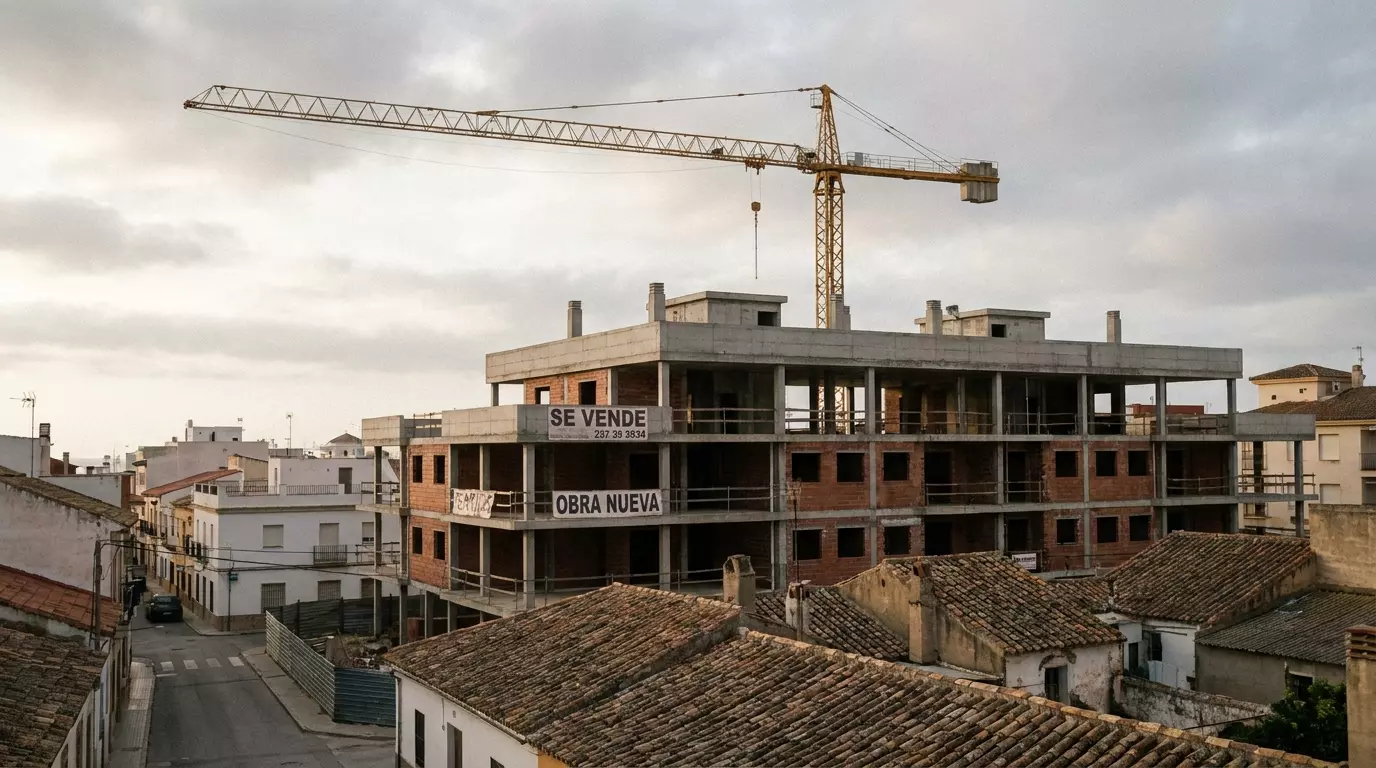
Spain’s Housing Market Finally Hits the Brakes: What Two New Reports Reveal
After years of watching property prices climb at a dizzying pace, Spain’s real estate sector appears to be entering a calmer phase. Two fresh industry reports suggest that the relentless upward trajectory of housing costs is beginning to lose steam, offering a glimmer of hope for buyers who’ve been priced out of the market. This shift comes as welcome news in cities where affordability has reached crisis levels, though the change isn’t happening uniformly across all regions. Let’s dig into what these findings actually mean for anyone watching the Spanish property landscape.
Price Growth Slows After Years of Relentless Increases
The Spanish housing market has been on a tear for the better part of a decade, with prices in hotspots like Madrid, Barcelona, and the Balearic Islands climbing year after year. According to recent data covered by Democrata, the pace of these increases is finally beginning to moderate. While prices aren’t necessarily falling across the board, the rate at which they’re rising has noticeably slowed, signaling what analysts describe as a market correction rather than a crash.
This deceleration follows a period when annual price growth in some Spanish provinces exceeded 10%, a figure that simply wasn’t sustainable given local wage levels. Economic pressures, including persistent inflation and tighter lending conditions from the European Central Bank, have started reshaping buyer behavior. Demand hasn’t disappeared, but it’s becoming more selective, and that selectivity is doing exactly what economists predicted it would: cooling the temperature of an overheated market.
What the Latest Reports Reveal About Spanish Housing
The two reports painting this picture come from major industry players whose data tracks both transaction volumes and listing prices nationwide. Their findings align on a key point: the second half of the year has shown markedly different dynamics compared to the explosive growth seen in 2022 and 2023. Key observations from the data include:
- Reduced year-over-year price acceleration in major metropolitan areas
- Longer average listing times for properties priced above local market norms
- Increased negotiation flexibility between sellers and buyers
- Stabilization of mortgage approval rates after months of declining lending activity
- Shifts in regional demand patterns, particularly in coastal and tourist-heavy zones
What’s particularly interesting is how these reports highlight regional variation. While some areas continue to see price pressure due to chronic supply shortages, others are showing genuine signs of equilibrium. The cooling effect appears strongest in cities where prices had previously decoupled most dramatically from local incomes, which makes intuitive sense from a market correction standpoint. According to broader analysis from Reuters coverage of European housing trends, Spain isn’t alone in this pattern, with similar dynamics emerging across several southern European economies.
Buyers Finally Get Some Breathing Room in Major Cities
For prospective homeowners who’ve spent the past few years watching properties sell within days of listing, often above asking price, the current environment offers something that has felt impossible: time to think. Buyers in Madrid and Barcelona, in particular, are reporting more opportunities to view properties multiple times, negotiate terms, and walk away from deals that don’t make financial sense. This rebalancing of power between sellers and buyers represents perhaps the most significant practical change of the current cycle.
Here’s a quick comparison of how the buyer experience has shifted:
| Market Factor | Peak Market (2022-2023) | Current Cooling Phase |
|---|---|---|
| Average time on market | 2-4 weeks | 6-12 weeks |
| Negotiation room | Minimal to none | 3-8% typically possible |
| Bidding wars | Common in prime areas | Rare outside specific zones |
| Mortgage conditions | Variable rates dominant | More mixed and fixed options |
| Buyer leverage | Very low | Moderate and improving |
This doesn’t mean Spain has suddenly become an affordable market overnight. Prices in absolute terms remain historically high, and incomes haven’t caught up to property values in any meaningful way. However, the shift in market psychology matters enormously for anyone planning a purchase in 2024 or 2025. The fear-of-missing-out mentality that drove rushed decisions has largely dissipated, replaced by a more analytical approach to home buying that benefits patient purchasers.
Why Experts Believe This Shift Could Stick Around
Industry analysts cited in the reports suggest several reasons why this cooling trend isn’t likely to reverse quickly. First, the macroeconomic conditions supporting it appear durable. Interest rates, while expected to moderate gradually, won’t return to the ultra-low levels that fueled the previous boom anytime soon. Second, demographic shifts and changing remote work patterns have altered demand geography, spreading interest beyond traditional urban centers in ways that ease pressure on the hottest markets.
There are several structural factors reinforcing this view:
- Tighter mortgage qualification standards are filtering speculative buyers out of the market
- Government regulatory attention on short-term rentals and foreign ownership is shifting investment calculations
- Construction activity is gradually catching up in some regions, addressing chronic undersupply
- Wage growth pressures are forcing sellers to be more realistic about achievable prices
- Investor cooling as yields become less attractive compared to other asset classes
That said, experts caution against assuming uniform behavior across Spain’s diverse property landscape. The Balearic Islands and Costa del Sol continue attracting international buyers whose purchasing decisions aren’t tied to local economic fundamentals. Madrid’s premium districts remain remarkably resilient. And rental markets, which face their own supply crisis, continue pushing many residents toward purchase decisions regardless of broader cooling trends. The picture is genuinely mixed, even if the overall direction points toward moderation.
In Short
The Spanish housing market is undergoing a meaningful transition from breakneck growth to a more measured pace. Two industry reports confirm what many on-the-ground observers have been sensing: buyers have more leverage, prices are stabilizing in key markets, and the FOMO-driven purchasing frenzy of recent years has largely subsided. While this doesn’t translate to bargain-basement prices, it does mean a healthier, more sustainable market environment is emerging. For anyone considering entering the Spanish property market, whether as a primary residence buyer, investor, or relocator, the current moment offers something valuable: the time and breathing room to make smart decisions rather than panicked ones.
Frequently Asked Questions
Q: Are Spanish housing prices actually dropping?
A: Not significantly in most regions. What’s happening is a slowdown in price growth rather than outright price declines. Some specific markets and property types may see modest reductions, but the broader trend is stabilization rather than collapse.
Q: Which Spanish cities are cooling fastest?
A: Major metropolitan areas like Madrid and Barcelona are showing the clearest signs of moderation, particularly in mid-market segments. Coastal areas with heavy international buyer interest are cooling more slowly due to external demand.
Q: Is now a good time to buy property in Spain?
A: For buyers with stable financing and long-term horizons, current conditions are more favorable than they’ve been in years. Increased negotiation room and longer listing times work in buyers’ favor, though mortgage rates remain elevated compared to historical lows.
Q: How are foreign buyers affecting the market?
A: International buyers continue playing a significant role, particularly in prime coastal areas and major cities. However, regulatory changes targeting non-resident buyers and short-term rental investors are gradually shifting these dynamics.
Q: Will the cooling trend continue into 2025?
A: Most analysts cited in the reports expect the moderation to persist, though they’re divided on whether prices will eventually decline or simply stabilize at current elevated levels. Economic conditions and interest rate trajectories will largely determine the outcome.
Q: What about rental prices in Spain?
A: Unlike purchase prices, rental costs continue rising in most Spanish cities due to chronic supply shortages and regulatory pressures on short-term rental conversion. This dynamic actually supports purchase demand among residents who can afford to buy.



Join The Discussion