

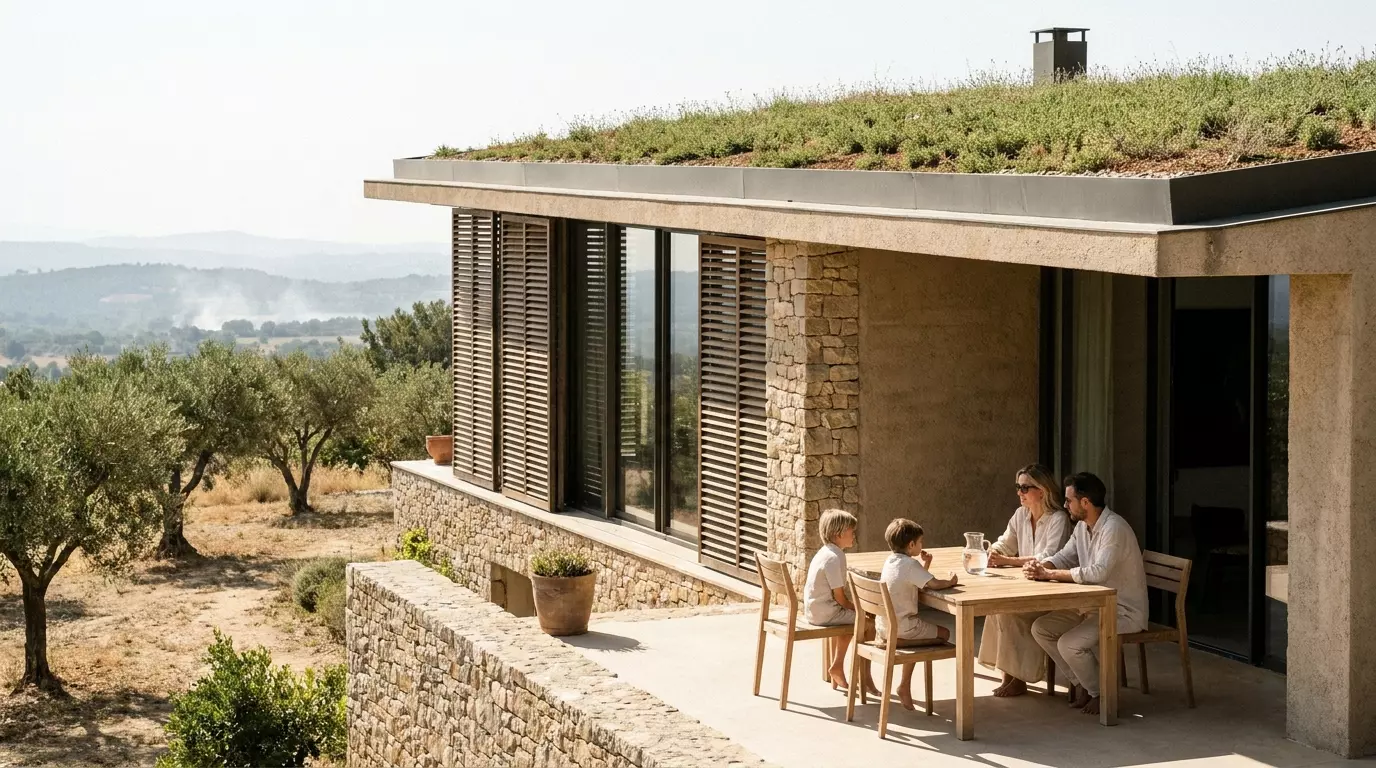
Why French Homes Are Back in Demand While the Climate Turns Up the Heat
France’s property market is finally showing signs of life again after two sluggish years, but the recovery is unfolding against an unexpected backdrop: record-breaking heatwaves that are quietly rewriting the rules of where and how people want to live. What was once a market driven almost entirely by location, price per square metre, and proximity to city centres is now increasingly shaped by summer temperatures, energy performance, and access to cooler microclimates.
This shift is more than a passing trend. From Paris to Provence, buyers are asking new questions about insulation, shading, air conditioning, and long-term climate resilience. In this article, we break down why French property prices are climbing again, how extreme heat is reshaping buyer behaviour, which cooler regions are emerging as the country’s new hotspots, and what all of this means for home values in the decade ahead.
Why French Property Prices Are Climbing Again
After a prolonged downturn triggered by rising interest rates and tighter lending conditions, the French real estate market is staging a genuine rebound. Mortgage rates, which peaked above 4% in late 2023, have gradually eased, restoring purchasing power to households that had been priced out of the market. According to data tracked by Notaires de France, transaction volumes have started to recover across major urban centres, and price declines in cities like Paris, Lyon, and Bordeaux have either slowed dramatically or reversed into modest growth.
Several forces are working together to fuel this recovery. First, the European Central Bank’s rate cuts have made borrowing cheaper, encouraging first-time buyers back into the market. Second, a persistent housing shortage in France, worsened by a slump in new construction permits, means demand is chasing a limited supply of quality homes. Third, sellers who held off during the downturn are now listing properties at more realistic prices, unlocking transactions that had been frozen. The combination of these factors has created the conditions for a sustained, if measured, price rebound:
- Falling mortgage rates improving affordability
- Chronic undersupply of new housing stock
- Pent-up demand from buyers who delayed purchases
- More realistic seller pricing after the correction
How Record Heatwaves Are Reshaping Buyer Demand
While the financial picture improves, France has simultaneously endured some of its hottest summers on record. Temperatures exceeding 40°C have become increasingly common in southern regions, and even traditionally temperate areas have faced prolonged heat episodes. Data from Météo-France confirms that heatwaves are arriving earlier, lasting longer, and reaching higher peaks than at any point in modern records. For property buyers, this is no longer an abstract climate statistic. It is a daily quality-of-life issue that directly influences where they choose to buy.
The impact on buyer behaviour is measurable. Homes without adequate thermal insulation, external shading, or cooling systems are attracting fewer offers and longer selling times, particularly top-floor apartments in dense urban areas that trap heat. Meanwhile, properties with features that mitigate extreme temperatures are commanding premiums. Buyers now routinely ask about:
- Energy performance ratings (DPE), with poorly rated homes facing rental restrictions under French law
- Orientation and natural shading from trees or neighbouring buildings
- Reversible heat pumps and air conditioning installations
- Thick stone walls and traditional construction that stays cool naturally
- Proximity to water, green spaces, or elevated terrain
This shift is also reinforced by regulation. France’s climate law progressively bans the rental of the worst-performing energy-rated properties, pushing investors to prioritise efficient, climate-resilient homes and accelerating renovation demand across the market.
Cooler Regions Emerge as France’s New Hotspots
One of the most striking consequences of repeated heatwaves is a geographic rebalancing of demand. Regions once considered secondary markets are now attracting serious buyer interest precisely because of their cooler climates. Brittany and Normandy on the Atlantic and Channel coasts, the Massif Central’s elevated plateaus, and mountain-adjacent areas in the Alps and Pyrénées are all recording rising enquiries from buyers seeking refuge from scorching summers. Coastal towns in northwestern France, long overshadowed by the Mediterranean, are experiencing notable price growth as retirees and remote workers reconsider where comfortable living is actually possible in July and August.
The contrast with traditional southern hotspots is becoming clearer each year. While the Côte d’Azur and Provence retain their prestige, some buyers are hesitating over properties exposed to extreme heat, water restrictions, and growing wildfire risk. Research on European climate migration patterns, including analysis published by the European Environment Agency, suggests this northward and upward shift in residential preference is likely to strengthen. The comparison below illustrates how buyer priorities are diverging:
| Factor | Traditional Southern Markets | Emerging Cooler Regions |
|---|---|---|
| Summer temperatures | Frequently above 38°C | Typically 22°C to 28°C |
| Price trend | Stabilising, selective growth | Accelerating demand and prices |
| Climate risks | Heat, drought, wildfire | Milder, mainly coastal erosion |
| Buyer profile | Luxury, international | Families, retirees, remote workers |
| Water availability | Increasing restrictions | Generally reliable |
What Climate Pressure Means for Future Home Values
Looking ahead, climate exposure is set to become a formal component of property valuation in France, much like flood risk already is in many markets. Surveyors, lenders, and insurers are beginning to factor heat resilience into their assessments. Homes that stay habitable and comfortable during 40°C episodes without enormous energy bills will hold and grow their value. Properties that become uncomfortable ovens each summer risk a structural discount, especially as insurance premiums rise in high-risk zones and banks grow cautious about financing climate-vulnerable assets.
For homeowners and investors, the practical takeaway is clear: climate adaptation is now a financial strategy, not just an environmental one. Renovating for thermal performance, installing efficient cooling, adding external shutters, and improving insulation are investments that protect resale value. For buyers, due diligence should extend beyond the classic checklist to include heat maps, water stress data, and regional climate projections. Key steps for anyone navigating this new market reality include:
- Check the DPE energy rating before making any offer
- Visit properties during summer afternoons where possible
- Research local water restrictions and wildfire history
- Budget for cooling and insulation upgrades in older homes
- Consider long-term regional climate projections, not just current conditions
In Short
France’s real estate rebound is real, driven by easing mortgage rates, constrained supply, and returning buyer confidence. But the recovery is not uniform, and the country’s intensifying heatwaves are becoming a decisive force in shaping where demand flows. Cooler regions like Brittany, Normandy, and mountain areas are enjoying newfound popularity, while heat-exposed southern markets face growing scrutiny over resilience, water, and wildfire risk.
The lesson for buyers, sellers, and investors is that climate is now a fundamental market variable in French property. Homes built or upgraded to withstand extreme heat will increasingly outperform those that are not. As France’s climate continues to warm, the smartest real estate decisions will be the ones that treat thermal comfort and climate resilience as core value drivers rather than afterthoughts.
FAQ
Are French property prices really rising again?
Yes. After a correction in 2023 and 2024, falling mortgage rates and limited housing supply have restored demand, with transaction volumes and prices recovering in most major cities.
How do heatwaves affect property values in France?
Homes with poor insulation, no cooling, and low energy ratings are selling more slowly and at discounts, while heat-resilient properties are commanding premiums, particularly in southern regions.
Which French regions are becoming popular due to climate change?
Brittany, Normandy, the Massif Central, and areas near the Alps and Pyrénées are attracting buyers seeking milder summers and lower climate risk.
Should I avoid buying property in southern France?
Not necessarily, but buyers should carefully assess heat resilience, water availability, wildfire exposure, and insurance costs before purchasing in high-risk southern zones.
What is a DPE rating and why does it matter?
The DPE is France’s mandatory energy performance certificate. Poorly rated homes face rental bans and lower resale values, making the rating a critical factor in any purchase decision.


Join The Discussion