

The Real Cost of Buying a 1-Euro House in Italy: A 2026 Financial Breakdown
The dream of owning an Italian home for the price of an espresso has captured imaginations worldwide. From sun-drenched Sicilian villages to medieval hill towns in Sardinia, the 1-euro house initiative has lured thousands of foreign buyers searching for la dolce vita on a budget. But behind that irresistible price tag lies a complex web of expenses that can quickly transform a symbolic purchase into a substantial investment. This detailed financial model breaks down exactly what buyers should expect to spend in 2026, from notary fees and security deposits to renovation costs per square meter.
Why the 1-Euro Price Tag Is Just the Beginning
The 1-euro house scheme, launched by Italian municipalities like Sambuca di Sicilia, Mussomeli, and Cinquefrondi, was designed to revive depopulated villages by attracting new residents willing to restore abandoned properties. While the headline price sounds almost too good to be true, the symbolic euro is essentially a marketing tool. The actual financial commitment begins the moment you sign the preliminary purchase agreement, and most buyers are surprised to discover that the total project cost typically ranges between €25.000 and €70,000, depending on property size and condition.
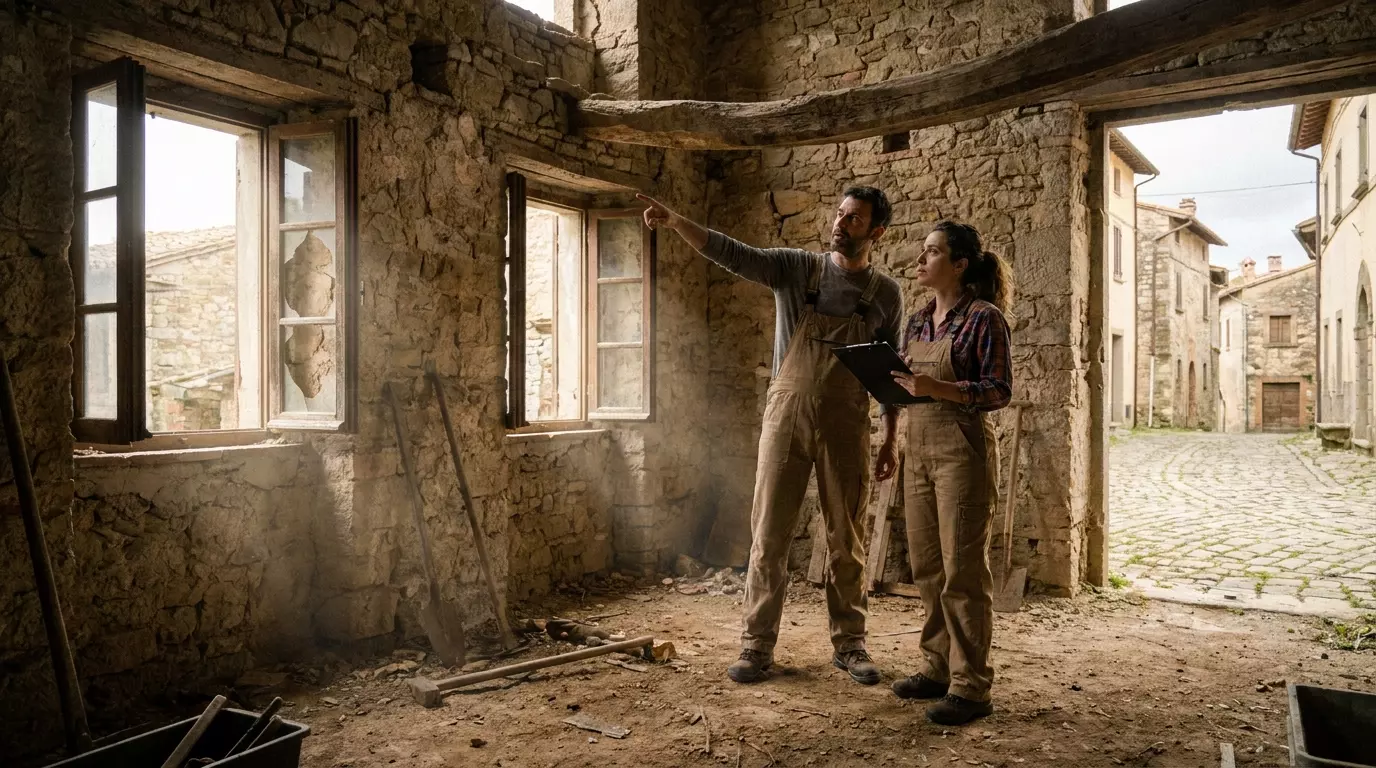
What many international buyers underestimate is that these properties have been abandoned for decades, often lacking basic utilities, structural integrity, or modern plumbing systems. Municipalities require buyers to commit to a full renovation within a strict timeframe, usually three years, and failure to deliver results in forfeiture of the deposit. According to a Reuters report on Italy’s village revival programs, demand has surged among American, British, and Northern European buyers, but only a fraction successfully complete their projects without significant unexpected costs.
Notary Fees, Taxes, and Deposits You Can’t Skip
Every Italian property transaction, regardless of price, must pass through a licensed notary (notaio) who handles the legal transfer, registration, and verification of titles. For a 1-euro property, notary fees typically range from €1.500 to €3,000, depending on the region and the complexity of the deed. These fees are non-negotiable and represent one of the first unavoidable expenses. On top of that, buyers must pay registration tax, cadastral tax, and mortgage tax, which together usually add another €500 to €1.500 to the bill.
The security deposit is perhaps the most significant upfront cost beyond the symbolic purchase price. Most municipalities require a refundable guarantee deposit ranging from €1.000 to €5,000, returned only after the renovation is successfully completed within the agreed timeframe. Additional administrative costs include:
- Translation and interpreter services: €300 to €800 for non-Italian speakers
- Codice Fiscale (Italian tax code) application: €50 to €150
- Power of attorney documents: €200 to €500
- Property survey and technical reports: €800 to €2.000
- Real estate agent commission (if applicable): 2% to 4% of declared property value
| Expense Category | Estimated Cost (EUR) |
|---|---|
| Notary Fees | €1.500 – €3.000 |
| Registration & Taxes | €500 – €1.500 |
| Security Deposit | €1.000 – €5.000 |
| Technical Surveys | €800 – €2.000 |
| Translation Services | €300 – €800 |
| Subtotal | €4.100 – €12.300 |
Renovation Costs Per Square Meter in 2026 Italy
This is where the real financial commitment begins. Renovation costs in Italy have risen significantly due to inflation, supply chain disruptions, and increased demand for construction materials. In 2026, average renovation costs for abandoned Italian properties range from €800 to €1.500 per square meter for basic restoration, while full luxury renovations can easily exceed €2.500 per square meter. A typical 80-square-meter cottage in a Sicilian village will therefore require between €64.000 and €120.000 to bring back to livable standards.
The breakdown of renovation expenses generally follows a predictable pattern, though regional variations apply. According to data published by ANCE (the Italian National Association of Builders), labor costs in Southern Italy remain 15-20% lower than in Northern regions, but material costs have equalized nationally. Here’s how a typical renovation budget breaks down:
- Structural work and roofing: 25-30% of total budget
- Plumbing and electrical systems: 20-25%
- Windows, doors, and insulation: 15-20%
- Flooring and interior finishes: 15-20%
- Kitchen and bathroom installations: 10-15%
- Permits and architect fees: 5-10%
Buyers should also budget for hidden surprises, which experienced renovators estimate at 15-20% above initial quotes. Asbestos removal, foundation reinforcement, or unexpected archaeological findings (more common than you’d think in centuries-old Italian villages) can add €5.000 to €15.000 to the final bill.
Adding It All Up: The True Investment Required
When you combine the purchase price, legal fees, deposits, and renovation costs, the total investment for a modest 1-euro house project in 2026 looks dramatically different from the headline figure. A realistic budget for a small 60 to 80 square meter property in a Southern Italian village should account for the following total expenditure ranges, broken down into minimum and comfortable budgets.
For buyers seeking a basic but functional restoration, expect to invest between €50.000 and €75.000 total. Those aiming for a higher-quality finish with modern amenities, energy-efficient systems, and quality furnishings should budget €90.000 to €150.000. While these figures are significantly higher than the symbolic 1 euro, they remain substantially lower than purchasing comparable renovated properties in popular Italian regions, where similar homes can sell for €200.000 or more.
| Budget Tier | Property Size | Total Investment |
|---|---|---|
| Basic Restoration | 60-80 sqm | €50.000 – €75.000 |
| Mid-Range Renovation | 80-100 sqm | €75.000 – €120.000 |
| Premium Finish | 100+ sqm | €120.000 – €200.000 |
Conclusion: In Short
The 1-euro house phenomenon in Italy remains one of the most fascinating real estate opportunities of the decade, but it demands realistic financial planning. The symbolic purchase price represents less than 0.001% of your total investment. Notary fees, deposits, taxes, and renovation costs combine to create a project budget that typically reaches €50.000 to €150.000 depending on ambitions and property condition. For buyers who approach this opportunity with open eyes, proper budgeting, and patience, the result can be a beautifully restored Italian home at a fraction of traditional market prices. For those who underestimate the commitment, it can become a financial nightmare. The key is treating the 1-euro tag as an entry ticket, not the actual price of admission.
Frequently Asked Questions
Q: Can foreigners buy a 1-euro house in Italy?
Yes, non-Italian citizens can purchase these properties, though they must obtain an Italian tax code (Codice Fiscale) and comply with local renovation requirements within the municipality’s specified timeframe.
Q: How long do I have to renovate a 1-euro house?
Most municipalities require renovation completion within 3 years of purchase, though some allow extensions. Failure to comply typically results in losing your security deposit and potentially the property itself.
Q: Are there hidden costs beyond renovation?
Yes. Common hidden costs include utility connections (€2.000-€5.000), property insurance, annual municipal taxes (IMU and TARI), and ongoing maintenance. Budget an additional 10-15% buffer for unforeseen expenses.
Q: Can I get a mortgage for a 1-euro house in Italy?
Italian banks rarely finance these properties due to their low valuation and renovation requirements. Most buyers fund their projects with personal savings or home equity loans from their country of residence.
Q: Which Italian regions offer the best 1-euro house programs in 2026?
Sicily, Sardinia, Calabria, Abruzzo, and parts of Tuscany continue to lead the program. Sambuca di Sicilia, Mussomeli, and Ollolai in Sardinia remain among the most popular destinations for international buyers.
Q: Do I need to live in the house full-time after renovation?
Requirements vary by municipality. Some require primary residence, while others allow vacation home use or even rental income. Always verify local rules before purchasing.


Join The Discussion