

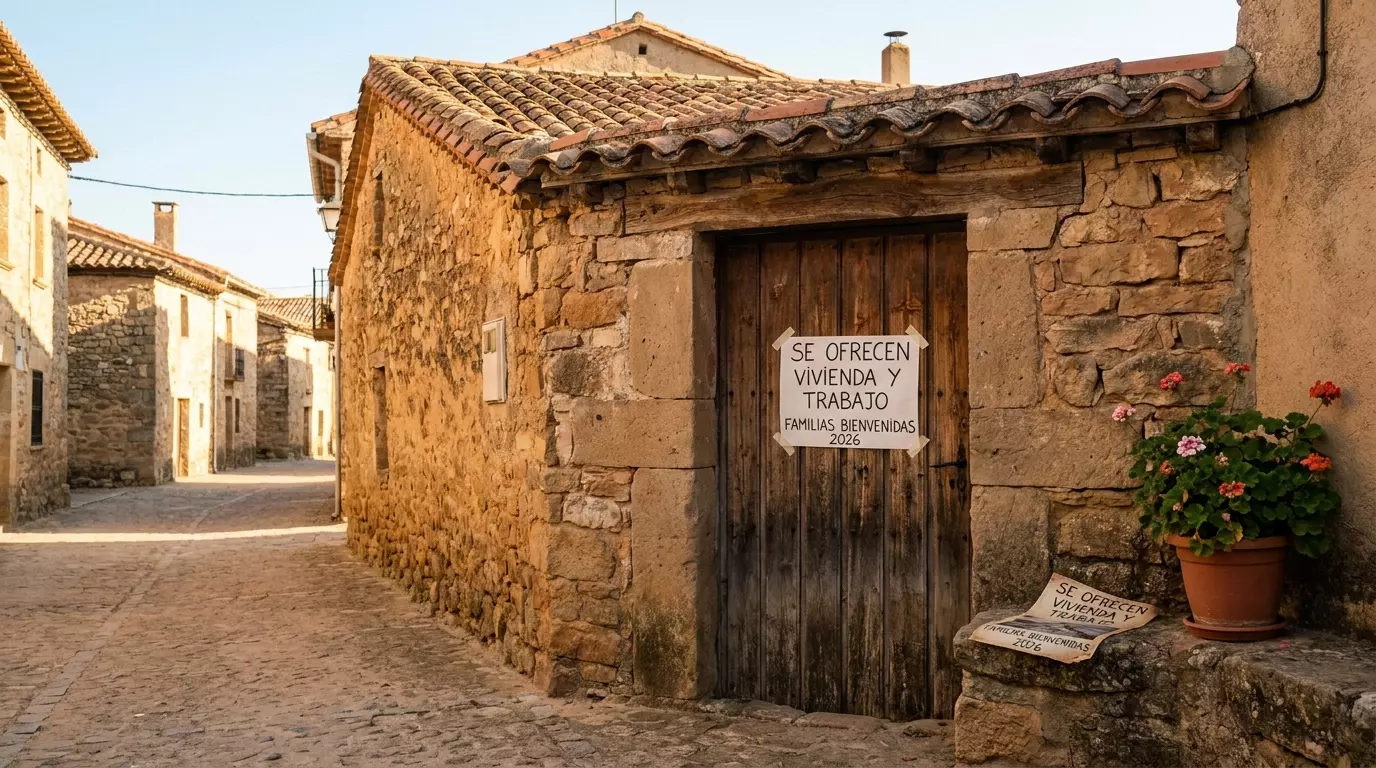
Spain’s ‘España Vaciada’ Programs: Free Houses and Jobs in 2026
Across rural Spain, a quiet transformation is underway. Hundreds of small villages, emptied over decades by migration to big cities, are fighting back with bold incentives. The movement known as “España Vaciada” (Emptied Spain) has grown into a coordinated effort to repopulate forgotten towns by offering something almost unheard of in today’s housing market: rent-free homes paired with guaranteed local work. In 2026, this model has matured into a structured system that links housing, employment, and community survival into one practical package for families willing to start over in the countryside.
How Spain’s ‘España Vaciada’ Plan Works in 2026
The ‘España Vaciada’ plan is not a single national law but a network of regional and municipal programs that share a common goal: reversing rural depopulation. By 2026, roughly half of Spain’s municipalities are considered at risk of disappearing, with population densities below the threshold that the European Union classifies as severely depopulated. To address this, local governments in regions like Castilla y León, Aragón, and Extremadura have rolled out what experts call “integrated revitalization.” Instead of simply handing out empty houses, towns now connect housing offers directly to essential community jobs, ensuring that newcomers both receive support and contribute to keeping the village functional.
The mechanics are straightforward but effective. A town council identifies a service gap, perhaps a missing baker, a closed bar, a vacant teaching post, or an empty medical clinic, and then advertises a package combining that role with free or heavily subsidized accommodation. According to reporting on Spain’s rural revival, this approach has proven far more durable than older schemes that gave away buildings with no strings attached. By tying residence to a working purpose, councils avoid attracting people who arrive briefly and leave, and instead build a stable base of families with a genuine stake in the community’s future.
Arenillas: A Village Trading Free Homes for Jobs
One of the most cited examples of this model is Arenillas, a small village in the province of Soria, part of Castilla y León. Soria is among the least densely populated areas in all of Europe, often compared to the empty expanses of Lapland or Siberia. Arenillas, with only a few dozen permanent residents, launched a program offering rent-free municipal housing to families willing to take on roles the village desperately needs. The initiative gained national attention because it framed repopulation not as charity but as a practical exchange: the village provides a home, and the family provides a service that keeps the community alive.
The roles offered in Arenillas reflect the real needs of a tiny rural settlement. These have included:
- Running the village bar or social center, often the heart of daily life
- Managing a rural tourism lodging or guesthouse
- Providing childcare or supporting the small local school
- Taking on agricultural, livestock, or land maintenance work
Families selected for the program receive a renovated home owned by the municipality and pay no rent, with the understanding that they commit to the assigned role for a set period. The arrangement gives newcomers breathing room to establish themselves financially while immediately embedding them into village life. For Arenillas, even adding two or three young families with children can mean the difference between a school staying open and closing permanently.
What Families Must Do to Claim Rent-Free Housing
Securing one of these rent-free homes is competitive and comes with clear obligations. While each town sets its own rules, most ‘España Vaciada’ programs share a common set of requirements designed to ensure newcomers genuinely integrate. Families are typically expected to relocate permanently rather than treat the home as a holiday property, register officially in the municipality, and fulfill the work commitment tied to their housing. This formal registration, known as empadronamiento, is crucial because regional funding often depends on official population counts.
Here is a typical comparison of what applicants give and receive:
| What Families Provide | What Villages Provide |
|---|---|
| Permanent relocation and residency | Rent-free or low-cost housing |
| Commitment to an essential job or business | A guaranteed local role or income source |
| Official registration in the town | Access to schools and basic services |
| Active participation in community life | Renovated municipal property |
Beyond the formal requirements, success in these villages depends heavily on attitude and adaptability. Councils generally favor applicants who show realistic expectations about rural living, including limited shopping options, slower pace, and harsh winters in highland regions like Soria. Many programs prioritize families with children, since young people directly help keep schools and future services viable. Applicants usually submit a written proposal explaining their skills, their plans for the role, and why they want to settle long term, allowing the council to choose candidates most likely to stay.
Filling Empty Towns With New Businesses and Life
The most ambitious dimension of the 2026 programs goes beyond filling jobs to actively creating new businesses. Many villages now invite entrepreneurs to take over dormant commercial spaces, offering not only free housing but also the keys to a shuttered shop, workshop, or restaurant. This entrepreneurial branch of ‘España Vaciada’ has produced reopened bakeries, revived hardware stores, new co-working hubs for remote professionals, and small farm-to-table ventures. The logic is simple: a single new business can generate ripple effects, drawing visitors, supporting suppliers, and giving residents reasons to stay.
Remote work has become a powerful ally in this revival. As internet infrastructure improves across rural Spain, supported by national digitalization funds, more professionals can live in a village while working for companies elsewhere. According to research on European rural depopulation, connectivity is one of the strongest predictors of whether a small town can attract and retain younger residents. Combining traditional roles like shopkeeping with modern remote careers, towns can build a more diverse and resilient population. The examples below show the variety of revitalization paths now available:
- Service roles such as bar managers, teachers, and caretakers
- Business takeovers of closed shops, lodgings, and restaurants
- Remote work residencies for digital professionals seeking affordable rural life
- Agricultural revival projects tied to land, livestock, and food production
Together, these strands form a comprehensive strategy. Rather than relying on a single solution, 2026’s programs blend housing, employment, entrepreneurship, and technology to give villages multiple chances at survival. The result is a model increasingly studied by other depopulating regions across Europe.
In Short
Spain’s ‘España Vaciada’ programs in 2026 represent a thoughtful, practical answer to one of the country’s biggest demographic challenges. By trading rent-free homes for essential work, villages like Arenillas in Soria are turning empty streets back into living communities. The genius of the integrated revitalization model lies in its balance: newcomers gain affordable housing and purpose, while towns gain the workers, children, and businesses they need to endure. For families seeking a fresh start and a slower way of life, these programs offer a rare opportunity to build a future in some of Spain’s most beautiful and overlooked corners. As more regions adopt and refine these schemes, Emptied Spain may slowly become Spain renewed.
Frequently Asked Questions
What is the ‘España Vaciada’ movement?
It is a social and political movement addressing rural depopulation in Spain. In 2026, it includes village programs that offer free or rent-free housing in exchange for taking on essential local jobs or running community businesses.
Are the houses really free?
In most cases the housing is rent-free rather than gifted outright. Families live in renovated municipal properties without paying rent, on the condition that they fulfill a work commitment and register as permanent residents.
Can foreigners apply to these programs?
Many programs welcome applicants from outside Spain, though requirements like legal residency, language ability, and long-term commitment vary by town. Each municipality sets its own eligibility criteria.
What kind of jobs are offered?
Common roles include running the village bar, managing tourist lodging, teaching, childcare, agricultural work, and reopening closed shops or restaurants. Remote work residencies are also increasingly available.
Why do villages prioritize families with children?
Children help keep rural schools and services open. A single young family can be enough to prevent a school from closing, which is why councils often favor applicants with kids.
How long must families commit to staying?
Commitment periods vary, but most programs require a multi-year stay tied to the assigned job or business, ensuring the village benefits from stable, long-term residents.


Join The Discussion