

From 1 October 2026, anyone buying urban property in Portugal has one more line to check in the deed. Decreto-Lei 108/2026 is now in force, and it rewrites article 4.º-A of the Portuguese urbanisation and building code, the RJUE, so that the document which transfers ownership has to state whether the property has an urbanistic title.
A duty falls on the professional who draws up the act, whether that is the notary, the registrar, a lawyer or a solicitor. They must record one of three things: that the title exists and was shown, that the seller says they hold it, or that the seller says they do not. Omit the mention and the sale can be annulled. Selling a home without an urbanistic title is still allowed, but silence is not.
How Portuguese Property Deeds Changed in October
The Decreto-Lei 108/2026 of 29 May is the Simplex reform of Portugal’s urban licensing, and its target is the Regime Jurídico da Urbanização e Edificação. Publication set entry for 120 days later, and then Decreto-Lei 155-B/2026 of 31 July pushed the date to 1 October so municipalities could adapt their platforms in time.
Paragraph 14 of the rewritten article 4.º-A is the part that touches a sale. Transfers of urban land for construction, of buildings already built or still under construction, and of the autonomous fractions inside them all fall within it. In the government’s own account of the reform, the aim is a conscious, informed purchase: the buyer should know the urbanistic position of what they are getting before the papers are signed.
Nothing here changes who may buy or what a property costs. The reform changes the information that has to travel with the ownership, and that is why it matters to an agent preparing a deal rather than an agent filing one away afterwards.
What Counts as an Urbanistic Title in Portugal
A título urbanístico is not a single certificate, and it is worth saying what it is not. It is not the caderneta predial, the tax description of the property, nor the land-registry certificate, nor the set of architect’s drawings. Rather, it is the documentary proof that the urban operation was lawfully licensed or communicated to the municipality.
For a licence, that means the proof of payment of the fees and charges, the last application form as submitted, which carries the synthesis of the operation, and either the notification of an express approval or, in a tacit approval, the proof of submission. For a prior communication, it means the proof of payment plus the completed form and the proof of submission, with a declaration of conformity included where there is one. Where the operation involved cessions of land or infrastructure, the proof of those is part of the title too.
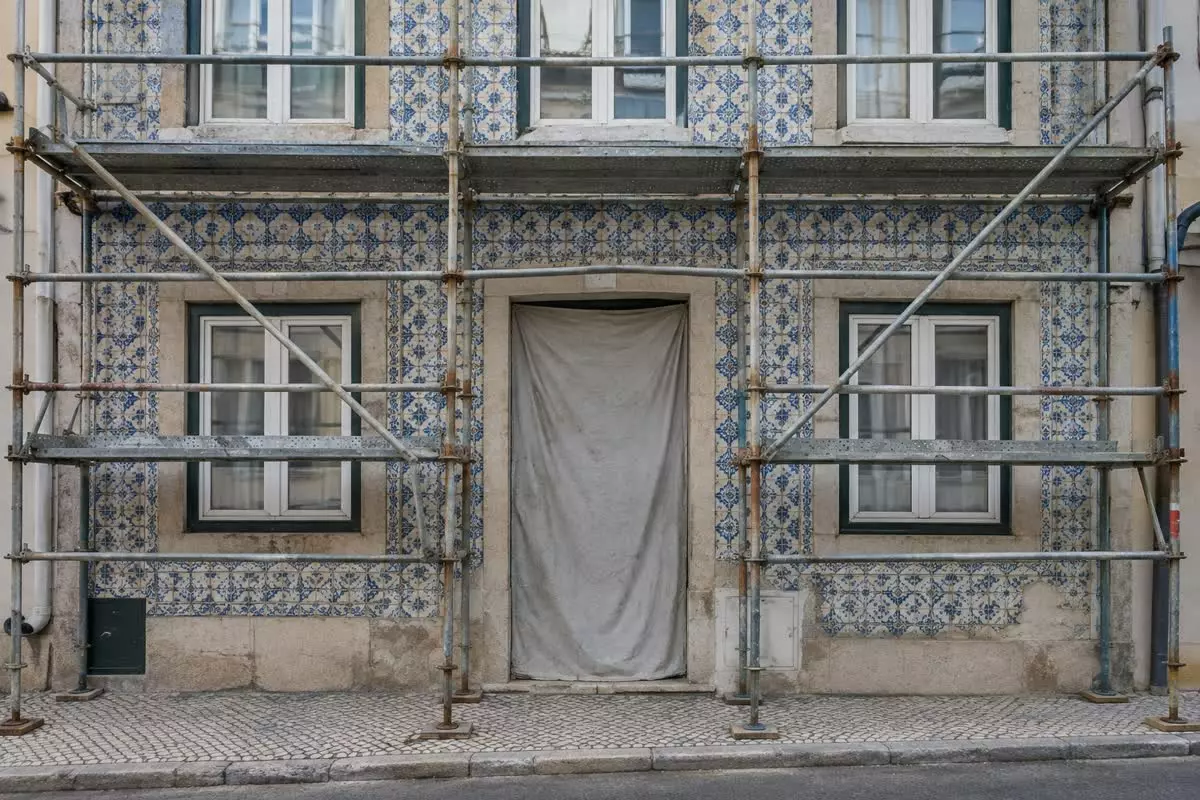
Not every building has one, and the law accepts that. Works exempt from licence or prior communication, and works of little urbanistic relevance, generate no document at all. Older buildings are covered through the idea of the último antecedente válido, the last valid antecedent: the last urban operation that was valid, or one that, when it was carried out, needed no title under the rules of its day. A missing title therefore does not, on its own, mean the building is illegal.
One more change sits in the same article, and it is easy to miss. The use title, the título de utilização that used to be called the licença de utilização, now passes automatically with the property. Before, each change of owner could call for a separate act to move it. Now it follows the building.
The Three Statements a Notary Can Now Record
On the day of the deed the rule gives the officer three options, and they are not equally good for a buyer. One option is the cleanest: the urbanistic title exists and was presented, so the document can refer to it directly. Second comes the transferor’s declaration that they hold the title even though they have not brought it along. Then there is the third, the transferor’s declaration that they hold no title at all.
Sanction is the sharp part. The mention is required “sob pena de anulabilidade do negócio jurídico”, under penalty of annulability of the transaction. That is not automatic nullity: it is a relative invalidity, waivable, and only those the Civil Code gives legitimacy can invoke it. And it attaches to the omission of the mention itself, not to the absence of the title. A deed that says plainly that no title exists is compliant. A deed that says nothing is the one at risk.
So the mention does not cure a building. Declaring that there is no urbanistic title does not legalise anything and does not replace the title. It simply puts the buyer on notice, in the one document they will keep for years.
How This Lands for Foreign Buyers and Agents
For foreign buyers the practical weight is small but real. No tax and no new registration step are added, and the deed can still go ahead where the seller holds no title. The change moves a question that used to surface after completion into due diligence, and that is a fair trade for anyone who does not know Portuguese building paperwork.
An agent working on a sale should read the three possibilities as a map of the risk in every urban property transaction.
| The deed records | When it applies | Buyer’s next step |
|---|---|---|
| Title exists and was shown | A seller who holds the licence or the communication | Keep a copy in the file, nothing to chase |
| Seller declares they hold the title | Title exists but was not produced | Ask to see it before signing the promissory contract |
| Seller declares they hold no title | No urbanistic title exists | Check the last valid antecedent and any older legal basis |
| Use title travels with the property | Every transfer | No separate act is needed to move the use title |
A short list keeps the job straight. Do not refuse a property that has no title, since many older homes legitimately have none. Know instead which of the three situations is on the table before the money moves.
- Ask the seller for the urbanistic title at the start of the process, not in the week of the deed
- Keep it apart from the tax package, since the flat rate non-residents pay on acquisition is a different matter
- Where there is no title, look for the last valid antecedent before calling the building irregular
- Flag the declaration in the draft deed so the notary records the right option

Getting the Title Check Right Before You Sign
Portugal’s housing market keeps drawing outside buyers, and the paperwork is where most of the surprises live. This new rule is a small tightening of that paperwork, not a change of direction. Handled early it is a checklist item. Handled late it is a reason to renegotiate or to walk away.
- Ask for the título urbanístico as soon as an offer is agreed
- Read it against the property, not just the address, because the synthesis of the operation is the part that matters
- Where the seller holds none, get the last valid antecedent in writing before the promissory contract
- Put the correct mention in the draft deed and check that it appears before signing
- Keep a copy with the file, because the buyer will want it again at resale
Portuguese practitioners made the same point when the date slipped to October: from the first of the month the check belongs in every pre-deed checklist, and the idealista news report on the delay said as much. A few minutes spent on it now saves an argument later.
Questions Agents Ask About Portuguese Deeds
Can a property without an urbanistic title still be sold?
Yes. Nothing bans the sale, only the silence. The deed has to say that no title exists, and the transaction stands. The buyer learns the position from the document itself instead of finding out months later.
Is the sale void if the deed leaves out the declaration?
Annullable, not automatically void, is the right description. Annulability is the penalty the law sets for the omission, a relative invalidity that can be waived and can only be invoked by those the Civil Code allows. Risk sits with the deed that says nothing, not with the deed that states the position honestly.
Who has to make the mention in the deed?
That job belongs to the officer who formalises the act: the notary, the registrar, a lawyer, a solicitor or another legally competent entity. Their part is to record one of the three statements, so a buyer who has asked the right questions early is simply making that duty easier to discharge.
What is the difference between the title and the use licence?
An urbanistic title proves that the operation was lawfully licensed or communicated, and it can be made up of several documents. A use title certifies that the building or fraction is fit for its purpose, and under the same reform it now travels automatically with the property instead of needing a separate act at each sale.
Does this change the taxes a buyer pays?
No. This reform is about urban licensing and the content of the deed, not about tax. Transfer tax, stamp duty and the flat rate that applies to non-resident buyers are set by different rules, and none of them moves because of this change.