

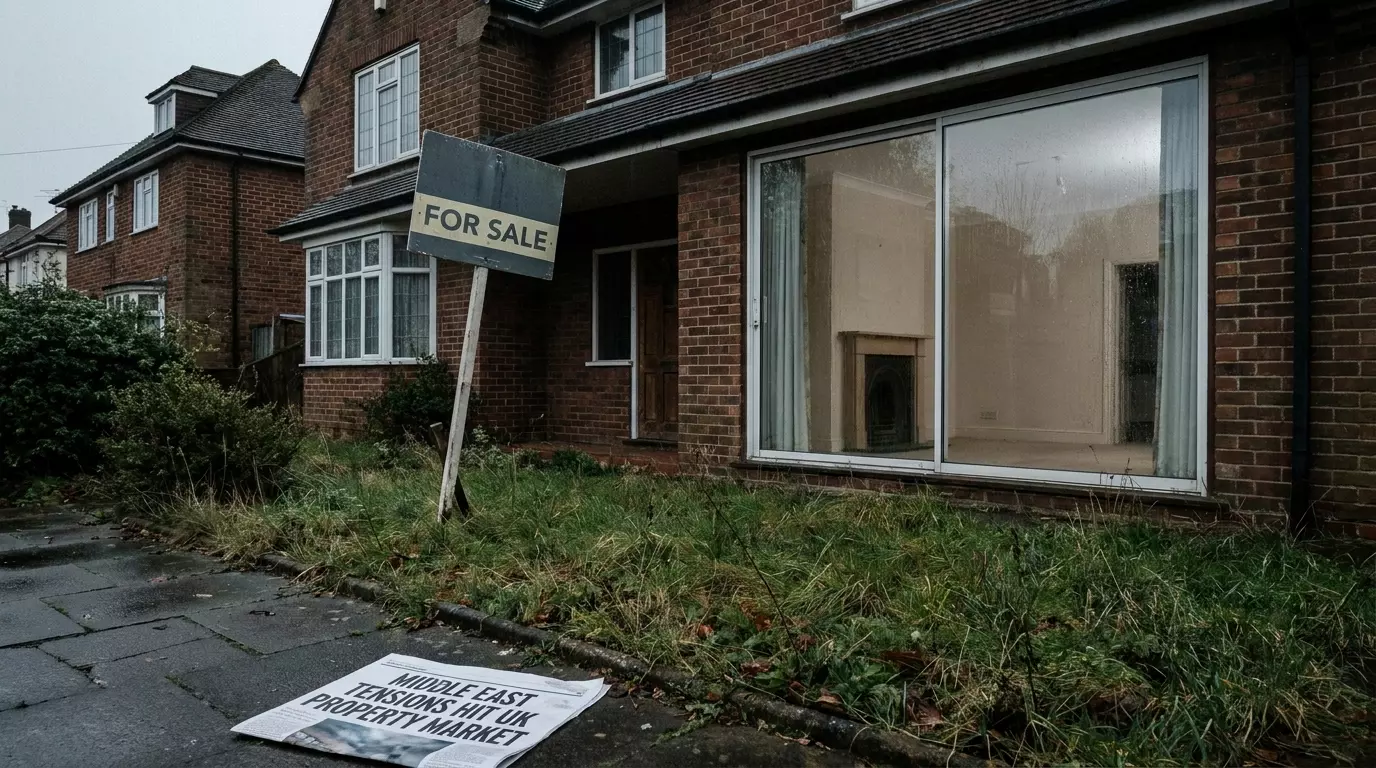
UK Housing Market Wobbles as Iran Conflict Casts Shadow Over Buyer Confidence
The property market across England and Wales is showing fresh signs of strain, and according to leading estate agents, the unfolding conflict involving Iran is partly to blame. Geopolitical instability has a way of seeping into financial decisions, and few decisions feel weightier than buying a home. As tensions in the Middle East escalate, would-be buyers are hesitating, mortgage applications are softening, and sellers are starting to feel the pinch.
In this post, we’ll unpack what’s happening across the UK housing landscape, why international events are influencing local property sales, and what homeowners, sellers, and first-time buyers should keep in mind as the market navigates these choppy waters.
How the Iran Conflict Is Shaking UK Property Confidence
When global tensions rise, consumer confidence tends to fall, and that ripple effect has now reached the British housing sector. According to a recent report shared with The Guardian, the Royal Institution of Chartered Surveyors (RICS) noted a clear weakening in buyer demand throughout April, with estate agents directly attributing part of the slowdown to anxiety surrounding the Iran conflict. Oil price volatility, currency fluctuations, and fears of broader economic disruption are all weighing on household decisions.
For many UK buyers, the conflict has reignited memories of previous economic shocks. Rising fuel costs and uncertainty about inflation trajectories make committing to a long-term mortgage feel risky. The Bank of England’s cautious tone on interest rates hasn’t helped either, leaving prospective homeowners stuck in a holding pattern. The result is a market where listings sit longer, offers come in lower, and confidence is in short supply.
Buyers Pull Back as Middle East Tensions Rattle Markets
The retreat of buyers from the property market isn’t just anecdotal. RICS data shows that new buyer enquiries fell sharply in April, marking one of the steepest declines since the post-mini-budget chaos of 2022. Estate agents report that potential purchasers are pausing viewings, withdrawing offers, and waiting to see how the geopolitical situation develops before signing any contracts.
Several factors are driving this pullback:
- Oil price spikes pushing fuel and energy bills higher, squeezing household budgets
- Mortgage rate uncertainty as lenders reassess risk amid global instability
- Stock market volatility affecting buyers who rely on investments for deposits
- Cautious sentiment among landlords and second-home purchasers
- Currency pressures influencing overseas buyers in London and the South East
Simon Rubinsohn, chief economist at RICS, noted that the survey responses pointed to heightened caution among buyers, with the Iran situation explicitly mentioned in feedback from agents. The combination of domestic affordability challenges and international turmoil has created what many in the industry are calling a “wait and see” market, where activity stalls until clearer signals emerge.
Estate Agents Report Sharp Drop in Sales Across Regions
The weakening isn’t confined to one part of the country. Estate agents across England and Wales are reporting falling agreed sales, with particular softness in the South East, the Midlands, and parts of Wales. According to figures cited by Reuters, agreed sales registered their weakest reading in months, and price expectations for the next three months turned negative for the first time this year.
Here’s a snapshot of how different regions are being affected:
| Region | Buyer Demand Trend | Price Outlook (3 months) |
|---|---|---|
| London | Mildly negative | Flat to slightly down |
| South East | Negative | Down |
| Midlands | Negative | Down |
| North West | Mixed | Flat |
| Wales | Negative | Down |
| Scotland | Resilient | Flat |
Agents in the South East have been particularly vocal about the slowdown, with several reporting that chains are collapsing as buyers reconsider their positions. In Wales, where affordability had been a relative bright spot, sentiment has cooled noticeably. Even prime central London, often insulated by international wealth, is feeling the effects as overseas investors weigh the risks of moving large sums during a period of geopolitical strain.
What This Means for Homeowners and First-Time Buyers
For existing homeowners considering a sale, the current environment calls for realistic pricing and patience. Properties that are competitively priced and well-presented are still moving, but sellers expecting peak-of-market valuations may find themselves disappointed. Agents are increasingly advising clients to factor in a softer negotiating position and to be prepared for offers below asking price. For those not in a hurry, holding off until autumn, when geopolitical clarity may improve, could be a sensible strategy.
First-time buyers, meanwhile, find themselves in a more complex position. On one hand, softer prices and motivated sellers create potential opportunities. On the other, mortgage rates remain elevated, and economic uncertainty makes long-term financial planning trickier. Here are a few practical steps for first-time buyers in this climate:
- Lock in mortgage offers early to protect against further rate movements
- Negotiate firmly, as many sellers are now open to offers 5 to 10 percent below asking
- Check affordability stress tests to ensure resilience if costs rise further
- Consider fixed-rate deals of two to five years for budgeting certainty
- Work with experienced local agents who understand regional market shifts
The current moment is one of those rare periods when buyers may have genuine leverage, but only those with stable finances and long-term horizons should rush in. For everyone else, watching how the Iran situation unfolds, along with the Bank of England’s next moves, will be crucial.
In Short
The UK housing market is once again proving how sensitive it is to events far beyond British shores. The Iran conflict has injected fresh uncertainty into an already fragile property landscape, prompting buyers to pause, sellers to adjust expectations, and estate agents to brace for a slower summer. While the long-term fundamentals of UK housing remain intact, with chronic supply shortages and steady demographic demand, the short-term outlook is decidedly cautious.
Whether you’re buying, selling, or simply watching from the sidelines, the key takeaway is that confidence drives markets, and confidence right now is thin. Keeping an eye on international developments, mortgage trends, and regional pricing data will be more important than ever in the months ahead.
Frequently Asked Questions
Q: Is now a good time to buy a house in the UK?
A: It depends on your personal circumstances. Buyers with secure income and solid deposits may find opportunities to negotiate, but elevated mortgage rates and geopolitical uncertainty mean caution is warranted.
Q: How is the Iran conflict affecting UK house prices?
A: The conflict is contributing to weaker buyer demand and softer price expectations, particularly in the South East, Midlands, and Wales, according to RICS data.
Q: Will UK mortgage rates fall soon?
A: The Bank of England has signalled caution on rate cuts due to inflation concerns linked partly to oil price volatility. Many analysts expect rates to remain elevated through the rest of the year.
Q: Which UK regions are most affected by the housing slowdown?
A: The South East, Midlands, and Wales are showing the sharpest declines in buyer demand and price expectations, while Scotland has remained relatively more resilient.
Q: Should sellers wait to list their homes?
A: If there’s no urgency, waiting for clearer economic and geopolitical signals may help. However, well-priced and presentable homes are still attracting interest from serious buyers.
Q: How long will the housing market weakness last?
A: Most analysts expect the current softness to persist until either geopolitical tensions ease or interest rates begin falling meaningfully, which could be later in the year.
Keywords: UK housing market, Iran conflict, property prices
5 Suggested Internal Links: UK housing market, mortgage rates, first-time buyers, estate agents, Bank of England


Join The Discussion