

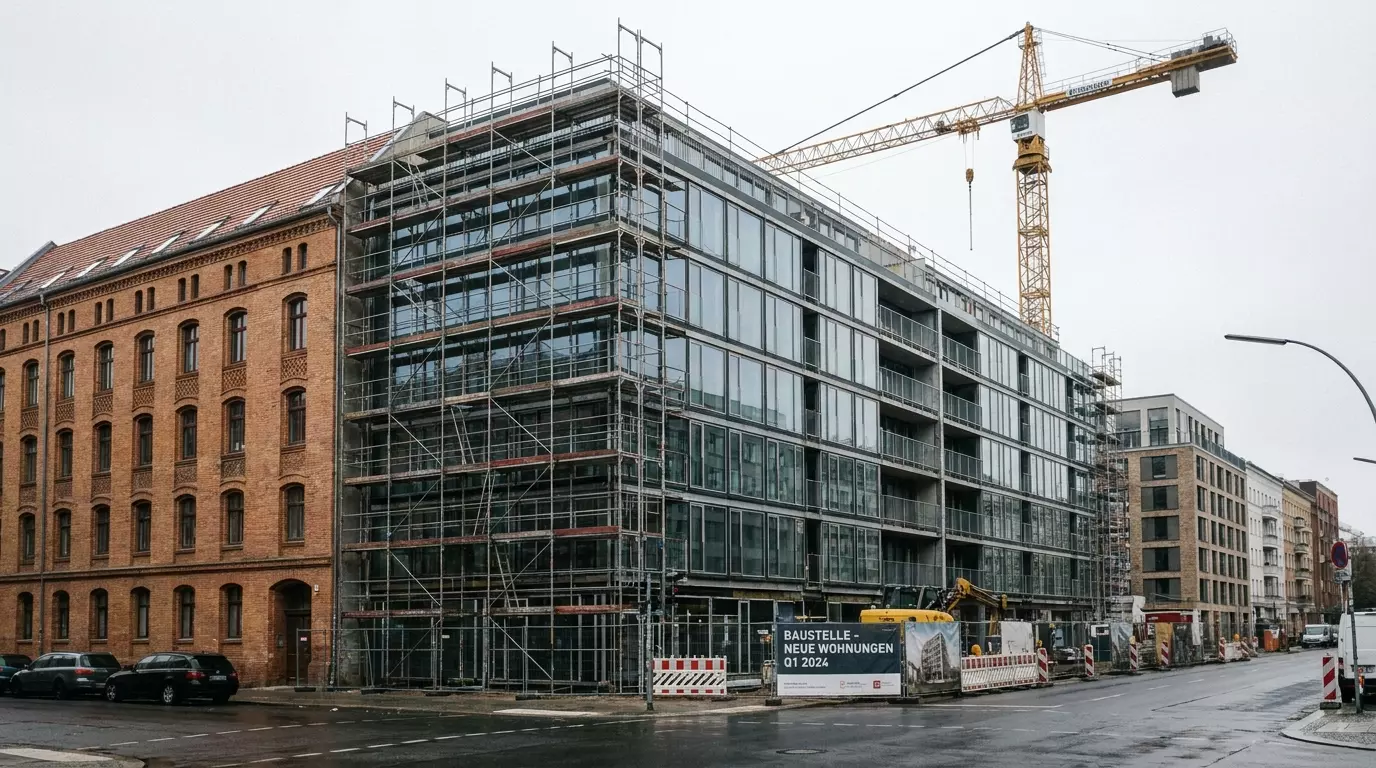
German Property Market Recovery: Prices Climb 2.2% in Q1 2026
After several years of declining values and cautious buyers, Germany’s housing market is finally showing real signs of life. Fresh data reveals that residential property prices across the country rose by 2.2% in the first quarter of 2026, marking another encouraging step in what’s becoming a clear pattern of recovery. The shift comes as borrowing conditions loosen and pent-up demand finally begins to translate into actual transactions.
For anyone who’s been watching German real estate over the past few years, this turnaround feels long overdue. The market endured one of its sharpest corrections in modern memory, and now buyers, sellers, and investors are recalibrating their expectations. Let’s take a closer look at what’s behind these numbers and what they mean for the road ahead.
German Real Estate Bounces Back After a Rough Patch
The recent figures from Reuters confirm something property watchers have been anticipating for months: the German housing market has officially turned a corner. The 2.2% quarterly increase, reported by Germany’s Federal Statistical Office (Destatis), continues a recovery trend that started gaining momentum in late 2025. Compared to the same period last year, prices are also showing positive year-over-year growth, which marks a significant shift from the deep declines seen throughout 2023 and much of 2024.
To put the recovery in context, it’s worth remembering just how steep the downturn was. German property values fell by record amounts during the European Central Bank’s aggressive rate-hiking cycle, with some quarters showing the worst price drops since records began. The slow climb back has been driven largely by stabilizing economic conditions, improved consumer confidence, and a noticeable thaw in lending activity. Major cities like Berlin, Munich, Hamburg, and Frankfurt are leading the rebound, though regional variations remain pronounced.
What’s Driving the 2.2% Jump in Property Prices
Several interconnected factors are fueling this resurgence, and understanding them helps explain why the recovery is gaining traction now rather than earlier. The primary drivers include:
- Lower mortgage rates: Financing costs have eased substantially compared to their 2023 peaks
- Returning buyer confidence: Households that delayed purchases are now re-entering the market
- Limited new construction: A shortage of new builds is tightening supply
- Stable employment: Germany’s labor market remains relatively resilient
- Inflation cooling: Reduced cost-of-living pressures free up household budgets
Construction activity has been a particularly important piece of the puzzle. Germany has been falling well short of its housing targets for years, with completions dropping significantly below the government’s stated goal of 400,000 new units annually. According to industry data from the German Property Federation (ZIA), the supply-demand imbalance has created upward pressure on prices, especially in urban centers where rental markets are already tight. When you combine constrained supply with returning demand, price growth becomes almost inevitable.
Buyers Return as Interest Rates Begin to Ease
The European Central Bank’s pivot toward looser monetary policy has been the single most important catalyst for the property market’s revival. After raising rates to combat post-pandemic inflation, the ECB began cutting rates throughout 2024 and 2025, gradually making mortgages more affordable for German households. Ten-year fixed mortgage rates, which had pushed above 4% during the peak tightening period, have now settled into a much more manageable range, encouraging fence-sitters to finally make their move.
Here’s a comparison showing how the lending environment has evolved:
| Period | Average 10-Year Mortgage Rate | Market Sentiment |
|---|---|---|
| Early 2022 | ~1.0% | Buying frenzy |
| Late 2023 | ~4.2% | Frozen market |
| Mid 2025 | ~3.3% | Cautious recovery |
| Q1 2026 | ~3.0% | Active rebound |
Banks are also showing more willingness to lend. Mortgage origination volumes have picked up noticeably, and major German lenders have reported stronger pipelines for residential financing. Real estate brokers across the country are seeing more foot traffic at viewings, faster decision-making from buyers, and even occasional bidding situations in desirable neighborhoods, all of which were nearly unthinkable just 18 months ago.
What This Recovery Means for Investors and Homeowners
For property investors, the current environment presents both opportunity and complexity. On one hand, the recovery’s early stage suggests there’s still upside potential before prices fully normalize. On the other hand, the recovery is uneven, with prime urban locations bouncing back faster than peripheral or rural areas. Investors who waited out the downturn now face the classic dilemma: jump in before prices climb further, or wait for a clearer picture to emerge?
Here are the key considerations for different market participants:
- First-time buyers: Lower rates improve affordability, but rising prices may erode some of those gains
- Existing homeowners: Property values are recovering, which strengthens household balance sheets
- Buy-to-let investors: Rental yields remain attractive given the supply shortage
- Commercial real estate players: Residential strength may signal broader market stabilization
- International investors: Germany’s relative stability continues to attract foreign capital
Homeowners who purchased near the market peak in 2021 or 2022 may still be looking at paper losses, but the trajectory is finally pointing in the right direction. For those considering selling, the improved liquidity in the market means transactions are closing faster and with fewer concessions than during the depths of the downturn. According to analysis from Bundesbank, the financial stability risks that emerged during the price correction have eased significantly, suggesting the recovery rests on relatively solid foundations rather than speculative excess.
That said, this isn’t a return to the runaway growth of the 2010s. Most analysts expect a more measured pace of appreciation going forward, with annual gains likely settling into mid-single-digit territory rather than the double-digit jumps seen during the pre-pandemic boom. Demographic trends, energy efficiency requirements, and ongoing affordability concerns will all act as natural brakes on the market.
In Short
Germany’s property market has decisively turned the corner, with Q1 2026 prices rising 2.2% and confirming the recovery that began taking shape last year. Lower interest rates, returning buyer confidence, and persistent supply shortages are working together to push values higher across most regions, though urban centers continue to lead the way. While the rebound is encouraging, it represents a normalization rather than a return to overheated growth, which is arguably healthier for long-term market stability. Buyers, sellers, and investors should all view this as a transitional moment where strategic decisions made now could pay off considerably as the recovery matures.
Frequently Asked Questions
How much did German property prices rise in Q1 2026?
Residential property prices in Germany increased by 2.2% in the first quarter of 2026 compared to the previous quarter, continuing a recovery trend that began in late 2025.
What caused the German property market downturn?
The downturn was primarily driven by the European Central Bank’s aggressive interest rate hikes between 2022 and 2023, which dramatically increased mortgage costs and froze buyer activity. Inflation and economic uncertainty added further pressure.
Are German house prices expected to keep rising?
Most analysts expect continued price growth throughout 2026, though at a moderate pace. Factors supporting further increases include limited new construction, easing mortgage rates, and pent-up buyer demand, though affordability constraints may limit how fast prices can climb.
Which German cities are seeing the strongest recovery?
Major urban centers including Berlin, Munich, Hamburg, and Frankfurt are leading the recovery, with prime locations within these cities experiencing the most consistent price gains. Smaller cities and rural areas are recovering more slowly.
Is now a good time to buy property in Germany?
This depends heavily on individual circumstances, but the combination of lower mortgage rates than peak 2023 levels and prices still below their 2022 highs creates a potentially favorable window. However, buyers should consider their long-term plans and local market conditions carefully.
How does Germany compare to other European property markets?
Germany experienced one of the sharpest corrections in Europe but is now recovering alongside markets like France and the Netherlands. The UK and Southern European markets have followed somewhat different trajectories due to varying economic conditions and policy responses.

Join The Discussion