

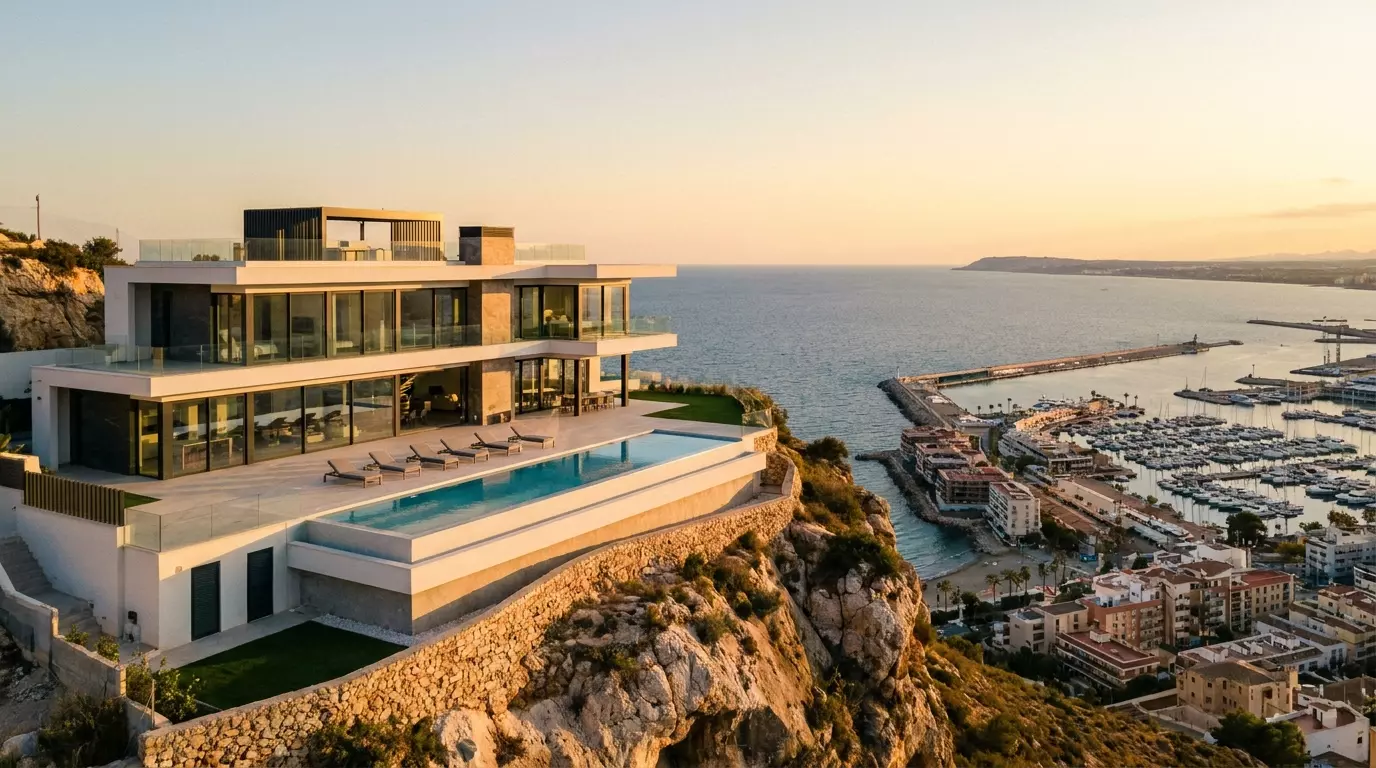
Alicante’s Luxury Property Boom: How the Costa Blanca Became Spain’s Third-Largest High-End Market
The Spanish luxury real estate landscape is shifting in ways few predicted just a couple of years ago. While Madrid and Barcelona continue to dominate the top tiers, a new contender has firmly planted its flag in third place. Alicante, long beloved by sun-seeking holidaymakers and expat retirees, has officially leapfrogged Marbella to claim its spot among Spain’s most active luxury property markets. The numbers tell a compelling story of international wealth flowing into the Costa Blanca, transforming both the coastline and the wider regional economy.
Alicante Overtakes Marbella in Luxury Property Rankings
Alicante has officially surpassed Marbella to become Spain’s third-largest luxury property market, trailing only Madrid and Barcelona. This represents a notable reshuffling of the country’s prime real estate hierarchy, with the Costa Blanca province now accounting for a significant share of high-end transactions across the nation. The latest figures show that luxury property sales in Alicante have climbed steadily over the past 24 months, with the region recording double-digit growth where many traditional hotspots have plateaued.
What makes this shift particularly remarkable is the speed at which it has occurred. Marbella has historically been synonymous with Spanish luxury, drawing celebrities, royalty, and ultra-high-net-worth individuals for decades. Yet Alicante’s combination of competitive pricing, modern developments, and superior infrastructure investment has tipped the scales. Buyers who once considered the Costa del Sol the only serious option for prestige property are now redirecting their attention eastward, drawn by the promise of better value without sacrificing lifestyle quality.
What’s Driving the Surge of High-End Buyers to the Coast
Several converging factors explain why affluent purchasers are flocking to Alicante. The province offers a rare blend of advantages that few competing destinations can match, and these benefits are being amplified by a global environment where buyers increasingly prioritize lifestyle, security, and value retention.
Key reasons behind the luxury influx include:
- Price advantage — Premium properties in Alicante typically cost 30 to 40 percent less per square meter than comparable homes in Marbella or Mallorca.
- Climate consistency — The region boasts more than 300 days of sunshine annually, making it ideal for year-round living rather than seasonal use.
- Infrastructure upgrades — Recent investment in Alicante-Elche Airport has expanded direct connections to major European cities.
- Healthcare quality — The province ranks among Spain’s top areas for both public and private healthcare facilities.
- Golf and marine offerings — Over 20 championship golf courses and several world-class marinas cater directly to luxury lifestyles.
Beyond the practical considerations, there’s a clear cultural pull. According to recent Knight Frank wealth reports, buyers are increasingly seeking secondary residences in destinations that combine authenticity with cosmopolitan amenities. Alicante delivers both, with its historic old quarters, Michelin-starred restaurants, and growing creative scene complementing the more traditional sun-and-sea appeal. The province has effectively repositioned itself from a budget holiday destination to a sophisticated lifestyle hub.
Foreign Investors Reshape the Costa Blanca Property Scene
International buyers are the engine behind Alicante’s luxury surge, and the demographics of these purchasers reveal a fascinating diversification of demand. While British and German buyers have historically dominated the Costa Blanca market, new waves of capital are arriving from countries that previously paid little attention to the region. This widening pool of nationalities has injected fresh momentum into pricing and accelerated the development of premium projects.
The current breakdown of foreign luxury buyers in Alicante looks roughly like this:
| Nationality | Market Share | Primary Interest |
|---|---|---|
| Belgian | 18% | Coastal villas, modern builds |
| Dutch | 15% | Golf community properties |
| German | 14% | New-build apartments |
| British | 12% | Established resort areas |
| Norwegian | 9% | Frontline beach homes |
| French | 8% | Historic town properties |
| American | 6% | Luxury new developments |
| Other | 18% | Mixed portfolio |
This diversity matters because it insulates the market from shocks tied to any single economy. When Brexit reduced British purchasing power, Belgian and Dutch buyers stepped in. When Nordic currencies weakened, American and Middle Eastern buyers filled the gap. The result is a more resilient market less vulnerable to the boom-and-bust cycles that have plagued other Spanish coastal regions in past decades. Developers have responded by building properties specifically designed to international tastes, with smart-home technology, sustainable design features, and architectural styles that appeal across cultures.
Where Alicante’s Luxury Market Is Heading Through 2026
Looking ahead, the trajectory for Alicante’s luxury sector appears strongly positive, though not without challenges. Industry analysts and local developers anticipate continued growth, with several emerging hotspots within the province expected to attract particular attention. Areas like Jávea, Moraira, Altea, and the increasingly fashionable Finestrat are seeing record demand, while traditional favorites such as Benidorm’s hillside enclaves are being reinvented for premium buyers.
Forecasted trends through the remainder of 2026 include:
- Sustained price growth of approximately 6 to 8 percent annually in prime coastal locations
- Expansion of branded residences, with several international hotel groups planning luxury developments
- Increased demand for sustainable properties featuring solar integration and water-efficient design
- Growth in ultra-prime segment (properties above 5 million euros) outpacing the general luxury market
- Tighter inventory in historic towns, pushing buyers toward newly developed gated communities
The main constraint on growth will likely be supply rather than demand. Strict planning regulations along protected coastal zones limit new construction, which paradoxically supports values for existing premium stock. Buyers entering the market now are advised to act decisively, as the combination of foreign capital influx and limited inventory points to continued price firmness. That said, the market remains far from overheated by international standards, suggesting room for sustainable appreciation rather than speculative bubbles.
In Short
Alicante’s rise to become Spain’s third-largest luxury property market represents one of the most significant shifts in European real estate in recent years. By overtaking Marbella, the Costa Blanca province has demonstrated that traditional luxury hierarchies can be challenged when value, lifestyle, and infrastructure align favorably. With diverse international demand, ongoing development of premium projects, and structural advantages that show no signs of fading, Alicante looks set to consolidate its newfound status well beyond 2026. For investors, lifestyle buyers, and developers alike, the message is clear: the Spanish luxury map has been redrawn, and Alicante now occupies prime territory.
Frequently Asked Questions
Why has Alicante overtaken Marbella in luxury property rankings?
Alicante offers significantly better value per square meter, improved infrastructure, a more diverse international buyer base, and lifestyle amenities that increasingly rival those of the Costa del Sol. The combination has shifted buyer preferences eastward.
Which areas in Alicante are most popular for luxury buyers?
Jávea, Moraira, Altea, Finestrat, and the hillsides above Benidorm currently lead luxury demand, along with parts of the city of Alicante itself and exclusive golf community developments throughout the province.
Are luxury property prices in Alicante still rising?
Yes. Industry forecasts suggest annual price growth of 6 to 8 percent in prime coastal locations, with the ultra-prime segment above 5 million euros growing even faster than the broader luxury market.
Who are the main international buyers in Alicante’s luxury market?
Belgian, Dutch, German, and British buyers dominate, but Norwegian, French, American, and Middle Eastern purchasers represent a growing share. This diversity makes the market more resilient than single-nationality dependent regions.
Is now a good time to invest in Alicante luxury real estate?
Most analysts view current conditions favorably due to limited supply, strong international demand, and ongoing infrastructure investment. However, individual decisions should always factor in personal financial goals and proper due diligence.


Join The Discussion