
Serbia building permits gave a mixed signal in September 2026. The count was flat against a year earlier, which would normally suggest steady supply. Yet the money behind those permits tells a different story: the anticipated value of the works fell by more than a third.
Building permits are the earliest public sign of what will eventually be for sale. They come before the cranes, the sales brochures and the handovers. For estate agents and the foreign buyers they advise, a permit release is a first look at the size, type and location of future stock. This piece goes through the September figures from the Statistical Office of the Republic of Serbia and says plainly what they can and cannot tell you.
How to read the index numbers in the release
Most of the official figures, however, are index numbers with a base of 100. An index of 100.0 means the same level as the comparison period, an index of 63.6 means 36.4% lower and an index of 119.6 means 19.6% higher.
Once you know that, the tables in the release become easy to read. Below, therefore, the plain percentages are used instead.
Permit data come from the Central Register of Integrated Procedures, administered by the Serbian Business Registers Agency under the Law on planning and construction, Official Gazette of the Republic of Serbia number 91/2025, article 8g. The statistical office publishes each monthly release on its own site, including this September 2026 release. Still, the figures are preliminary and do not cover Kosovo.
The September permit count against three benchmarks
Serbia issued 2,961 building permits in September 2026. That is the same level as September 2025, so the year-on-year change is exactly zero.
Against other benchmarks, the month looks stronger:
- 21.2% above August 2026
- 19.6% above the 2025 monthly average
- Flat against September 2025
Over the first nine months of 2026, the permit count ran 5.3% above the same nine months of 2025. So the year is ahead, while September itself did not add to that lead. The statistical office publishes the full release, and the next one is due on 15 December 2026.
Key September and nine-month index numbers
The table below pulls together the five figures that carry the story.
| Measure | Index value |
|---|---|
| Permits, September 2026 vs September 2025 | 100.0 |
| Permits, January to September 2026 vs 2025 | 105.3 |
| Dwellings planned, September 2026 vs September 2025 | 109.0 |
| Dwellings planned, January to September 2026 vs 2025 | 116.8 |
| Anticipated value of works, September 2026 vs September 2025 | 63.6 |
The first four rows point to steady or rising activity. The last row is the outlier, and it is the one that needs explaining.
What the permits cover: buildings, roads and pipes
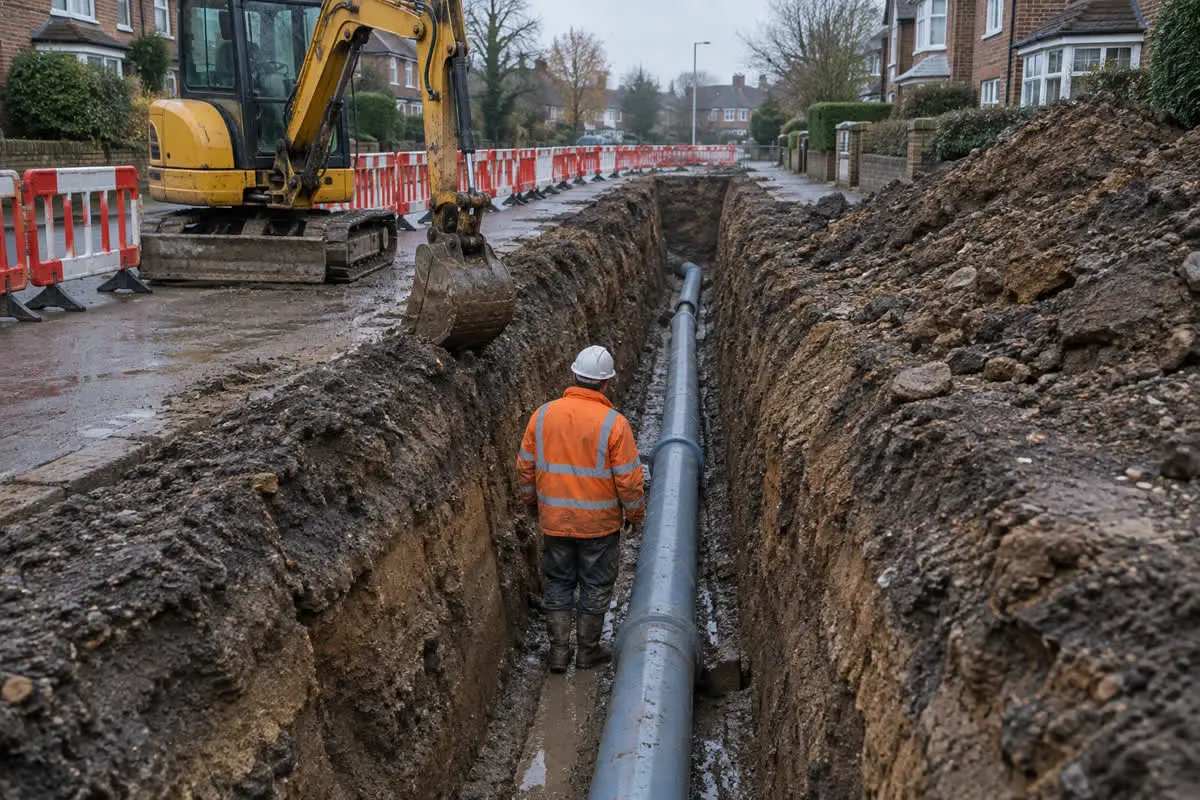
Of the permits issued in September, 83.9% related to buildings and 16.1% to civil engineering constructions. Among the building permits, 86.0% were residential and 14.0% non-residential.
Civil engineering is a different kind of work, because those permits are for infrastructure. Of those permits, 76.9% were for pipelines, communication and electric power lines. That is utility infrastructure rather than anything a buyer would live in.
For anyone following the Serbian property market, the residential share is the headline. Housing took most of the September permits.
How big the new dwellings in the pipeline will be
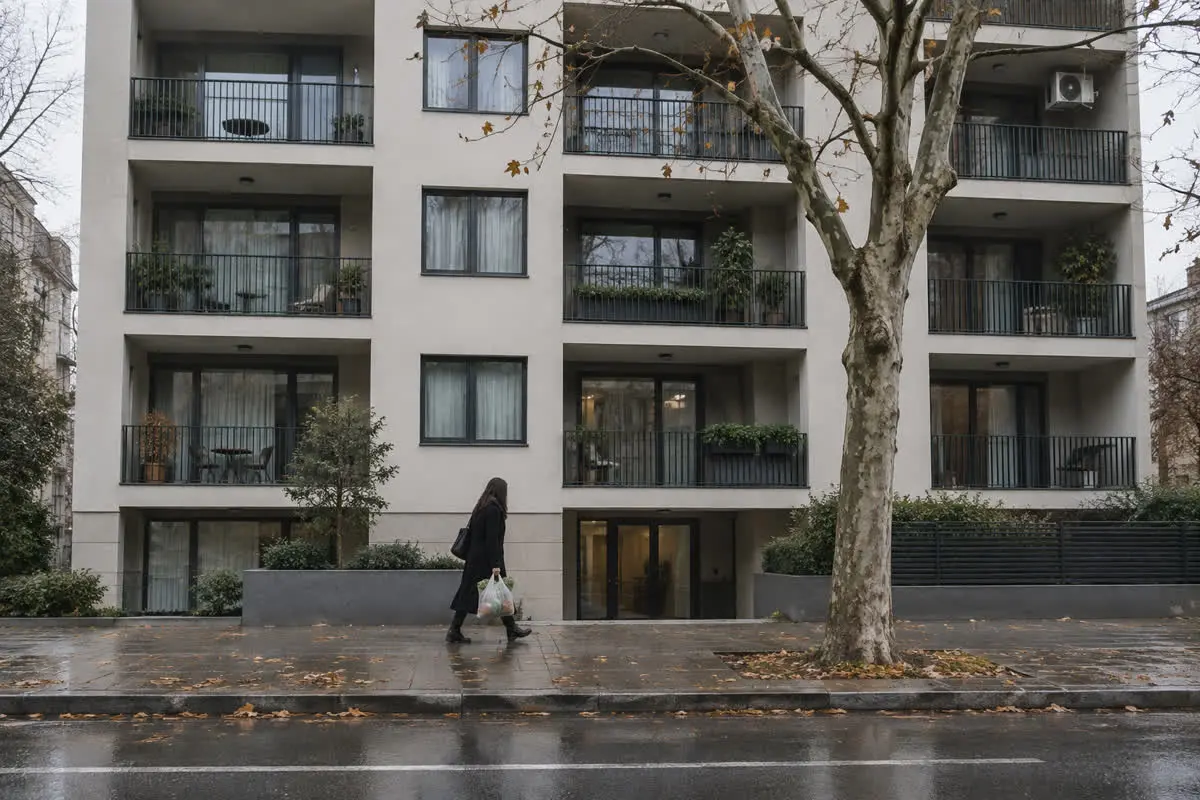
The September permits record the construction of 3,284 dwellings with an average useful floor space of 75.9 m². Building type is where the detail sits, because the two ends of the range differ sharply.
Of the dwellings in new residential buildings:
- 12.9% are in single-dwelling buildings, with an average useful floor space of 137.4 m².
- 85.8% are in buildings with three or more dwellings, with an average useful floor space of 65.5 m².
So the typical new home in the pipeline is an apartment of around 65 m² in a multi-unit block. A house of around 137 m² is a small minority. Conversely, a buyer looking for a family house will find far fewer new options than a buyer looking for a compact flat.
Where the new build lands: Belgrade dominates
By area, the statistical office expects most construction activity in Beogradska oblast, which accounts for 55.9% of the anticipated value of new construction works. The next three areas are far behind:
- Sremska oblast: 5.2%
- Juznobacka oblast: 4.6%
- Macvanska oblast: 4.4%
Every other area is at 3.5% or less. Because the anticipated value of new construction works was 88.5% of the total anticipated value of works, the regional shares describe the bulk of the money.
The concentration is striking. One area takes more than half of the value of new construction. For foreign buyers, therefore, new-build choice will be widest around the capital and thinner elsewhere.
Why permit numbers and project value diverge
The total anticipated value of works in September 2026 was 36.4% lower than in September 2025, while the number of permits was unchanged. The number of dwellings planned was 9.0% higher than a year earlier, yet 12.9% below August 2026.
Put together, the figures describe more dwellings and a lower total value, which means the value per permitted dwelling fell. A flat permit count carrying 36.4% less anticipated value points to smaller projects in September than a year earlier, and the regional shares put most of the remaining value in Belgrade. The release gives the totals only, so the project list stays out of view.
Over nine months, planned dwellings ran 16.8% above the same period of 2025. The September dip in value therefore sits inside a year of rising planned housing.
What the quarterly construction figures add
Permits show intent, whereas the construction activity release shows work already under way. In the third quarter of 2026, the value of construction works rose 22.8% at current prices and 12.7% at constant prices against the third quarter of 2025.
At constant prices, meanwhile, work on buildings rose 10.0% and work on other constructions rose 14.4%. The statistical office published the quarterly release on 10 November 2026.
So projects already under way are growing in real terms. Still, the September fall in anticipated value is a statement about new permits, not about the building sites that are already active. The euro area moved the other way in August, when building work across the single currency bloc fell 3.8% against a year earlier even as renovation work grew, as our report on the euro area construction figures sets out.
What the pipeline means for agents and buyers
For the agent and the foreign buyers they advise, the permit data answer some questions and leave others open.
What the pipeline says:
- New dwellings are mostly apartments in buildings of three or more units.
- The average new dwelling is 75.9 m², and the typical apartment block unit is 65.5 m².
- Belgrade carries 55.9% of the anticipated value, so most new stock will probably cluster around the capital.
- Planned dwellings are 16.8% higher over nine months, so the housing market is seeing continued activity.
What it does not say:
- It does not say what will happen to house prices. The release contains no price data.
- It does not say when those dwellings will be finished or offered for sale.
- It does not say how many will be sold to foreign buyers.
Permits are intent, not completions. A permit can lead to a handover within a few years or, instead, stall before work begins.
Conclusion: a flat count with a lighter value
September 2026 delivered a flat permit count, a strong comparison with August and the 2025 average, and a sharp fall in anticipated value. Over nine months, permits and planned dwellings are both ahead of last year.
For the Serbian property market, however, the useful takeaway is about shape rather than direction. The Serbia building permits figures describe supply skewed towards compact apartments and towards Belgrade. Prices are the missing half of the picture: across the EU, house prices outran incomes by 6.8% between 2015 and 2025, a gap this release does not measure for Serbia, as our reading of the EU house price figures explains. Meanwhile, the next permit release is due on 15 December 2026.
Serbia building permits: Questions and answers
How many building permits did Serbia issue in September 2026?
Serbia issued 2,961 building permits in September 2026. That is the same level as September 2025 and 21.2% above August 2026.
How many dwellings do the September permits cover?
The permits record the construction of 3,284 dwellings, with an average useful floor space of 75.9 m². That is 9.0% above September 2025 and 12.9% below August 2026.
Where does the office expect most new construction?
Beogradska oblast accounts for 55.9% of the anticipated value of new construction works. Sremska oblast follows with 5.2%, Juznobacka oblast with 4.6% and Macvanska oblast with 4.4%.
Does this release say anything about prices?
No. The release covers permits, dwellings, floor space and the anticipated value of works. It contains no price data, so it cannot be used to say whether prices are rising or falling.