

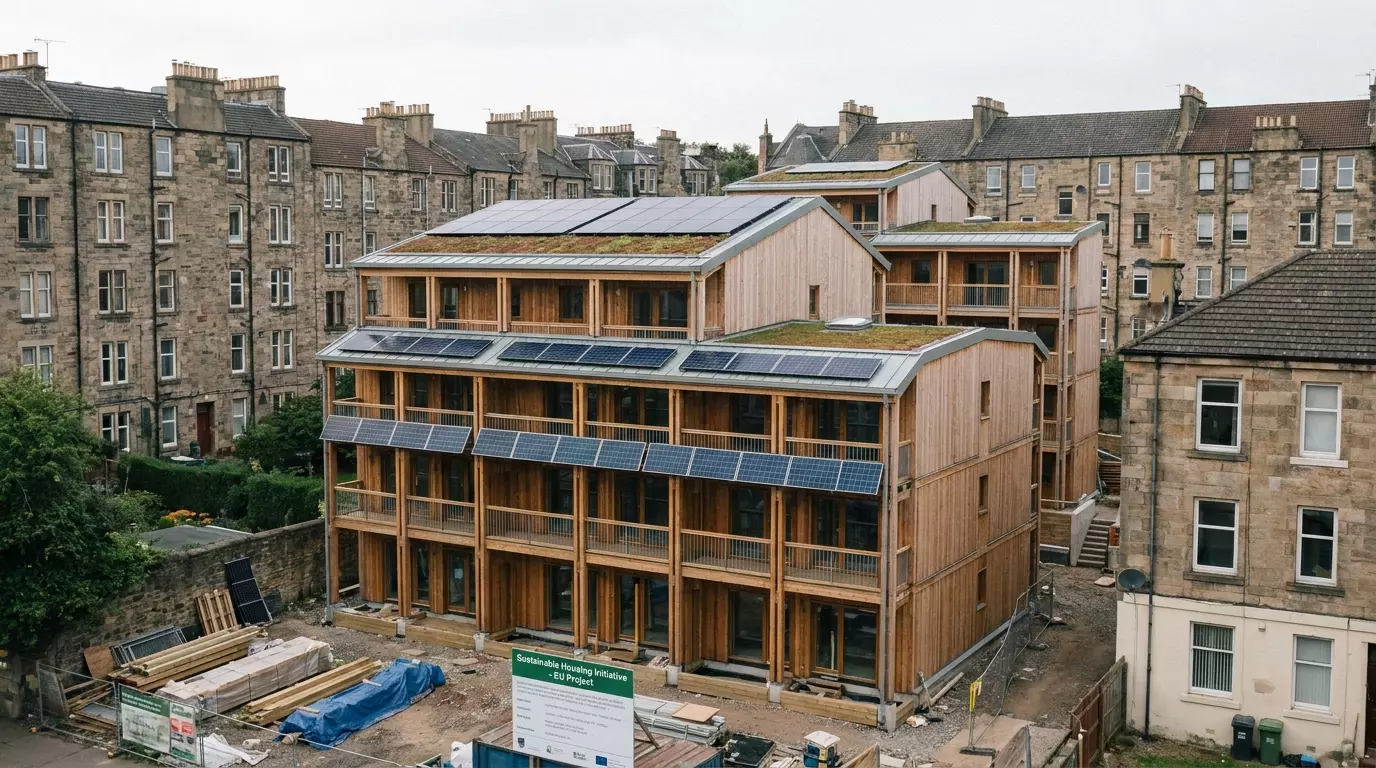
Europe’s Housing Equation: More Homes, Less CO2, Lower Costs
Europe is facing a difficult balancing act. On one side, millions of people are struggling to find affordable places to live. On the other, the continent has committed to ambitious climate targets that demand cleaner, more energy-efficient buildings. Bringing these two priorities together is one of the biggest challenges facing policymakers today, and the way they handle it will shape both economies and the environment for decades.
The good news is that these goals are not mutually exclusive. With the right mix of investment, smart regulation, and innovative construction methods, it is entirely possible to build more homes while cutting emissions and keeping costs in check. This article breaks down the housing equation Europe is trying to solve and explores what needs to happen next.
The Housing Crisis Squeezing Families Across Europe
Across the European Union, finding affordable housing has become an everyday struggle for ordinary families. Rents have climbed sharply in major cities, property prices have outpaced wages, and the supply of new homes simply has not kept up with demand. In many capitals, young people are delaying moving out, families are sharing cramped spaces, and lower-income households are being pushed to the outskirts. According to Eurostat data, housing costs now consume a disproportionate share of household budgets, particularly for renters in urban centers.
The roots of the problem run deep. Decades of underinvestment in social and affordable housing, combined with rising construction costs and complex planning rules, have created a bottleneck. The European Commission has acknowledged that housing affordability is now a continent-wide concern rather than a localized one. When you add in inflation, higher interest rates, and supply chain disruptions affecting building materials, it becomes clear why so many families feel squeezed from every direction. The pressure is not just financial; it affects quality of life, mobility, and social stability.
Why Building Greener Homes Doesn’t Have to Cost More
A common misconception is that environmentally friendly construction automatically means higher prices. Many assume that sustainable materials, energy-efficient systems, and green certifications push costs out of reach for average buyers. While it is true that some green technologies carry higher upfront costs, the long-term picture tells a different story. Energy-efficient homes drastically reduce utility bills, require less maintenance over time, and often hold their value better than conventional properties.
The key lies in looking at the total cost of ownership rather than just the initial price tag. Consider the comparison below:
| Factor | Standard Home | Energy-Efficient Home |
|---|---|---|
| Upfront construction cost | Lower | Slightly higher |
| Monthly energy bills | Higher | Significantly lower |
| Maintenance over 20 years | Higher | Lower |
| Resale value | Stable | Often higher |
| Carbon footprint | High | Reduced |
When the savings on heating, cooling, and electricity are factored in over the lifespan of a property, green homes frequently come out ahead financially. Innovations such as prefabricated construction, modular building techniques, and improved insulation materials are also helping to bring initial costs down. As these methods scale up and become standard practice, the price gap between conventional and sustainable housing continues to narrow.
Smart Policies That Cut Emissions and Save Money
Policy plays a decisive role in making the housing equation work. Governments and EU institutions have several levers they can pull to encourage greener construction without piling extra costs onto families. Subsidies for energy renovations, tax incentives for sustainable building, and streamlined permitting for eco-friendly projects can all accelerate progress. The EU’s broader climate framework, including the European Green Deal, sets the direction, but the real impact depends on how member states implement these goals locally.
Some of the most effective approaches combine financial support with clear standards. Here are a few policy tools that have shown promise:
- Renovation grants that help homeowners upgrade insulation, windows, and heating systems.
- Low-interest green loans that make sustainable upgrades accessible to middle-income households.
- Building code reforms that require new construction to meet high energy standards from the start.
- Density and zoning changes that allow more homes to be built in well-connected areas.
- Public-private partnerships that pool resources for large-scale affordable, green housing projects.
When these measures are coordinated, they create a virtuous cycle. More efficient buildings mean lower energy demand, which reduces emissions and eases pressure on the power grid. At the same time, families save money, and the construction sector gains a steady pipeline of work. The challenge is ensuring these policies are designed to benefit those who need help most, rather than only wealthier buyers who can already afford premium green homes.
What Europe Needs to Do Before Time Runs Out
Time is not on Europe’s side. Climate deadlines are approaching fast, and the housing shortage is worsening year by year. To meet both challenges, the continent needs to dramatically increase the pace of construction while ensuring new and existing buildings meet strict environmental standards. This requires a shift in mindset, treating housing and climate policy as two sides of the same coin rather than competing priorities. Coordination between national governments, local authorities, and the private sector will be essential.
Several concrete steps stand out as priorities for the years ahead:
- Scale up renovation programs to upgrade the millions of older, energy-hungry buildings across the continent.
- Invest in skilled labor to address the shortage of workers trained in green construction techniques.
- Simplify bureaucracy so that approval processes do not delay urgently needed projects.
- Direct funding toward affordable housing specifically, not just market-rate developments.
- Embrace innovation in materials and methods that lower both costs and emissions.
The countries that act decisively will reap significant rewards. They will reduce their dependence on imported energy, lower household costs, create jobs, and move closer to their climate targets all at once. Those that hesitate risk deepening the affordability crisis and falling behind on emissions goals. The path forward demands bold leadership, sustained investment, and a willingness to rethink how Europe builds and lives. The tools and knowledge already exist; what is needed now is the political will to put them into action at scale.
In Short
Europe’s housing equation is complex, but it is solvable. The continent does not have to choose between affordable homes and a cleaner environment. By embracing energy-efficient construction, supporting households with smart financial incentives, and reforming outdated policies, governments can deliver more housing, lower emissions, and reduced living costs at the same time. The evidence shows that green homes pay off over their lifetime, and that well-designed policy can make these benefits accessible to everyone, not just the wealthy.
The window for action is narrowing, however. With climate deadlines looming and affordability pressures mounting, Europe must move quickly and decisively. Coordinated effort across governments, industry, and communities will determine whether the continent successfully balances these competing demands. The reward for getting it right is enormous: stronger economies, healthier communities, and a more sustainable future for generations to come.
Frequently Asked Questions
Does building energy-efficient homes really save money?
Yes. While the upfront cost of green homes can be slightly higher, the long-term savings on energy bills, maintenance, and resale value typically outweigh the initial investment. Over a property’s lifetime, efficient homes are often cheaper to own.
Why is housing so unaffordable in Europe right now?
Several factors combine to create the crisis, including decades of underinvestment in affordable housing, rising construction costs, complex planning rules, higher interest rates, and demand outpacing supply, especially in major cities.
What is the European Green Deal’s role in housing?
The European Green Deal sets the EU’s overall climate strategy, including targets for reducing building emissions. It guides national policies on energy efficiency, renovations, and sustainable construction standards.
Can older buildings be made more energy efficient?
Absolutely. Renovation programs that improve insulation, upgrade windows, and install efficient heating systems can significantly cut energy use in existing buildings. This is one of the most impactful steps Europe can take.
What can governments do to make green housing affordable?
Governments can offer renovation grants, low-interest green loans, tax incentives, building code reforms, and zoning changes. Combining financial support with clear standards helps make sustainable homes accessible to more families.

Join The Discussion