

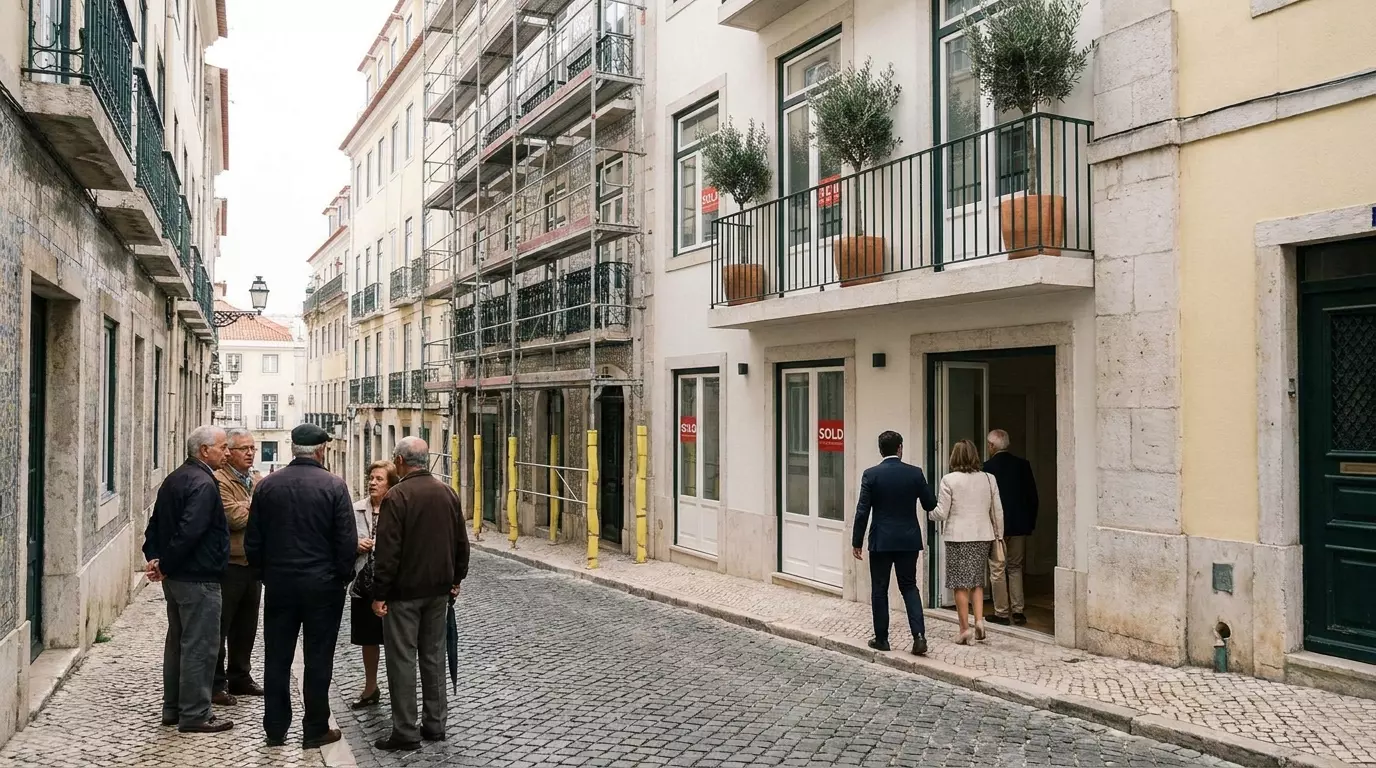
Portugal’s Property Boom Forces Major Golden Visa Overhaul
Portugal has long been a magnet for international investors, retirees, and digital nomads chasing sun-drenched lifestyles and tax incentives. But the country’s red-hot housing market is now forcing officials to take a hard look at one of its most controversial policies: the Golden Visa programme. With locals being priced out of their own cities and rental costs climbing at alarming rates, the government is preparing to apply the brakes on a scheme that has poured billions into the economy but left many residents struggling to find affordable homes.
Lisbon Housing Crisis Pushes Government to Rethink Visas
The Portuguese capital is at the epicentre of a housing affordability storm that has been brewing for several years. According to recent reporting from Portugal Resident, property prices in Lisbon have surged so dramatically that the average citizen now finds it nearly impossible to purchase a home in the city centre. The government, led by Prime Minister António Costa, is openly discussing measures to cool the overheated market, including significant restrictions on the Golden Visa programme that has attracted wealthy foreign buyers since its launch in 2012.
What makes this moment particularly significant is the shift in political tone. For years, Portuguese authorities defended the Golden Visa as an economic lifeline, especially after the financial crisis. Now, with rents in Lisbon climbing by double digits annually and middle-class families being pushed to suburbs and satellite towns, the policy is being reframed as part of the problem rather than the solution. Officials at the Bank of Portugal have repeatedly warned that the property sector shows clear signs of overvaluation, adding pressure on lawmakers to act decisively.
Why Foreign Buyers Are Driving Up Portuguese Home Prices
The Golden Visa scheme allowed non-EU nationals to obtain Portuguese residency by investing a minimum of €500.000 in real estate, with reduced thresholds available for properties in low-density or rehabilitation zones. Since its inception, the programme has generated more than €6 billion in investment, with buyers predominantly coming from China, Brazil, the United States, South Africa, and Turkey. Lisbon and Porto, along with parts of the Algarve, became the most popular destinations, with luxury apartments and renovated historic buildings being snapped up at record pace.
The ripple effect on local markets has been profound. When investors purchase high-end properties at premium prices, the surrounding market adjusts upward, pricing out first-time Portuguese buyers and young professionals. A report from Reuters highlighted that average property prices in Portugal increased by over 18% in a single year, one of the steepest rises across the European Union. The combination of foreign capital, short-term rental conversions through platforms like Airbnb, and limited new construction has created a perfect storm for affordability.
Key factors driving the price surge include:
- Limited housing supply in major urban centres, particularly Lisbon and Porto
- Tax incentives for non-habitual residents that attracted retirees and remote workers
- Tourism-driven demand converting residential units into short-term rentals
- Foreign investment concentration in specific neighbourhoods and luxury segments
- Slow construction permits that have failed to keep pace with demand
What Proposed Golden Visa Changes Mean for Investors
The government’s proposed reforms target the real estate component of the Golden Visa directly. Under the new framework being discussed, property purchases in high-density areas such as Lisbon, Porto, and coastal Algarve regions would no longer qualify for residency benefits. Investors would instead be steered toward interior regions, the Azores, and Madeira, where development is encouraged and population decline remains a concern. Alternative qualifying investments may include capital transfers, job creation, scientific research contributions, and cultural heritage preservation.
For prospective investors, this represents a fundamental shift in strategy. Those who were planning to acquire Lisbon apartments as a path to EU residency must now reconsider their approach. Below is a comparison of how the Golden Visa programme has evolved:
| Feature | Original Programme (2012) | Proposed Changes |
|---|---|---|
| Minimum property investment | €500.000 | Restricted in major cities |
| Eligible locations | Nationwide | Interior, Azores, Madeira only |
| Capital transfer option | €1 million | Likely increased threshold |
| Job creation route | 10 jobs | Maintained or expanded |
| Processing time | 6-8 months | Expected to lengthen |
| Family inclusion | Yes | Yes |
Investors who already hold Golden Visas should not be affected by retroactive changes, but those in the application pipeline may face transitional rules. Legal advisors across Portugal have reported a surge in inquiries from clients trying to complete their investments before any new legislation takes effect.
Local Residents React to Skyrocketing Property Market Costs
The frustration among Portuguese citizens has reached a boiling point in recent years. Public demonstrations against unaffordable housing have drawn tens of thousands of participants in Lisbon, with protesters demanding government intervention to protect residents from being displaced. The minimum wage in Portugal remains among the lowest in Western Europe, while property prices in desirable neighbourhoods have climbed to levels comparable with Paris or Barcelona. The disconnect between local incomes and housing costs has become impossible to ignore.
Younger generations have been hit particularly hard. Many Portuguese in their twenties and thirties continue living with their parents well into adulthood, simply because they cannot afford rent in the cities where jobs are concentrated. Teachers, nurses, and public servants have spoken out about being forced to commute long distances or leave the profession entirely. Community groups and tenant associations are pushing for:
- Stricter regulation of short-term rentals
- Expanded public housing construction
- Rent caps in pressured zones
- Tax penalties on vacant investment properties
- Complete suspension of real estate Golden Visas in urban areas
The government appears to be listening, though critics argue the proposed reforms come years too late and may not go far enough to reverse the damage already done to local communities.
Conclusion: In Short
Portugal stands at a crossroads where economic policy must be reconciled with social wellbeing. The Golden Visa programme delivered substantial foreign investment during a critical period of recovery, but the unintended consequences for ordinary Portuguese residents have grown too significant to ignore. As the government moves toward throttling back the scheme, the broader question becomes whether these changes will arrive in time to restore balance to a market that has spiralled well beyond the reach of average citizens. Investors, expats, and locals alike will be watching closely as Portugal attempts to redefine its relationship with foreign capital while protecting the affordability of its cities.
Frequently Asked Questions
Q: Will current Golden Visa holders lose their residency status?
No. The proposed changes are not expected to be retroactive. Existing Golden Visa holders should retain their residency rights and renewal pathways under the terms in place when they applied.
Q: Can foreign buyers still purchase property in Lisbon?
Yes, foreign nationals can still buy property anywhere in Portugal. The proposed changes only affect whether such purchases qualify for Golden Visa residency benefits, not the right to own real estate.
Q: Which Portuguese regions will remain eligible for Golden Visa property investment?
Interior regions of mainland Portugal, along with the Azores and Madeira archipelagos, are expected to remain eligible. These areas have lower population density and welcome development to counter demographic decline.
Q: How much has Portuguese property appreciated due to Golden Visas?
While the Golden Visa is not the sole cause, studies suggest that property prices in affected urban areas have risen significantly faster than national averages, with some Lisbon neighbourhoods seeing increases exceeding 100% over the past decade.
Q: Are there alternative residency routes for investors in Portugal?
Yes. Portugal offers the D7 visa for passive income holders, the D8 digital nomad visa, and various entrepreneurship pathways. These options may become more attractive as the Golden Visa programme tightens.
Q: When will the new Golden Visa rules take effect?
The exact timeline remains uncertain, as the proposals must pass through parliamentary debate and approval. Industry observers expect implementation within the next legislative cycle, though investors are advised to consult licensed Portuguese immigration lawyers for current status.




Join The Discussion