

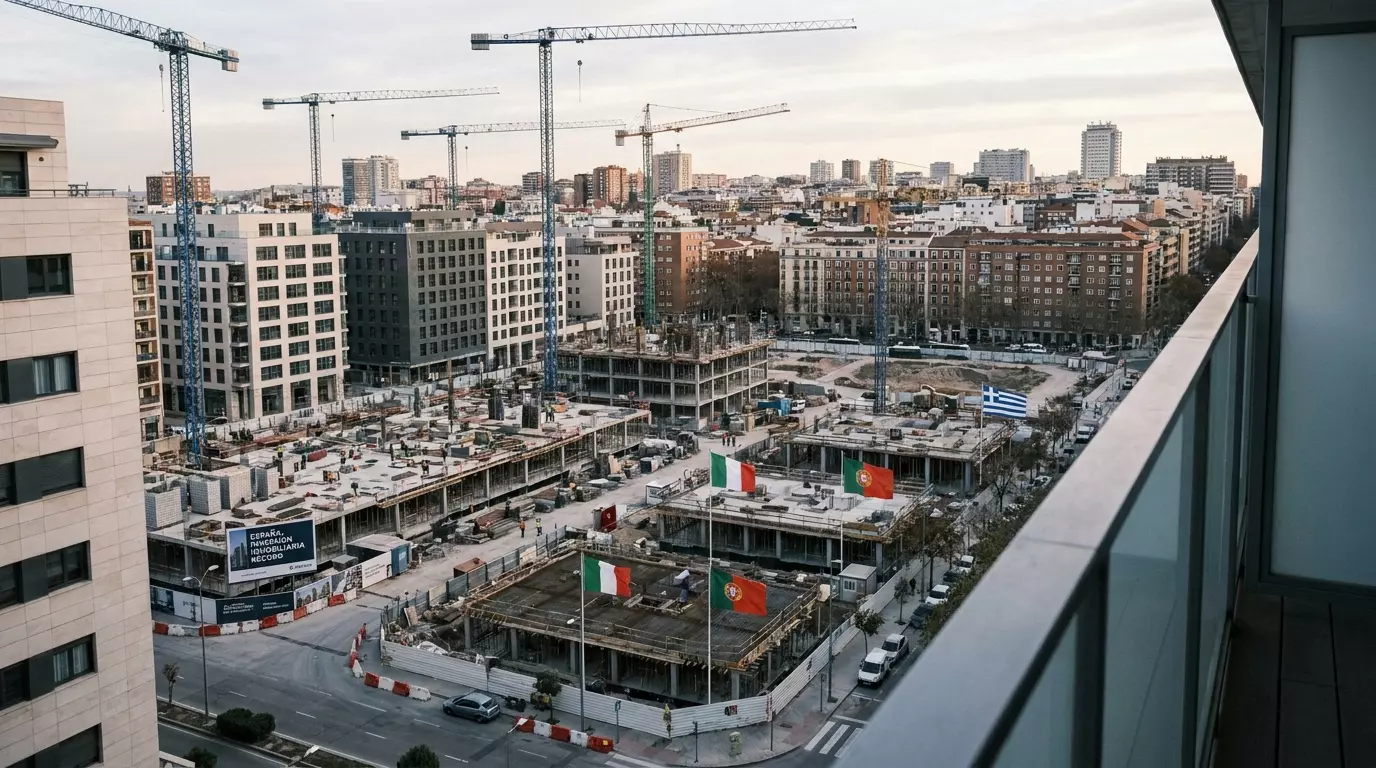
Spain Becomes the Property Heavyweight of Southern Europe
Southern Europe’s real estate map is being redrawn, and Spain is now sitting firmly at the top. While neighbouring countries like Italy, Portugal, and Greece continue to attract attention from international investors, none have matched the sheer scale of capital flowing into Spanish bricks and mortar. The latest figures paint a striking picture of a market that has not only recovered from previous downturns but is now setting the pace for the entire region.
In this article, we take a closer look at why Spain has surged ahead, what kind of investment volumes we are talking about, and how the country stacks up against its Mediterranean peers in 2024 and beyond.
Spain Pulls Ahead as Southern Europe’s Property Leader
Spain has officially claimed the crown as the property investment heavyweight of southern Europe. According to recent market analysis reported by Spanienpress, the country has become the undisputed leader in real estate capital flows, attracting more institutional and private investment than any other nation in the southern part of the continent. This is no small feat, given the historical strength of markets like Milan, Lisbon, and Athens.
What makes the Spanish performance particularly impressive is the breadth of activity. Investment is not concentrated in just one sector or city. Major capital is moving into residential developments, hotel chains, logistics hubs, retail spaces, and office buildings, with Madrid and Barcelona acting as the twin engines. The result is a property ecosystem that feels resilient, diversified, and increasingly attractive to foreign buyers seeking long-term returns in a stable European economy.
Record-Breaking Investment Figures Leave Neighbours Behind
The numbers behind Spain’s property boom are nothing short of remarkable. Real estate investment in Spain has reached record-breaking levels, dwarfing the totals recorded in Italy, Portugal, and Greece combined for certain asset classes. International capital, particularly from the United States, the United Kingdom, Germany, and Latin America, has poured into Spanish projects at a pace not seen since before the pandemic.
Here is a snapshot of where the money is going:
- Hotel sector: Spain led Europe in hotel investment volume, with iconic transactions involving major chains
- Residential build-to-rent: Madrid and Barcelona dominate the pipeline
- Logistics and warehousing: Driven by e-commerce growth across Iberia
- Prime office space: Recovering strongly in central business districts
- Retail centres: Renewed interest from yield-hungry funds
According to industry data published by sources like Savills and JLL, Spain accounted for a significant share of all southern European commercial real estate transactions in the most recent reporting period, well ahead of its closest competitors.
What’s Driving the Surge in Spanish Real Estate Deals
Several factors are working together to fuel the explosion of investment activity in Spain. Understanding these drivers helps explain why the country has pulled ahead of its neighbours so decisively.
Economic Stability and Growth
Spain’s economy has outperformed many European peers, with GDP growth figures that have impressed analysts. Tourism, which contributes heavily to the country’s prosperity, has rebounded to record levels, with over 85 million international visitors arriving in a single year. This strong macroeconomic backdrop gives investors confidence that property values will hold or rise.
In addition, inflation has cooled faster in Spain than in some northern European economies, while the labour market has continued to add jobs. These conditions create a positive feedback loop where employment growth fuels housing demand, which in turn attracts more developers and investors.
Attractive Yields and Pricing
Compared to prime markets in London, Paris, or Frankfurt, Spanish real estate still offers more attractive entry prices and higher rental yields. Investors looking for value in a maturing European market find Madrid, Barcelona, Valencia, Malaga, and the Balearic Islands particularly compelling.
Key reasons capital is flowing in include:
- Higher yields than core western European cities
- Strong rental demand from both locals and international tenants
- Currency stability within the eurozone
- Growing digital nomad population boosting urban rental markets
- Golden visa legacy effects still influencing investor sentiment
Infrastructure and Lifestyle Appeal
Beyond pure financials, Spain offers a quality of life that few European countries can match. Excellent transport connections, world-class healthcare, a Mediterranean climate, and cultural richness all combine to make Spanish cities and coastal regions magnets for both lifestyle buyers and institutional capital seeking properties with strong end-user demand.
The country has also invested heavily in modernising its airports, high-speed rail networks, and digital infrastructure. These improvements make secondary cities like Seville, Bilbao, and Alicante more accessible and attractive to investors who previously focused only on the two largest metropolitan areas.
How Spain Compares to Italy, Portugal, and Greece Now
When you place Spain side by side with its Mediterranean neighbours, the gap becomes clear. Each country has its strengths, but Spain currently leads on most metrics that matter to serious investors.
Comparison Table: Southern European Property Markets
| Country | Investment Volume Trend | Key Strengths | Main Challenges |
|---|---|---|---|
| Spain | Record highs | Diversified sectors, large scale, strong yields | Rising prices in prime cities |
| Italy | Moderate growth | Luxury and heritage assets | Bureaucracy, slower transactions |
| Portugal | Cooling slightly | Lisbon and Porto appeal | Golden visa changes, smaller market |
| Greece | Steady recovery | Tourism-driven coastal demand | Limited scale, banking legacy issues |
Italy: The Luxury Niche
Italy continues to attract investment, particularly in luxury residential, hospitality, and historic properties. Milan remains a serious financial hub for office and retail capital. However, total volumes are smaller than Spain’s, and Italy’s complex regulatory environment can slow down major transactions. Cities like Rome and Florence draw lifestyle buyers but struggle to compete with the institutional scale seen in Madrid.
Portugal: A Smaller but Distinct Market
Portugal had a remarkable run during the late 2010s and early 2020s, fuelled by its golden visa programme and Lisbon’s growing tech scene. However, changes to the visa scheme and a smaller overall economy mean it cannot match Spain’s volume. Portugal still attracts steady interest, especially in the Algarve and Porto, but it now plays a supporting role rather than a leading one in the regional landscape.
Greece: The Comeback Story
Greece has staged an impressive recovery from its earlier financial crisis years. Athens has seen renewed investment, and Greek islands continue to attract tourism-focused property buyers. Yet the absolute scale of the Greek market remains modest, and structural challenges in financing and bureaucracy limit how quickly it can catch up to Spain.
In Short
Spain has firmly established itself as the property heavyweight of southern Europe, with record-breaking investment figures that leave Italy, Portugal, and Greece trailing in its wake. A combination of strong economic fundamentals, attractive yields, lifestyle appeal, and diversified investment sectors has made the country irresistible to both institutional and private capital. While its neighbours each have their unique strengths, none can currently match the scale, momentum, and confidence flowing through Spanish real estate.
For investors looking at southern Europe, the message is clear: Spain is no longer just one option among several. It has become the benchmark against which the entire region is measured. Whether the focus is hotels, residential build-to-rent, logistics, or prime offices, Spain offers depth and opportunity that few other Mediterranean markets can rival in 2024 and beyond.
Frequently Asked Questions
Why has Spain become the leading property market in southern Europe?
Spain combines strong GDP growth, record tourism numbers, attractive yields, and a diversified property sector that includes residential, hotel, logistics, and office assets. This breadth makes it more appealing than smaller neighbouring markets.
Which Spanish cities attract the most real estate investment?
Madrid and Barcelona lead by a wide margin, but Valencia, Malaga, Seville, Bilbao, and the Balearic Islands are also seeing significant inflows of capital from international investors.
How does Spain compare to Portugal for property investment?
Spain offers a much larger and more diversified market than Portugal. While Portugal remains attractive, especially in Lisbon and the Algarve, changes to its golden visa scheme and smaller overall scale mean it cannot match Spain’s volumes.
Is Spanish real estate still affordable compared to northern Europe?
Yes, in many cases. Cities like Madrid and Barcelona remain more affordable than London, Paris, or Frankfurt, with higher rental yields. Coastal regions and secondary cities offer even better value for entry-level investors.
What sectors are driving Spain’s record investment?
Hotels, build-to-rent residential, logistics, and prime offices are the leading sectors. Spain led Europe in hotel investment volume during the most recent reporting period, and residential remains a long-term growth engine.
Will Spain’s property boom continue?
Most analysts expect continued strength, supported by sustained tourism, demographic demand, and ongoing foreign capital interest. However, rising prices in prime locations may eventually moderate growth in certain segments.
Keywords: Spain property investment, southern Europe real estate, Spanish real estate market
5 Suggested Internal Links:
property investment heavyweight, residential build-to-rent, hotel investment volume, Madrid and Barcelona, golden visa programme



Join The Discussion