

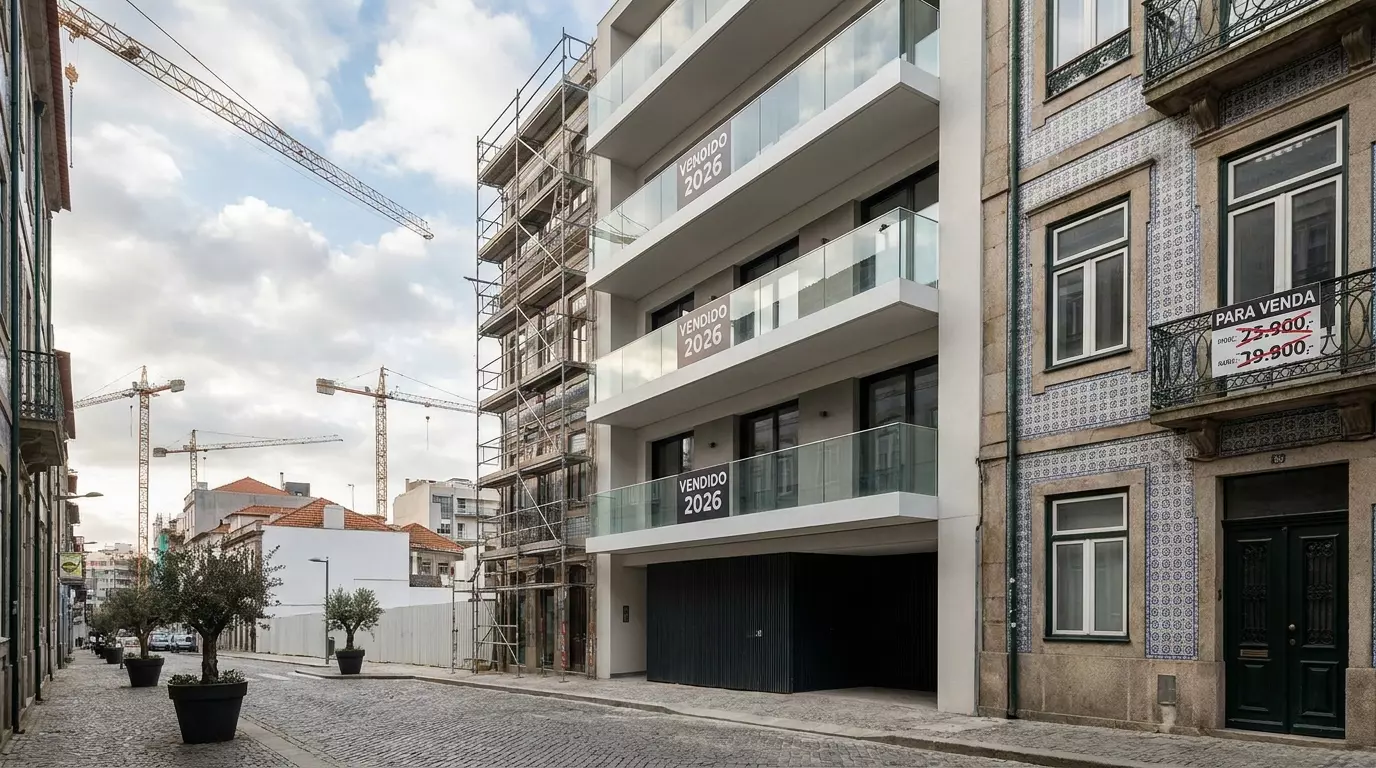
The New Reality of Portugal’s Property Market in 2026
Portugal’s real estate scene has shifted dramatically in recent months, and anyone watching the market closely can feel the change in the air. After years of relentless price hikes, foreign buyer frenzies, and bidding wars in Lisbon’s historic neighbourhoods, 2026 is shaping up to be a turning point. New tax policies, cooling demand from international investors, and a fresh wave of interest in Portugal’s quieter regions are rewriting the rules of the game.
This article takes a closer look at what’s actually happening on the ground, who’s buying, who’s stepping back, and where the smart money is heading next. Whether you’re a homeowner, a prospective buyer, or just curious about one of Europe’s most talked-about property markets, here’s what the new reality looks like.
Foreign Buyers Pull Back as New Tax Rules Bite
The wave of international buyers that flooded Portugal over the past decade has noticeably slowed in 2026. The end of the popular Non-Habitual Resident (NHR) tax regime in its original form, combined with the closure of the Golden Visa property route back in 2023, has changed the calculus for many would-be investors. Americans, Brazilians, French and British buyers, who once accounted for a significant share of premium property transactions, are now thinking twice. Higher property transfer taxes (IMT) on luxury homes and stricter rules around short-term rental licences (Alojamento Local) have added another layer of caution.
Industry data suggests that foreign demand has dropped by roughly 15 to 20 percent compared to the peaks of 2022 and 2023. Estate agents in Lisbon report that high-end listings now sit on the market for considerably longer than before, sometimes six months or more, where they used to move in weeks. According to recent Bank of Portugal housing data, the slowdown is most visible in properties priced above €750,000, the threshold where new tax measures hit hardest. The result? A market that’s finally catching its breath after years of overheating.
Lisbon and Porto Prices Finally Start to Cool Off
For the first time in nearly a decade, Lisbon and Porto are seeing genuine price corrections rather than just slower growth. Apartments in central Lisbon neighbourhoods like Príncipe Real, Chiado, and Alfama have dropped between 4 and 7 percent year-on-year, with some sellers willing to negotiate even further. Porto’s historic centre is following a similar pattern, particularly in areas that had become saturated with tourist-focused investment properties. The combination of fewer foreign buyers, higher mortgage rates earlier in the cycle, and local affordability protests has finally moved the needle.
Here’s a quick comparison of how the two cities are performing in early 2026:
| City | Avg. Price per m² (2026) | Year-on-Year Change | Days on Market |
|---|---|---|---|
| Lisbon | €5.150 | -5.2% | 95 |
| Porto | €3.420 | -4.1% | 78 |
| Cascais | €5.800 | -3.8% | 110 |
| Vila Nova de Gaia | €2.890 | -2.5% | 65 |
That said, this isn’t a crash, it’s a recalibration. Portuguese buyers, especially younger families who had been priced out for years, are slowly returning to the market. Local banks have eased some lending criteria, and with inflation cooling across the eurozone, borrowing costs have stabilised. The European Central Bank has signalled that rates should remain at current levels through most of 2026, giving buyers more confidence to commit.
Inland Regions Become the Smart Money’s New Target
While the coastal hotspots cool down, something interesting is happening further inland. Regions that were once overlooked, like the Alentejo, Beira Interior, and parts of central Portugal around Castelo Branco and Guarda, are seeing renewed interest. These areas offer something the cities can no longer provide: genuine value, space, and a pace of life that appeals to remote workers and lifestyle buyers. Property prices here can be up to 70 percent lower than equivalent homes in Lisbon, and government incentives for inland relocation are making the move even more attractive.
Several factors are driving this shift:
- Remote work flexibility has untethered buyers from major urban centres
- Government incentives including tax breaks for moving to designated low-density areas
- Improved infrastructure with new highway and rail connections
- Climate considerations as inland regions are seen as more resilient to coastal pressures
- Authentic lifestyle appeal with traditional villages, vineyards, and slower living
Towns like Évora, Castelo Branco, and Bragança are experiencing what some local agents call a “quiet boom.” Renovation projects on traditional stone houses are particularly popular among Northern European buyers looking for character properties at a fraction of Algarve prices. The Algarve itself, while still strong in the luxury segment, is also seeing buyers shift attention to less-developed areas like the Costa Vicentina and the eastern Algarve near Tavira and Olhão.
What Buyers Should Actually Expect for the Rest of 2026
So what does this all mean if you’re thinking about buying in Portugal this year? First, the days of aggressive bidding wars are largely over in most segments. Buyers now have time to think, negotiate, and conduct proper due diligence without feeling rushed. Sellers, especially those with properties that have been listed for several months, are increasingly open to offers below asking price. This is a market shift that hasn’t been seen in Portugal since around 2014.
Here’s what buyers should keep in mind for the remainder of the year:
- Negotiate confidently: Listed prices are no longer fixed in stone, especially above €500.000
- Factor in new taxes: Make sure you understand the latest IMT brackets and AIMI (wealth tax) thresholds
- Consider mortgage options: Portuguese banks are offering competitive fixed-rate products again
- Look beyond the obvious locations: Inland and lesser-known coastal towns offer better value
- Get proper legal advice: Use a Portuguese lawyer independent from the seller or agency
- Understand rental restrictions: Short-term rental licences are now harder to obtain in many areas
The fundamentals of Portugal as a destination remain strong. The country still offers safety, climate, healthcare, and quality of life that few other European nations can match. What’s changed is that the market has matured. Speculation has cooled, and buyers who do their homework are finding genuine opportunities. For anyone who watched from the sidelines as prices doubled over the past decade, 2026 might finally be the year to take a serious look.
In Short
Portugal’s property market is going through a much-needed correction, not a collapse. Foreign buyer demand has eased, prices in Lisbon and Porto are softening, and inland regions are emerging as the most exciting value plays. Tax changes have reshaped who buys and where, while local Portuguese buyers are slowly reclaiming space in a market that had become unaffordable for many. For 2026 and beyond, the message is clear: do your research, look beyond the headlines, and consider regions that don’t always make the glossy magazine spreads. The opportunities are there, but they require patience and a sharper eye than they did during the boom years.
Frequently Asked Questions
Are property prices in Portugal really dropping in 2026?
Yes, but selectively. Lisbon, Porto, and parts of the Algarve are seeing modest price declines of 3 to 7 percent, while inland regions remain stable or are slightly increasing due to growing demand.
Is the Golden Visa still available for property investment?
No. The property route for the Golden Visa was closed in 2023. Investors can still apply through other routes such as fund investments, cultural contributions, or business creation, but real estate is no longer eligible.
What’s replacing the old NHR tax regime?
A new, more limited tax incentive scheme has been introduced for specific qualified professionals, researchers, and certain skilled workers. It’s narrower than the original NHR and excludes pensioners, who were major beneficiaries before.
Where in Portugal offers the best value right now?
Inland regions like the Alentejo, Beira Interior, and the eastern Algarve are currently offering the best price-to-value ratios. Towns such as Évora, Castelo Branco, and Tavira are particularly attractive.
Can foreigners still get mortgages in Portugal?
Yes. Portuguese banks continue to lend to non-residents, typically financing 60 to 70 percent of the property value. Interest rates have stabilised in 2026, with both fixed and variable options widely available.
Is now a good time to buy in Lisbon?
For buyers who plan to live in or hold the property long-term, conditions are more favourable than they’ve been in years. Negotiation is back on the table, and competition is significantly lower than during the 2021 to 2023 peak.

Join The Discussion