

Italy has long captured the hearts of dreamers, travelers, and expats looking for a slower pace of life under the Mediterranean sun. But what if you could own a piece of that dream for just one euro? Over the past decade, dozens of small Italian municipalities have launched symbolic-price home programs to combat depopulation and breathe new life into their historic centers. As we head into 2026, these programs are more organized, more accessible, and more popular than ever. Whether you are a remote worker seeking a scenic retreat, a retiree chasing golden-hour sunsets, or an investor with an eye for renovation projects, the 1-euro house movement offers a genuinely unique path to Italian homeownership. This guide breaks down the most active villages currently accepting applications, their regional perks, and what makes each one stand out from the rest.
Italy’s Most Active One Euro House Villages
The concept of selling abandoned homes for a symbolic price originated as a creative municipal strategy to reverse decades of rural decline. Small towns, particularly across Sicily, Sardinia, Calabria, and Abruzzo, watched their populations shrink as younger generations moved to cities like Milan, Rome, and Turin. Local governments realized that giving away crumbling properties, with the condition that buyers commit to renovation within a set timeframe, could attract new residents and outside investment. The idea gained international attention around 2019 and has since expanded to dozens of municipalities across the country.
As of early 2026, roughly 30 Italian towns have active or recently relaunched 1-euro house programs. However, not all programs are created equal. Some villages have robust application processes, dedicated English-language websites, and established support networks for foreign buyers. Others are still in early stages, with limited inventory and unclear timelines. The villages highlighted in this article represent the most organized and buyer-friendly programs, based on factors like application volume, renovation support, regional incentives, and community feedback from international buyers who have already taken the plunge. According to CNN Travel, Italy’s 1-euro home schemes have generated thousands of inquiries from over 60 countries, signaling that demand shows no signs of slowing down.
Where to Buy a Home in Italy for One Euro
Choosing the right village depends on your lifestyle priorities, renovation budget, and long-term goals. Here is a closer look at the top 10 most active municipalities for 2026:
| Village | Region | Primary Selling Point |
|---|---|---|
| Sambuca di Sicilia | Sicily | Coastal proximity, vineyard landscapes |
| Mussomeli | Sicily | Large inventory, international community |
| Troina | Sicily | Mountain views, wellness tourism |
| Bivona | Sicily | Agricultural heritage, affordable living |
| Castiglione di Sicilia | Sicily | Etna views, wine culture |
| Zungoli | Campania | Medieval charm, mild climate |
| Bisaccia | Campania | Hilltop setting, Irpinia wine region |
| Nulvi | Sardinia | Rural tranquility, Sardinian culture |
| Pratola Peligna | Abruzzo | Ski access, national park proximity |
| Laurenzana | Basilicata | Untouched landscapes, low cost of living |
Sicily dominates the list for good reason. The island has the highest concentration of depopulated hill towns and the most mature programs in terms of logistics. But emerging options in Campania, Sardinia, Abruzzo, and Basilicata are gaining traction as buyers look beyond the most well-known destinations.
Each village comes with its own set of requirements. Buyers typically need to submit a renovation plan, post a security deposit ranging from 1,000 to 5,000 euros, and commit to completing renovations within one to three years. Some municipalities also require that buyers use local contractors, which helps funnel investment directly into the community. It is worth noting that the purchase price may be one euro, but total renovation costs generally range from 15,000 to 50,000 euros depending on the property’s condition and size.
Top Picks for 1-Euro Houses Across Italy
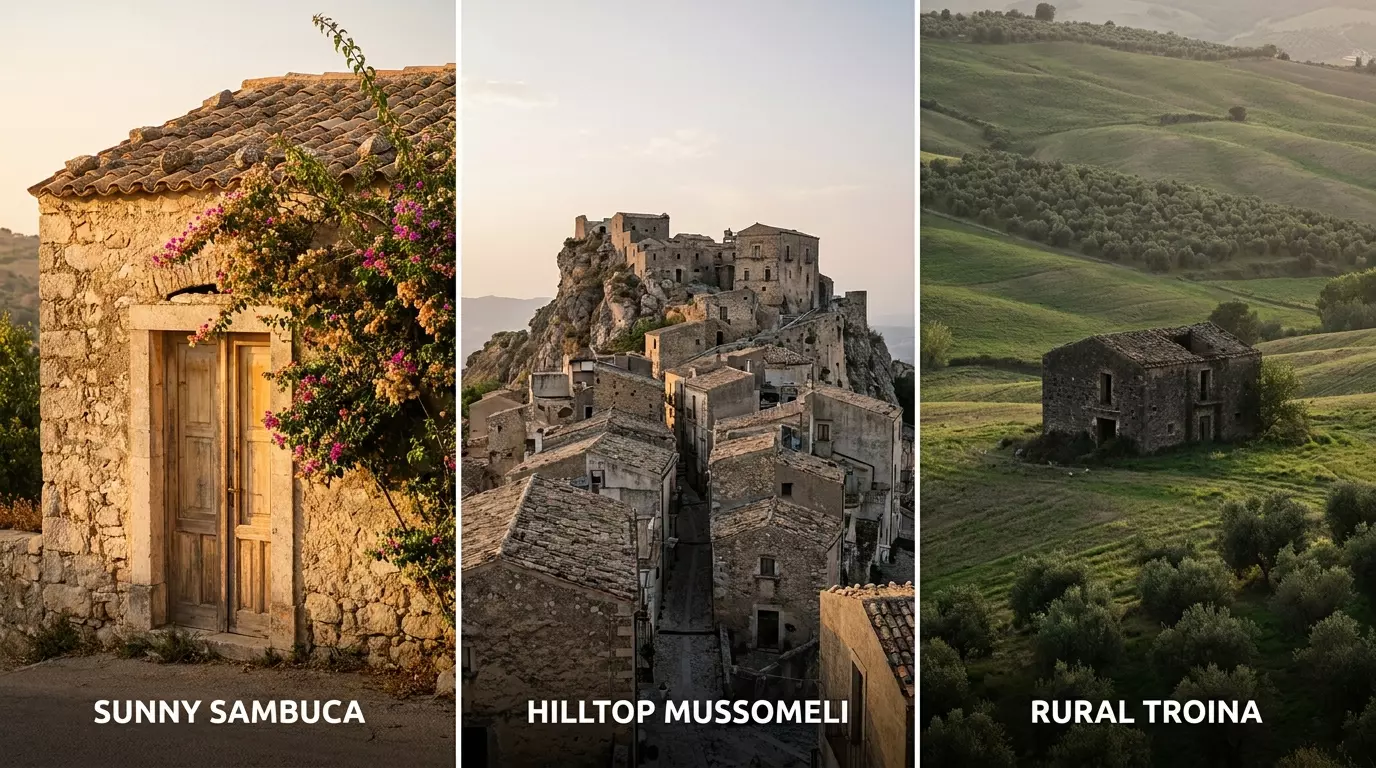
Sambuca di Sicilia remains one of the flagship programs. Located about an hour south of Palermo and just 20 minutes from the coast, Sambuca offers a rare combination of hilltop charm and beach access. The town gained worldwide fame after its 2019 auction, and it continues to list properties through its official municipality website. Sambuca has also attracted a growing expat community, with buyers from the United States, United Kingdom, and Germany settling in and opening small businesses. The local government provides a list of vetted architects and contractors, making the renovation process smoother for international buyers unfamiliar with Italian building regulations.
Mussomeli, perched in the hills of central Sicily, boasts one of the largest inventories of available properties. With over 100 homes listed at various stages of the program, Mussomeli is ideal for buyers who want options. The town has a well-established international community, with several English-speaking residents who run blogs and social media pages documenting their renovation journeys. Troina, meanwhile, sits at nearly 1,000 meters above sea level in the Nebrodi Mountains and appeals to those seeking cooler temperatures, hiking trails, and a connection to nature. Troina has also invested in wellness tourism infrastructure, positioning itself as a health-focused retreat destination. According to The Guardian, Troina’s program has drawn particular interest from remote workers and digital nomads looking for affordable European bases.
Beyond Sicily, Zungoli in Campania offers a storybook medieval setting with narrow stone streets and panoramic views of the Apennine foothills. Pratola Peligna in Abruzzo provides easy access to ski resorts and the Majella National Park, making it a strong pick for outdoor enthusiasts. Nulvi in Sardinia appeals to those drawn to the island’s distinct culture, slower rhythms, and rugged natural beauty.
Why These Villages Are Leading the Program
Several factors set these 10 villages apart from the broader pool of 1-euro house municipalities. First, they have dedicated staff or offices handling foreign inquiries. Programs like Sambuca and Mussomeli offer multilingual support, streamlined application portals, and transparent timelines. This level of organization dramatically reduces the friction that can discourage international buyers unfamiliar with Italian bureaucracy.
Second, these villages benefit from regional incentives that go beyond the symbolic purchase price. Sicily, for example, offers tax breaks and renovation grants for buyers who restore properties in designated historic centers. Some Sicilian municipalities provide up to 25,000 euros in renovation subsidies through regional development funds. Abruzzo and Basilicata have introduced similar incentive packages aimed at attracting remote workers and young families. The combination of a one-euro purchase price, renovation subsidies, and a lower cost of living compared to northern Italy makes these villages financially compelling. Additionally, the presence of established expat networks in towns like Mussomeli and Sambuca means newcomers have access to practical advice, social connections, and a sense of community from day one. These networks often share contractor recommendations, navigate permit processes together, and even organize group events that bridge local and international residents.
The long-term vision behind these programs is not just about filling empty houses. It is about economic revitalization. New residents open cafes, bed-and-breakfasts, co-working spaces, and artisan workshops. They enroll children in local schools, shop at neighborhood markets, and pay local taxes. For villages that were on the brink of disappearing, the 1-euro house program has become a lifeline, and the municipalities listed here are proof that the model works when it is executed with care and commitment.
In Short
Italy’s 1-euro house programs heading into 2026 represent a maturing movement that has evolved from a novelty headline into a legitimate pathway to European homeownership. Villages like Sambuca di Sicilia, Mussomeli, and Troina lead the pack thanks to organized application systems, strong expat communities, and attractive regional incentives. Whether you are drawn to Sicilian coastlines, Sardinian solitude, or Abruzzo’s mountain air, there is a program that fits your vision. The key is doing thorough research, understanding renovation commitments, and choosing a village that aligns with your lifestyle and budget. With the right preparation, that one-euro investment could become the best decision you ever make.
FAQ
How much does it really cost to buy and renovate a 1-euro house in Italy?
While the purchase price is symbolic at one euro, buyers should budget between 15,000 and 50,000 euros for renovations, depending on the property’s size and condition. Additional costs include notary fees, security deposits, and permits.
Do I need to be an EU citizen to participate?
No. Most programs are open to buyers from any country. However, non-EU citizens may need to navigate additional paperwork related to residency permits and property ownership regulations.
What happens if I do not complete renovations on time?
Most municipalities require renovations to be completed within one to three years. Failure to meet the deadline can result in forfeiture of your security deposit, which typically ranges from 1,000 to 5,000 euros.
Can I rent out my renovated 1-euro house?
Yes, many buyers convert their properties into vacation rentals or bed-and-breakfasts. Some municipalities actively encourage this as part of their tourism development strategies.
Which village is best for English-speaking buyers?
Mussomeli and Sambuca di Sicilia have the largest English-speaking expat communities and the most resources available in English, making them ideal starting points for first-time buyers.

Join The Discussion