

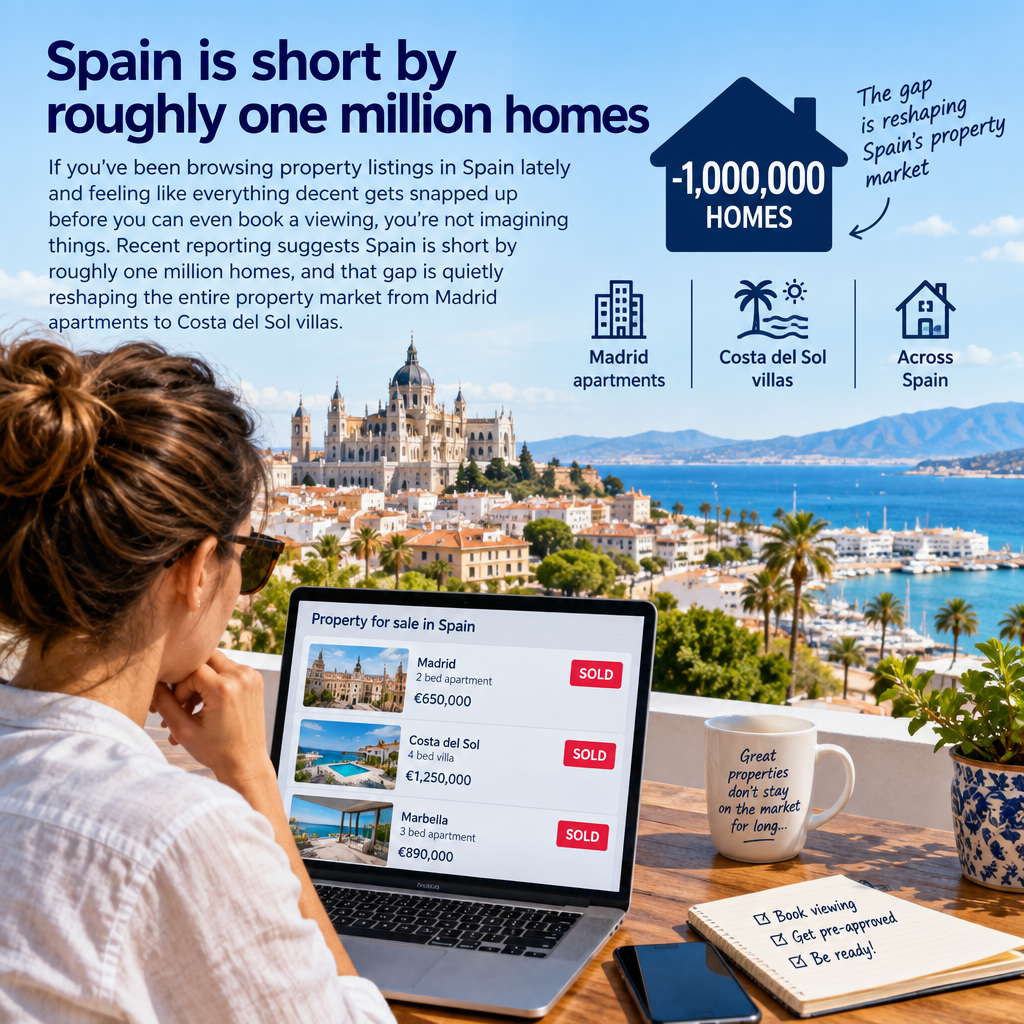
Why Everyone’s Talking About Spain’s Housing Gap
If you’ve been browsing property listings in Spain lately and feeling like everything decent gets snapped up before you can even book a viewing, you’re not imagining things. Recent reporting suggests Spain is short by roughly one million homes, and that gap is quietly reshaping the entire property market from Madrid apartments to Costa del Sol villas.
Here’s how it happened. After the 2008 financial crisis, construction in Spain basically ground to a halt. Developers pulled back, banks tightened lending, and for years new housing projects were few and far between. Meanwhile, demand kept climbing: population growth, urban migration, and a steady stream of international buyers all wanted a piece of the Spanish property pie. The result is a classic supply squeeze, and it’s showing up everywhere from bustling city centers to quiet coastal towns.
So why should this matter to you if you’re just trying to buy a home? Because this isn’t some abstract economic statistic buried in a news report. It’s the reason listings disappear fast, why bidding situations are becoming more common, and why waiting too long to make a decision could cost you. Understanding this shortage is the first step to buying smart in today’s Spanish market.
How the Shortage Is Pushing Prices Upward
Basic economics is at play here, and it’s worth understanding if you want to make sense of what’s happening. When there simply aren’t enough homes to go around, the ones that do hit the market attract far more attention. That competition among buyers naturally pushes prices upward, sometimes faster than incomes or savings can keep pace with.
This trend is especially visible in Spain’s biggest cities. Madrid and Barcelona continue to post some of the steepest price increases in the country, driven by strong job markets, international interest, and limited space to build. Along the coast, the story is similar. Popular Costas like the Costa del Sol and Costa Blanca are seeing values climb as both domestic and international buyers compete for a limited pool of homes with sea views or beach access.
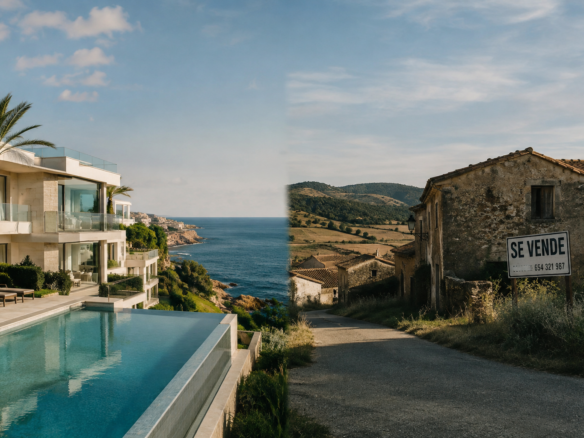
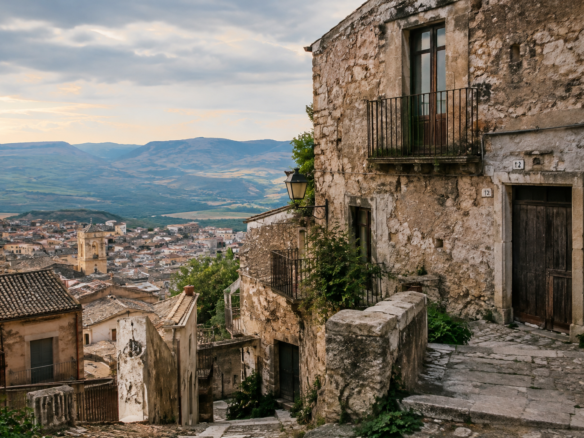
What’s interesting is how far this pressure is spreading. Buyers priced out of major hubs are increasingly looking toward smaller towns and inland areas that once flew under the radar. As demand shifts outward, even these quieter markets are starting to see noticeable price growth. In short, there are fewer truly “affordable” corners of Spain left untouched by the ripple effects of this shortage.
Who’s Feeling the Squeeze the Most
Not everyone feels this squeeze equally, and it’s worth understanding who’s really struggling to keep up.
First-time buyers and young families are bearing the brunt of it. Wages haven’t kept pace with property prices, and city centers in places like Madrid and Barcelona have become financially out of reach for many local buyers just starting out. It’s pushing younger generations further from urban jobs and support networks, forcing tough compromises on location and commute times.
Then there’s the added pressure from abroad. Foreign buyers, drawn by Spain’s lifestyle, climate, and relatively favorable prices compared to other parts of Europe, are snapping up holiday homes and retirement properties along the coast. This international demand, while great for Spain’s economy, tightens an already limited pool of available homes in places like the Costa del Sol and Costa Blanca.
Renters aren’t spared either. As fewer homes come onto the market, rental prices climb right alongside sale prices. That creates a frustrating cycle: the same people hoping to save for a deposit are instead spending more of their income just to keep a roof over their heads, making the path to ownership feel further away than ever.
What This Means If You’re House Hunting Right Now
If you’re actively browsing listings right now, you’ve probably already noticed things move fast. A well-priced apartment near the beach or a townhouse in a popular neighborhood can attract several interested buyers within days, sometimes hours, of hitting the market. That’s the new reality in many parts of Spain right now.
Homes in good condition, especially those in prime locations, tend to sell quickest. If a property doesn’t need major repairs and sits somewhere buyers actually want to be, expect competition. It’s not unusual for sellers to receive multiple offers, and in some cases, bidding above the asking price has become normal rather than exceptional.
This is exactly why preparation matters more than ever. Getting pre-approved for a mortgage before you start seriously house hunting shows sellers you’re a serious, capable buyer, not just someone testing the waters. Having your paperwork organized, proof of income, ID, financial statements, can shave days off the process when you find the right place.
In a market this competitive, speed and readiness often matter just as much as budget. Buyers who show up prepared are simply better positioned to act when the right property appears.
Smart Strategies for Navigating a Tight Market
You can’t change Spain’s housing numbers, but you can change how you approach the search. A few smart moves can make a real difference.
Start by widening your search radius. If Madrid, Barcelona, or the busiest Costa towns feel out of reach, look at neighboring areas that are still growing but haven’t hit peak demand yet. You’ll often find better prices and less competition without sacrificing much in lifestyle or convenience.
A good local agent is worth their weight in gold right now. Someone who knows the region can tip you off to listings before they hit the major portals, saving you from constantly refreshing search pages and losing out to faster buyers.
Flexibility helps too. A move-in-ready home might feel safer, but a renovation project in a good location can offer far better value, especially when there’s less competition for fixer-uppers.
Finally, keep an eye on new construction projects. Spain is ramping up building activity in certain regions, and fresh supply could ease pressure over the next few years. Watching these developments now might reveal opportunities before everyone else catches on.
The Bottom Line for Prospective Buyers
Spain’s housing shortage is undeniably real, and it’s changing the way people buy homes across the country. But a tighter market doesn’t mean the door is closed. It just means you need to approach things a little differently than buyers did five or ten years ago.
The buyers who succeed in this kind of environment tend to share a few habits. They’re patient enough to wait for the right property instead of panic-buying the first available listing. They’re prepared, with financing sorted and paperwork ready to go the moment they find something worth pursuing. And they take the time to understand local market knowledge, whether that’s knowing which neighborhoods are undervalued or which agents get early access to new listings.
Competition isn’t going away anytime soon, but that’s exactly why doing your homework matters so much right now. Buyers who understand the bigger picture, why prices are moving, where demand is concentrated, and what alternatives exist, are the ones making confident decisions rather than rushed ones driven by fear of missing out.
The takeaway is simple: Spain’s housing gap is a real obstacle, not an impossible one. With the right strategy, plenty of good opportunities are still out there for buyers willing to look a little closer and act a little smarter.
Join The Discussion