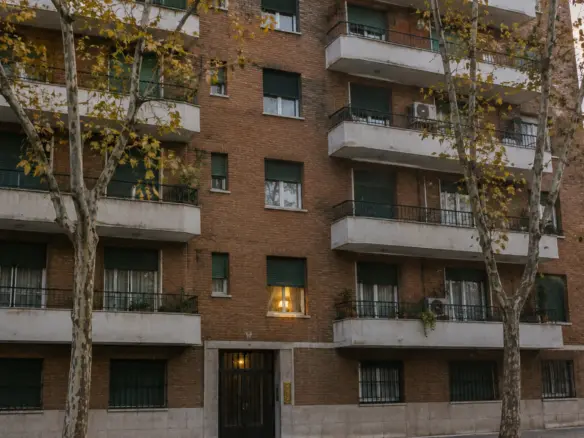

Spain’s Congress repealed the rent decree Real Decreto-ley 28/2026 and validated Real Decreto-ley 29/2026 on 12 November 2026, and both resolutions appeared in the Boletín Oficial del Estado on 13 November. BOE-A-2026-23754 records the repeal and BOE-A-2026-23755 the validation, both in BOE núm. 283. RDL 28 had been due to enter into force on 15 November, so the repeal came two days early and the decree never applied.
For estate agents and foreign buyers, the practical result is simple. The compensation rule for landlords who refuse to renew a lease did not take effect, so no compensation is owed under it. The extension and rent-increase measures in RDL 29 stay in place.
What changed in Congress on 12 November 2026
The government approved both decrees on 6 October, after Congress had struck down the earlier housing decrees at the end of September. Both appeared in the BOE on 7 October. RDL 29 came into force the next day. RDL 28 was to enter into force later, on 15 November.
On 12 November the Diputación Permanente of the Congreso de los Diputados acted under article 86.2 of the Constitution. It agreed to repeal RDL 28/2026 and to validate RDL 29/2026. Two resolutions of that date ordered publication of the agreements, and both appeared in the BOE on 13 November.
- 6 October 2026: both decrees approved.
- 7 October 2026: both published in the BOE.
- 8 October 2026: RDL 29 enters into force.
- 12 November 2026: Congress repeals RDL 28 and validates RDL 29.
- 13 November 2026: both resolutions published.
- 15 November 2026: the date RDL 28 had been due to enter into force.
A rent decree repealed before entry into force
RDL 28/2026 appeared in BOE núm. 249 on 7 October 2026. Its final provision 2 set entry into force for 15 November 2026. The BOE record now gives 13 November 2026 as the date of derogation. The repeal therefore came before the start date, and the decree was never applied.
That changes how you describe the rent decree to clients. The amendment to article 10 of the Ley de Arrendamientos Urbanos (Ley 29/1994, the LAU) never took effect. It is not a rule that applied and was then withdrawn: no landlord became liable under it, and no tenant acquired a right to the payment it described.
What RDL 28 would have done is still worth knowing, because it shaped how the market read the autumn. It amended article 10 LAU so that a landlord who validly notified non-renewal owed the tenant the greater of two amounts. The first was twelve monthly payments, calculated on the upper reference-index value for the dwelling. The second was one monthly payment on the same value for each year of residence, prorated for part years and months.
No compensation would have been due in three cases: where the landlord needed the home for himself or close family, where the tenant did not live there, or where another suitable dwelling was available. The notice had to state those exceptions in writing. A buyer who took over the landlord position would also have been liable.
The BOE analysis of the repeal resolution adds a second consequence. The repeal leaves without effect, from 15 November 2026, the version of final provision 5 of RDL 29 that RDL 28 had rewritten. It also ends the RDL 28 amendment to article 10 LAU.
What the validated decree still provides
RDL 29/2026 appeared on 7 October 2026 and has applied since 8 October. Congress validated it through the resolution published as BOE-A-2026-23755. Two parts matter most for anyone holding or buying in the rental market.
The first is the extraordinary extension in final provision 5. A tenant may ask for up to two more years, in annual periods, where the mandatory extension under article 9.1 LAU ends before 31 December 2028, or where a tacit extension or a tacit reconduction under article 1566 of the Civil Code ends.
The tenant must be up to date with payments and must have paid monthly for the previous eight months. The landlord must accept unless the parties agree other terms, sign a new contract, or the landlord needs to occupy the dwelling for himself or close family. The extension does not apply if the parties agree a renewal or new contract with rent at least 5% lower than the current rent. It is incompatible with the extension in article 10.3 LAU, which applies in preference.
The second is the limit on rent increases in final provision 6. It covers annual updates that fall between 8 October 2026 and 31 December 2027. Where the rent is above the maximum price under the state reference index system, no increase applies. Otherwise the increase is whatever the parties agree, and without agreement it cannot exceed 2%.
RDL 29 also treats a seasonal or room rental without an accredited temporary cause as a lease of vivienda habitual, so a label on the contract does not settle which rules apply.
Side by side: RDL 28/2026 and RDL 29/2026
The table below sets the two decrees against each other on the points that affect a let flat. The table shows RDL 28 as it was written, since it never applied.
| Point | RDL 28/2026 | RDL 29/2026 |
|---|---|---|
| Status | Repealed 13 November 2026 before entry into force | Validated, in force since 8 October 2026 |
| Core measure | Compensation on non-renewal, amending article 10 LAU | Extraordinary extension of up to two years and a 2% cap on updates |
| Landlord duty | Pay the greater of twelve monthly payments or one per year of residence | Accept the extension unless an exception applies |
| Exceptions | Own or family need, tenant not living there, other suitable dwelling | Own or family need, new terms, new contract, or rent at least 5% lower |
A checklist for agents advising a foreign buyer

When a client is looking at a flat that already has a tenant, these six checks cover what the validated rules turn on.
- Lease dates against 31 December 2028. Find out when the mandatory extension under article 9.1 LAU, or any tacit extension, ends.
- The eight-month payment record. Ask for proof that the tenant has paid monthly for the previous eight months. Without it, no one can claim the extension.
- A need-to-occupy case. Check whether the landlord, or the buyer after completion, genuinely needs the home for himself or close family.
- A 5% rent cut. Ask whether the parties could agree a renewal or new contract with rent at least 5% lower. If they do, the extension does not apply.
- Rent against the reference price. Compare the rent with the maximum under the state reference index system. Above it, no update applies before 31 December 2027. Below it, check the agreement and the 2% limit.
- Whether the lease is really vivienda habitual. Look past the title of the contract.
A buyer who completes on a let property takes over the landlord position, so these answers shape the yield and the route to vacant possession.
What remains open after the official texts
The published resolutions settle the main outcome but leave two practical questions unanswered, and we are not offering an answer to either.
The first is how to treat notices served between 7 October and 13 November. A landlord may have sent a non-renewal notice in that window with the RDL 28 rule in mind. The texts do not say what status those notices now have. Anyone in that position should take legal advice on the specific notice.
The second is how courts will read a contract whose extension period straddled the dates. A lease whose extension ran across 8 October, 15 November or 31 December 2028 may raise questions about which rules govern the final stretch. That too will resolve case by case.
Treat both as unsettled in any file note or client advice.
What this means for landlords and tenants now
For landlords, the repeal removes a liability due to start on 15 November. Nobody owes compensation under the RDL 28 rule on non-renewal, because that rule never applied. What remains is the extraordinary extension in RDL 29, which a landlord must accept unless an exception applies, or unless the parties agree different terms or a rent at least 5% lower.
For tenants, the extension of up to two more years is still available to those who meet the conditions, including the eight months of monthly payments. The decree restricts rent increases. Where rent sits above the reference-index maximum, no increase applies before the end of 2027. Otherwise the increase cannot exceed 2% without agreement.
For anyone buying to let, the property market advice is the same as before the repeal: read the lease, check the dates, and ask for the payment record.
Your questions about the repeal and validation
Did RDL 28/2026 ever apply?
No. It was due to enter into force on 15 November 2026, and Congress repealed it on 12 November. The BOE published the repeal on 13 November, two days before the start date.
Is any compensation owed when a landlord does not renew a lease?
Not under RDL 28. Its change to article 10 LAU never applied, so the payment it described is not owed. Other LAU rules stand.
Can a tenant still ask for the two-year extension?
Yes, if a tenant meets the conditions in final provision 5 of RDL 29. The mandatory or tacit extension must end before 31 December 2028, and the tenant must be up to date and have paid monthly for the previous eight months. The landlord may refuse in the cases the decree lists.
How much can rent go up at the annual update?
For updates between 8 October 2026 and 31 December 2027, nothing if the rent is above the maximum under the state reference index system. Otherwise the parties set the increase, and without agreement it cannot exceed 2%.
What happens to notices sent between 7 October and 13 November?
The official texts do not say. This is an open question, so take legal advice on any notice served in that period before relying on it.