
From 3 October 2026, anyone selling or renting a property in Catalonia has to hand over a certificate that states whether the building contains asbestos. That duty comes from Law 8/2026, the region’s asbestos eradication law, and it arrived before the market was ready for it. In the days before it took effect, notaries, registrars, banks and estate agents were still asking one another what the rule actually requires.
In truth, the obligation is real and already in force, while the regulation that will spell out the detail is still to be written. For an agent working in Barcelona, Girona or the Costa Brava, that gap between the law and its rulebook is the thing to manage now. It is also why a few lenders briefly paused mortgage offers while they waited for certainty.
Catalonia Requires an Asbestos Certificate to Sell or Rent
This certificate is a new document in a Catalan sale or lease. Article 21 of Law 8/2026, approved by the regional parliament in June and published in July, requires the seller or landlord to deliver a report on the presence or absence of asbestos when the property changes hands. It covers a sale and a rental alike, and it is the first rule of its kind anywhere in Spain.
It took effect on 3 October, three months after publication, which is the timetable the law itself set. It reaches every transaction closed in Catalonia from that date, whatever the nationality of the buyer, and it applies whether the property is a family flat or a commercial unit.
- What it reports: the presence or absence of visible asbestos
- What else it covers: the state of any material that contains asbestos, and the risk it poses
- Who receives it: the buyer in a sale, the tenant in a lease
- Where it fits: alongside the energy certificate in the file an agent prepares
What Catalonia’s Asbestos Certificate Actually Is
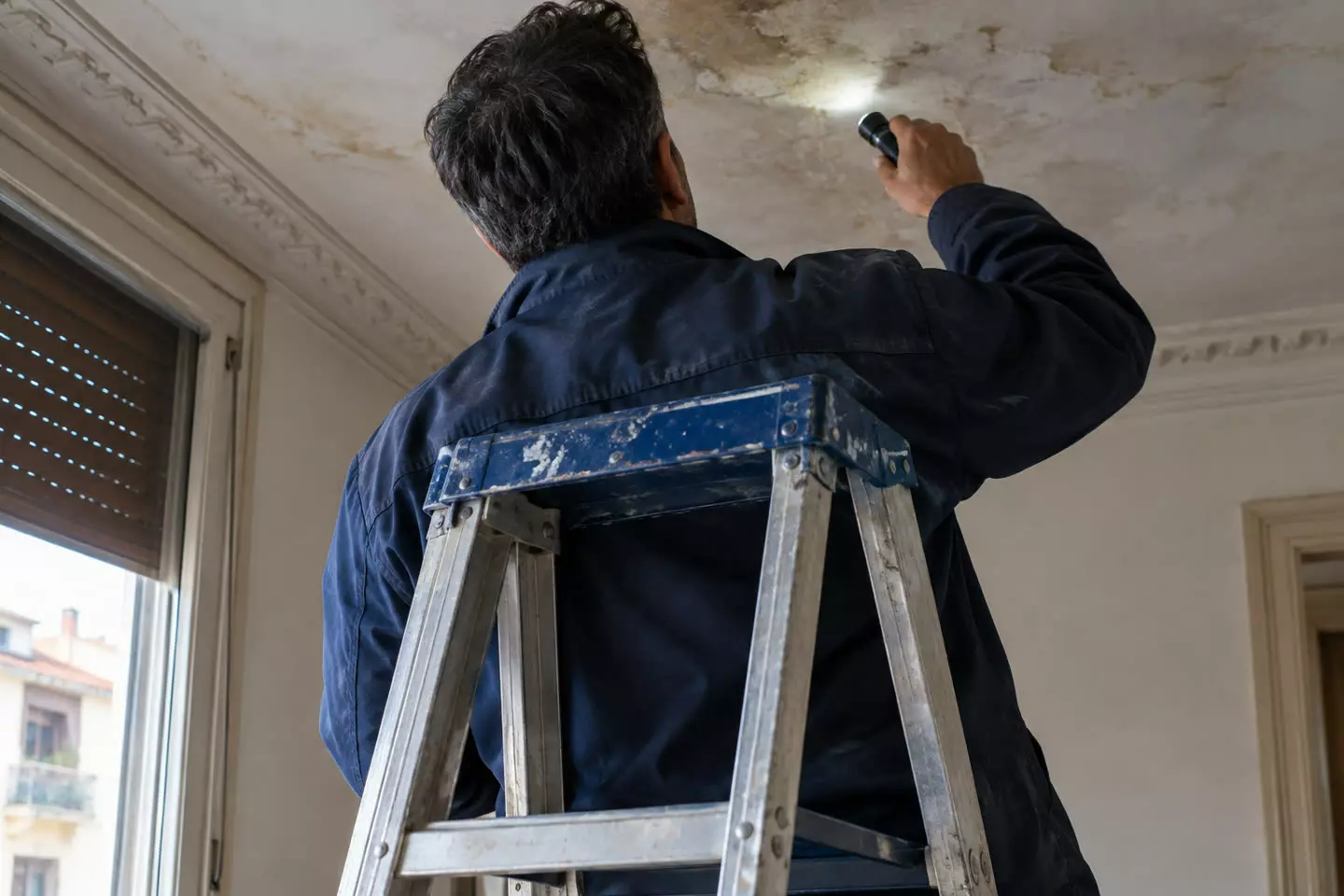
What it must contain is spelled out in the law. The certificate has to state whether visible asbestos is present or absent, how well any asbestos-containing material has been kept, and the risk that material presents to people. It is a snapshot of what a qualified professional could see on the day, not a guarantee that the building is free of hidden asbestos.
Who may issue it is the part still open. Details are left to a regulation, and the Generalitat has a year to write it. Until then, the Catalan Waste Agency has published a model certificate and said it can be signed by the professions listed in the building regulation law, meaning architects, technical architects and engineers. That reading is an interpretation, not a settled rule.
Which Homes in Catalonia the New Rule Covers
Its wording is broad. The law speaks of delivering the certificate when a property is sold or rented, and market lawyers read that as covering homes, offices, industrial units and even undeveloped or rustic land. Some go further and expect it to apply to other transfers as well, from a foreclosure to a usufruct or a contribution of a property to a company.
In practice, most operators draw the line at the age of the building. Asbestos was banned in Spain in 2002, so the assumption is that anything built before then needs a look and anything after it does not, though the law does not say so in those words. Whether the certificate must be attached to the deed or simply handed over is another point the regulation should settle.
What It Means for Agents and Cross-Border Buyers
For an agency, the certificate is now one more item on the checklist, and the sensible move is to raise it early. Ask the seller whether the document exists before a signing date is promised, and put it beside the energy certificate and the nota simple in the pack the buyer receives. A missing certificate is a delay to manage, not a defect that kills a sale.
For foreign buyers of Spanish property, the extra paperwork matters most at the notary’s desk, where a transaction can stall if the document is not there. Failing to deliver the certificate counts as a minor infraction, with fines from 100 to 3,000 euros, and the notary has to be satisfied that the sale complies with the rules in force. Registrars, meanwhile, expect a grace period to be set so that deals signed before the paperwork catches up can still be recorded.
| Point | What the law says | Still to be settled |
|---|---|---|
| When it applies | On any sale or rental | The exact list of transfers covered |
| What it states | Visible asbestos, its condition, the risk | The final template and its scope |
| Who issues it | To be set by regulation | Which professions qualify |
| Penalty | A fine of 100 to 3,000 euros | How strictly it will be enforced |
- Add the asbestos certificate to the standard sale file in Catalonia
- Ask the seller for it before you commit to a signing date
- Explain to buyers that it reports what is visible, not a clean bill of health
- Flag the age of the building, since pre-2002 stock is where the question bites
- Watch the regulation, because it will fix who signs and what the document says
How the Rule Will Bed In as the Regulation Arrives
Next comes the rulebook. The Generalitat has a year to develop the regulation, and until it lands the certificate rests on the law’s own wording plus the Waste Agency’s model. That is enough to make the obligation real, but it leaves room for argument about the edges, and it is why the sector is watching the first few weeks closely.
Its direction is clear enough, and it is not a Catalan quirk. European rules on managing asbestos have been tightening for years, and the region has simply moved first with a document at the point of sale. For anyone buying property in Spain, expect this kind of certificate to spread, and treat a missing one as a question to resolve rather than a reason to walk away.
Questions Agents Ask About the Asbestos Certificate
With the law in force, the questions are now practical ones about timing and paperwork rather than about whether the rule exists at all.
Is the asbestos certificate already required in Catalonia?
Yes. Law 8/2026 came into force on 3 October 2026, and since then a seller or landlord in Catalonia has had to deliver the certificate with a sale or a rental, even though the regulation that details it is still pending.
Does it apply to flats built after 2002?
Nothing in the law exempts them. Because asbestos was banned in Spain in 2002, most operators assume newer buildings fall outside the intent of the rule, but the wording is wide and the regulation may draw the line. For now, the safe reading is that any property in Catalonia can be asked for it.
Who can issue the certificate?
A regulation will decide. In the meantime, the Catalan Waste Agency says a basic model can be signed by architects, technical architects and engineers, the professions covered by the building regulation law. A specialist surveyor will usually be the one to inspect the property.
What happens if the seller does not provide it?
Failure to deliver the certificate is a minor infraction, punishable by a fine of between 100 and 3,000 euros. A bigger risk in practice is a stalled signing, since the notary has to confirm the sale complies with the rules in force.
Can the buyer waive the certificate?
No. A clause in which the buyer gives up the certificate does not free the seller from the legal duty to provide it. It is an obligation toward the administration, so a private agreement between the two sides cannot switch it off.