
A commune that voted for it can cut three years of taxe foncière on an older French home, including one you buy in 2027. Taxe foncière is the annual French property tax paid by the owner of a building. This renovation tax exemption is not automatic, though: your declaration has to reach the tax office before 1 January 2027, and the version in force since 1 January 2025 now reaches houses built well after 1989.
What the code asks of the building and the spending
The rule sits in article 1383-0 B of the French tax code, in the version in force since 1 January 2025. Article 143 of the finance law for 2024 gave the article its current wording. You can read the text on Légifrance.
First, a commune, or an intercommunal body with its own taxation, has to have voted the exemption by deliberation. Nothing happens in a commune that hasn’t. The exemption then covers 50% to 100% of the share of the tax that falls to that commune or body. It does not cover the whole bill.
Then two tests apply to the property and the spending:
- The dwelling has to be more than ten years old at 1 January of the first year for which the exemption applies.
- You must have paid more than €10,000 per dwelling in the year before that first year, or more than €15,000 per dwelling over the three years before it.
The spending has to be for energy renovation services and the associated equipment, and maintenance does not count.
The renovation tax exemption deadline falls on 1 January
The deadline is the practical heart of this renovation tax exemption. You send a declaration to the tax office where the property is, before 1 January of the first year for which the exemption applies. For an exemption starting in 2027, that means before 1 January 2027.
The declaration has to identify the property, including the date of completion. It also needs everything that justifies the nature and the amount of the spending. Service-Public adds that a copy of the proof of spending goes with it.
The clock starts the year after you pay the final invoice in full. If you settle the final invoice in 2026, the three exempt years begin in 2027. Once the three years end, the owner cannot renew the exemption for the following ten years.
One more point on timing. If the property also qualifies for the older exemption under article 1383 E, that one applies first. The 1383-0 B exemption is then granted when that period ends, for the time left.
Which renovation work counts towards the threshold
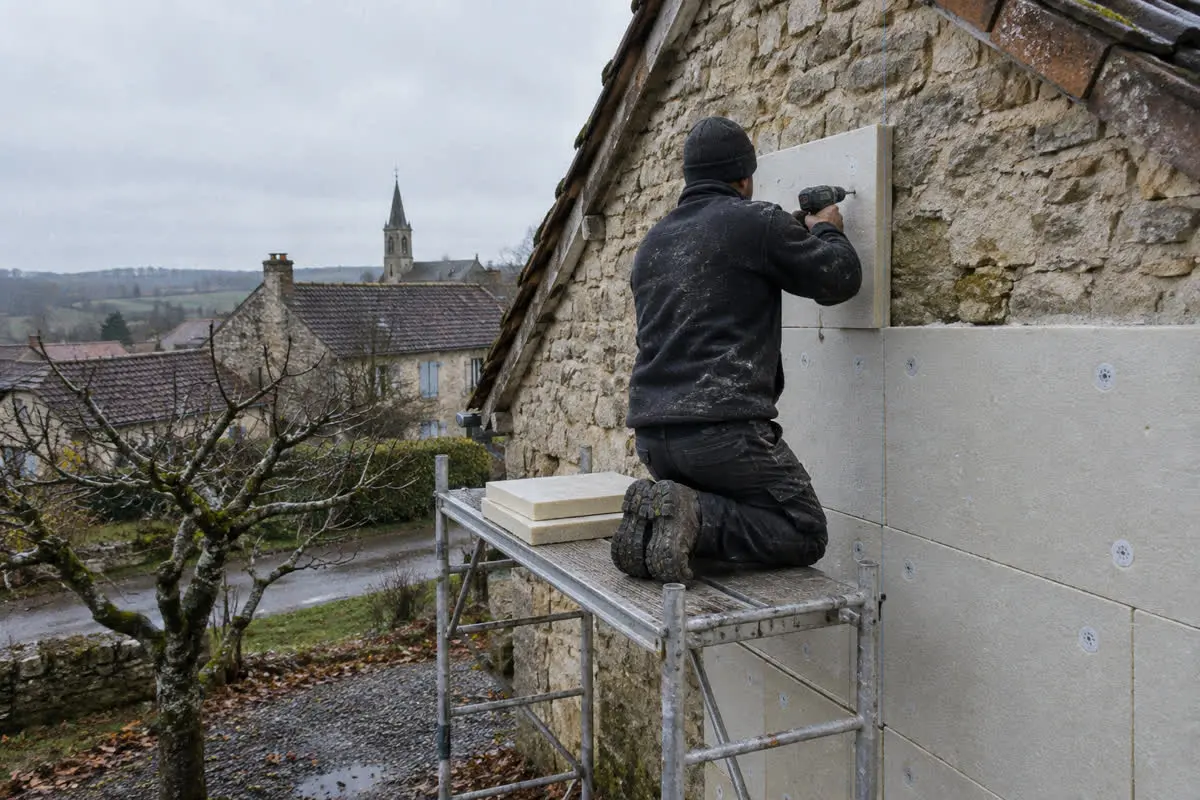
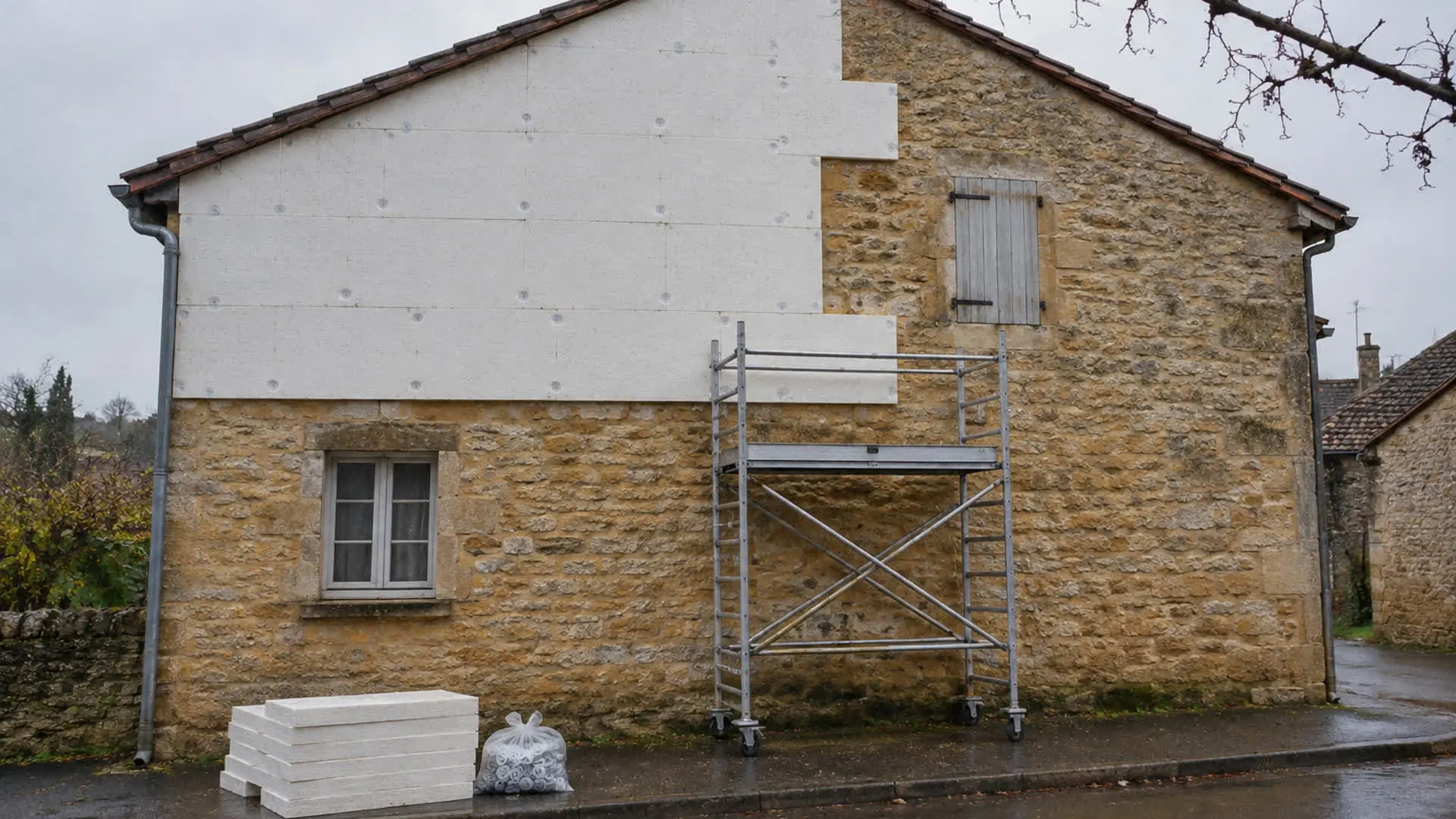
The code points to energy renovation services and associated equipment that benefit from the reduced rate of VAT. Service-Public Entreprendre explains that this reduced rate is 5.5% for energy renovation work in a dwelling completed at least two years ago. The categories named are:
- Thermal insulation
- Heating and ventilation
- Domestic hot water
Solar panels of 9 kilowatts or less can also carry the reduced rate, where the household uses the electricity on site. Other improvement, transformation, fitting-out or maintenance work carries 10% in mainland France, and the exemption ignores maintenance spending in any case.
If you’re weighing up a larger project, our guide to home renovation grants and 1 euro houses in France covers the wider funding picture. Check your invoices against the VAT categories before you count them towards the €10,000 or €15,000 threshold.
What the exemption is worth on a French bill
The value depends on two things: the commune’s share of your bill, and the rate the commune has voted, anywhere from 50% to 100%.
Here is a worked example, and it is arithmetic on an assumed bill rather than a statistic or a typical taxe foncière. Say the commune’s share of your bill is €1,500 a year. At a 100% rate the three exempt years are worth €4,500; at 50% they are worth €2,250.
The exemption applies to the part of the tax that falls to the commune or the intercommunal body that voted it. Other parts of the notice are not covered. The waste collection charge (taxe d’enlèvement des ordures ménagères) appears on the same notice as the property tax, but it is not part of this exemption.
The 2025 rewrite and the transition rules
Before 1 January 2025, the exemption covered only dwellings completed before 1 January 1989. Since 2025 the code has run a rolling test instead: the dwelling has to be more than ten years old at 1 January of the first exempt year. A house finished in the 1990s or 2000s can now qualify, provided the commune has voted the exemption and the owner clears the spending threshold.
Owners who already met the old conditions keep their exemption for the period still to run. For 2024 spending, article 143 of the finance law set a transition. Equipment you paid for up to 31 December 2024 counts under the article as it read before the law. So does equipment covered by an accepted quote and a deposit paid in 2024, with payment in 2025.
There was also a one-off relief on timing. As a derogation from the 1 January rule, owners had until 31 March 2025 to file the declaration for the 2025 tax. That extension was specific to 2025, so don’t rely on a similar grace period for 2027.
What agents and buyers should check before acting
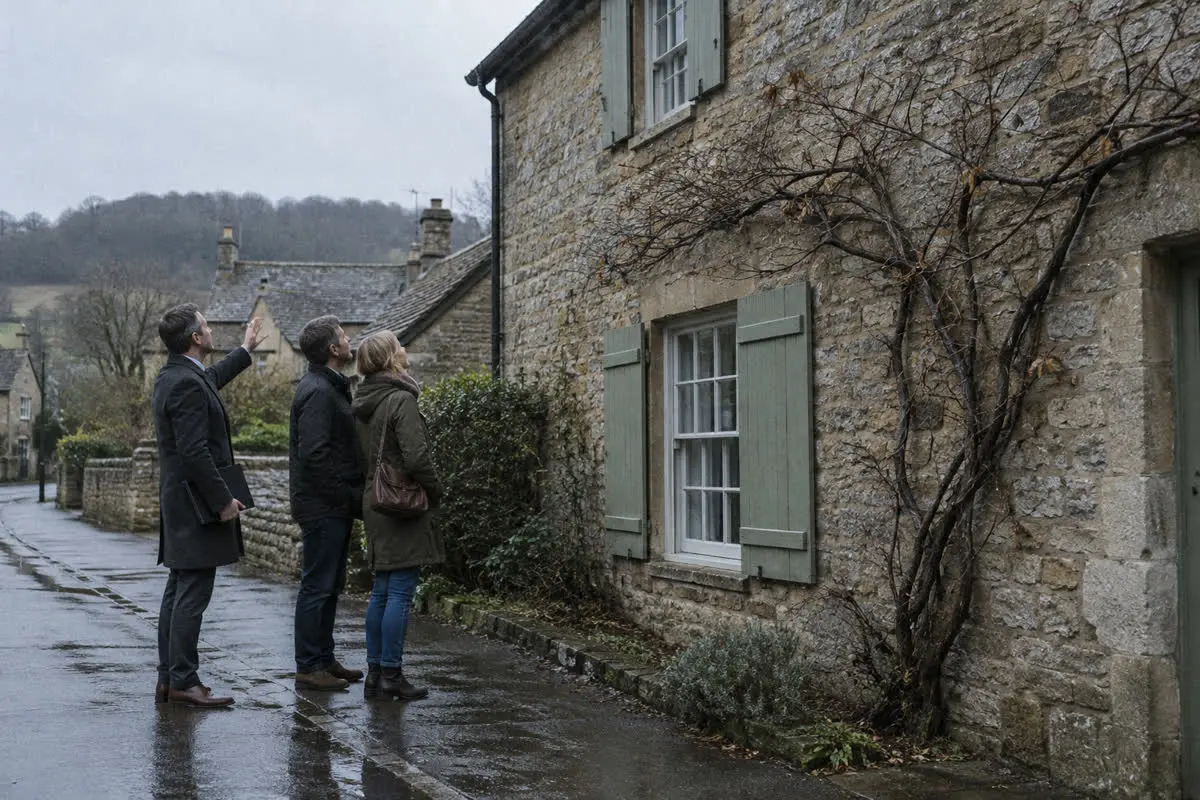
Start with the commune. The exemption exists only where the local authority has voted it, and this guide cannot tell you which have. The official Service-Public simulator is the way to check. It asks for the town, how you use the dwelling, whether the building clears the ten-year mark, and the total amount of the work. Have the purchase deed and all the invoices to hand.
Buyers of a second home should note that the simulator asks how you use the dwelling, so check your own case rather than assuming the answer makes no difference. Anyone buying French property to renovate should also check the wider purchase costs, because the local tax is only part of the budget. Agents can add the dwelling’s completion date to the checklist, because the age test depends on it.
Then follow these steps:
- Confirm the commune has voted the exemption, and at what rate.
- Confirm the building clears the ten-year mark at 1 January of the first exempt year.
- Keep every invoice and the proof of payment for qualifying energy work.
- Add up the spending against the €10,000 or €15,000 threshold.
- File the declaration with the local tax office before 1 January.
The summary below pulls the key conditions together.
| Item | Condition |
|---|---|
| Age of the dwelling | Completed more than ten years before 1 January of the first exempt year |
| Spending in one year | More than €10,000 per dwelling, paid in the year before the first exempt year |
| Spending over three years | More than €15,000 per dwelling, paid over the three years before the first exempt year |
| Rate | 50% to 100% of the commune’s share, as voted locally |
| Length | Three years, from the year after full payment |
| Declaration | To the local tax office before 1 January of the first exempt year |
Price effects matter too. Weak energy ratings can weigh on what a house is worth, as we explain in how energy ratings affect French property prices, so a renovation can help on more than one front.
Plan the paperwork before the tax year ends
A renovation tax exemption can lower a few years of local tax, but only if the commune has voted it, the work qualifies and the paperwork arrives on time. The 1 January deadline is firm, and the exemption is not granted without a declaration.
If you’re thinking about work late in the year, check the commune first, keep your invoices in order, and file before the deadline. Our note on the French property tax deadline is a useful companion for the wider calendar.
Questions buyers and agents often ask (FAQ)
Is the exemption automatic once I spend €10,000?
No. The commune has to have voted it, you have to meet the conditions, and you have to send a declaration to the tax office before 1 January of the first exempt year.
Does it cut my whole property tax bill?
No. It applies at between 50% and 100% to the share that falls to the commune or intercommunal body that voted it. The waste collection charge on the same notice is not part of it.
Can I get it for a house built after 1989?
Yes, since 1 January 2025. The test is now age: the dwelling has to be more than ten years old at 1 January of the first exempt year. Before 2025 the cut-off was 1 January 1989.
Can I claim it again after the three years?
Not straight away. After the exemption ends, the owner cannot renew it during the following ten years.