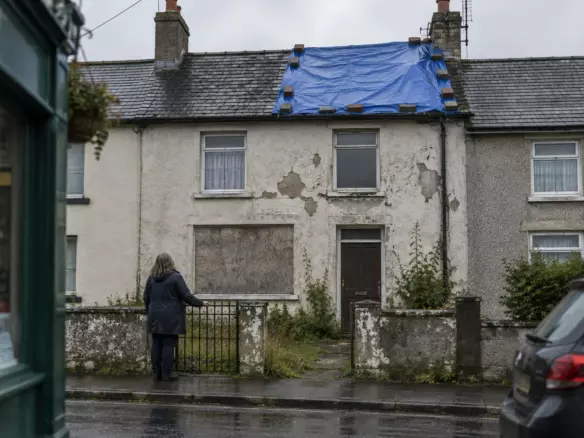


Households across the euro area expect the price of their own home to rise 3.5% over the next twelve months, according to the ECB’s Consumer Expectations Survey for September 2026, published on 23 October. That is up from 3.4% in August. The same release found that expectations for mortgage rates a year ahead stayed at 4.9%, unchanged since July, and that a rising net share of households reported tighter access to credit.
Each wave is a monthly online poll of around 19,000 adults in eleven euro area countries, with fieldwork for this one running from 27 August to 28 September. It is not a forecast by the central bank: the release says plainly that the results do not represent the views of the ECB’s decision-making bodies. What it does show is how the people who actually buy and borrow are pricing the next twelve months, and that is the number a foreign buyer tends to bring to the first meeting.
Euro Area Households Expect a 3.5% Gain on Their Home
At 3.5%, the median expectation is only a small move on August’s 3.4%, but the split by income is wider than the month-on-month change. Households in the lowest income quintile expect 4.0%, those in the highest expect 3.2%, and the pattern has held for months, as the ECB’s September release sets out. Note what the question asks: the price of the respondent’s own home, not the market average, so the figure is a household’s view of its own asset rather than a national forecast.
Against the recorded data, that expectation looks slightly cautious. Euro area house prices rose 4.0% in the year to the second quarter of 2026 and 1.1% between the first and second quarters, according to Eurostat’s House Price Index published on 1 October, after 4.6% in the year to the first quarter. Households are therefore expecting a little less than the index has just delivered, which is a reasonable posture after four quarters of slowing annual growth.
Mortgage Rate Expectations Stay Pinned at 4.9% for a Year
For a purchase decision, the mortgage number matters more than the price number, and it has not moved. Households expect mortgage rates in twelve months’ time to be 4.9%, the same figure they gave in July and August. The gap between income groups is large: the top quintile expects 4.4%, the bottom quintile 5.7%. A buyer on a modest income is planning for a rate 1.3 points above what a wealthier buyer down the road is planning for, and only one of them is likely to be right.
Put those rates on a loan and the practical difference appears. On €200,000 over 25 years at a fixed 4.9%, the monthly payment is €1,157.56 and the total repaid is €347,267. At 4.4% it is €1,100.34 a month and €330,103 in total; at 5.7% it is €1,252.18 and €375,653. Those are our own calculations on a standard annuity, not figures from the survey, and they are the arithmetic to run in front of a client who assumes rates will fall before completion.

Credit Access Tightens Even as Price Expectations Rise
Credit access is the third finding, and the one agents tend to skip. The net percentage of households reporting that access to credit tightened over the previous twelve months increased compared with August, and so did the net percentage expecting tighter credit conditions over the next twelve months. In plain terms, households are watching lenders get stricter and expect that to continue. That matters at the point where a mortgage offer has to be issued, not at the point where the asking price is agreed.
Inflation expectations moved a little in the same release. Perceived inflation over the past twelve months rose to 3.6% from 3.5%, expectations for the next twelve months rose to 3.1% from 3.0%, and the three-year and five-year figures were unchanged at 2.9% and 2.5%. Nominal income growth expected over the next year rose to 1.1% from 1.0%, while expected spending growth rose to 3.7% from 3.6%. Income expectations sit 2.0 points below inflation expectations, and expected spending growth of 3.7% against income growth of 1.1% is a squeeze rather than a backdrop for aggressive bidding.
What 3.5% Means Against Eurostat’s 4.0% Reality
An aggregate expectation hides the thing a buyer actually faces, which is a national market. Eurostat’s index for the second quarter of 2026 shows annual growth running from 16.5% in Portugal to minus 0.8% in France, with the euro area at 4.0%. Behind that spread is the recorded data in the table below, and it is the context in which the 3.5% expectation should be read.
| House prices, Q2 2026 (Eurostat) | Change on a year earlier | Change on Q1 2026 |
|---|---|---|
| Euro area | 4.0% | 1.1% |
| Portugal | 16.5% | 3.6% |
| Spain | 12.1% | 3.4% |
| Ireland | 6.0% | 0.5% |
| Netherlands | 4.3% | 0.5% |
| Italy | 4.0% | 1.7% |
| Germany | 0.6% | 0.3% |
| France | -0.8% | -0.8% |
Three numbers get mixed together in this story, and they answer different questions:
- 3.5% is what households expect for their own home over the next twelve months, a survey answer collected in September.
- 4.0% is what the euro area index actually did in the year to the second quarter of 2026, a measured figure from Eurostat.
- 16.5% is what the same index recorded in Portugal over the same twelve months, the fastest annual growth in the release.
Read the table with the survey in mind and the advice writes itself. A Dutch or German buyer who reads that households expect 3.5% will underestimate what is happening in Portugal, where property prices rose 16.5% in a year, and overestimate France, where they fell. A euro area average is a useful headline for a client who has not chosen a country yet. It is a poor basis for an offer in the Algarve, and it is close to useless in a market where annual growth is under 1%, because local stock, planning rules and the currency of the buyer’s own income matter more than the aggregate.
What Agents Should Tell Buyers This Autumn
This wave lands four weeks before the ECB publishes the next one on 27 November, which makes it a briefing document rather than a headline. Five things are worth doing with it while it is current:
- Quote the country index, not the euro area average, in any price conversation, and name the quarter, because the next Eurostat release is due on 11 January 2027.
- Stress-test the client’s budget at the bottom-quintile rate of 5.7% rather than the 4.9% median, and show the monthly difference in euros instead of percentage points.
- Ask about the mortgage offer date, not just the rate, because the survey’s credit-access question points to stricter lending ahead.
- Separate expectation from evidence in writing, so a buyer who reads “3.5%” in the press does not treat it as a floor under the asking price.
- For a second home, check what the local market has actually done in the last four quarters before repeating a national growth figure to an overseas client.
None of that requires a subscription or an economist. The ECB release and the Eurostat table are both free, both dated, and both short enough to read before a viewing.

Where the Numbers Leave a Buyer This Winter
The picture for the coming twelve months is a market where households expect modest gains on their own homes, no relief on mortgage rates, and slightly tighter lending. That combination favours the buyer who is ready over the buyer who is waiting for a signal, because the price expectation is not falling fast enough to offset another year of payments at 4.9%.
For an agent, the value of the release is that it is quotable. A client who asks what the market will do next year can be given a date, a sample and a figure, and then the local index that shows whether their target market is running at 16.5% or minus 0.8%. The next update is on 27 November, and until then these are the numbers to work from.
Questions Buyers Ask About the September Survey
What does the 3.5% figure actually measure?
It is the median expectation of households for the price of their own home over the next twelve months, collected between 27 August and 28 September 2026. It is not a forecast of the market average and it is not an ECB projection.
Does it mean house prices will rise 3.5% next year?
No. It is what households expect, and expectations have run slightly below the recorded index through 2026. The euro area index rose 4.0% in the year to the second quarter, and national outcomes ranged from 16.5% in Portugal to minus 0.8% in France.
Why do richer households expect lower mortgage rates?
The survey does not explain it, but the pattern is consistent: the top income quintile expects 4.4%, the bottom quintile 5.7%. Higher-income borrowers typically have larger deposits and better access to the cheapest products, which is the usual reading of that gap.
Is 4.9% the rate I will be offered?
It is the median expectation for rates a year from now, not a quoted product. Actual offers depend on the lender, the loan-to-value, the country and the buyer’s income, and the survey also records households reporting tighter access to credit.
Where can I check the underlying numbers?
The ECB publishes the survey results and the country detail on its Data Portal, and the aggregate figures in the press release are published monthly. Price data comes separately from Eurostat’s House Price Index, which is released quarterly.