

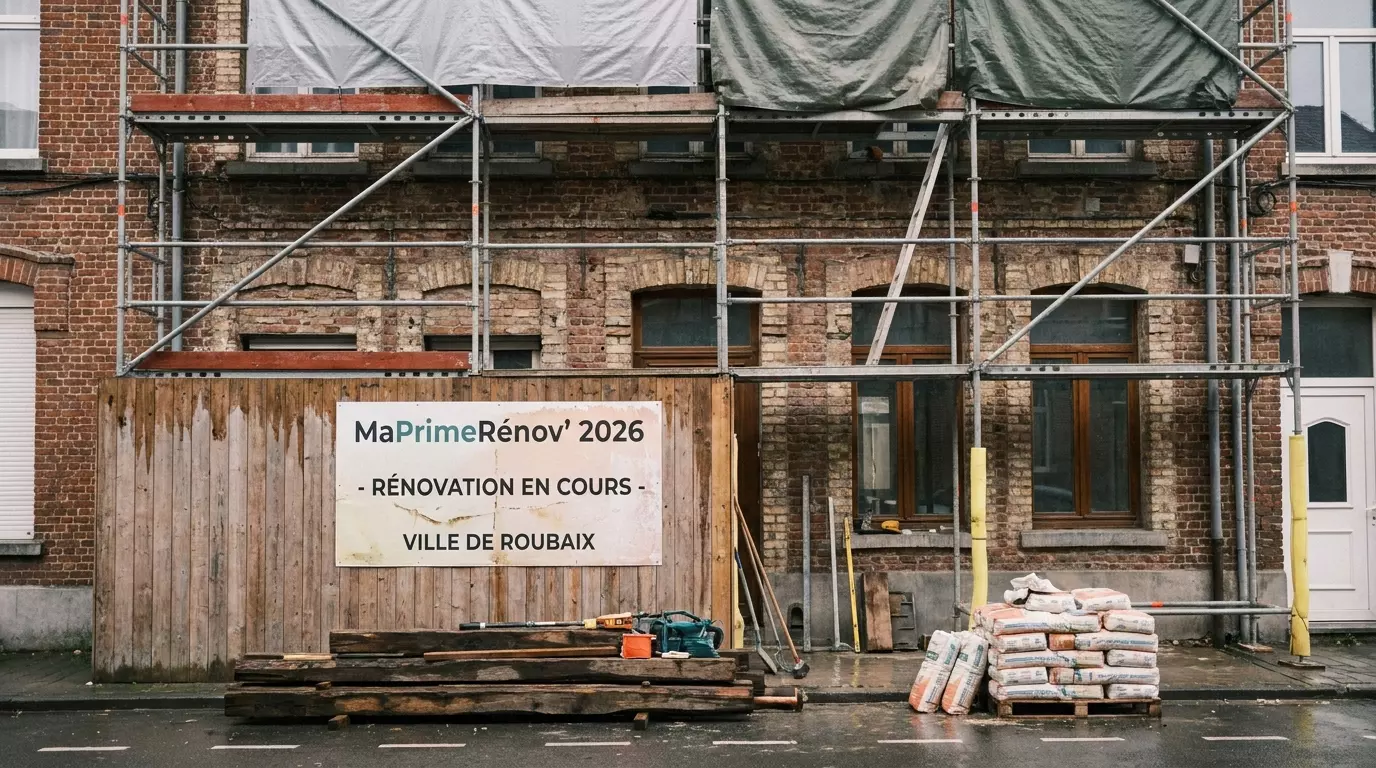
France’s MaPrimeRénov’ and 1-Euro Homes: A 2026 Guide
Buying a rundown property for a symbolic price and turning it into a comfortable home sounds like a dream. In parts of northern France, particularly towns like Roubaix, this dream has become a genuine opportunity for buyers with modest budgets. Combined with the government’s flagship renovation grant, MaPrimeRénov’, the path to affordable homeownership in 2026 is more accessible than many people realize. This guide breaks down how the subsidy works, who can claim it, and how to find those famous one-euro houses while keeping renovation costs under control.
How MaPrimeRénov’ Works for Homeowners in 2026
MaPrimeRénov’ is the French state’s main financial aid scheme for energy-focused home improvements. Launched in 2020 and managed by the National Housing Agency (ANAH), it replaced older tax-credit systems with a more direct grant model. The idea is simple: the government pays homeowners a portion of the cost of works that make their property warmer, greener, and cheaper to run. In 2026, the scheme continues to prioritise deep energy renovations rather than small one-off jobs, reflecting France’s wider climate commitments and its goal to phase out poorly insulated “thermal sieve” homes.
The amount you receive depends on your household income, the type of work undertaken, and how much your renovation improves the property’s energy rating. Grants are paid after the works are completed, although advance payments are available for lower-income households to ease cash-flow pressure. Eligible improvements include loft and wall insulation, heat pumps, solar water heaters, and double glazing. For larger projects that combine several measures, homeowners can access the “Parcours accompagné” track, which requires a certified energy audit and the support of an approved advisor known as “Mon Accompagnateur Rénov'”. This structured approach helps ensure that the money delivers real efficiency gains.
Who Qualifies for France’s Home Renovation Grants
Eligibility for MaPrimeRénov’ centres on three main factors: income level, property type, and the nature of the works. The home must be your main residence, built more than 15 years ago, and located in France. Both owner-occupiers and landlords can apply, though landlords must commit to renting the property for a set period after the works. Income is assessed using a four-tier colour-coded system that determines how generous your grant will be.
The four income brackets are organised as follows:
- Blue (très modeste) – very low income households, receiving the highest grant rates
- Yellow (modeste) – modest income households with strong support levels
- Purple (intermédiaire) – middle income households with reduced rates
- Pink (supérieur) – higher income households, eligible mainly for major energy overhauls
Below is a simplified comparison of how support typically varies across brackets:
| Income Tier | Typical Support Level | Best Suited For |
|---|---|---|
| Blue | Up to 90% of works | Low-income buyers in regeneration zones |
| Yellow | Up to 75% of works | Modest earners renovating older homes |
| Purple | Up to 60% of works | Middle earners doing full retrofits |
| Pink | Up to 40% of works | Higher earners targeting deep renovation |
For buyers eyeing affordable homes in towns like Roubaix, the blue and yellow tiers are especially relevant. These categories were designed precisely to help lower-income households restore older housing stock that would otherwise remain empty or unsafe to live in.
Finding 1-Euro Houses in Towns Like Roubaix
The one-euro house scheme became internationally famous when Roubaix, a former textile town near Lille, launched its initiative to combat urban decay. Decades of industrial decline left the town with thousands of vacant terraced houses, many in poor condition. Rather than let them crumble, the local authority offered selected properties for a single euro to buyers willing to renovate and live in them. The programme has since drawn attention from buyers across France and abroad, as reported by outlets like The Guardian, which highlighted Roubaix’s slow but steady revival.
It is important to understand that the “one euro” refers only to the purchase price. Buyers commit to substantial renovation budgets, often between €40.000 and €100,000, depending on the property’s state. Applicants are usually chosen based on the strength of their renovation plan and their ability to finance the works. The following conditions are common:
- A realistic, costed renovation project must be presented
- The buyer must occupy the home for a minimum number of years
- Works must meet local planning and safety standards
- Priority may be given to first-time buyers or families
This is where MaPrimeRénov’ becomes a perfect partner to the scheme. A buyer who purchases a one-euro house can layer the renovation grant on top, dramatically reducing the real out-of-pocket cost of bringing the property up to modern living standards. Combining a near-free purchase with substantial state subsidies turns an intimidating project into a feasible one.
Funding Energy Efficiency Upgrades on a Tight Budget
For buyers with limited capital, stacking financial aids is the key to success. MaPrimeRénov’ rarely works alone. It can be combined with several complementary schemes to cover a larger share of the bill. The most popular partner is the interest-free eco-loan, known as the “éco-prêt à taux zéro” (Eco-PTZ), which lets homeowners borrow up to €50.000 for renovation work without paying interest. Local authorities and energy suppliers may also offer additional bonuses, especially in regeneration zones where the public goal is to revive entire neighbourhoods.
A smart funding strategy for a budget-conscious buyer might look like this:
- Purchase the property under a one-euro or low-cost municipal scheme
- Apply for MaPrimeRénov’ based on your income tier
- Combine the grant with an Eco-PTZ to spread remaining costs
- Check for regional aids and supplier “energy saving certificate” bonuses
- Sequence works to maximise the energy rating jump and the resulting grant
Prioritising the right works matters too. According to France’s energy transition data, summarised by ADEME, insulation usually delivers the best return per euro spent, followed by efficient heating systems. By tackling insulation first, then upgrading the heating, buyers can achieve a meaningful improvement in their property’s energy label, which in turn unlocks higher grant amounts. With careful planning, a buyer in a town like Roubaix can transform a derelict terrace into a warm, efficient home while spending far less than the headline renovation figures suggest.
In Short
France’s combination of one-euro housing schemes and the MaPrimeRénov’ grant offers a rare route into affordable homeownership for low-to-modest income buyers. Towns like Roubaix prove that abandoned properties can find new life when public incentives and private ambition meet. The key is preparation: understand your income tier, build a solid renovation plan, and stack every available aid from national grants to interest-free loans. While the work is real and the timeline can be long, the financial support in 2026 makes the journey from a one-euro purchase to a comfortable, energy-efficient home genuinely achievable.
Frequently Asked Questions
Can foreigners buy a one-euro house in Roubaix?
Yes. There is no nationality requirement, but buyers must commit to renovating and occupying the property, and they need to demonstrate the financial means to complete the works.
Is MaPrimeRénov’ paid before or after the renovation?
The grant is generally paid after the works are completed and verified. However, lower-income households in the blue and yellow tiers can receive advance payments to help fund the project.
Can I combine MaPrimeRénov’ with other funding?
Absolutely. It is commonly combined with the interest-free Eco-PTZ loan, regional subsidies, and energy supplier bonuses, which together can cover a large portion of the total cost.
What energy works qualify for the grant?
Eligible works include wall and loft insulation, heat pumps, solar water heaters, improved ventilation, and double glazing. Larger combined projects may require an energy audit.
Do I need to live in the property to qualify?
For owner-occupiers, the home must be your main residence. Landlords can also apply but must agree to rent the property for a fixed minimum period after completing the works.

Join The Discussion