

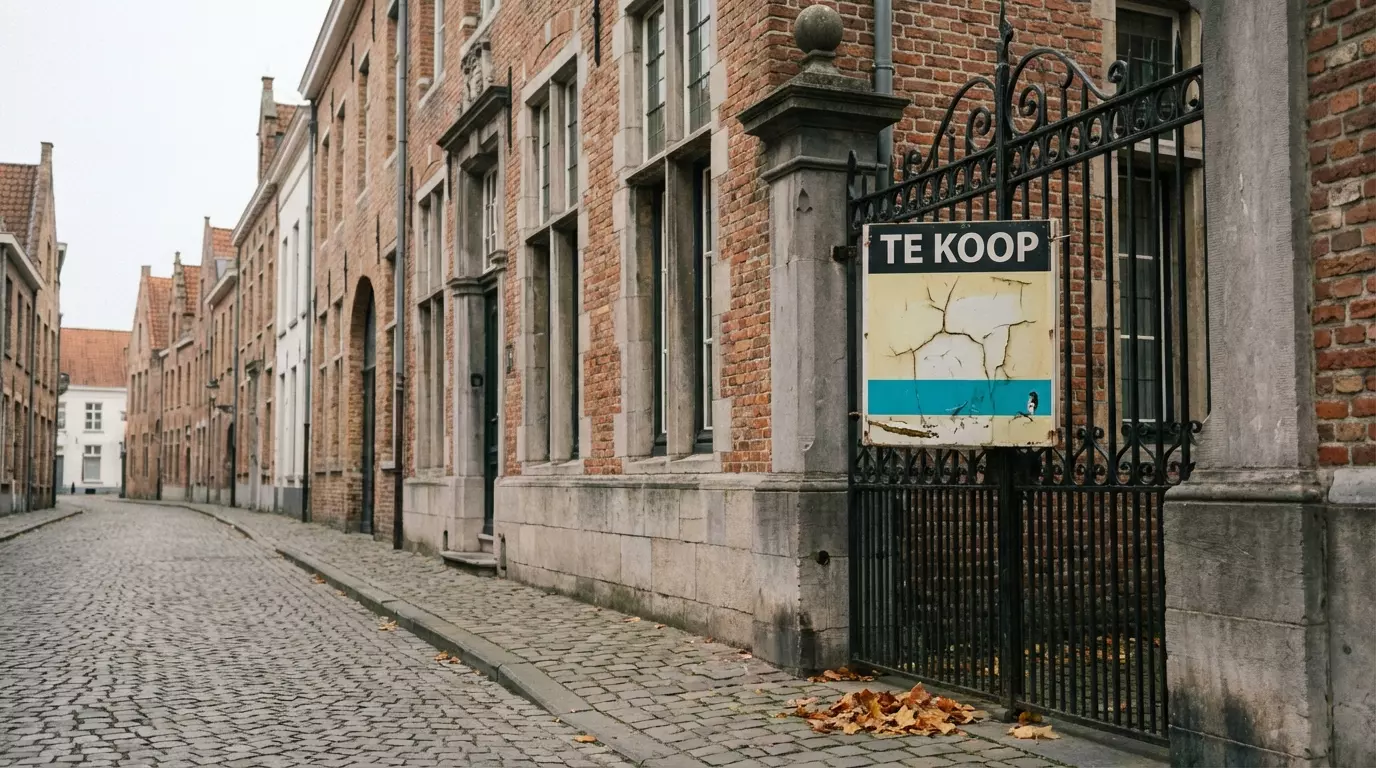
Belgian Property Market Under Pressure: Rising Rates and Global Tensions Threaten Stability
Belgium’s real estate market has long been considered a safe haven for investors and homeowners alike. But the landscape is shifting rapidly. A combination of climbing interest rates, persistent global tensions, and evolving economic conditions is pushing the Belgian property market toward what many experts believe could be a critical tipping point. As reported by The Brussels Times, the convergence of these factors is creating an environment of uncertainty that buyers, sellers, and investors can no longer afford to ignore. In this article, we break down what is happening, why it matters, and what Belgian homeowners and prospective buyers should prepare for in the months ahead.
Rising Rates Put Belgian Housing Market on Edge
The Belgian housing market has experienced years of steady growth, fueled in large part by historically low interest rates that made borrowing cheap and accessible. However, the European Central Bank has been steadily raising rates to combat persistent inflation across the eurozone. This shift has had a direct and measurable impact on mortgage affordability in Belgium. Monthly repayments on a standard home loan have increased significantly compared to just two years ago, and this is forcing many potential buyers to reconsider their budgets or delay purchases altogether.
The ripple effects are already visible in market data. Transaction volumes in several Belgian provinces have started to slow, and price growth, while still positive in some segments, is decelerating noticeably. Analysts warn that if rates continue to climb or even remain elevated for an extended period, the market could reach a genuine tipping point where price corrections become unavoidable. The days of double-digit annual price increases appear to be firmly behind us, and the new reality demands a more cautious approach from all market participants.
How Global Tensions Are Shaking Up Property
It is not just domestic monetary policy driving the uncertainty. Global geopolitical tensions, including the ongoing conflict in Ukraine, instability in the Middle East, and trade friction between major economies, are contributing to volatility in energy prices, supply chains, and investor confidence. Belgium, as a small open economy deeply integrated into European and global markets, is particularly sensitive to these external shocks. Rising energy costs have already squeezed household budgets, leaving less room for large financial commitments like purchasing property.
Furthermore, global uncertainty tends to push investors toward safer assets, which can paradoxically increase demand for real estate in the short term while simultaneously undermining the economic fundamentals that support long-term property values. For Belgium, this creates a complicated dynamic. Foreign investment in Belgian real estate, particularly in Brussels and major cities like Antwerp and Ghent, remains relatively strong. Yet the broader economic outlook, shaped by factors well beyond Belgium’s borders, introduces a level of unpredictability that makes accurate forecasting extremely difficult. Key global factors affecting the Belgian market include:
- Energy price volatility driven by geopolitical conflict
- Supply chain disruptions increasing construction and renovation costs
- Investor sentiment shifts as global risk appetite fluctuates
- Inflationary pressure reducing real household purchasing power
- Currency and trade policy uncertainty affecting cross-border investment flows
Buyers Face Tough Choices as Borrowing Costs Climb
For prospective Belgian homebuyers, the current environment presents a series of difficult decisions. The most immediate challenge is the increased cost of borrowing. A buyer who could comfortably afford a property worth 350,000 euros two years ago may now find that the same monthly budget only supports a purchase of 280,000 to 300,000 euros, depending on the loan terms available. This compression of buying power is reshaping demand patterns across the market, with more activity in lower price segments and growing hesitation at the higher end.
Many buyers are now weighing whether to lock in current rates before they potentially rise further or to wait in the hope that conditions improve. Neither option comes without risk. Those who buy now face the possibility of purchasing near a market peak, while those who wait could see rates climb even higher. Financial advisors across Belgium are encouraging buyers to focus on affordability stress tests, ensuring they can handle potential further rate increases. Here is a simplified comparison of how rate changes affect a typical Belgian mortgage:
| Mortgage Amount | Interest Rate | Monthly Payment | Total Interest Paid (25 years) |
|---|---|---|---|
| €300.000 | 1.5% | €1.200 | €59.856 |
| €300.000 | 3.0% | €1.423 | €126.827 |
| €300.000 | 4.5% | €1.667 | €200.069 |
The table above illustrates how even a seemingly modest rate increase dramatically changes the total cost of homeownership. For many Belgian families, these numbers are the deciding factor in whether they enter the market now or step back.
What This Means for Belgian Homeowners in 2024
For existing homeowners, the shifting market brings a different set of concerns. Those with variable-rate mortgages are already feeling the pinch of higher monthly payments, and this trend is unlikely to reverse quickly. According to data from the National Bank of Belgium, a significant portion of Belgian mortgages issued in recent years were at fixed rates, which provides some buffer. However, homeowners looking to refinance, renovate, or sell face a market that is less forgiving than it was during the boom years.
Property owners in major Belgian cities like Brussels, Antwerp, and Leuven may find that their homes still hold value relatively well due to sustained demand and limited supply. Rural and peripheral areas, on the other hand, could see more pronounced slowdowns. Homeowners should consider the following strategies to navigate the current environment:
- Review your mortgage terms and consult with your bank about fixed-rate options if you are currently on a variable rate.
- Avoid over-leveraging by taking on additional debt for renovations unless absolutely necessary.
- Monitor local market trends closely, as conditions can vary significantly between regions and even neighborhoods.
- Consider energy efficiency upgrades, which can protect property values as energy performance certificates become increasingly important in Belgian real estate transactions.
- Seek professional advice from independent financial planners who can help you stress-test your household finances against various rate scenarios.
The Belgian property market is not collapsing, but it is entering a period of adjustment. The combination of higher rates and global instability means that the margin for error is thinner than it has been in over a decade. Smart, informed decision-making is more critical now than at any point in recent memory.
In Short
The Belgian property market stands at a crossroads. Rising interest rates set by the European Central Bank, combined with global geopolitical tensions and persistent inflationary pressure, are creating conditions that could push the market toward a meaningful correction. Transaction volumes are slowing, buying power is shrinking, and both buyers and homeowners face difficult choices. While Belgium’s real estate sector has shown resilience historically, the current environment demands caution, thorough financial planning, and a willingness to adapt to rapidly changing conditions. Whether you are looking to buy your first home, invest in property, or simply protect the value of your current home, staying informed and seeking professional guidance has never been more important.
FAQ
Will Belgian property prices crash in 2024?
A full-scale crash is not the most likely scenario, but price corrections in certain segments and regions are increasingly possible. Market conditions vary significantly between urban centers like Brussels and more rural areas.
How much have Belgian mortgage rates increased?
Rates have roughly doubled or even tripled compared to the historic lows seen in 2021 and early 2022. A rate that was around 1.5% could now be closer to 3.5% or higher, depending on the loan type and lender.
Is now a good time to buy property in Belgium?
It depends on your personal financial situation. If you can comfortably afford payments even if rates rise further, buying now could still make sense. However, rushing into a purchase without adequate financial buffers is risky in the current climate.
How do global tensions affect Belgian real estate?
Global instability drives up energy prices, disrupts supply chains, and creates economic uncertainty, all of which reduce household purchasing power and investor confidence, indirectly pressuring property values.
What should Belgian homeowners do to protect their investment?
Focus on locking in fixed mortgage rates, improving energy efficiency, avoiding unnecessary debt, and staying informed about regional market trends.



Join The Discussion