

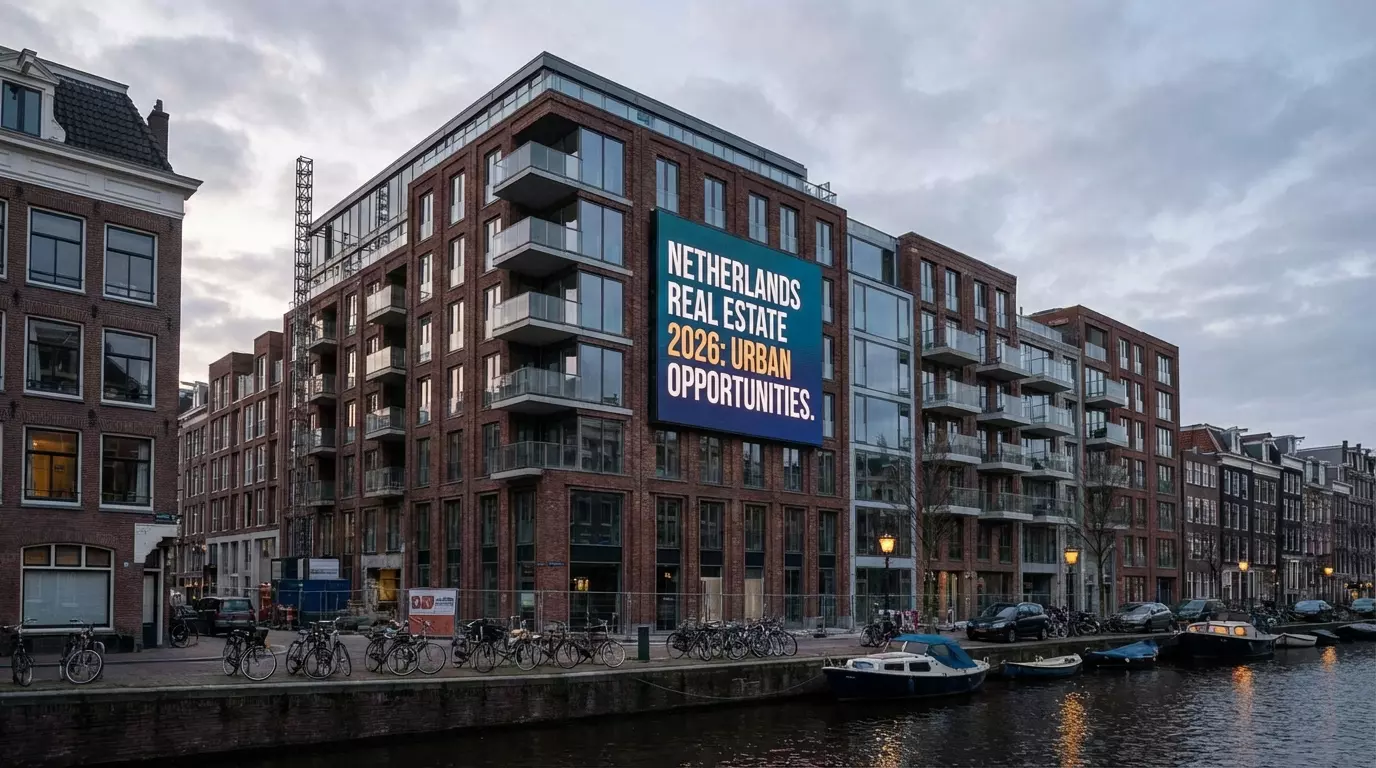
Netherlands Real Estate Market 2026: Urban Growth, Housing Demand and Sustainable Development
The Netherlands has long been one of Europe’s most dynamic and competitive real estate markets. As we move deeper into 2026, the Dutch housing landscape is undergoing significant transformation driven by urban expansion, shifting demographics, and ambitious sustainability mandates. Whether you are a first-time buyer, a seasoned investor, or simply curious about European property trends, understanding what is happening in the Netherlands right now is essential.
This article breaks down the key forces shaping the Dutch real estate market in 2026. From rising demand in major cities to new green building regulations, we will explore the factors that matter most and offer practical guidance for anyone looking to buy property in this thriving market.
Why the Dutch Housing Market Is Shifting in 2026
The Dutch housing market in 2026 looks noticeably different from what buyers and investors experienced just a few years ago. After a period of rapid price increases between 2020 and 2023, followed by a brief correction, the market has entered a new phase characterized by steadier growth and more deliberate government intervention. According to data from Statistics Netherlands (CBS), housing prices have stabilized in many regions while still climbing in high-demand urban zones. This recalibration reflects a broader effort to balance affordability with continued investment appeal.
Several macroeconomic factors are contributing to this shift. Interest rates, while no longer at historic lows, have settled into a range that keeps mortgage financing accessible for many buyers. At the same time, the Dutch government has introduced new policies aimed at curbing speculative investment and prioritizing owner-occupiers. Tax adjustments on buy-to-let properties, stricter rental regulations, and expanded social housing commitments are all reshaping who buys, where they buy, and at what price. For buyers entering the market in 2026, these policy changes create both challenges and genuine opportunities.
Urban Growth and Rising Demand Across Cities
The Netherlands is one of the most densely populated countries in Europe, and its major cities continue to attract residents at a remarkable pace. Amsterdam, Rotterdam, The Hague, Utrecht, and Eindhoven remain the primary magnets for domestic and international migration. Population growth in these urban centers is fueled by a combination of factors, including job creation in technology, finance, and green energy sectors, as well as the country’s reputation for quality of life. The result is persistent housing demand that consistently outpaces new supply.
What makes 2026 particularly interesting is the expansion of demand beyond traditional hotspots. Cities like Groningen, Arnhem, Tilburg, and Breda are experiencing accelerated growth as remote work policies and improved rail connectivity make them attractive alternatives to the Randstad region. Here is a quick comparison of how key cities are performing:
| City | Avg. Price per m² (2026 est.) | Year-over-Year Growth | Key Growth Driver |
|---|---|---|---|
| Amsterdam | €7.200 | +3.5% | Tech and finance sectors |
| Rotterdam | €4.800 | +5.1% | Port economy and regeneration |
| Utrecht | €5.500 | +4.2% | University and transit hub |
| Eindhoven | €4.400 | +6.0% | High-tech campus ecosystem |
| Groningen | €3.200 | +7.3% | Affordability and student population |
This geographic diversification is a healthy sign for the overall market, reducing pressure on Amsterdam while creating new investment corridors across the country.
Sustainability Rules That Will Affect Your Purchase
Sustainability is no longer a nice-to-have in Dutch real estate. It is a regulatory requirement that directly impacts property values, renovation costs, and long-term ownership expenses. The Netherlands has committed to aggressive climate targets under the European Green Deal, and the housing sector is squarely in the crosshairs. By 2030, the Dutch government aims to reduce carbon emissions from the built environment by 55% compared to 1990 levels. In 2026, this means buyers need to pay close attention to a property’s energy label before making a purchase.
Energy labels in the Netherlands range from A (most efficient) to G (least efficient). Properties with labels D through G are increasingly difficult to rent out legally, and future regulations may extend restrictions to resale conditions as well. New construction projects are now required to meet nearly zero-energy building (NZEB) standards, and many municipalities offer subsidies for retrofitting older homes with:
- Heat pumps to replace natural gas boilers
- Solar panel installations on rooftops
- Improved insulation for walls, floors, and roofs
- Smart home energy management systems
- Triple-glazed windows for better thermal performance
According to the Netherlands Enterprise Agency (RVO), homeowners can access grants covering up to 30% of renovation costs for energy upgrades. Ignoring sustainability when buying property in 2026 is not just environmentally irresponsible. It is financially risky, as poorly rated homes are losing value relative to their energy-efficient counterparts.
Smart Tips for Buying Property in the Netherlands
Navigating the Dutch property market as a buyer in 2026 requires a combination of preparation, local knowledge, and strategic thinking. The first and most important step is securing a mortgage pre-approval. Dutch banks and lenders, including major institutions like ABN AMRO, Rabobank, and ING, offer mortgage products tailored to both residents and expats. Having your financing confirmed before you start house hunting gives you a significant competitive edge, especially in cities where bidding wars still occur on desirable properties.
Beyond financing, here are practical tips that can make or break your buying experience:
- Hire a registered buying agent (aankoopmakelaar) who knows the local market and can negotiate on your behalf
- Always commission a structural survey (bouwkundige keuring) before finalizing your purchase
- Check the energy label carefully and factor potential renovation costs into your budget
- Research the local zoning plan (bestemmingsplan) to understand future development near your property
- Consider emerging cities outside the Randstad for better value and stronger growth potential
- Understand the transfer tax rules, which currently set the rate at 2% for owner-occupiers and 10.4% for investors
- Budget for notary fees and advisory costs, which typically add 5% to 6% on top of the purchase price
Taking these steps seriously can save you tens of thousands of euros and help you avoid common pitfalls that catch unprepared buyers off guard.
In Short
The Netherlands real estate market in 2026 presents a landscape of measured growth, expanding urban demand, and transformative sustainability requirements. While Amsterdam remains the flagship market, cities like Eindhoven, Rotterdam, and Groningen are emerging as compelling alternatives with stronger growth trajectories and greater affordability. Government policies are actively reshaping the market to favor owner-occupiers and energy-efficient homes, making it essential for buyers to stay informed and plan strategically.
Whether you are investing for the long term or searching for your first home, the Dutch market rewards preparation. Secure your financing early, work with experienced local professionals, prioritize energy-efficient properties, and do not overlook the rising stars among Dutch cities. The opportunities are real, but they belong to those who approach the market with clear eyes and a solid plan.
FAQ
Is 2026 a good year to buy property in the Netherlands?
Yes, 2026 offers a more stable market compared to the volatility of previous years. Prices have normalized, interest rates are manageable, and new government incentives support owner-occupiers.
What energy label should I look for when buying a Dutch home?
Aim for a label of C or higher. Properties rated A or B hold their value best and have lower energy costs. Homes rated D or below may require costly renovations to meet future regulations.
Can expats buy property in the Netherlands?
Absolutely. There are no restrictions on foreign nationals purchasing property in the Netherlands. However, securing a mortgage as an expat may require additional documentation and working with a specialized mortgage advisor.
Which Dutch cities offer the best real estate investment potential in 2026?
Eindhoven and Groningen are showing the strongest year-over-year price growth. Rotterdam also offers excellent value with significant urban regeneration projects underway.
What are the total costs of buying a home in the Netherlands beyond the purchase price?
Expect to pay an additional 5% to 6% for transfer tax, notary fees, mortgage advisor fees, and structural survey costs. For owner-occupiers, the transfer tax is currently 2% of the property value.

Join The Discussion