

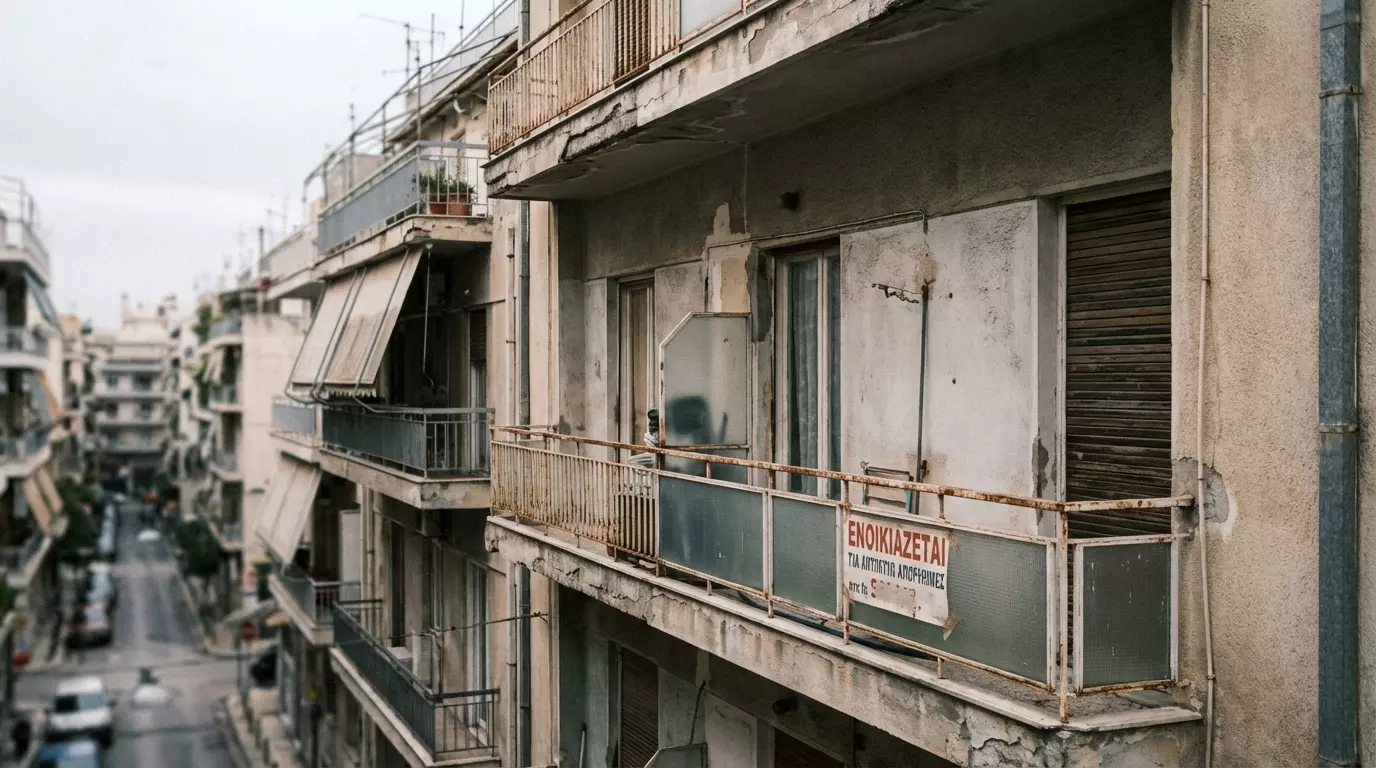
The Housing Affordability Crisis in Greece: 1 in 3 Greeks Spends 40% of Income on Housing
Greece is facing a housing affordability crisis that is quietly reshaping the financial lives of millions of its citizens. A recent report from the Bank of Greece has laid bare a troubling reality: roughly one in three Greek households now dedicates a staggering 40 percent of their income to housing costs alone. This figure far exceeds the affordability thresholds recommended by European institutions and international housing experts. As rents continue to climb and wages remain stagnant in many sectors, the squeeze on everyday Greek families is becoming unbearable. In this article, we explore the key findings from the Bank of Greece report, unpack the root causes behind this crisis, and examine what policymakers and the market need to do to restore balance.
Housing Costs Are Crushing Greek Households
The numbers paint a grim picture. According to the Bank of Greece, approximately one in three Greek residents now allocates at least 40 percent of their disposable income to housing expenses. This includes rent payments, mortgage installments, and associated costs like utilities and maintenance. By most international standards, spending more than 30 percent of income on housing is considered a burden, meaning a significant share of the Greek population has crossed well into financially distressed territory.
The problem is not evenly distributed across the country. Urban centers, particularly Athens and Thessaloniki, are bearing the brunt of the crisis. In these cities, demand for rental properties has surged due to a combination of factors, including population concentration, short-term rental platforms, and limited new construction aimed at affordable housing. For lower-income households, the situation is even more dire. Many families are forced to choose between paying rent and covering basic necessities such as food, healthcare, and education. The Bank of Greece report underscores that this level of housing cost burden is not sustainable and poses a genuine risk to social cohesion and economic stability.
Bank of Greece Sounds the Alarm on Rents
The Bank of Greece did not mince words in its assessment. The central bank’s report highlighted that rental prices across the country have been climbing at a pace that far outstrips wage growth. In major metropolitan areas, rents have increased by double-digit percentages in recent years, while average salaries have either stagnated or grown only marginally. This widening gap between income and housing costs is the core driver behind the affordability crisis. The report essentially serves as a warning to the government and the broader market that without intervention, the situation will continue to deteriorate.
What makes the Bank of Greece’s alarm particularly significant is the institution’s credibility and its role as a key economic watchdog. When a central bank dedicates substantial attention to the housing market in its official reports, it signals that the issue has moved beyond a social concern and into the realm of macroeconomic risk. Rising housing costs can dampen consumer spending in other sectors, reduce household savings, increase personal debt levels, and ultimately slow economic growth. The bank has urged a comprehensive policy response that addresses both the supply and demand sides of the housing equation. According to Eurostat data, Greece consistently ranks among the EU countries where citizens face the highest housing cost overburden rates.
Why So Many Greeks Can Barely Make Ends Meet
Several interconnected factors explain why so many Greek households are struggling with housing costs. Here are the primary drivers:
- Stagnant wages: Despite Greece’s post-crisis economic recovery, wage growth has been sluggish. Many workers, especially in the service and retail sectors, earn salaries that have barely changed in a decade.
- Short-term rental boom: Platforms like Airbnb have pulled thousands of properties off the long-term rental market, particularly in tourist-heavy areas. This has reduced supply and driven up prices for local renters.
- Insufficient housing supply: New residential construction has not kept pace with demand, especially in the affordable and mid-range segments.
- Rising property values: Foreign investment and the Golden Visa program have contributed to property price increases, further squeezing domestic buyers and renters.
- Inflation and cost of living: Broader inflationary pressures on energy, food, and transportation have eroded purchasing power, making the housing cost burden feel even heavier.
The cumulative effect of these factors is a population that is increasingly stretched thin. Young adults in Greece are particularly affected. Many are unable to move out of their family homes due to prohibitive rental costs, delaying major life milestones such as starting a family or building financial independence. According to a report by the OECD, housing affordability challenges in Greece are among the most acute in Southern Europe, with younger demographics and single-income households hit the hardest. The social implications are profound and extend far beyond simple economics.
What Needs to Change in the Housing Market
Addressing Greece’s housing crisis requires a multi-pronged approach. Experts and the Bank of Greece itself have pointed to several potential policy interventions:
- Increase affordable housing stock: The government needs to invest in or incentivize the construction of affordable rental units, particularly in high-demand urban areas.
- Regulate short-term rentals: Implementing stricter regulations on platforms like Airbnb could help return properties to the long-term rental market and ease price pressures.
- Strengthen tenant protections: Updating rental laws to provide greater stability for tenants, including limits on annual rent increases, could offer immediate relief.
- Boost wages: Sustained efforts to raise the minimum wage and promote higher-paying employment sectors would help close the gap between income and housing costs.
- Review the Golden Visa program: Reassessing or modifying the program’s impact on domestic property markets could prevent further price inflation driven by foreign investment.
| Policy Measure | Expected Impact | Timeline |
|---|---|---|
| Affordable housing construction | Increases supply, lowers rents | Medium to long-term |
| Short-term rental regulation | Returns units to long-term market | Short to medium-term |
| Tenant protection laws | Stabilizes existing renters | Short-term |
| Minimum wage increases | Improves affordability ratio | Medium-term |
| Golden Visa reform | Reduces speculative demand | Short to medium-term |
Beyond policy, there is also a need for a broader cultural and institutional shift in how Greece approaches housing. For decades, homeownership was the default path for Greek families, often supported by inherited property. But as demographics shift and urbanization intensifies, the rental market has become the primary arena where affordability battles are fought. Greece must develop a modern, well-regulated rental market that serves the needs of its population rather than prioritizing short-term profit for property owners and investors. The stakes are high. Failure to act decisively could lead to deeper inequality, increased poverty, and long-term economic damage.
In Short
The Bank of Greece report has thrown a spotlight on a crisis that many Greek families have been living with for years. When one in three residents spends 40 percent or more of their income on housing, the problem has moved beyond individual hardship and into systemic failure. The causes are complex, ranging from stagnant wages and insufficient housing supply to the unchecked growth of short-term rentals and foreign-driven property speculation. Solutions exist, but they require political will, coordinated policy action, and a willingness to prioritize the long-term wellbeing of Greek citizens over short-term economic gains. The housing market in Greece is at a crossroads, and the decisions made in the coming months and years will determine whether millions of people can afford to live with dignity in their own country.
FAQ
What percentage of income do Greek households spend on housing?
According to the Bank of Greece, approximately one in three Greek households spends at least 40 percent of their disposable income on housing costs, including rent and mortgage payments.
Why are rents rising so fast in Greece?
Rents are rising due to a combination of limited housing supply, the growth of short-term rental platforms like Airbnb, foreign investment in property, and stagnant wage growth that has not kept pace with price increases.
Which Greek cities are most affected by the housing crisis?
Athens and Thessaloniki are the most affected, as these urban centers experience the highest demand for rental properties and the most significant price increases.
What solutions has the Bank of Greece recommended?
The Bank of Greece has called for a comprehensive policy response that addresses both supply and demand, including increasing affordable housing construction, regulating short-term rentals, and strengthening tenant protections.
How does Greece compare to other EU countries on housing affordability?
Greece consistently ranks among the EU countries with the highest housing cost overburden rates, according to Eurostat data, with the problem being especially severe in Southern Europe.


Join The Discussion