

Beyond Italy: 5 Other European Countries Offering 1-Euro Homes
Italy may have grabbed global headlines with its symbolic-price housing initiatives, but it’s far from the only European nation tempting buyers with rock-bottom property deals. From Croatian villages selling homes for the price of a coffee to Greek islands paying families to relocate, several countries have rolled out their own creative schemes to repopulate fading rural communities. If you’ve been priced out of conventional markets or simply dream of a European bolthole, these alternative programs deserve serious attention.
Each country approaches the concept differently. Some demand renovation commitments, others require permanent residency, and a few even offer cash incentives on top of the cheap real estate. Below, we break down the most compelling 1-euro home schemes outside Italy, including unique programs in Croatia, Greece, France, and Spain that you may not have heard about.
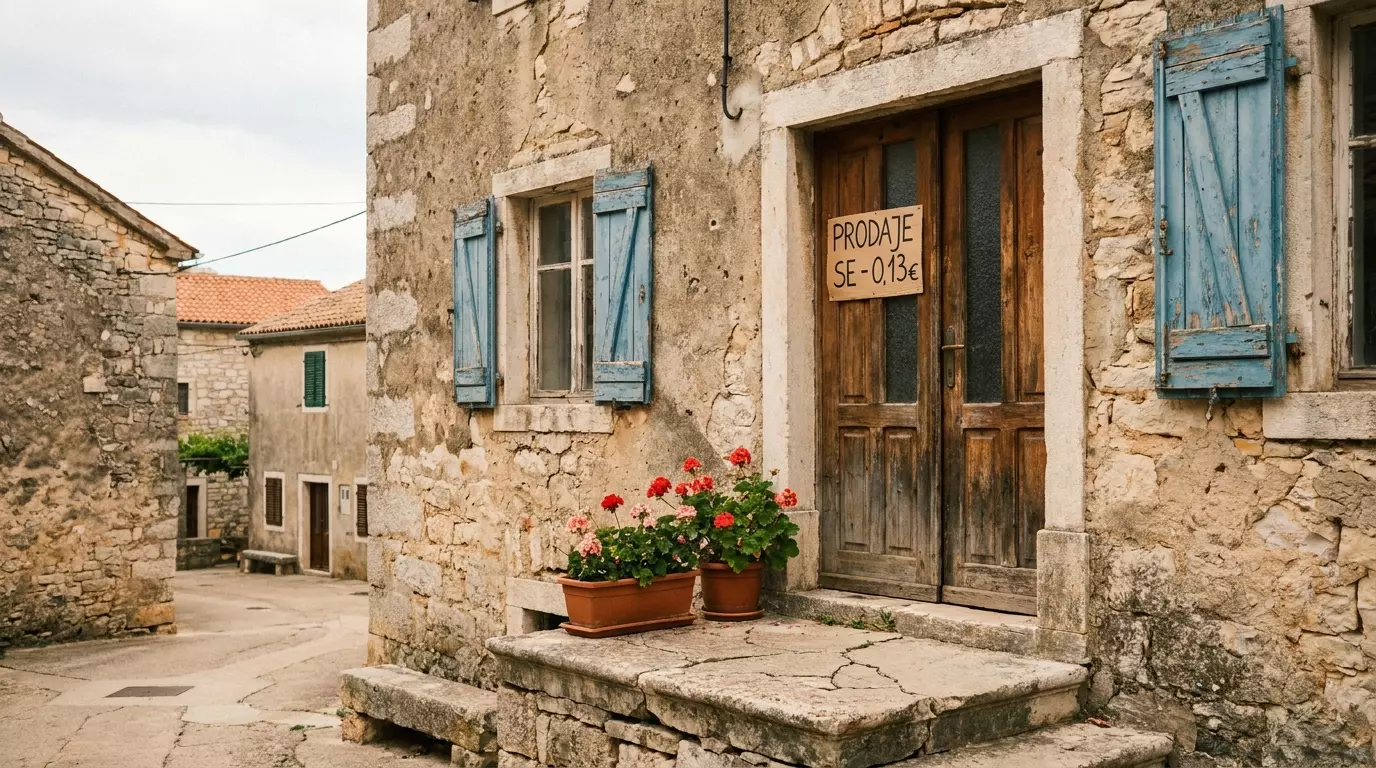
Croatia’s 13-Cent Homes: The Legrad Program Explained
The small municipality of Legrad, tucked into northern Croatia near the Hungarian border, made international waves when it began selling abandoned houses for just 1 Croatian kuna, which translates to roughly 13 euro cents at the time of launch. The initiative was a direct response to a steep population decline, with Legrad losing more than half its residents over the past several decades. Local officials decided that drastic measures were needed to attract new families and breathe life back into the region.
The program isn’t a free-for-all, however. Buyers must be under 45 years old, married or in a registered partnership, and commit to living in the property for at least 15 years. The municipality also chips in up to 25,000 euros toward renovation costs, making the deal even sweeter. Demand has been overwhelming, with applications pouring in from across Europe. According to Reuters, interest in such Croatian schemes has spiked dramatically since 2021, prompting other Croatian towns to consider similar models.
Key Requirements at a Glance
- Price: 1 kuna (~13 euro cents)
- Age limit: Buyers must be under 45
- Status: Married or in a civil partnership
- Residency: Minimum 15-year commitment
- Bonus: Up to €25.000 in renovation grants
Greece Pays Families to Move to Antikythera Island
Greece has taken a slightly different but equally fascinating approach with its initiative on the remote island of Antikythera. Located between Crete and Kythira, this windswept rock has fewer than 50 permanent residents, and the local Orthodox Church partnered with the Greek government to reverse the trend. Rather than selling homes for symbolic sums, the program offers free housing, a plot of land, and a monthly stipend of around 500 euros for three years to families willing to relocate.
The catch is that the island is genuinely isolated, with limited ferry connections, no hospital, and only a handful of basic services. Families with at least three children are prioritized, and applicants must be willing to take on jobs that benefit the local community, such as fishing, agriculture, or hospitality. The Antikythera initiative has drawn international applications from places as far as Australia and the United States, illustrating just how alluring even the most remote corners of Europe can be when financial barriers disappear.
Why Antikythera Stands Out
- Free accommodation provided by the Church of Greece
- Monthly cash stipend of approximately €500
- Free land allocation for agricultural use
- Priority for families with three or more children
- Three-year initial support period
France’s 1-Euro Homes Come With a Catch You Should Know
France has quietly joined the symbolic-price housing trend, particularly in struggling industrial towns in the north and east. Cities like Roubaix, near the Belgian border, have launched programs selling derelict properties for just 1 euro. The goal is to combat urban blight and revive neighborhoods that suffered from decades of factory closures and population flight. Unlike Italian rural schemes, French initiatives often focus on dense urban areas with existing infrastructure.
The biggest condition is the primary residence mandate. Buyers cannot use these properties as holiday homes, rentals, or investment flips. They must live in the home themselves for a minimum number of years, typically five or six, depending on the local commune. Renovation requirements are also strict, with detailed timelines and quality standards enforced by municipal authorities. According to a report by The Guardian, Roubaix has successfully sold dozens of properties under this scheme, with new owners investing an average of 60,000 to 100,000 euros into renovations.
France vs. Italy: Quick Comparison
| Feature | France (Roubaix) | Italy (Various) |
|---|---|---|
| Price | €1 | €1 |
| Location type | Urban | Rural |
| Residency requirement | Yes, mandatory | Sometimes |
| Renovation deadline | 2-3 years | 1-3 years |
| Investor flips allowed | No | Often yes |
| Typical reno cost | €60k-€100k | €20k-€50k |
Spain’s Empty Villages Are Selling Houses for Pocket Change
Spain faces a phenomenon known as “España vaciada” or “emptied Spain,” referring to the vast inland regions that have lost residents to coastal cities and abroad. Provinces like Teruel, Soria, and parts of Galicia have seen entire villages abandoned, with some now offering homes and even whole hamlets for symbolic prices. In some cases, you can purchase an entire abandoned village in Galicia for less than the cost of a Madrid apartment.
The Spanish approach varies dramatically by region. Some municipalities sell individual homes for as little as a few hundred euros, while others bundle multiple properties together for buyers willing to revive an entire community. Real estate agencies like Aldeas Abandonadas specialize in these unique listings. Buyers should be aware that many properties lack modern utilities, and reconnecting water, electricity, and internet can require significant investment. Still, for those seeking solitude and a sustainable lifestyle, Spain’s depopulated north offers some of Europe’s most affordable rural real estate opportunities.
Most Active Spanish Regions for Cheap Homes
- Galicia: Entire villages from €45.000 upward
- Teruel (Aragón): Individual homes from €5.000
- Soria (Castile and León): Stone houses from €10.000
- Asturias: Mountain cottages requiring restoration
- Extremadura: Traditional farmhouses with land
Conclusion: In Short
Europe’s 1-euro home phenomenon has expanded far beyond Italy, with each country putting its own stamp on the concept. Croatia’s Legrad program targets young couples with generous renovation grants, while Greece’s Antikythera initiative offers cash stipends and free land to families willing to embrace island life. France focuses on urban revival with strict residency mandates, and Spain’s depopulated villages provide some of the continent’s most affordable rural real estate. Each scheme reflects local priorities, whether that’s reversing population decline, restoring historic neighborhoods, or preserving cultural heritage.
Before jumping in, prospective buyers should weigh the renovation costs, residency obligations, and lifestyle realities carefully. These programs aren’t quick paths to passive income but genuine commitments to communities that have been struggling for decades. Done right, they offer life-changing opportunities to own a home in Europe at a price that seems almost too good to be true.
Frequently Asked Questions
Q: Are foreigners eligible for these 1-euro home programs?
A: Yes, most schemes welcome international buyers, though some, like Croatia’s Legrad program, may have specific age or family status requirements. EU citizens generally face fewer hurdles than non-EU applicants.
Q: How much should I budget for renovations?
A: Renovation costs vary widely, but most buyers spend between €20.000 and €100.000 depending on the property’s condition and location. France’s urban schemes often require larger budgets than Spain’s rural villages.
Q: Can I use the property as a holiday home or rental?
A: It depends on the country. France strictly requires primary residency, while some Italian and Spanish programs allow more flexibility. Always check local rules before buying.
Q: How long does the buying process take?
A: Expect anywhere from three to twelve months, depending on the country, the property’s legal status, and how quickly renovation plans are approved.
Q: Is the Antikythera program still accepting applications?
A: The program has had multiple application rounds, and interested families should contact the Church of Greece or local Greek authorities directly for the latest opportunities.
Q: Do I need to speak the local language?
A: While not always mandatory, basic knowledge of the local language significantly helps with paperwork, contractor negotiations, and integrating into small communities.
Join The Discussion