


Italy’s second IMU instalment falls due on 16 December 2026, and the rate that applies is the one each comune publishes by 28 October. For a British, Dutch or German owner with a stone house in Umbria or a flat near Turin, this is the annual bill nobody mentions at the notary. The purchase taxes are paid once. This one comes back every year, whether the house is used or not.
The rule behind it is shorter than the paperwork suggests. IMU is due on the possession of buildings, and the main-residence exemption that foreign buyers assume they inherit only works if they are registered as resident in the property and live there. Buy a second home in Italy and keep your life in London or Utrecht, and the tax is due in full, calculated on a value the state takes from the cadastral register rather than from the price you paid.
Why Residence, Not Ownership, Decides the IMU Bill
The Dipartimento delle Finanze defines the main residence as the unit where the taxpayer and their household are registered with the anagrafe and habitually live, under article 1, comma 741, letter b) of legge 160 of 27 December 2019. Both conditions have to hold. A non-resident owner who keeps their registration abroad fails the first test the moment they sign, and the flat is classed with the other buildings, whatever the family calls it.
The exemption is narrow in a second way. The department’s own page on the main residence states that IMU is not due there at all, and that only homes in cadastral categories A/1, A/8 and A/9, the three luxury classes, pay it even as a main residence. Those pay 0.5% with a deduction of €200. Since 2020 the old assimilation for Italian pensioners registered abroad is gone as well, so an Italian who retires to Spain pays IMU on the family house in Italy. A comune can stretch the definition for an owner who moves permanently into care, and that is about the limit of its discretion.
The Cadastral Value Is Not What You Paid for It
The taxable base is the cadastral income, revalued by 5% and multiplied by 160 for buildings in group A, A/10 excepted, according to the department’s base-imponibile page. Garages, cellars and storage rooms in C/2, C/6 and C/7 take the same 160 multiplier, which matters on a second home that comes with an annexe. The cadastral income itself sits in the visura catastale and in the deed, and it is a bureaucratic number that has drifted far from market prices since the last general revision.
That gap is the whole point for a buyer. A flat sold at €300,000 with a cadastral income of €900 has a taxable base of €151,200, less than half what the buyer hands over. Two flats on the same street at the same price can carry different bills if their cadastral income differs, and nobody at the agency will volunteer the figure. Ask for the rendita catastale before the offer, not after the deed.
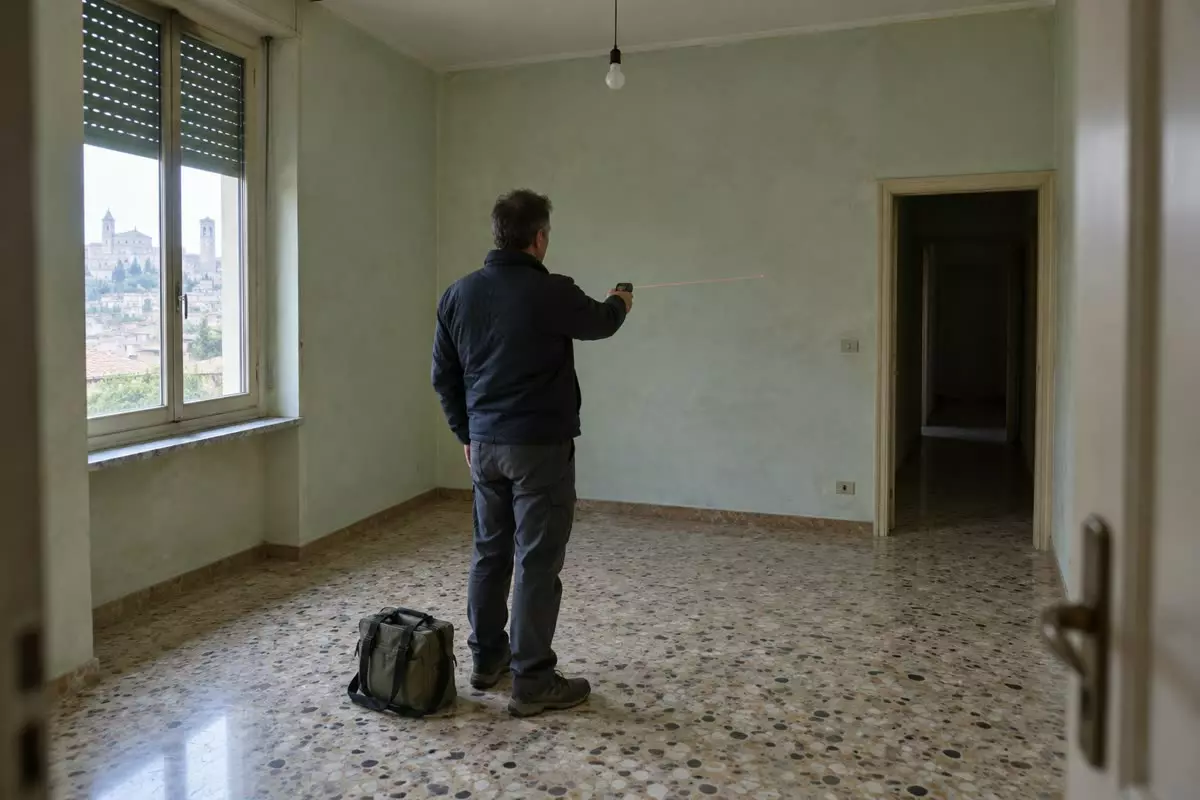
What the 16 December Balance Actually Requires
IMU is paid in two instalments. The first falls due on 16 June and is half the year’s tax at the previous year’s rate. The second, on 16 December, is the balance for the whole year, calculated on the rates and the regulation each comune published on the finance department’s site by 28 October. If a comune misses that date, the acts of the previous year apply to the balance, which is the detail that catches owners who budget on a rate announced in the spring. The mechanics sit on the department’s payments page, and the whole year can be settled in one go by 16 June.
Payment runs through an F24 form or a compatible postal bollettino, and the tax is not attached to the property in a way the notary settles for you. Three dates are worth putting in a client’s calendar:
- 28 October, when the comune’s rates for the year are supposed to be visible on the finance department’s site.
- 16 June, the first instalment, or the single payment for the year if the owner prefers one transfer.
- 16 December, the balance, which carries any difference between the June instalment and the final bill.
A Worked Example: What a Second Home Costs a Year
The statutory rate for buildings other than the main residence is 0.86%, and each comune can set its own between 0 and 1.06%, with a ceiling of 1.14% where it applies the increase that replaced the old TASI surcharge, as the department’s rate table sets out. Take two plausible cadastral incomes and run both at the statutory rate and at the municipal ceiling.
| 2026 IMU, second home | Rendita €900 | Rendita €1,800 |
|---|---|---|
| Taxable base (rendita + 5%, times 160) | €151,200 | €302,400 |
| At 0.86%, the statutory rate | €1,300.32 | €2,600.64 |
| At 1.06%, the municipal ceiling | €1,602.72 | €3,205.44 |
| Half-yearly instalment at 0.86% | €650.16 | €1,300.32 |
Ownership is counted in months, not in days spent there. The tax is due in proportion to the months in which the property was held, a month counts in full when it was held for more than half its days, and the day of the transfer falls to the buyer. A deed signed on 10 November leaves the buyer with November and December, so two twelfths of the annual bill: €216.72 on the €900 example. A deed signed on 20 November gives November to the seller and leaves one twelfth with the buyer. On the same example the yearly bill comes to roughly 0.43% of a €300,000 purchase price, small beside a mortgage and permanent beside it too.
Two taxes sit next to it and are easy to confuse. TARI, the waste charge, is a separate municipal bill and survived the abolition of the old IUC in 2020, and TASI disappeared with it. In Friuli-Venezia Giulia and in the provinces of Trentino-Alto Adige the national IMU does not apply at all: those territories run IMIS and IMI under their own statutes, and the calculation is not the same.
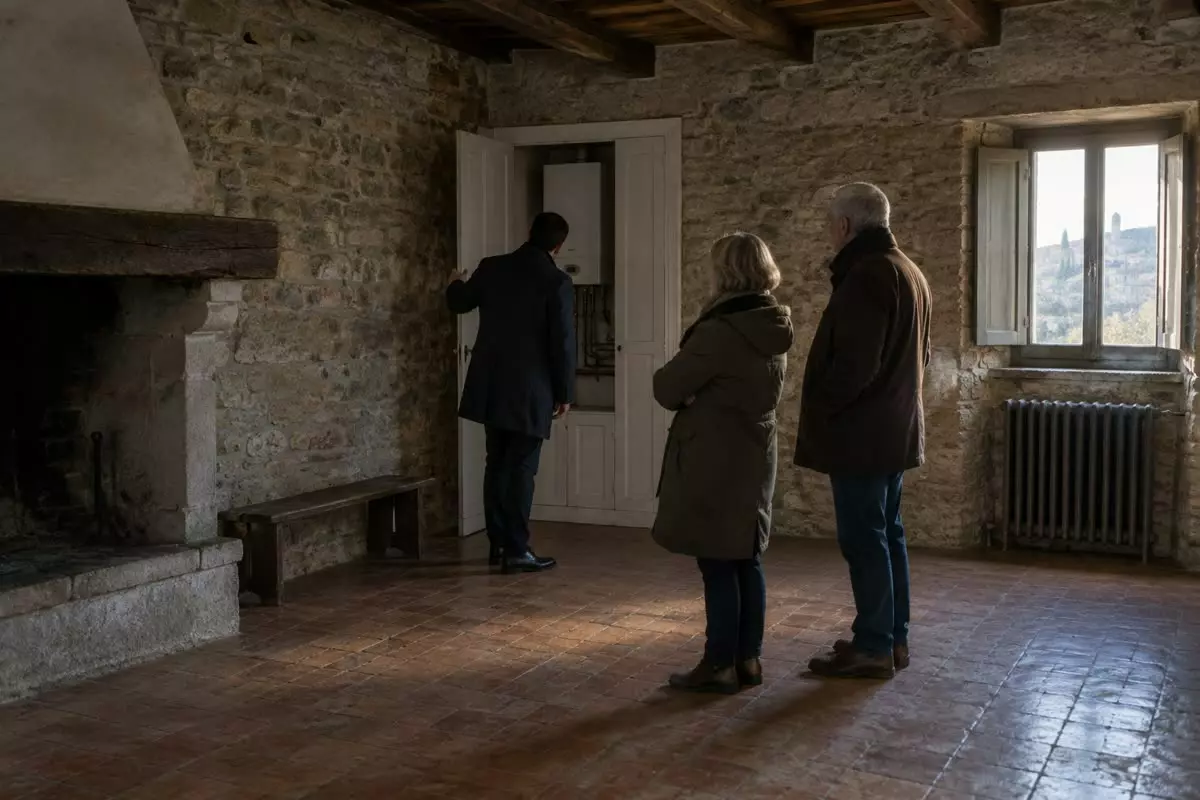
What an Agent Should Check Before a Client Buys
Almost none of this appears in a listing, and all of it can be settled before the offer. Five checks, in the order they cost least:
- Pull the rendita catastale from the visura or the deed and calculate the base yourself, at 5% revaluation and a 160 multiplier for a home.
- Ask the comune for its current IMU delibera and its rate for other buildings, and check whether it was published by 28 October.
- Ask the client whether they intend to take up Italian residence. If they do, the exemption applies, except in A/1, A/8 and A/9. If they do not, the bill is annual and permanent.
- Add TARI and ask who owes the arrears at completion, because the waste bill is invoiced to whoever the comune has on record for the property rather than to whoever holds the deed.
- Check the territory. A property in Friuli-Venezia Giulia or Trentino-Alto Adige follows IMIS or IMI, and a calculation copied from a national guide will be wrong.
The conversation is worth having early, because it changes how a client reads a yield. A flat let for a few weeks a year and empty for the rest pays the same IMU as one lived in, and the Italian property tax is one of the few costs an owner controls by deciding where to register, not by negotiating harder on the price.
The Annual Cost Belongs in the Buying Decision
Purchase costs in Italy are visible, itemised at the notary and paid once, and the standard guides to buying property in Italy stop there. IMU is the opposite: a modest annual figure that nobody puts in the brochure and that quietly shapes whether a second home is a pleasure or a liability. For most buyers the number is between €1,000 and €3,000 a year on a home in that €300,000 range, and it arrives in December, when the house is closed and the owner is somewhere else.
The practical takeaway is a document, not an opinion. Get the rendita, get the comune’s rate, and put both in the file before the client signs anything. An agent who can quote the yearly figure in the first meeting looks like someone who has done this before, and the buyer who hears it early does not discover it from an F24 two Decembers later.
Frequently Asked Questions About Italian IMU
Is IMU due on a home that stands empty?
Yes. The tax follows possession, not use, so an empty second home pays the same as one used for a few weeks in August. Only the main residence escapes, and only when the owner is registered there and lives there.
Does letting the property out remove the IMU?
No. A tenancy changes who lives in the flat, not who owns it, and the owner remains the taxpayer. Some lease types carry reductions in the base, which is a question for the comune’s regulation rather than a rule you can assume.
What happens in the year a buyer completes?
The year is split by months. Each month belongs to whoever held the property for more than half of its days, and the day of the deed counts for the buyer. A completion in the first half of a month puts that whole month on the buyer’s bill.
Is the December instalment always half the annual tax?
Not necessarily. June is half the year at the previous year’s rate, and December is the balance at the current rate, so an increase approved for the year shows up as a larger December payment rather than as a larger June one.
Do luxury homes pay IMU even as a main residence?
Yes, in categories A/1, A/8 and A/9. The statutory rate is 0.5% with a €200 deduction, and a comune can move it within its own margins. A villa bought as a full-time home can therefore carry a bill that a flat next door does not.