
France has redrawn the map of where its clay soils can crack a house, and the new version covers far more homes than the one it replaces. An arrêté published on 31 January 2026 puts 12.1 million individual houses in a medium or high exposure zone, out of 19.6 million across mainland France. That is 62% of the country’s houses, and it is the number to check before advising on a property in the centre or the south.
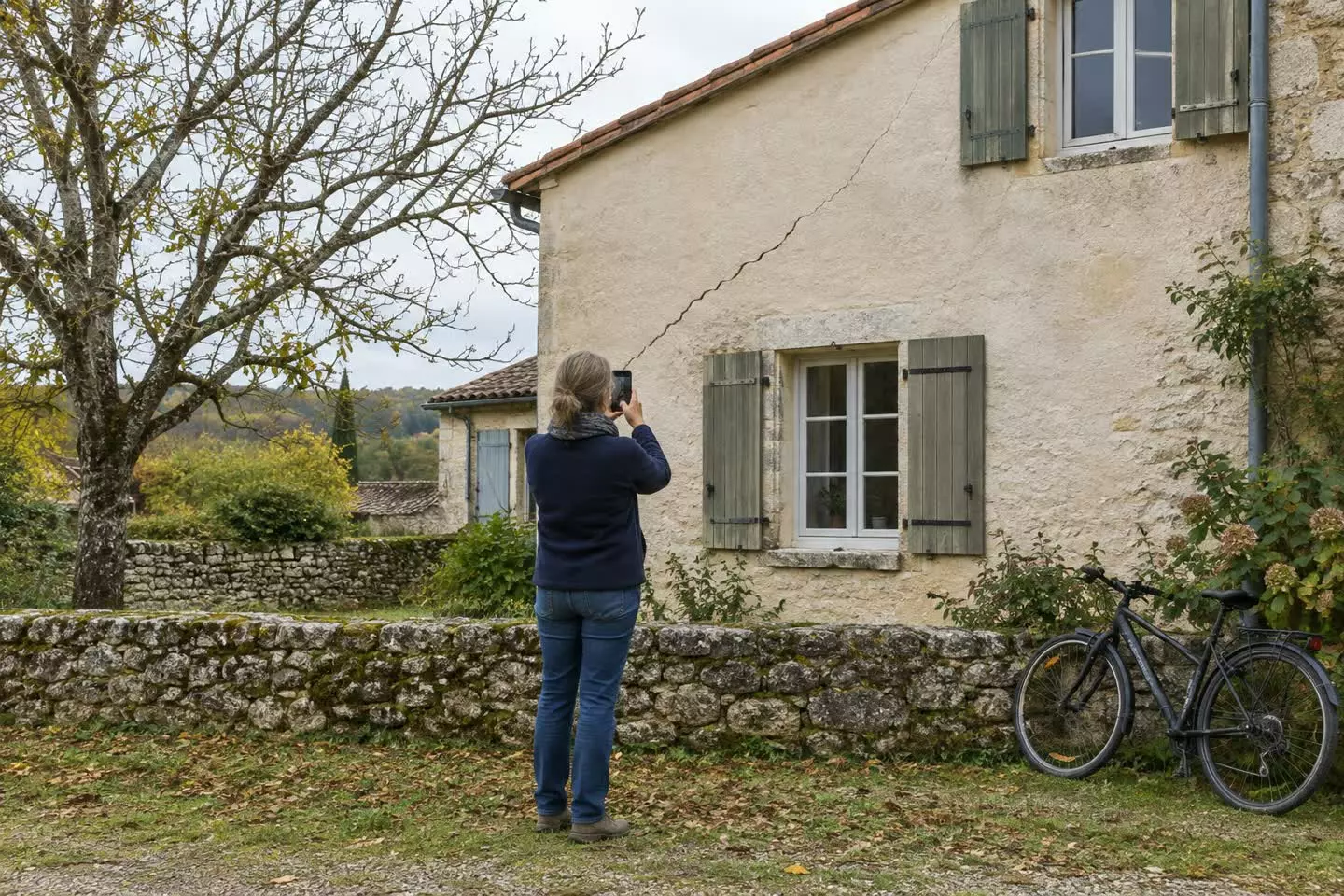
This change arrives in a year that made the risk visible. France has just recorded its wettest February since 1959 and its hottest summer since records began in 1900, and clay ground moves most when it swings from soaked to baked. The Local France reported on 15 October that owners across the country are finding new cracks in walls that had held for years. Here is what the map says, and what it changes for a buyer.
What France’s New Clay-Risk Map Actually Covers
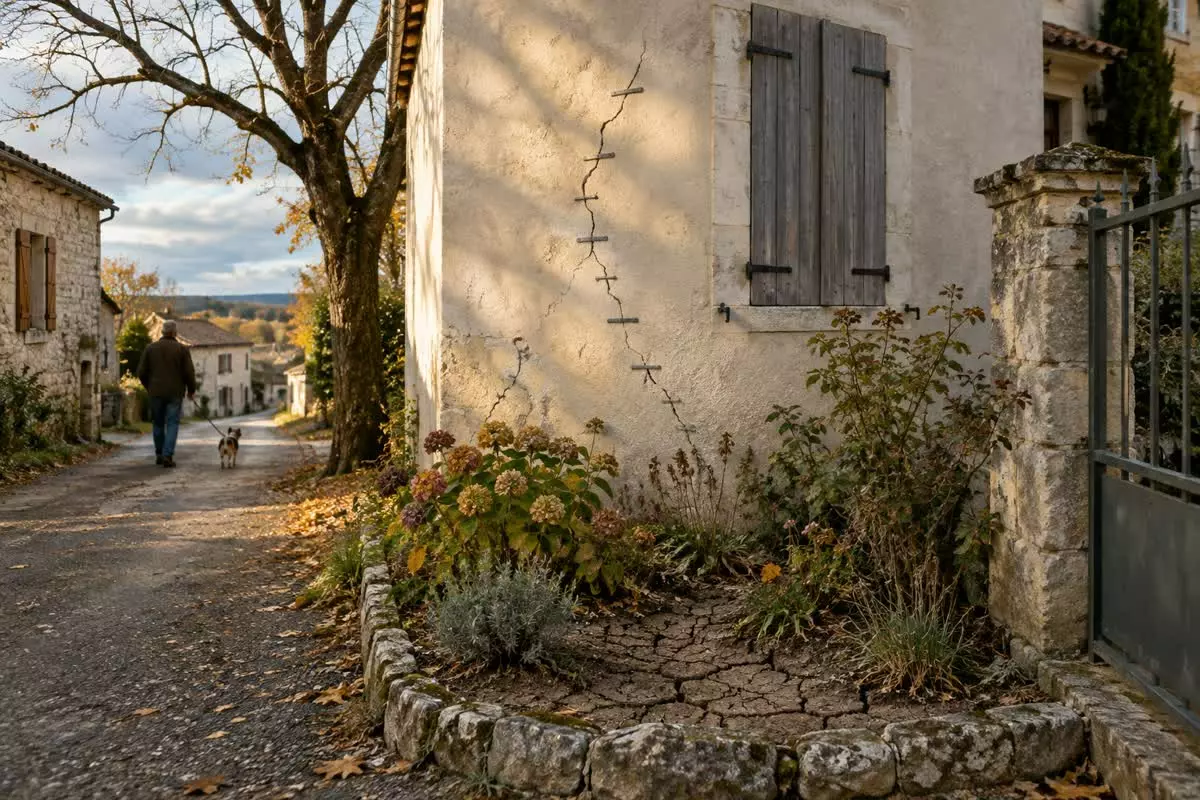
The phenomenon is called retrait-gonflement des argiles, the shrinking and swelling of clay. Clay under a house’s foundations loses water in a drought and contracts, then takes it back when the rain returns and expands. Repeated over years, the movement weakens the soil and the house sitting on it, cracking walls and distorting door and window frames. A report by the statistical service of the ecology ministry, published on 17 March 2026, puts the exposure at 72% of the surface of mainland France, with 55% in a medium or high zone against 48% in the 2020 map.
House numbers are the part that matters commercially. Of 19.6 million individual houses, a little over 12.1 million, or 62%, now sit in a medium or high exposure zone, and just under 3.6 million, or 18%, are considered unexposed. It draws the map from the Géorisques geological work of the BRGM crossed with the 2021 housing file of Insee, and it notes that more than 70% of the exposed houses were built before 1990, when the construction rules for clay ground didn’t exist.
How the 2026 Drought Made the Cracks Appear
Weather is what turns a dormant risk into a claim. Météo-France recorded a February with twice the normal rainfall, the wettest since 1959, and then a summer that was the hottest since 1900, with around 60% of the country under crisis-level water restrictions. That wet-then-dry swing is the worst case for clay, and it is why this autumn’s cracks are appearing in houses that had been stable for decades.
Repairs aren’t cheap. Géorisques puts the average claim for a subsidence-damaged house at €16,500, and the clay prevention fund records that the 2022 drought alone generated €3.5 billion in payouts under the natural disaster insurance scheme. State reinsurer Caisse centrale de réassurance projects a rise of between 44% and 162% in clay-related claims by 2050.
A Soil Study the Law Now Requires Before You Build
The legal teeth sit in the sale of land. Since the ELAN law of 2018, now article L. 132-4 of the construction and housing code, a seller of an unbuilt but buildable plot in an exposed zone has to hand the buyer a geotechnical study of the soil. Article 3 of the new arrêté states that the map applies to promises of sale, or failing that to the notarial deeds, and to housebuilding contracts concluded from 1 July 2026. Because the medium and high zones have grown, plots that carried no study duty last year can carry one now.
For an agent the practical effect on the French property market is a document to ask for early. On a plot in a medium or high zone, the seller should be able to produce the study, and a buyer who is refused it should treat that as a red flag. Houses built after 2020 on such ground have to follow construction techniques that make them more resistant, which is why the report finds that recent builds are a smaller share of the exposed stock.
How Catastrophe Naturelle Insurance Pays a Claim
For an existing home, the route to compensation is the catastrophe naturelle guarantee, which French law folds into every home policy that covers damage to property. It doesn’t pay on the crack alone. It pays once an interministerial arrêté, published in the Journal officiel, recognises the commune as a natural disaster zone for a drought event, and that recognition is something the commune applies for, generally within 24 months of the event. The service-public portal sets out the official procedure.
Once the arrêté is published, the clock is short: a household has 30 days to declare the damage to its insurer, by recorded letter, and should keep dated photographs of every crack as evidence. Drought is the most expensive natural risk France insures. Over the past ten years drought accounted for 53% of the sums paid out under the natural disaster scheme, more than flooding, according to the state reinsurer Caisse centrale de réassurance. Claims are often contested on cause, so the advice is to photograph early, notify the mairie, and avoid starting repairs before an expert has seen the damage.
- Photograph and date every crack, inside and out, and keep taking pictures as it changes.
- Tell the mairie, which is the body that applies for the disaster recognition.
- Declare the loss to your insurer in writing within 30 days of the arrêté.
A State Fund That Pays You to Prevent Damage
France also pays owners to act before the cracks start. An experimental state scheme, the clay prevention fund covers a vulnerability survey and preventive works in 11 départements: Allier, Alpes-de-Haute-Provence, Dordogne, Gers, Indre, Lot-et-Garonne, Meurthe-et-Moselle, Nord, Puy-de-Dôme, Tarn and Tarn-et-Garonne. An updated map widened the number of houses that qualify.
Eligibility is narrow and the grants are generous where it applies. An owner-occupier of a principal residence, in a high exposure zone, in a house at least 15 years old and no more than three storeys, with home insurance and income within the scheme’s ceilings, can claim a share of the survey and of the works.
| Phase | Cap on eligible spend | State grant |
|---|---|---|
| Vulnerability survey and buried-pipe check | €2,000 excl. VAT | 90%, 85% or 70% by income |
| Project management assistance | €1,000 excl. VAT | as above |
| Preventive works | €14,000 excl. VAT | 90%, 85% or 70% by income |
Take-up has been slow, which is the reason the scheme keeps being widened. By the end of April 2026, only 19 applications had been submitted across the 11 pilot départements, and the government has since raised the storey limit and the crack width that still allows works to be funded.
What to Check Before You Buy on Clay Soil
Most of the work is a handful of checks, and they cost nothing before you commit. Anyone buying a home on clay ground in France should run these in order.
- Look up the address on Géorisques, which shows the exposure level for the commune.
- Ask the seller for the geotechnical study if the plot is buildable and unbuilt.
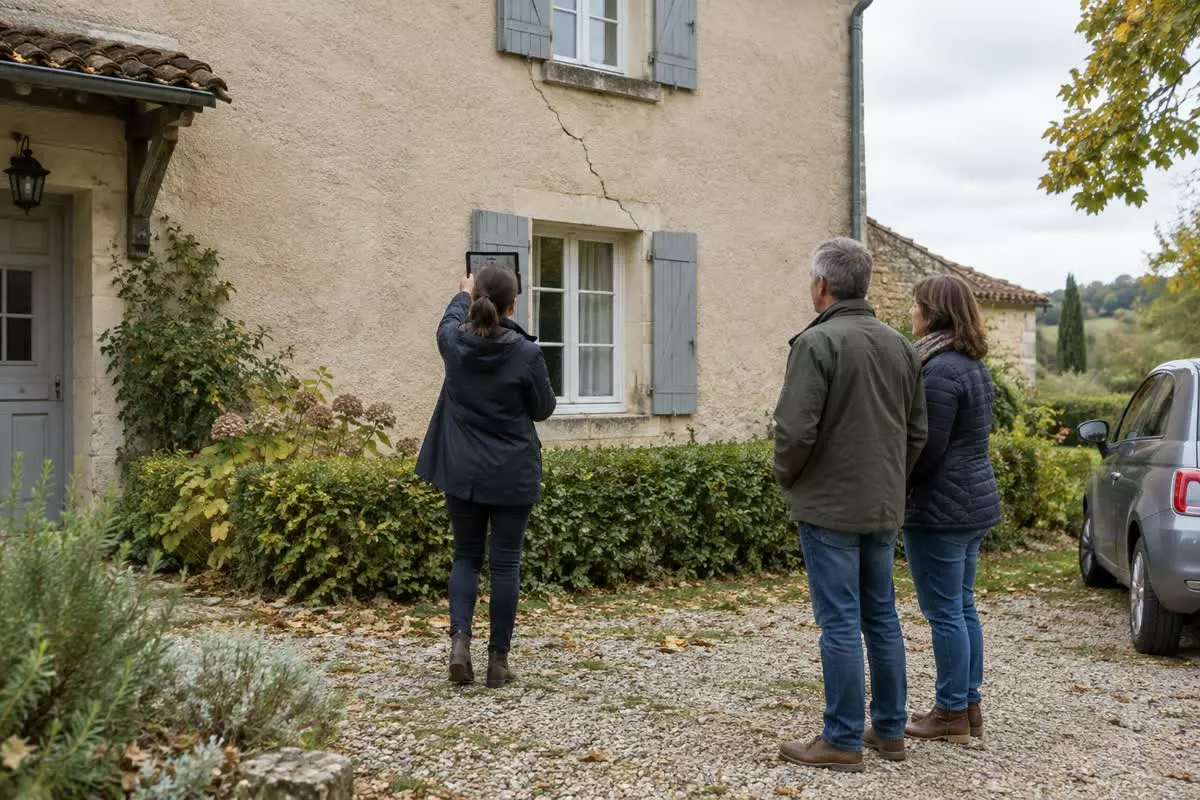
- Walk the walls after rain and after a dry spell, and photograph any crack with a coin for scale.
- Check the commune’s recent natural disaster arrêtés in the Journal officiel.
- Confirm the home insurance policy carries the catastrophe naturelle guarantee.
- If the house is in a pilot département, test eligibility for the prevention fund.
Why Clay Risk Belongs in Every French Valuation
Clay is now a line item in the value of a French house, not a footnote. Almost two-thirds of the country’s individual houses sit on ground that can move, the map behind the rules has just grown, and the insurance that answers the damage pays only after a commune has been recognised and within a 30-day window.
For a buyer, the checks above are cheap and they settle the question before a price is agreed. For an agent, quoting on a house without knowing the exposure zone of the plot is quoting blind, and the difference between a stable house and a cracked one can run to five figures, rarely visible in the house prices a listing quotes. Droughts are lengthening across southern Europe, so the soil map and the insurance that answers it will keep moving up the list of things a valuation has to name.
Questions Buyers Ask About Clay Risk in France
These come up as soon as a buyer sees a crack or hears the word argile.
Is my house in a clay risk zone in France?
Look the address up on Géorisques, the government’s risk portal. It returns the exposure level for the commune, from none to strong, based on the BRGM map that the arrêté of 9 January 2026 brought into force. Of 19.6 million individual houses, 12.1 million sit in a medium or high zone.
Does home insurance cover drought cracks?
Only through the catastrophe naturelle guarantee, and only once an interministerial arrêté has recognised the commune as a natural disaster zone for a drought. The guarantee is automatic in every policy that covers damage to property, but it is the recognition, not the crack, that opens the claim.
How long do I have to declare drought damage?
Thirty days from the publication of the recognition arrêté in the Journal officiel, by recorded letter to your insurer. A commune has up to 24 months from the event to apply for that recognition, so the two clocks run at different speeds and a household should keep dated photographs from the moment the cracks appear.
Can I still build on clay soil in France?
Yes, but with conditions. In a medium or high exposure zone the sale of an unbuilt buildable plot has to carry a geotechnical study, and housebuilding contracts concluded from 1 July 2026 fall under the new map. Houses built under those rules have to use techniques that resist soil movement.
Who can claim from the clay prevention fund?
Owner-occupiers of a principal residence in one of 11 pilot départements, in a high exposure zone, in a house at least 15 years old and no more than three storeys, with home insurance and income within the scheme’s ceilings. It pays a share of a vulnerability survey and of preventive works, and eligibility is checked through the fund’s own simulator.