
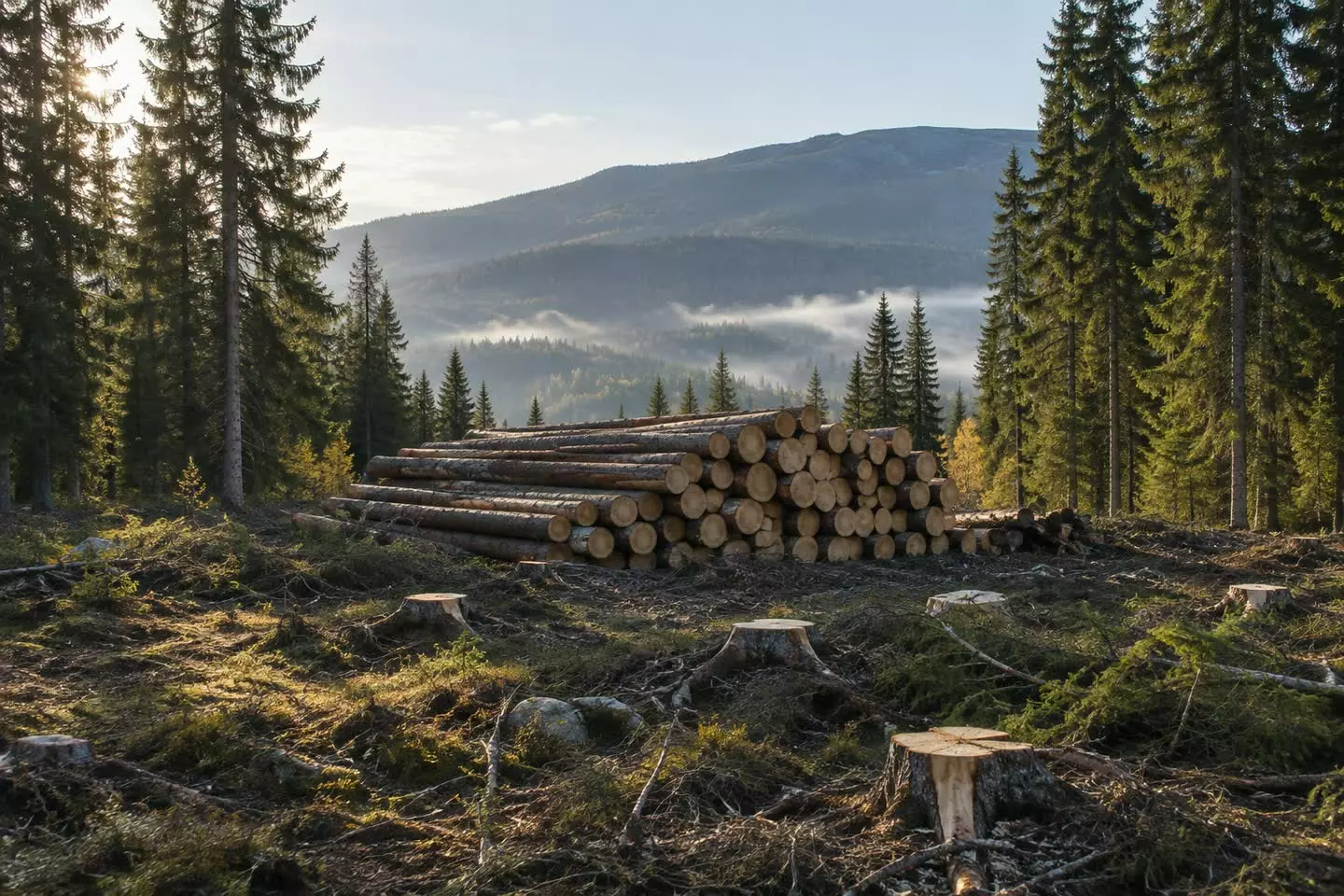
Alex Karp, the chief executive of Palantir Technologies, has bought 37,000 acres of forest in Sweden. It covers about 15,000 hectares in the Harjedalen region, and the land changed hands through a newly registered company, Cladonia Skog AB, of which Karp is the beneficial owner.
Reports put the value at 235 million kronor, about 22 million dollars. Svenska Cellulosa Aktiebolaget, the paper manufacturer most people call SCA, was the seller, and it judged the property suboptimal for forestry. Word reached the public only after hunters in the region received letters telling them their hunting rights had been revoked.
For agents who work with land, the buyer’s name is not the interesting part. What matters is the machinery of the deal: who holds the hunting lease, what a new owner may do with the trees, and how a foreign buyer actually acquires forest in Sweden.
Alex Karp buys 37,000 acres of Swedish forest
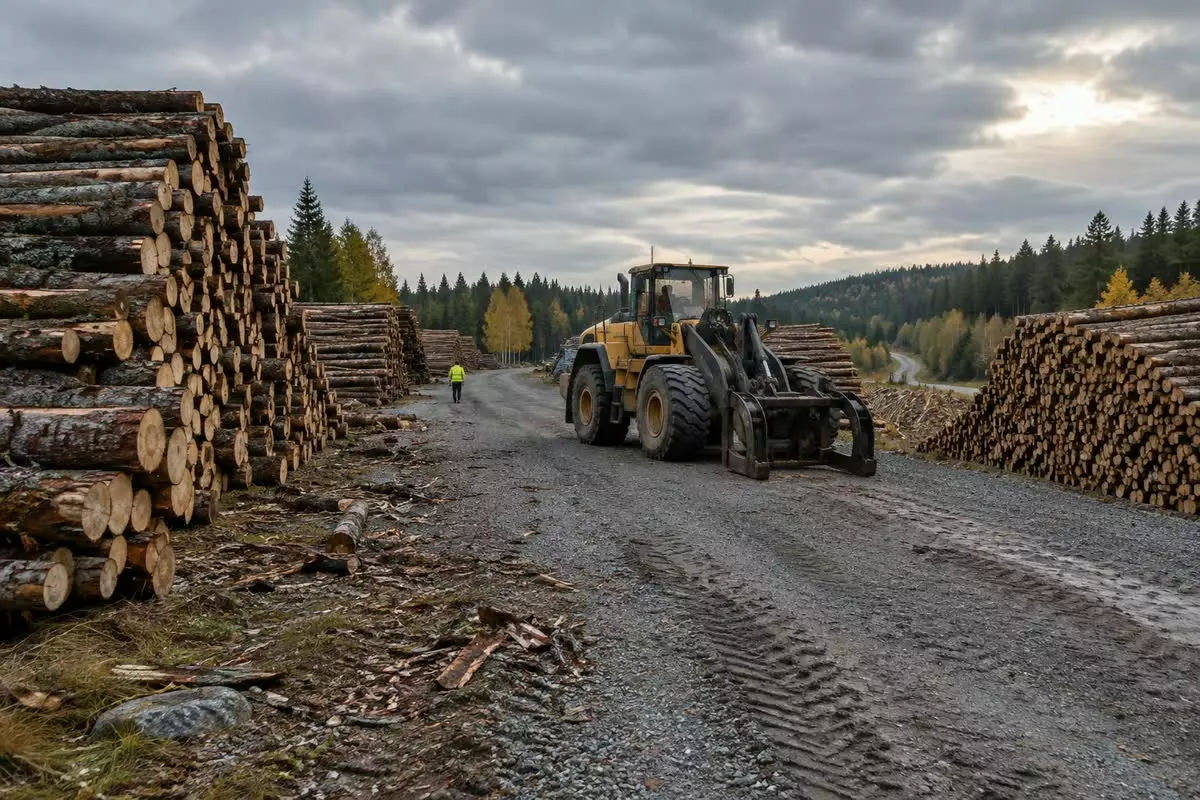
Fortune reported the purchase in late September 2026, and the shape of it will be familiar to anyone who has sold standing timber. This is a working forest, not a country estate. SCA is one of the largest forest owners in Sweden, and it judged this block to be below the standard it wants for commercial forestry. That is why the land was available at all.
A deal at this scale is a company transaction rather than a personal one. Cladonia Skog AB is the registered owner, and Karp is named as its beneficial owner. Buyers often hold large land holdings through a company, because the structure suits borrowing, inheritance and the way timber income is taxed. It also means the buyer inherits the company itself, with its history and its tax position attached.
Compare it with Karp’s earlier purchase. He paid 120 million dollars for a monastery compound of roughly 3,700 acres in Capitol Creek Valley, Colorado. That holding is about ten times the area for a fifth of the money, which says something about what forest costs in the far north.
Why SCA sold the land and what hunting tells us
SCA has said the transaction was already completed, and that ending the hunting agreements tied to the land was a natural part of the sale. Its reasoning is simple enough: a company can grant hunting rights only on land it owns. Once the property left SCA, the old leases could not continue, and ending them was a condition of the sale.
Hunters found out by post. Tidningen Harjedalen reported the story first, and local authorities said they had no advance notice of the purchase. That is how a quiet corporate sale becomes a public one, not through a press release but through a letter to people who have shot on the same ground for decades.
Hunting rights in Sweden are normally leased rather than owned outright. A sale can end an arrangement that has run for generations unless the buyer agrees to carry it over, which is why the lease deserves a careful look before contracts are exchanged.
- Who holds the current hunting lease, and until when?
- Does the sale carry the lease over, or end it at completion?
- Are there cabins, forest roads or grazing agreements tied to the land?
- Which neighbours rely on the property for access?
How a foreign buyer buys land in Sweden today
Foreign buyers can own Swedish forest, and many do. Two routes matter, and they are not equivalent. You can buy the property directly, or you can buy the company that already owns it. That second route is common, and it moves the company’s history and its tax position onto the buyer’s books along with the trees.
Two features of Swedish law shape what follows. Allemansratten, the right of public access, lets anyone walk and camp on private land. It is a long-standing custom, and it sits separately from hunting. Under Swedish forestry law, a landowner must notify Skogsstyrelsen before final felling and must replant after felling.
| Direct property purchase | Company share purchase |
|---|---|
| Buyer takes the land and the leases attached to it | Buyer takes the company, its history and its tax position |
| Cleaner boundary between old owner and new | Timber income and losses carry on inside the company |
| Hunting agreements can be carried over directly | Hunting agreements end with the owning company’s decision |
Reading the two statements from the new owner
Jenny Lopes Da Silva, a Cladonia board member who also works as a sales manager at Scandinavian Trust, the firm that brokered the deal, said the new owner is committed to the beauty of the land and its preservation. She described forest landscapes that offer habitats for plants and animals, and a place for recreation and restoration.
Cladonia has also told Swedish media that it plans forestry and related activities on the property. Those two statements sit oddly together. Preservation and commercial forestry are not the same ambition, and the company has not said how it will choose between them.
Arctic Today reported the purchase and the questions it raised for the region. Facts and intentions sit in different columns. The purchase happened, and the price is reported. A plan to harvest is a statement by the buyer, and nothing in the public record commits the new owner to a particular level of felling.
What the sale means for rural agents and clients
Zoom out, and this looks like one move in a larger pattern. European leaders are weighing whether to reduce their dependence on American technology, which makes the identity of a US defence-tech chief executive relevant to how the story is read. Palantir has a partnership with Swedish defence authorities, and Swedish police and NATO also use its services.
Land has itself become an asset class that institutions understand. Farmland in the United States has grown into a 4.3 trillion dollar asset class, and timberland has followed a similar path. When forest can be held the way a bond is held, buyers stop being neighbours and start being funds.
For anyone whose work touches real estate investment in the Nordics, the lessons stay local. A property investment of this kind is a long hold. It rewards patience, good records and a clear view of the leases attached to the land.
- Which company is buying, and who is the beneficial owner?
- Does the deal include the hunting lease or end it?
- What felling has been notified to Skogsstyrelsen, and when is replanting due?
- Which access rights, cabins and grazing agreements run with the land?
- How will the buyer hold the asset, and what does that mean for tax on timber income?
A land purchase that agents should read closely
A 37,000 acre sale in a thinly traded market is a signal as much as it is a transaction. It shows that Scandinavian forest can pull in capital from the technology sector, and that the paperwork around hunting, access and felling is where most of the work sits. Sweden’s property market will absorb the news slowly, if at all.
That playbook is exportable, though, and agents across European real estate should recognise it. Watch the hunting letters. They tend to arrive before the press release.
Frequently asked questions about the forest sale
Who bought the Swedish forest land?
Alex Karp, the chief executive of Palantir Technologies, bought the land through Cladonia Skog AB, a newly registered company in which he is the beneficial owner. It covers 37,000 acres, about 15,000 hectares, in the Harjedalen region.
How much did the Swedish forest sale cost?
Reports put the value at 235 million kronor, which is roughly 22 million dollars. SCA, the paper manufacturer, was the seller, and it said the property was suboptimal for forestry and therefore not part of its long-term plan.
Why did the hunters lose their rights?
SCA said ending the hunting agreements was a condition of the sale, because a company can grant hunting rights only on land it owns. Hunters learned about it from letters, and Tidningen Harjedalen reported the story first.
Can a foreign buyer own forest in Sweden?
Yes. Foreign buyers can own Swedish forest directly or through a company, and a share purchase brings the company’s tax position with it. Allemansratten stays with the public, and felling still requires notice to Skogsstyrelsen and replanting afterwards.
What does the sale mean for the local property market?
It is unlikely to move prices on its own, because it is a single transaction in a thinly traded area. It does show that forest is attracting outside capital, which matters over time for values, for leases and for how rural agents talk to buyers.