

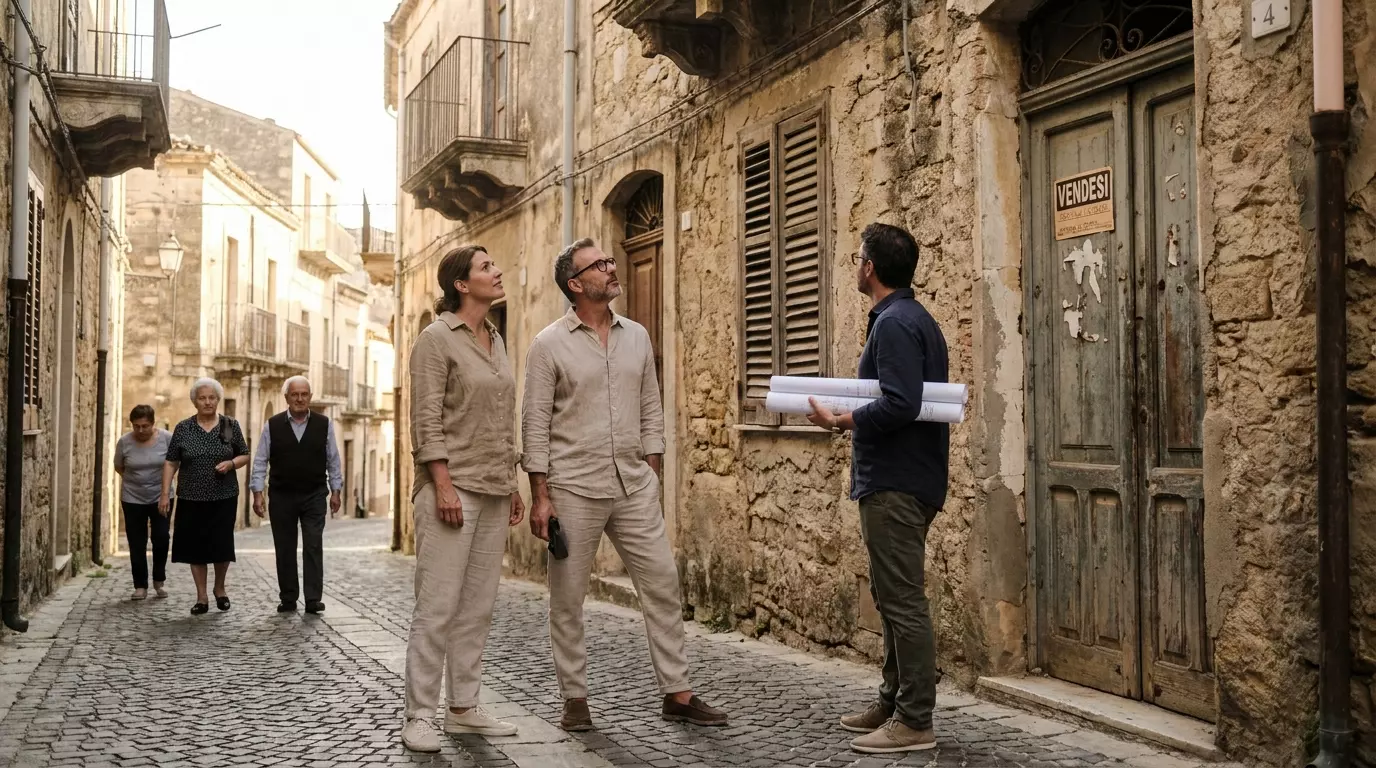
Sicily’s Latest €1 Home Gamble: Can Naro Turn Empty Streets Into a New Community?
Italy’s fascination with selling off abandoned houses for pocket change continues, and this time it’s the turn of Naro, a quiet town tucked into the province of Agrigento in southern Sicily. Local officials have unveiled a fresh initiative aimed at breathing life back into its crumbling historic core by offering properties for as little as one euro. It’s a familiar headline by now, but Naro’s version of the scheme comes with its own set of rules, expectations, and opportunities worth unpacking.
For anyone who has dreamed of owning a slice of Sicily without needing a fortune, this could be the moment to pay attention. But as with every “too good to be true” real estate deal, the fine print matters just as much as the price tag.
Naro’s €1 Home Scheme: What’s the Catch?
Let’s get the obvious question out of the way first: nobody hands over a house for a single euro without expecting something in return. Naro’s municipal government has confirmed that buyers will be required to commit to renovating the property within a set timeframe, typically three years, a standard clause seen in similar schemes across towns like Sambuca di Sicilia and Mussomeli. The goal isn’t charity: it’s a calculated strategy to stop buildings from collapsing into ruin while repopulating neighborhoods that have been steadily emptying out for decades.
Buyers will also need to put down a refundable deposit, often around €5,000, as a guarantee that renovation work will actually happen. Skip the deadline, and you risk losing that deposit or even the property itself. Renovation costs themselves are the real investment here, frequently ranging between €15.000 and €30.000 depending on the state of the building, according to figures reported by outlets like The Guardian covering similar Sicilian initiatives. So while the sale price is symbolic, the true cost of ownership is far from free.
Inside Sicily’s Bold Plan to Revive Empty Homes
Naro isn’t inventing this concept from scratch. It’s following a well-trodden path laid out by other Sicilian and Italian towns facing the same demographic squeeze: shrinking populations, aging residents, and young people leaving for jobs in Palermo, Milan, or abroad. According to Istat, Italy’s national statistics agency, Sicily has experienced one of the steepest population declines in the country over the past decade, with smaller inland towns bearing the brunt of it.
What makes Naro’s plan noteworthy is the scale of its ambition. Town officials have identified dozens of properties within the historic quarter, many dating back centuries, that have been abandoned by families who moved away or inherited homes they never intend to use. By putting these buildings back into circulation, the town hopes to reverse a cycle of decay that has left entire streets looking like ghost towns. It’s not just about selling houses; it’s about restoring a sense of community, reopening shuttered shops, and giving local schools and services a reason to stick around.
Who Can Apply for Naro’s One-Euro Houses?
The application process is designed to be accessible, but that doesn’t mean anyone can simply show up and claim a house. Interested buyers, whether Italian residents or foreign nationals, typically need to submit a formal application to the town hall outlining their renovation plans and financial capacity to complete the work. Naro’s administration has indicated that international buyers, particularly from the United States, United Kingdom, and other parts of Europe, are welcome and even encouraged, mirroring the pattern seen in Sambuca’s widely publicized scheme that attracted global media attention a few years back.
Here’s a general breakdown of what applicants can expect:
- Submit an application to the municipal office expressing interest in a specific property or general availability.
- Provide proof of financial means to cover renovation costs, since the town wants assurance the project won’t stall halfway through.
- Sign a formal agreement committing to a renovation timeline, usually two to three years.
- Pay the refundable deposit, which acts as a security measure for the municipality.
- Begin renovation work promptly, often with a requirement to submit progress updates.
Some towns also prioritize applicants who intend to relocate permanently or use the property as a primary residence rather than a short-term rental, since the underlying goal is repopulation rather than speculative investment. Naro appears to be following that same philosophy, though specific residency requirements should be confirmed directly with the town hall before applying.
Is This Sicilian Town Italy’s Next Big Draw?
Naro might not have the international name recognition of Taormina or the Instagram fame of Sambuca, but that could be exactly why it’s positioning itself for a quiet renaissance. Its historic center, dotted with Baroque architecture and narrow winding streets, offers the kind of authentic, undiscovered charm that increasingly appeals to buyers tired of overcrowded tourist hotspots. The town’s proximity to the Valley of the Temples in Agrigento, a UNESCO World Heritage Site, only adds to its long-term appeal for both residents and visitors.
There’s also a broader trend at play. Remote work has made it easier for people to relocate to smaller, more affordable towns without sacrificing career opportunities, and Sicily’s lower cost of living compared to northern Italy or other parts of Western Europe makes it an attractive option. If Naro can successfully renovate even a fraction of its abandoned housing stock, it could set a precedent for sustainable small-town revival, one that doesn’t rely solely on tourism but on genuine, long-term residency. Whether it becomes “Italy’s next big draw” remains to be seen, but the ingredients for a modest comeback are certainly there.
Comparing Naro to Other €1 Home Towns in Sicily
To put Naro’s scheme into perspective, here’s how it stacks up against some of Sicily’s other well-known one-euro home initiatives:
| Town | Region | Renovation Deadline | Estimated Renovation Cost | Deposit Required |
|---|---|---|---|---|
| Naro | Agrigento | 3 years | €15.000–€30.000 | ~€5.000 |
| Sambuca di Sicilia | Agrigento | 3 years | €15.000–€25.000 | €5.000 |
| Mussomeli | Caltanissetta | 1–3 years | €10.000–€30.000 | €5.000 |
| Salemi | Trapani | 3 years | €10.000–€20.000 | Varies |
While the numbers are broadly similar across towns, local context, such as building condition, infrastructure, and proximity to services, makes a significant difference in the actual cost and feasibility of each project. Prospective buyers are strongly encouraged to visit in person before committing, since photos and listings rarely capture the true state of these century-old structures.
In Short
Naro’s €1 home scheme is the latest chapter in Sicily’s ongoing effort to fight depopulation and preserve its architectural heritage, one abandoned house at a time. While the headline price is undeniably eye-catching, the real commitment lies in the renovation work, financial investment, and long-term dedication required to bring these properties back to life. For the right buyer, someone patient, financially prepared, and genuinely drawn to slow-paced Sicilian living, this could be a rare opportunity to own a piece of Italian history at a fraction of typical market cost.
Whether Naro becomes a widely recognized success story or remains a quieter, lesser-known alternative to towns like Sambuca and Mussomeli will depend largely on how effectively the local government manages applications and supports new residents through the renovation process. Either way, it’s a compelling example of how creative municipal policy can address both housing decay and demographic decline simultaneously.
FAQ
Is it really possible to buy a house in Naro for €1?
Yes, but buyers must commit to renovating the property within an agreed timeframe, typically three years, and pay a refundable deposit as a guarantee.
How much should I budget for renovations?
Estimates suggest renovation costs generally range from €15.000 to €30,000, depending on the property’s condition and size.
Can foreigners apply for Naro’s €1 homes?
Yes, international buyers are generally welcome, following the pattern set by other Sicilian towns with similar schemes.
What happens if I don’t complete renovations on time?
Failure to meet the renovation deadline can result in losing the deposit or, in some cases, the property itself.
Why are Sicilian towns offering homes for €1?
These schemes aim to combat depopulation, restore abandoned historic buildings, and attract new residents to revitalize local economies.

Join The Discussion