

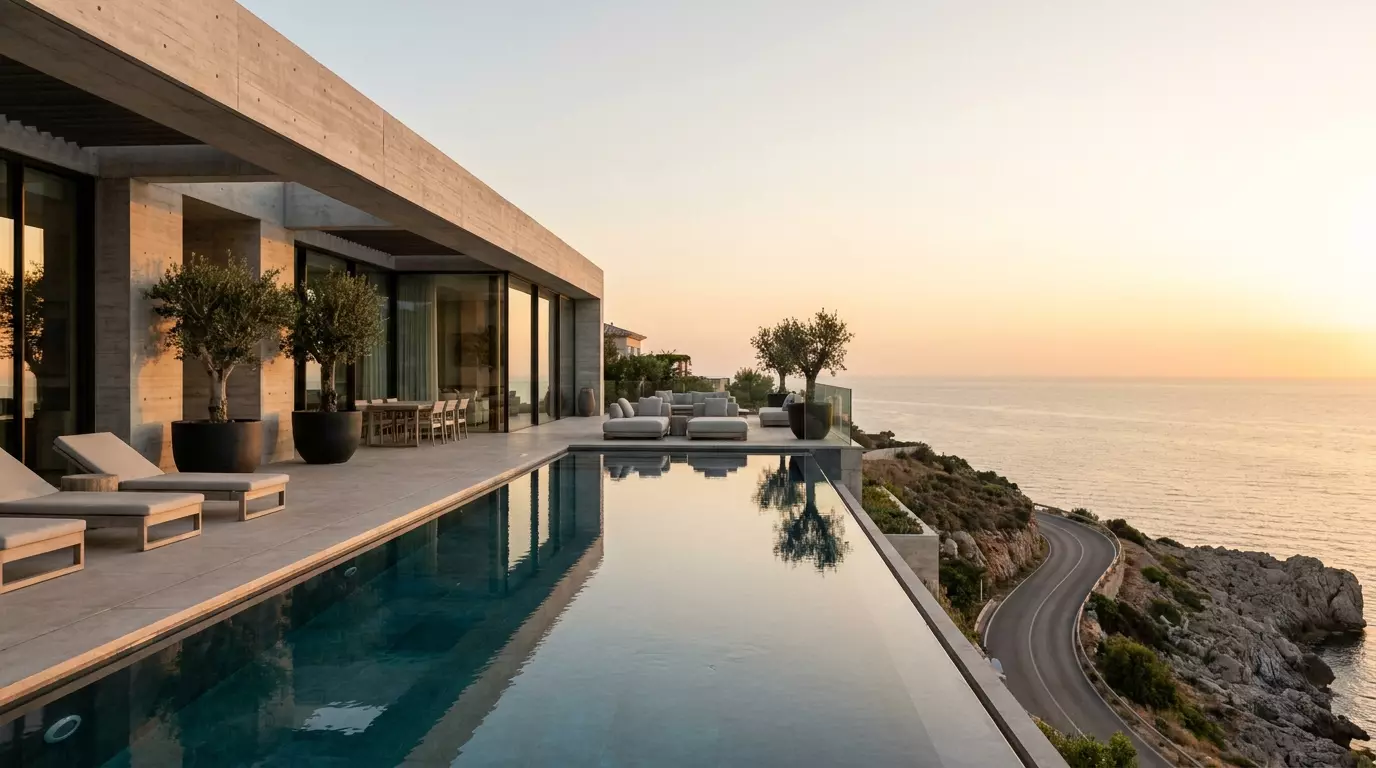
Spain’s Coastal House Prices Soar by Up to 300% in Five Years, Rivalling Madrid and Barcelona’s Most Exclusive Districts
Spain’s coastline has always been a magnet for sun-seekers, retirees, and holiday-home hunters. But what was once a relatively affordable dream is rapidly becoming a luxury reserved for the wealthy. According to a report highlighted by The Olive Press, house prices in some of Spain’s coastal areas have soared by as much as 300% in just five years, with values in certain seaside towns now matching the most exclusive neighbourhoods of Barcelona and Madrid.
This is not a gentle upward trend. It is a full-blown property boom that has reshaped the market along the Mediterranean, the Balearic Islands, and beyond. In this article, we break down why the coastal market is running so hot, which locations have seen the most dramatic increases, how these towns now compare to Spain’s big cities, and what it all means for buyers, investors, and the local residents caught in the middle.
Why Spain’s Coastal Property Market Is on Fire
Several powerful forces have converged since 2021 to push coastal property prices to record highs. The pandemic fundamentally changed how people think about where they live and work. Remote working freed thousands of professionals from big-city offices, and many of them chose the Spanish coast as their new base. Add to that a surge in international demand from British, German, Dutch, Scandinavian, and increasingly American buyers, and you have a market where demand vastly outstrips supply. Data from property portal Idealista has consistently shown coastal municipalities leading national price growth, with year-on-year increases in double digits across many seaside markets.
Supply is the other half of the equation. Spain simply has not built enough new homes to keep pace with demand, particularly in prime coastal locations where land is scarce and planning restrictions are tight. Meanwhile, a significant share of existing coastal housing stock has been absorbed by the short-term holiday rental market, further shrinking the pool of homes available for long-term buyers and residents. When you combine limited supply, booming foreign investment, lifestyle migration, and inflation pushing investors towards bricks and mortar as a safe haven, the result is the explosive price growth we are seeing today.
The Hotspots Where Prices Have Tripled Since 2021
The headline figure of up to 300% growth is concentrated in a handful of standout locations, though strong double and triple-digit increases have been recorded along much of the coast. The usual suspects lead the pack. The Costa del Sol, and in particular the golden triangle of Marbella, Estepona, and Benahavis, has seen extraordinary appreciation driven by luxury developments and international wealth. The Balearic Islands, especially Ibiza and Mallorca, continue to set records, while parts of the Costa Blanca around Javea, Moraira, and Altea have transformed from mid-market destinations into premium enclaves.
What is remarkable is how quickly second-tier coastal towns have caught up. Areas that were once considered affordable alternatives have experienced some of the steepest percentage gains, precisely because they started from a lower base. Key hotspots identified in the boom include:
- Marbella and the western Costa del Sol – luxury villas and branded residences driving record per-square-metre prices
- Ibiza and Mallorca – island scarcity pushing values beyond many mainland city districts
- Estepona – dubbed the “new Marbella,” with new-build prices multiplying since 2021
- Javea and Moraira on the Costa Blanca – strong northern European demand transforming the market
- Sotogrande and the Cadiz coast – exclusive resort living attracting ultra-high-net-worth buyers
Official statistics from Spain’s National Statistics Institute (INE) confirm that provinces with major coastlines, including Malaga, Alicante, and the Balearics, have consistently outpaced the national average for property price growth over the past five years.
Coastal Towns Now Rival Madrid and Barcelona Prices
Perhaps the most striking finding is that prices in top coastal areas now match, and in some cases exceed, those in the most exclusive districts of Spain’s two biggest cities. For decades, Madrid’s Salamanca district and Barcelona’s Eixample and Pedralbes represented the ceiling of the Spanish property market. That hierarchy has been upended. In prime coastal enclaves, per-square-metre prices for luxury new builds and front-line beach properties now sit comfortably alongside, or above, what buyers pay in the capital’s smartest postcodes.
The comparison tells the story clearly:
| Location | Market Position | Typical Price Trend Since 2021 |
|---|---|---|
| Marbella (Golden Mile) | Ultra-prime coastal | Up to 300% in select segments |
| Ibiza Town | Ultra-prime island | Among Spain’s highest per m² |
| Salamanca, Madrid | Prime city district | Strong but slower growth |
| Eixample, Barcelona | Prime city district | Steady appreciation |
| Estepona | Emerging prime coastal | Among the fastest risers |
This convergence matters because it signals a structural shift in the Spanish market, not just a temporary spike. International buyers no longer view the coast as a discount alternative to city living. Instead, coastal Spain is being priced as a global luxury destination, competing with the French Riviera, the Italian lakes, and prime resort markets worldwide. For sellers, this is a windfall. For anyone hoping to buy at yesterday’s prices, that window has firmly closed.
What This Boom Means for Buyers and Local Residents
For buyers, the implications depend entirely on which side of the market you sit on. Investors who purchased coastal property in 2020 or 2021 are sitting on extraordinary paper gains, and rental yields in high-demand tourist areas remain attractive. New buyers, however, face a much tougher landscape. Affordability has deteriorated sharply, mortgage sizes have grown, and competition for well-priced properties is fierce, with the best listings often selling within days. Buyers now need to look further inland, consider up-and-coming towns, or accept significantly smaller properties for the same budget they had five years ago.
For local residents, the picture is more troubling. Wages in coastal Spain have not remotely kept pace with a 300% rise in property values, pricing many workers, young families, and first-time buyers out of the towns where they grew up. Key consequences include:
- Housing exclusion – essential workers in tourism and hospitality struggling to live near their jobs
- Rental pressure – long-term rents rising sharply as landlords pivot to holiday lets
- Community change – traditional neighbourhoods transforming into seasonal, second-home enclaves
- Political response – growing calls for limits on foreign purchases, holiday rental licences, and more social housing
Regional governments across Andalucia, Valencia, and the Balearics are under mounting pressure to intervene, and measures such as restrictions on tourist rentals and proposed taxes on non-resident buyers are already being debated at national level. How policymakers balance the economic benefits of foreign investment against the housing needs of local communities will define the next chapter of this story.
In Short
Spain’s coastal property market has delivered one of the most dramatic price surges in Europe, with values in some seaside hotspots climbing by up to 300% in just five years. Towns along the Costa del Sol, Costa Blanca, and the Balearic Islands now command prices that rival the most exclusive districts of Madrid and Barcelona, a shift that would have seemed unthinkable a decade ago.
The boom reflects a perfect storm of international demand, remote-working migration, limited supply, and the coast’s enduring lifestyle appeal. While investors and sellers are reaping the rewards, affordability for local residents has reached crisis levels, and pressure is building for political action. Whether you are a buyer, an investor, or simply watching from the sidelines, one thing is clear: the Spanish coast is no longer the bargain it once was, and the market shows few signs of cooling.
FAQ
How much have house prices risen on the Spanish coast?
In the strongest hotspots, prices have risen by up to 300% since 2021, with many other coastal towns recording double or triple-digit growth over the same period.
Which coastal areas have seen the biggest increases?
The Costa del Sol (especially Marbella and Estepona), Ibiza, Mallorca, and premium Costa Blanca towns like Javea and Moraira lead the rankings.
Are coastal prices really as high as Madrid and Barcelona?
Yes. Prime coastal enclaves now match or exceed per-square-metre prices in exclusive city districts such as Salamanca in Madrid and Eixample in Barcelona.
Is it still a good time to buy property on the Spanish coast?
It depends on your goals. Long-term demand fundamentals remain strong, but buyers should budget carefully, act quickly on good listings, and consider emerging towns where prices have not yet peaked.
What is being done to help local residents priced out of the market?
Regional and national authorities are debating measures including holiday rental restrictions, taxes on non-resident buyers, and increased social housing investment.


Join The Discussion