

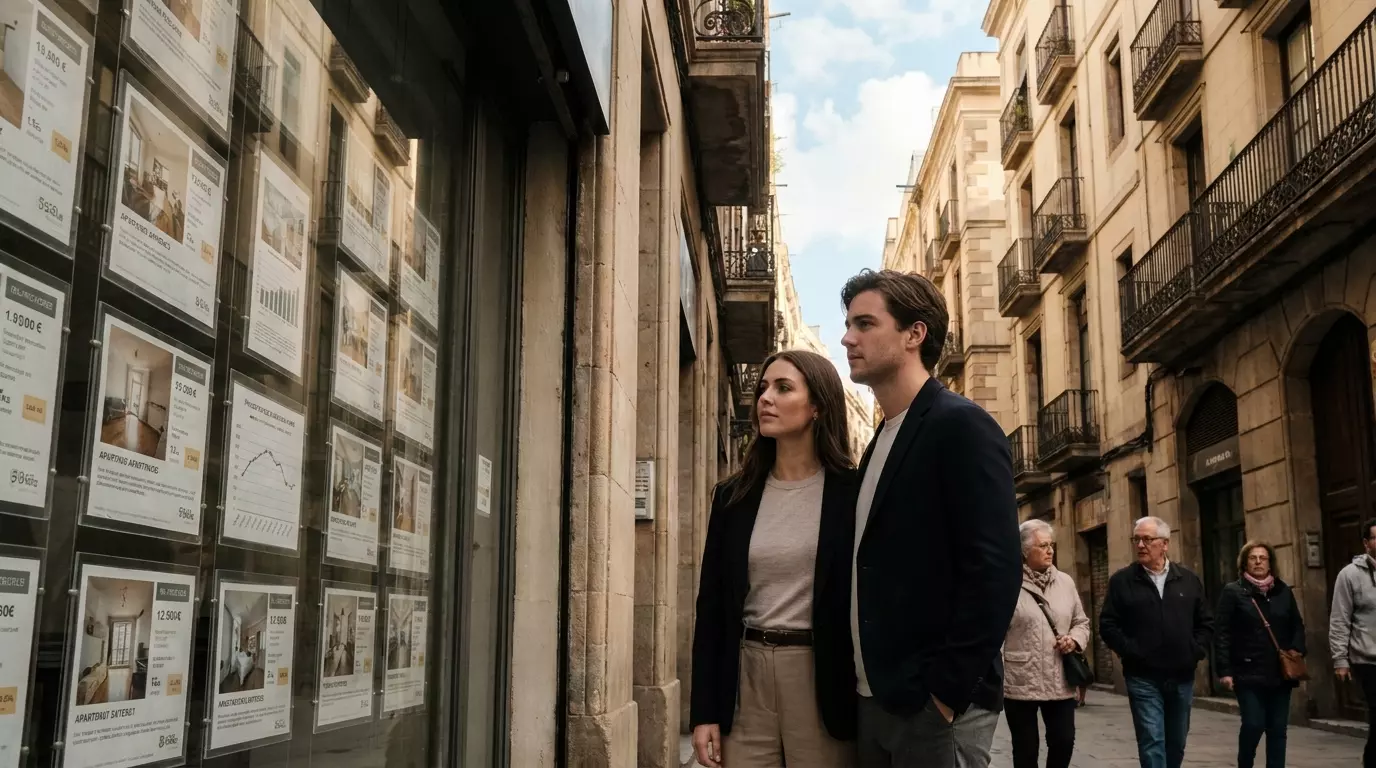
Owning a Home in Spain: The New Reality for Buyers in 2026
Buying property in Spain has long been seen as a milestone of financial stability, a rite of passage that signalled adulthood and long-term security. But that picture is changing fast. Across the country, from Madrid to Málaga, the gap between what people earn and what homes actually cost has widened to levels that would have seemed unthinkable a decade ago. First-time buyers are getting older, deposits are getting heavier, and the dream of owning four walls in Spain is slowly turning into a financial puzzle that many simply cannot solve.
This shift isn’t just about numbers on a spreadsheet. It’s reshaping how families plan their futures, how young professionals choose where to live, and how the rental market is absorbing the pressure of those locked out of ownership. Let’s break down what’s really happening to Spain’s housing market and why the squeeze on buyers shows no signs of easing.
Why Spain’s Housing Market Is Slipping Out of Reach
The Spanish property market has entered a phase that economists are quietly calling unsustainable. Home prices have surged dramatically in recent years while household incomes have crawled forward at a far slower pace. The result is a market where demand keeps pushing prices higher, but the pool of people who can realistically afford to buy keeps shrinking. Coastal regions, major cities, and even mid-sized towns that were once considered affordable have all seen significant jumps in price per square metre.
Several forces are driving this imbalance. International buyers continue to flock to Spain, drawn by the climate, lifestyle, and relative value compared to other European hotspots. Investment funds and short-term rental operators have also gobbled up large chunks of urban housing stock, particularly in tourist-heavy areas like Barcelona, Palma, and the Costa del Sol. Meanwhile, new construction has lagged well behind demand, leaving young Spanish buyers competing against deep-pocketed foreign investors and corporate landlords for a limited supply of homes. The Bank of Spain has repeatedly flagged this supply-demand mismatch as one of the country’s most pressing economic concerns.
The Average Age of First-Time Buyers Keeps Climbing
A generation ago, it was common for Spaniards in their late twenties to purchase their first home, often with the help of family but largely on the strength of stable employment and modest savings. That timeline has stretched considerably. Today, the typical first-time buyer in Spain is well into their thirties, and in many urban areas, the average is creeping closer to forty. Delayed entry into the property market has knock-on effects that reach far beyond housing, influencing everything from family planning to retirement savings.
Why the delay? It comes down to a mix of structural and cultural shifts:
- Longer education paths, with more young people pursuing master’s degrees or specialised training before entering full-time employment.
- Unstable early careers, where temporary contracts and freelance work dominate the first decade of professional life.
- Higher deposit requirements, with most Spanish banks asking for at least 20% down plus an additional 10 to 12% to cover taxes and fees.
- Rising rental costs that make saving for a deposit increasingly difficult, especially in cities like Madrid, Barcelona, and Valencia.
The combined effect is that buying a home has shifted from being an early-adulthood goal to a mid-life achievement, and for many, an outright impossibility without significant family support.
Wages Aren’t Keeping Up With Property Prices Anymore
The mismatch between income growth and housing costs is perhaps the clearest signal that something fundamental has broken in the Spanish market. While property prices have risen by double digits in many regions over recent years, average wages have inched upward at a much slower rate, often barely matching inflation. This means that even Spaniards with stable, full-time jobs are finding themselves priced out of neighbourhoods where their parents bought decades ago for a fraction of today’s cost.
To illustrate the gap, here’s a simplified comparison of how the affordability equation has shifted:
| Metric | A Decade Ago | Today |
|---|---|---|
| Average years of salary needed to buy a home | Around 5 to 6 | 7 to 9 or more |
| Typical deposit required | 15 to 20% | 20 to 30% |
| Age of average first-time buyer | Late 20s to early 30s | Mid to late 30s |
| Share of income spent on housing | Around 30% | Frequently above 40% |
This widening gap explains why housing affordability has become one of the most discussed political and social issues in Spain. According to reports from El País, a growing share of young workers now spend more than 40% of their income on housing alone, well above the 30% threshold that financial advisors generally consider healthy. When that much of a paycheck goes towards rent or mortgage payments, building savings, investing, or even starting a family becomes increasingly difficult.
What Young Spaniards Can Actually Do About It
Faced with these headwinds, younger generations are getting creative about how they approach homeownership. Some are pooling resources with siblings or partners, buying property jointly to spread the financial burden. Others are looking beyond the major cities, exploring smaller towns and rural areas where prices remain far more reasonable and remote work makes the commute less of an issue. Regions in inland Spain, parts of Galicia, and certain areas of Aragón have seen renewed interest from young buyers willing to trade urban convenience for affordability.
Here are some practical strategies that are gaining traction among first-time buyers:
- Co-purchasing with family or friends, splitting both the deposit and the mortgage to make ownership viable.
- Targeting smaller cities like Zaragoza, Valladolid, or Murcia, where prices remain considerably lower than in Madrid or Barcelona.
- Exploring public housing schemes, including the regional vivienda protegida programmes that offer reduced prices to qualifying buyers.
- Considering fixer-uppers, where older properties at lower prices can be renovated gradually over time.
- Maximising government incentives, such as the youth housing aid programmes available in several autonomous communities.
There’s also a growing conversation about how Spain might reform its housing policies to make ownership more attainable. Proposals range from increasing public housing stock to tightening rules around short-term rentals and providing tax incentives for first-time buyers. While none of these solutions will deliver overnight relief, they signal that the issue is finally getting the attention it deserves at both national and regional levels.
In Short
Spain’s housing market has reached a tipping point where buying a home is no longer a straightforward goal but a complex, often delayed financial undertaking. The combination of stagnant wages, soaring prices, and limited housing supply has pushed the average first-time buyer into their late thirties and forced many to rethink where and how they live. While the situation looks daunting, there are still paths to ownership for those willing to adapt, whether through co-buying, relocating, or tapping into public support schemes. The coming years will likely bring more policy debate and structural change, but for now, prospective buyers need patience, planning, and a clear-eyed view of what they can realistically afford.
Frequently Asked Questions
What is the average age of a first-time home buyer in Spain today?
The average age has climbed into the mid to late thirties, with some urban areas seeing buyers approach forty before purchasing their first property. This represents a significant shift from previous generations.
How much deposit do I need to buy a home in Spain?
Most Spanish banks require at least 20% of the property value as a deposit, plus an additional 10 to 12% to cover taxes, notary fees, and other transaction costs. So buyers typically need around 30% of the purchase price in savings.
Are there government programmes to help young buyers in Spain?
Yes, several autonomous communities offer youth housing aid schemes, and there are public housing programmes known as vivienda protegida that provide reduced prices for qualifying buyers. Eligibility varies by region and income level.
Why are property prices rising faster than wages in Spain?
The main drivers include strong international demand, investment fund activity, the growth of short-term rentals, and a chronic shortage of new construction. Wage growth has remained modest, creating a widening affordability gap.
Where are the most affordable places to buy property in Spain?
Smaller cities and inland regions tend to offer the best value. Areas in Castilla y León, Galicia, Aragón, and parts of Murcia generally have lower prices compared to Madrid, Barcelona, and the major coastal hotspots.
Join The Discussion