

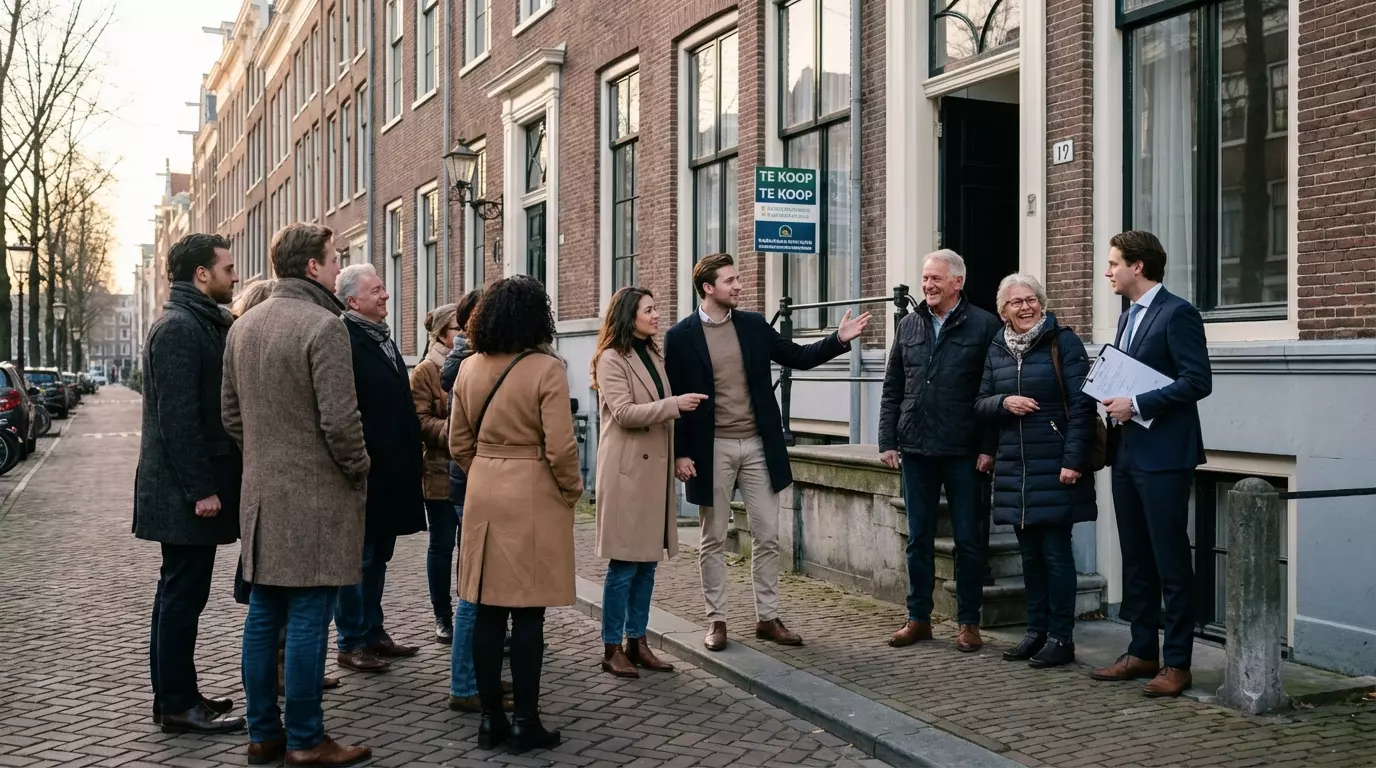
The Dutch housing market has long been a competitive battlefield, but new data reveals a fascinating trend that challenges common assumptions. While many believe that internationals are driving up property prices across the Netherlands, the reality tells a different story. According to recent findings published by IamExpat, Dutch locals actually overbid significantly more than their international counterparts when purchasing homes. This revelation sheds light on the dynamics of the housing crisis and offers valuable insights for expats navigating the notoriously tight property market in Holland. Let us break down what this means, why it happens, and how it affects your chances of buying a home in the Netherlands.
Dutch Locals Outbid Expats in Housing Market
Recent research has uncovered that Dutch residents consistently place higher bids above the asking price compared to internationals looking to buy property in the Netherlands. This finding contradicts the popular narrative that expats and foreign buyers are the primary force pushing home prices skyward. In reality, local buyers who understand the market, have established networks, and often benefit from generational wealth or family support tend to bid more aggressively. The data suggests that locals overbid by a noticeably larger margin, reflecting their confidence and familiarity with how the Dutch real estate system operates.
This trend is particularly evident in major cities like Amsterdam, Rotterdam, The Hague, and Utrecht, where competition for available homes is fiercest. Dutch buyers frequently leverage advantages such as long-standing relationships with mortgage advisors, knowledge of neighborhood-specific pricing trends, and the ability to waive certain conditions in their offers. These factors combine to create a scenario where locals feel empowered to stretch their budgets further. For years, internationals have been blamed for inflating property values, but this data paints a more nuanced picture of who is actually driving overbidding in the market.
Why Internationals Pay Less Over Asking Price
Several factors explain why expats and internationals tend to overbid less than Dutch locals. First and foremost, many internationals face structural disadvantages when entering the housing market. They may lack familiarity with the Dutch bidding process, have limited access to local financial products, or struggle with language barriers during negotiations. Additionally, expats often face uncertainty about the length of their stay in the Netherlands, making them more cautious about overpaying for a property they might need to sell within a few years.
Financial constraints also play a significant role. While Dutch buyers can sometimes tap into family wealth, equity from previously owned homes, or favorable mortgage terms from established banking relationships, internationals are often starting from scratch. Consider the following challenges that expats commonly face:
- Limited mortgage options: Some lenders are hesitant to offer mortgages to expats on temporary contracts or without a permanent Dutch employment history.
- Unfamiliarity with local customs: The Dutch practice of sealed-bid auctions can be confusing for newcomers who are used to different purchasing processes.
- Higher perceived risk: Expats may be more conservative with their bids because they view the Dutch market as volatile or unpredictable from their outsider perspective.
- Fewer local connections: Without a network of real estate agents, notaries, and advisors, internationals may receive less strategic guidance on competitive bidding.
According to housing market research from CBS (Statistics Netherlands), the number of international buyers has grown in recent years, but their bidding behavior remains more restrained compared to locals.
The Surprising Gap in Dutch Home Overbidding
The gap between what locals and internationals are willing to pay above the asking price is more significant than most people realize. While exact percentages vary depending on the region and property type, the trend is consistent across the country. Dutch buyers regularly overbid by several percentage points more than international buyers on comparable properties. This gap has widened in recent years as the housing shortage has intensified, pushing locals who are deeply rooted in their communities to fight harder for limited inventory.
To put this in perspective, here is a simplified comparison of overbidding behavior:
| Factor | Dutch Locals | Internationals |
|---|---|---|
| Average overbid margin | Higher | Lower |
| Willingness to waive conditions | More likely | Less likely |
| Access to family financial support | Common | Rare |
| Mortgage flexibility | Broader options | More restricted |
| Market knowledge | Deep | Limited |
This table illustrates that the overbidding gap is not just about money. It reflects a broader set of advantages that locals enjoy. Research from De Nederlandsche Bank has highlighted that housing market dynamics are heavily influenced by local buyer sentiment and access to capital, both of which favor Dutch residents. The misconception that internationals are outbidding locals is not only inaccurate but also distracts from the real structural issues driving the housing crisis, such as insufficient new construction and restrictive zoning policies.
What This Means for Expats Buying in Holland
For expats looking to purchase property in the Netherlands, this data is both encouraging and sobering. On one hand, it means that internationals are not necessarily at a disadvantage because of price competition from other expats. The real competition comes from well-prepared Dutch buyers. On the other hand, it highlights the importance of thorough preparation before entering the market. Expats who take the time to understand the local system, build relationships with experienced real estate agents, and secure solid mortgage pre-approvals can significantly improve their chances.
Here are practical steps expats should take to compete more effectively in the Dutch housing market:
- Get mortgage pre-approval early: Work with a mortgage advisor who specializes in expat clients to understand your maximum budget before you start viewing homes.
- Hire a buying agent (aankoopmakelaar): A local buying agent can provide invaluable insights into fair market value and help you craft competitive offers.
- Learn the bidding process: Understand how sealed bids work and what conditions you can reasonably waive to make your offer more attractive.
- Research neighborhoods thoroughly: Knowing the micro-market dynamics of specific areas can help you identify opportunities where competition may be less fierce.
- Be patient but decisive: The Dutch market rewards buyers who are well-prepared and can act quickly when the right property appears.
By adopting these strategies, internationals can narrow the gap and position themselves as serious contenders in a market that heavily favors informed and prepared buyers.
In Short
The Dutch housing market continues to surprise with data that challenges long-held assumptions. The fact that locals overbid more than internationals when buying homes in the Netherlands underscores the importance of local knowledge, financial preparedness, and strategic bidding. For expats, this means the playing field is not as tilted against them as many believe, but success requires deliberate effort and smart preparation. Rather than being discouraged by the competitive market, internationals should focus on building the tools and networks that will help them compete effectively. Understanding these dynamics is the first step toward making a successful property purchase in Holland.
FAQ
Do Dutch locals really overbid more than expats?
Yes, recent data shows that Dutch residents consistently bid higher above the asking price compared to international buyers. This is attributed to their deeper market knowledge, financial advantages, and established local networks.
Why do internationals overbid less in the Netherlands?
Expats often face challenges such as limited mortgage options, unfamiliarity with the Dutch bidding process, fewer local connections, and greater uncertainty about their long-term stay in the country.
Is it harder for expats to get a mortgage in the Netherlands?
It can be more challenging, especially for those on temporary employment contracts or without a long Dutch credit history. However, several lenders and mortgage advisors specialize in serving the expat community.
What is an aankoopmakelaar and do I need one?
An aankoopmakelaar is a buying agent who represents your interests during the home-buying process. For expats unfamiliar with the Dutch market, hiring one is highly recommended as they provide crucial guidance on pricing, bidding, and negotiations.
Are expats driving up Dutch housing prices?
Contrary to popular belief, the data suggests that locals are more responsible for overbidding and pushing prices higher. The housing crisis is primarily driven by structural issues like insufficient housing supply and restrictive building regulations.

Join The Discussion