

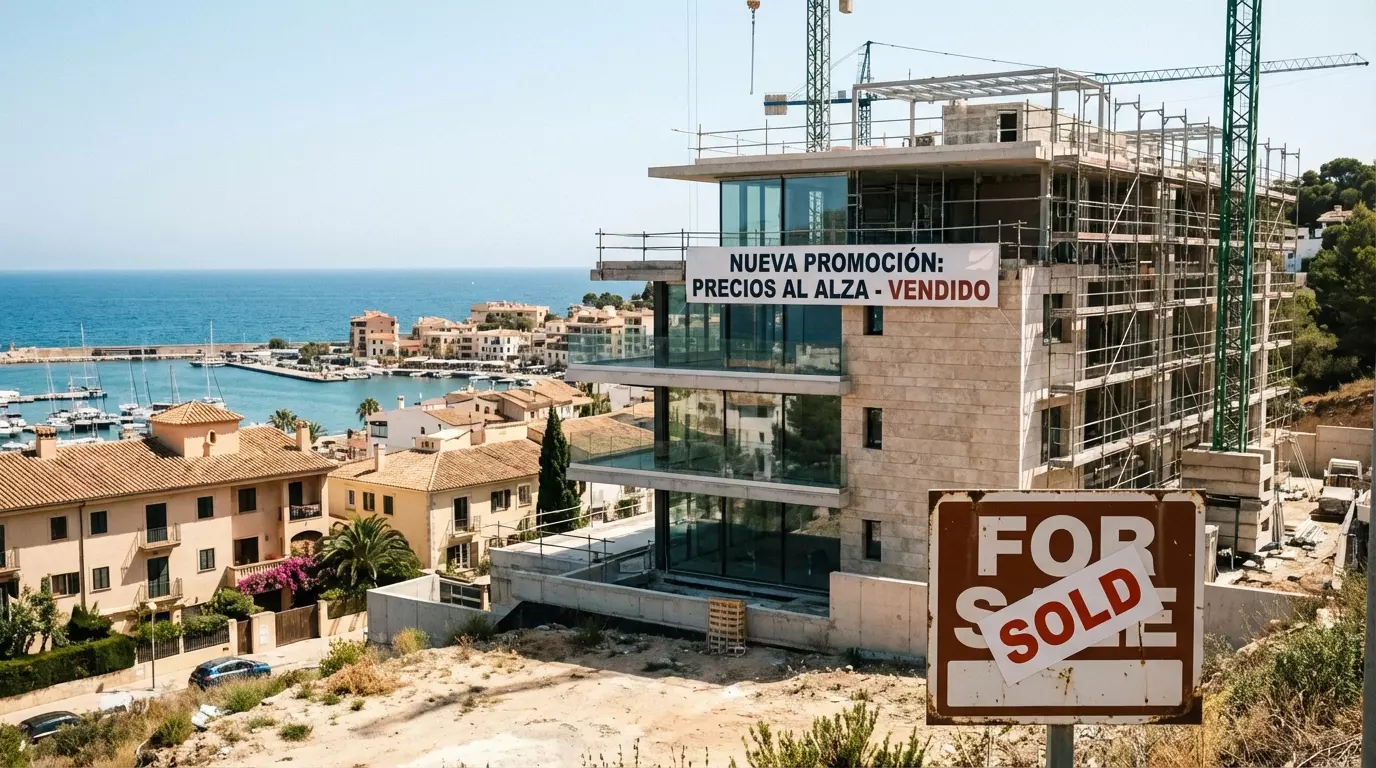
Spain Property Prices Surge Past EU Average: What You Need to Know in 2025
Spain’s housing market is making headlines once again, and for good reason. Property prices across the country have surged at a pace that now doubles the European average, signaling a red-hot real estate sector that shows no signs of cooling down. For buyers, investors, and homeowners alike, understanding what is happening in Spain’s property landscape is essential for making informed decisions in the months ahead.
Whether you are considering purchasing a holiday home on the Costa Cálida, investing in a rental property in a major city, or simply keeping an eye on market trends, the latest data paints a compelling picture. Spain’s property price growth has accelerated significantly, outpacing most of its European neighbors. Let’s break down the numbers, the driving forces, and what the future might hold.
Spain Property Prices Surge Past EU Average
The numbers are striking. Spain’s property prices have risen at a rate that is approximately double the European Union average, placing the country among the fastest-growing housing markets on the continent. While the EU as a whole has seen moderate and sometimes stagnant price growth in recent quarters, Spain has bucked the trend with consistent and accelerating increases. This divergence highlights the unique dynamics at play in the Spanish real estate market, where strong demand continues to outstrip available supply in many regions.
According to data from Eurostat, the EU’s statistical office, several European countries have actually experienced price declines or flat growth during the same period. Germany, France, and Sweden, for example, have all seen their markets cool or contract under the weight of higher interest rates. Spain, however, has proven remarkably resilient. The combination of international demand, domestic economic recovery, and a persistent housing shortage has created conditions where prices continue to climb quarter after quarter, leaving analysts debating just how sustainable this trajectory really is.
What Is Driving the Spanish Housing Boom
Several interconnected factors are fueling Spain’s property price surge. Understanding these drivers is key to grasping why the market is behaving differently from much of the rest of Europe:
- Strong international demand: Foreign buyers, particularly from the United Kingdom, Germany, the Netherlands, Belgium, and Scandinavian countries, continue to flock to Spain in search of sun, lifestyle, and value compared to their home markets. This international appetite for Spanish property has been a consistent engine of price growth, especially along the Mediterranean coast and on the islands.
- Domestic economic recovery: Spain’s economy has performed better than many analysts expected, with solid GDP growth, falling unemployment, and rising wages. This has boosted domestic purchasing power and confidence in the housing market.
- Limited housing supply: New construction has not kept pace with demand. Years of underbuilding following the 2008 financial crisis have left Spain with a housing deficit that is particularly acute in major cities and popular coastal areas.
- Tourism and rental demand: Spain’s booming tourism sector has driven strong demand for short-term rental properties, encouraging investors to enter the market and pushing prices higher in tourist-heavy regions.
Beyond these primary factors, the relatively affordable price point of Spanish property compared to other Western European markets continues to attract attention. A buyer from London, Amsterdam, or Munich can often acquire a significantly larger or better-located property in Spain for the same budget. This price differential, combined with Spain’s climate, healthcare system, and quality of life, makes the country an irresistible draw. The Bank of Spain has also noted that mortgage lending conditions, while tighter than during the pre-2008 boom, remain accessible enough to support continued demand from both Spanish and foreign buyers.
Regional Hotspots Leading the Price Rises
Not all regions of Spain are experiencing the same level of price growth. Some areas are significantly outperforming the national average, creating a patchwork of hotspots that savvy buyers and investors are closely watching. The data reveals notable regional differences:
| Region | Price Trend | Key Driver |
|---|---|---|
| Murcia (Costa Cálida) | Strong rises | Affordability, foreign buyers |
| Balearic Islands | Very strong rises | International luxury demand |
| Canary Islands | Above average | Tourism, remote workers |
| Madrid | Strong rises | Domestic demand, economic hub |
| Barcelona / Catalonia | Steady growth | Urban demand, tourism |
| Andalusia (Costa del Sol) | Strong rises | Foreign investment, lifestyle |
| Valencia / Alicante | Accelerating growth | Value for money, expat community |
The Region of Murcia, in particular, has emerged as one of the standout performers. Known for its Costa Cálida coastline, affordable property prices relative to other coastal regions, and growing infrastructure, Murcia has attracted a wave of both Spanish and international buyers. Towns and cities across the region are seeing heightened activity, with limited stock driving competitive bidding on desirable properties. Meanwhile, the Balearic Islands and the Canary Islands continue to see premium price growth, fueled by luxury buyers and the ongoing appeal of island living.
Urban centers like Madrid and Barcelona remain pillars of the Spanish property market. Madrid, as the economic and political capital, benefits from strong job creation, corporate relocations, and a thriving rental market. Barcelona, despite regulatory challenges around short-term rentals, continues to attract global interest. Along the coast, the provinces of Alicante, Málaga, and Almería are all posting impressive gains, driven by a potent mix of foreign demand, tourism infrastructure, and lifestyle appeal. For investors, these regional variations offer both opportunities and risks, making local market knowledge more important than ever.
Will Spanish Property Prices Keep Climbing
The million-euro question on everyone’s mind is whether this upward trajectory can be sustained. Most analysts and industry experts believe that Spain’s property market has further room to grow, at least in the short to medium term. The fundamental supply-demand imbalance remains unresolved, and new construction is not accelerating fast enough to close the gap. International demand continues to flow into the country, and Spain’s economic outlook remains broadly positive.
However, there are potential headwinds to consider:
- Interest rate environment: While the European Central Bank has begun to ease monetary policy, borrowing costs remain higher than the ultra-low levels seen in previous years. Any reversal or pause in rate cuts could dampen demand.
- Regulatory changes: The Spanish government has been exploring measures to address housing affordability, including potential restrictions on tourist rentals, new housing laws, and tax changes that could affect investors.
- Global economic uncertainty: A slowdown in key source markets for foreign buyers, such as the UK or Germany, could reduce international demand.
- Affordability ceiling: In some regions, prices are approaching levels that may begin to price out local buyers, potentially creating social and political pressure for intervention.
Despite these risks, the consensus among market watchers is that Spain’s property prices are unlikely to experience a sharp correction in the near future. The structural shortage of housing, combined with the country’s enduring appeal as a place to live, retire, or invest, provides a solid floor under prices. For those considering entering the market, the key takeaway is that waiting for a significant dip may prove to be a losing strategy, particularly in the most sought-after regions where competition for available properties is fierce.
In Short
Spain’s property market is in a period of remarkable growth, with price increases that now double the European average. Driven by strong international and domestic demand, limited housing supply, and a resilient economy, the Spanish real estate sector stands out as one of the most dynamic in Europe. Regional hotspots like Murcia, the Balearic Islands, Madrid, and the Costa del Sol are leading the charge, offering diverse opportunities for buyers and investors.
While no market is without risks, the fundamentals supporting Spain’s housing boom appear solid for the foreseeable future. Whether you are a first-time buyer, a seasoned investor, or someone dreaming of a Mediterranean lifestyle, staying informed about these trends is crucial. The data is clear: Spain’s property market is not just keeping up with Europe, it is leaving it behind.
FAQ
How much have Spanish property prices risen compared to the EU average?
Spain’s property price growth is currently approximately double the EU average, making it one of the fastest-growing housing markets in Europe.
Which regions in Spain are seeing the biggest property price increases?
Key hotspots include the Region of Murcia, the Balearic Islands, Madrid, Andalusia (Costa del Sol), and the Valencia/Alicante area, each driven by a mix of foreign demand, tourism, and limited supply.
Is it a good time to buy property in Spain?
Many analysts suggest that the supply-demand imbalance and ongoing international interest make current conditions favorable for buyers, though individual circumstances and regional market conditions should always be carefully evaluated.
What could cause Spanish property prices to fall?
Potential risks include rising interest rates, new government regulations on housing and rentals, a slowdown in foreign buyer activity, and affordability pressures in overheated markets.
Are foreign buyers driving up property prices in Spain?
Foreign buyers are a significant factor, particularly in coastal and island regions. Demand from UK, German, Dutch, Belgian, and Scandinavian purchasers continues to be a major engine of price growth.


Join The Discussion