

Smart Buildings in 2026: The Convergence of PropTech and ESG Compliance
The European real estate sector stands at a pivotal crossroads where environmental responsibility meets technological innovation. With the Energy Performance of Buildings Directive (EPBD) setting ambitious targets for 2026, property owners across Europe face mounting pressure to transform their portfolios from energy-draining liabilities into efficient, sustainable assets. This isn’t just about meeting regulatory requirements anymore. It’s about survival in a market where green credentials directly impact property values, tenant satisfaction, and investment appeal.
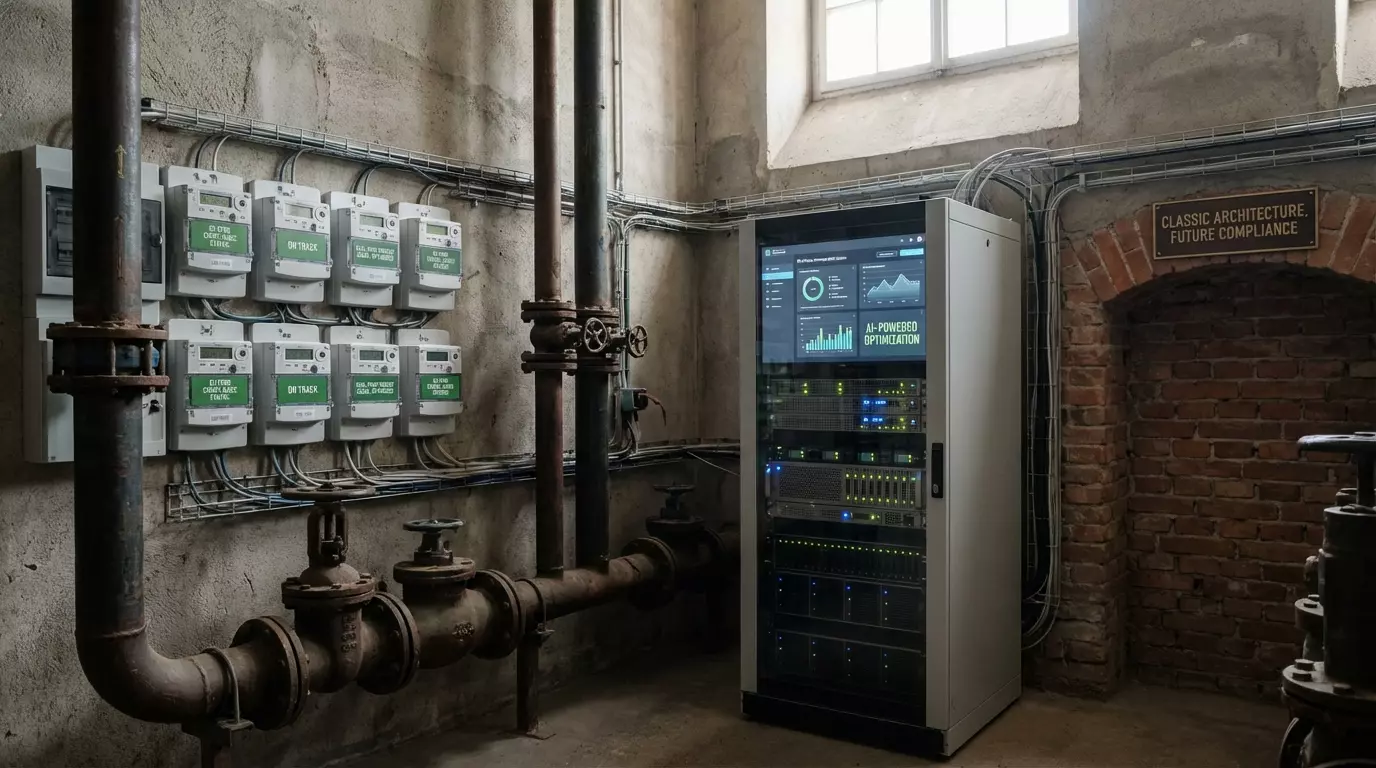
The convergence of Property Technology (PropTech) and Environmental, Social, and Governance (ESG) compliance has created a new paradigm for building management. What was once considered cutting-edge technology has rapidly become essential infrastructure for landlords who want to stay competitive. Smart meters, advanced Building Management Systems, and artificial intelligence tools are no longer luxury add-ons but fundamental necessities for navigating the complex landscape of energy regulations. As 2026 approaches faster than many anticipated, the question has shifted from “should we invest in these technologies?” to “can we afford not to?”
Why 2026 EPBD Targets Are Closer Than You Think
The updated Energy Performance of Buildings Directive represents one of the most significant regulatory shifts in European property history. Under the new framework, all non-residential buildings must achieve at least Energy Performance Certificate (EPC) rating E by 2027, with further improvements to rating D required by 2030. For residential properties, member states must ensure that 16% of their worst-performing buildings undergo renovation by 2030, rising to 26% by 2033. These aren’t distant goals on a far-off horizon. They require immediate action, with implementation strategies and renovation plans needing to be in place well before the actual deadlines.
Many property owners have fallen into a dangerous trap of complacency, believing they have ample time to address these requirements. However, the reality paints a different picture. The construction and renovation sectors are already experiencing capacity constraints, with skilled labor shortages and supply chain disruptions causing project delays across Europe. According to research from the Buildings Performance Institute Europe, approximately 75% of Europe’s building stock is energy inefficient, meaning millions of properties need urgent attention. The clock isn’t just ticking; it’s racing forward. Property owners who delay their compliance strategies risk facing inflated costs, limited contractor availability, and potential penalties that could severely impact their bottom line.
Smart Meters and BMS: Your Compliance Toolkit
Smart meters have emerged as the foundational layer of any serious energy compliance strategy. These devices provide real-time visibility into energy consumption patterns, allowing property managers to identify inefficiencies, track usage trends, and implement targeted improvements. Unlike traditional meters that offer only monthly snapshots, smart meters deliver granular data that can be analyzed down to individual circuits or zones within a building. This level of detail proves invaluable when diagnosing energy waste, validating the impact of efficiency measures, and demonstrating compliance with regulatory requirements. The European Union has mandated that 80% of consumers should have smart meters installed where cost-effective, pushing the technology from optional to standard.
Building Management Systems represent the next evolution in property intelligence, integrating multiple building functions into a unified control platform. Modern BMS solutions connect heating, ventilation, air conditioning (HVAC), lighting, security, and access control systems, creating a holistic view of building operations. These platforms use sophisticated algorithms to optimize energy usage based on occupancy patterns, weather forecasts, and utility rate structures. For instance, a BMS can automatically adjust temperature setpoints in unoccupied zones, dim lights in areas with sufficient natural illumination, or shift energy-intensive operations to off-peak hours. The European Commission estimates that intelligent building automation can reduce energy consumption by 20-30%, making BMS technology not just a compliance tool but a powerful financial asset that pays for itself through reduced utility costs.
AI-Powered Carbon Tracking for Real Estate
Artificial intelligence has revolutionized how property owners approach carbon footprint management, transforming it from a manual, error-prone process into an automated, precise science. AI-powered platforms can ingest data from multiple sources including smart meters, BMS outputs, utility bills, and weather stations to create comprehensive carbon accounting models. These systems don’t just calculate current emissions; they predict future trends, identify anomalies that might indicate equipment malfunctions, and recommend specific interventions to reduce carbon output. Machine learning algorithms continuously improve their accuracy by analyzing historical patterns and outcomes, essentially becoming smarter with each data point they process.
The practical applications of AI in carbon tracking extend far beyond simple measurement. Advanced platforms can simulate the impact of various renovation scenarios, helping property owners make informed decisions about which upgrades will deliver the greatest carbon reductions per euro invested. Some solutions incorporate predictive maintenance capabilities, using sensor data to identify equipment that’s operating inefficiently before it fails completely. This proactive approach prevents energy waste while avoiding costly emergency repairs. For portfolio managers overseeing multiple properties, AI tools can benchmark performance across buildings, highlighting which assets need immediate attention and which are performing optimally. This data-driven approach transforms ESG compliance from a checkbox exercise into a strategic advantage that attracts environmentally conscious tenants and investors.
Making PropTech Pay: ROI Meets Regulation
The business case for PropTech investment has never been stronger, with regulatory compliance creating a compelling forcing function that accelerates return on investment timelines. Property owners who implement smart building technologies typically see energy cost reductions of 15-40% within the first year, depending on the building’s starting efficiency level and the comprehensiveness of the technology deployment. These savings compound over time as systems learn and optimize, while energy prices continue their upward trajectory. Beyond direct utility savings, green-certified buildings command rental premiums averaging 5-10% and experience lower vacancy rates as tenants increasingly prioritize sustainability in their location decisions.
The financial benefits extend into less obvious but equally important areas. Buildings equipped with modern PropTech infrastructure require less hands-on management, reducing operational labor costs and freeing facility teams to focus on strategic improvements rather than reactive firefighting. Insurance providers are beginning to offer preferential rates for properties with advanced monitoring and safety systems, recognizing that these technologies reduce risk. Perhaps most significantly, properties that meet or exceed EPBD requirements maintain their market value and liquidity, while non-compliant buildings face declining valuations and restricted buyer pools. Forward-thinking investors are already incorporating compliance timelines into their acquisition criteria, viewing 2026 EPBD targets not as burdens but as filters that separate quality assets from stranded ones. The convergence of regulatory necessity and economic benefit has created a rare alignment where doing the right thing for the environment also means doing the smart thing for your portfolio.
In Short
The 2026 EPBD deadline represents a fundamental shift in how European real estate operates, moving sustainability from aspiration to requirement. PropTech solutions including smart meters, Building Management Systems, and AI-powered analytics have transitioned from innovative luxuries to essential compliance tools. Property owners who embrace these technologies gain multiple advantages: reduced energy costs, improved tenant satisfaction, enhanced property values, and most importantly, confidence in meeting regulatory requirements that will only become more stringent over time.
The message for landlords is clear and urgent. Waiting is not a viable strategy. The combination of tight construction timelines, capacity constraints in the renovation sector, and the sheer scale of work required across Europe’s building stock means that procrastination will prove costly. Those who act now benefit from better contractor availability, more competitive pricing, and sufficient time to optimize their technology investments. The convergence of PropTech and ESG compliance isn’t reshaping the future of real estate; it’s reshaping the present, and success belongs to those who recognize this reality and respond accordingly.
FAQ
What exactly does the 2026 EPBD require from property owners?
The EPBD sets phased requirements with the first major deadline requiring non-residential buildings to achieve minimum EPC rating E by 2027 and rating D by 2030. Residential properties must see 16% of worst-performing buildings renovated by 2030. Implementation varies slightly by member state.
How much does it typically cost to install smart building technology?
Costs vary significantly based on building size and existing infrastructure, but basic smart meter installations range from €100-500 per unit, while comprehensive BMS systems can cost €5-50 per square meter. Most installations achieve payback within 2-5 years through energy savings.
Can older buildings realistically meet EPBD targets?
Yes, though older buildings typically require more extensive interventions. The combination of envelope improvements (insulation, windows) with smart technology creates synergies where monitoring systems help optimize the performance of physical upgrades.
What happens if my property doesn’t meet the 2026 requirements?
Penalties vary by member state but may include fines, restrictions on rental or sale, mandatory disclosure of non-compliance, and potential forced renovation orders. Non-compliant properties also face declining market values.
Do I need to hire specialists to implement PropTech solutions?
While some systems require professional installation, many modern PropTech platforms are designed for straightforward deployment. Most providers offer installation services and training, with ongoing support to ensure optimal performance.
How does PropTech help with ESG reporting requirements?
PropTech platforms automatically collect and organize the energy and emissions data required for ESG reports, eliminating manual data gathering and reducing reporting errors. Many systems generate compliance-ready reports with minimal additional effort.



Join The Discussion