

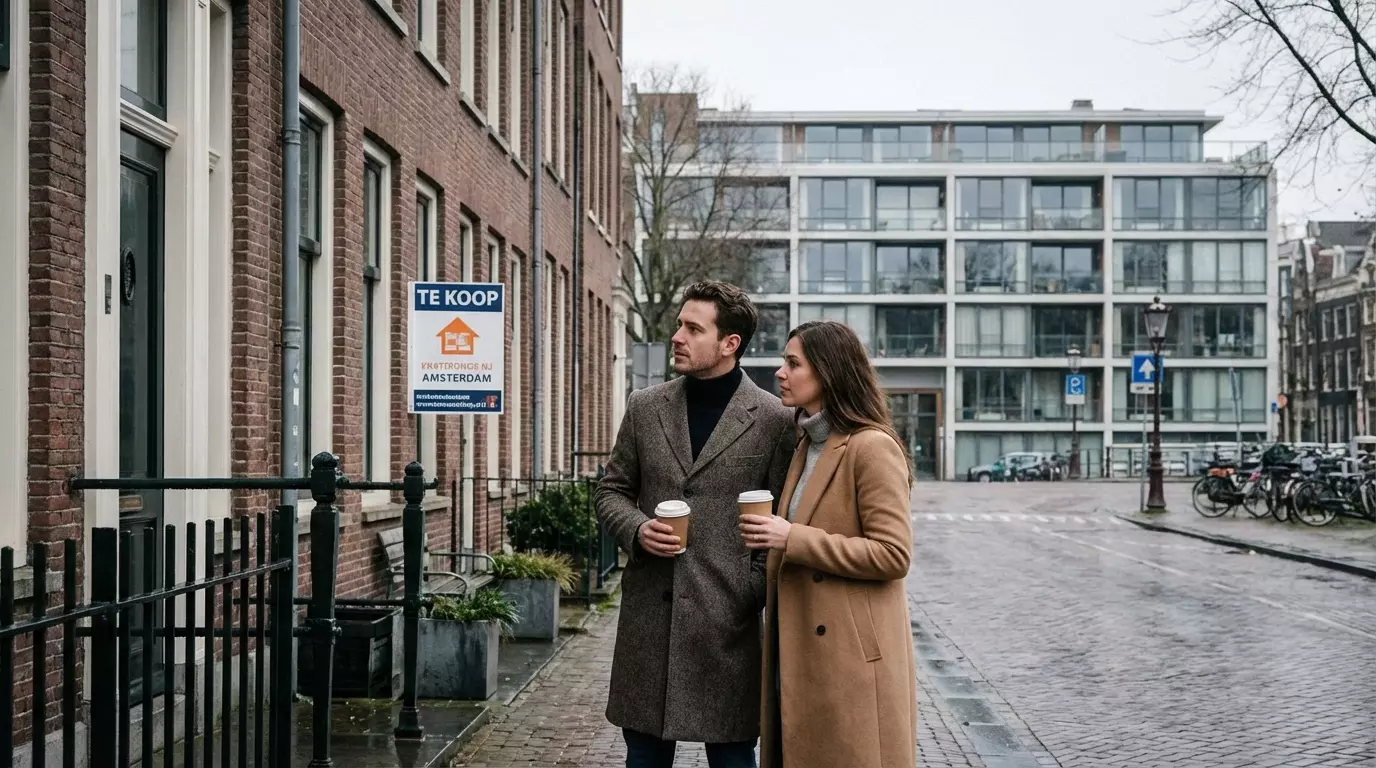
Free Sector Rents in the Netherlands Are Now Outpacing Home Purchase Prices
The Dutch housing market has reached a remarkable turning point. For the first time in recent memory, rental prices in the free sector are climbing faster than the prices of owner-occupied homes. This shift is sending shockwaves through the market and putting enormous pressure on tenants who already face some of the highest housing costs in Europe. The gap between renting and buying is widening at an alarming pace, raising serious questions about affordability, policy, and the future of housing in the Netherlands.
What does this mean for the millions of Dutch residents who rent their homes? And how did we get here? In this article, we break down the key data, explore the human impact, and look at what this trend signals for the broader Dutch housing crisis. Whether you are a renter, a prospective buyer, or simply someone trying to understand the state of housing in the Netherlands, this analysis will give you a clear picture of where things stand today.
Why Free Sector Rents Are Surpassing Home Prices
The free sector rental market in the Netherlands, also known as the “vrije sector,” operates outside the regulated social housing system. Landlords in this segment are free to set prices based on market conditions, and those conditions have been extremely favorable for property owners in recent years. Demand for rental properties has surged due to a combination of factors: a persistent housing shortage, population growth driven by immigration, and the inability of many would-be buyers to secure a mortgage in an increasingly competitive purchase market. As a result, landlords can command ever-higher rents with little pushback.
Meanwhile, the growth rate of home purchase prices has actually started to cool. After years of double-digit increases, the owner-occupied market has stabilized somewhat, partly due to rising interest rates and stricter lending criteria. This deceleration in purchase prices, combined with the continued acceleration of rental costs, has created a crossover moment. Rents in the free sector are now rising faster than the cost of buying a home. This dynamic is historically unusual and signals a structural imbalance in the Dutch housing market that could take years to correct.
The Numbers Behind Skyrocketing Rental Costs
The data paints a stark picture. According to the figures highlighted by NU.nl, free sector rents have been climbing at a pace that outstrips the growth of home purchase prices. While exact percentages fluctuate by region and quarter, the trend is unmistakable. In major cities like Amsterdam, Rotterdam, Utrecht, and The Hague, rental prices have reached levels that consume a significant portion of household income. Some tenants are now spending well over 40 percent of their net earnings on rent alone, far exceeding the commonly recommended threshold of 30 percent.
To put this in perspective, consider the following comparison:
| Metric | Free Sector Rent Growth | Home Purchase Price Growth |
|---|---|---|
| Trend direction | Accelerating | Stabilizing or slowing |
| Primary driver | Housing shortage, demand | Interest rate increases |
| Impact on affordability | Worsening for renters | Mixed for buyers |
| Regional hotspots | Amsterdam, Utrecht, The Hague | Suburban and rural areas |
These numbers are not just abstract statistics. They represent real financial strain for hundreds of thousands of Dutch households. The gap is especially pronounced in the Randstad region, where economic activity and job opportunities are concentrated, making it nearly impossible for workers to simply move to cheaper areas.
How Renters Are Struggling in Today’s Market
For many renters in the Netherlands, the current market feels like a trap. Those who cannot afford to buy a home, whether due to insufficient savings for a down payment or an income that does not meet mortgage requirements, are forced to remain in the free sector rental market. But staying put is becoming increasingly expensive. Lease renewals often come with significant price increases, and finding a new rental at an affordable rate has become a daunting task. Waiting lists for social housing in cities like Amsterdam can stretch beyond 10 years, effectively shutting out anyone who does not already have a foot in the door.
The human toll is considerable. Young professionals, single-income households, and families with moderate earnings are among the hardest hit. Many are making difficult trade-offs:
- Downsizing to smaller apartments to stay within budget
- Commuting longer distances from cheaper regions to their workplace
- Sharing housing with roommates well into their 30s and 40s
- Delaying major life decisions such as starting a family or pursuing further education
- Leaving the Netherlands entirely in search of more affordable living conditions elsewhere in Europe
Reports from organizations like CBS (Statistics Netherlands) and the Woonbond, the Dutch tenants’ association, have repeatedly highlighted these pressures. The Woonbond has been particularly vocal about the need for stronger rent regulation and increased construction of affordable housing.
What This Means for the Dutch Housing Crisis
The fact that free sector rents are now growing faster than home prices is not just a market curiosity. It is a symptom of a deeper, structural housing crisis that the Netherlands has been grappling with for over a decade. The country faces a shortage of hundreds of thousands of homes, and new construction has consistently failed to keep pace with demand. Government efforts to address the shortage, including plans to build roughly 100,000 new homes per year, have been hampered by bureaucratic delays, nitrogen emission regulations, labor shortages in the construction sector, and rising material costs.
Policy responses are evolving, but slowly. The Dutch government has introduced measures aimed at regulating a portion of the free sector, including proposals to cap rent increases and expand the definition of regulated housing. However, critics argue that these steps may discourage investment in new rental properties, potentially worsening the supply problem. The tension between protecting tenants and incentivizing construction remains one of the central dilemmas of Dutch housing policy. Without a dramatic increase in housing supply combined with thoughtful regulation, the gap between what renters pay and what the market can sustainably support will only continue to grow.
In Short
The Dutch housing market is at a critical juncture. Free sector rental prices are now rising faster than the cost of purchasing a home, a development that underscores the severity of the housing shortage and the vulnerability of renters in the Netherlands. The data is clear: tenants in major cities are spending unsustainable portions of their income on rent, while the pipeline of new affordable housing remains inadequate.
For renters, the outlook is challenging. For policymakers, the pressure to act decisively has never been greater. Balancing tenant protection with the need to stimulate new construction will require creative solutions, sustained investment, and political will. Until meaningful progress is made on both fronts, the Dutch housing crisis will continue to deepen, and the dream of affordable, secure housing will remain out of reach for too many.
FAQ
Why are free sector rents rising faster than home prices in the Netherlands?
The primary drivers are a severe housing shortage, high demand for rental properties (especially in urban areas), and a cooling of the purchase market due to higher interest rates. Landlords in the free sector face few restrictions on pricing, allowing rents to climb rapidly.
What is the difference between social housing and free sector housing in the Netherlands?
Social housing is regulated by the government with income-based eligibility and capped rents. Free sector housing has no such caps, meaning landlords set prices based on market demand. Social housing often has long waiting lists, pushing many renters into the more expensive free sector.
How much of their income do Dutch renters typically spend on housing?
Many free sector renters in major Dutch cities spend over 40 percent of their net income on rent, which is significantly above the recommended 30 percent threshold for healthy household finances.
What is the Dutch government doing to address the housing crisis?
The government has proposed expanding rent regulation into parts of the free sector, capping annual rent increases, and aiming to build approximately 100,000 new homes per year. However, implementation has been slow due to regulatory, environmental, and labor challenges.
Is it cheaper to buy or rent in the Netherlands right now?
While buying has become relatively more affordable compared to renting in terms of price growth trends, the high upfront costs of purchasing a home (down payment, transfer tax, mortgage requirements) still make buying inaccessible for many Dutch residents.

Join The Discussion