

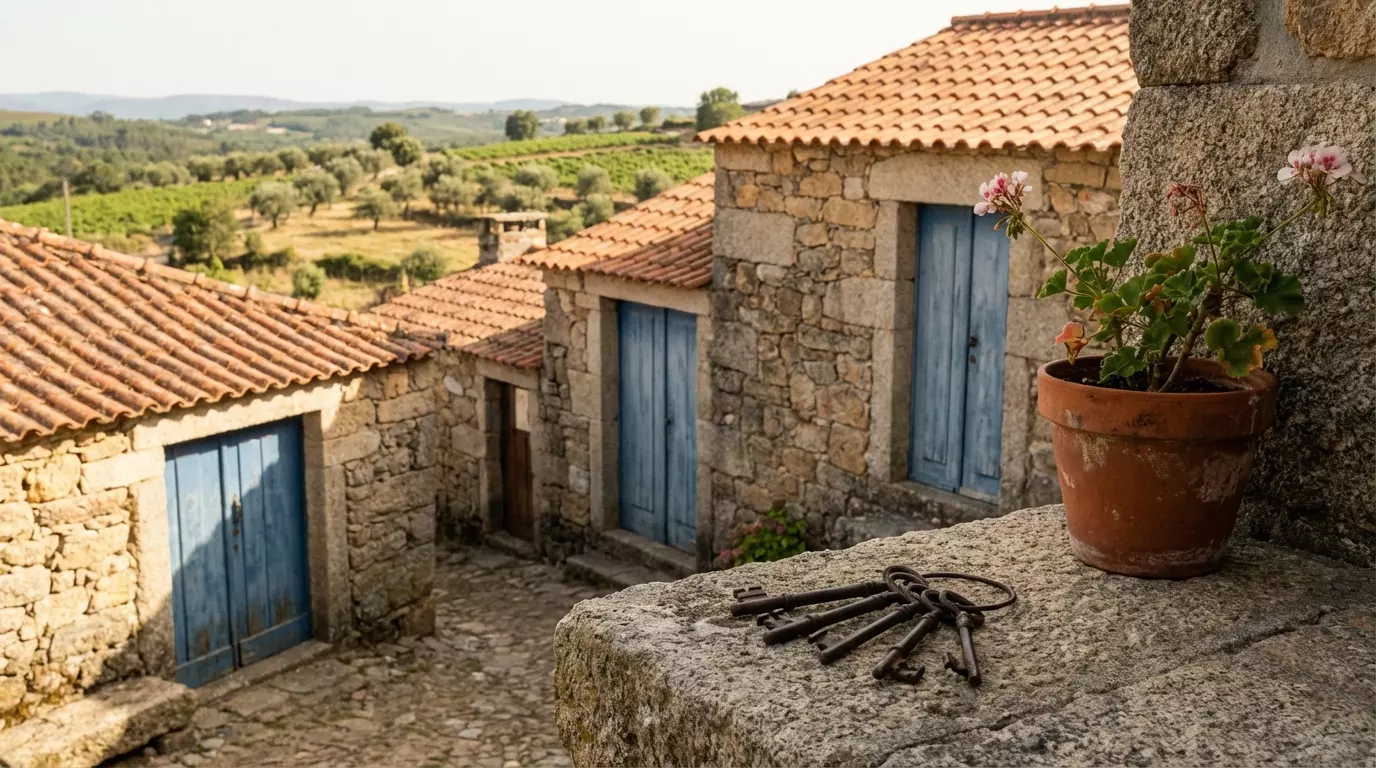
Portugal Tops EU Charts in Homeownership
Portugal has emerged as a leading nation of property owners within the European Union, with an impressive 74% of residents living in their own homes. This remarkable statistic places the country significantly above the EU average and showcases a deeply ingrained cultural preference for property ownership over renting. The data reveals a society where homeownership remains a cornerstone of financial security and personal achievement, reflecting decades of social and economic policies that have prioritized private property acquisition.
The Portuguese homeownership model stands in stark contrast to countries like Germany and Austria, where rental markets dominate and homeownership rates hover around 50%. This cultural divide highlights different approaches to housing across Europe, with Portugal maintaining traditional values around property ownership despite recent economic challenges. The European Union statistics office confirms Portugal’s position among the top homeowning nations, demonstrating that the Portuguese dream of owning a home remains very much alive despite mounting pressures on the housing market.
The Financial Reality Behind High Ownership Rates
While the 74% homeownership rate appears impressive on the surface, the underlying financial reality tells a more complex story. Many Portuguese homeowners are burdened with substantial mortgage debt, with household debt levels remaining among the highest in Europe relative to disposable income. The journey to homeownership often requires significant financial sacrifice, with families dedicating a disproportionate share of their income to mortgage repayments, sometimes exceeding 40% of monthly earnings. This financial strain has become particularly acute in recent years as interest rates have risen and property prices have surged in major urban centers.
The situation is further complicated by Portugal’s relatively low average wages compared to other Western European nations. Despite the high homeownership rate, many Portuguese families struggle to maintain their properties or save for other financial goals while servicing their mortgages. According to Banco de Portugal, household indebtedness remains a concern for economic stability, with mortgage debt accounting for the vast majority of family liabilities. This creates a paradox where homeownership is widespread, yet financial flexibility remains limited for many households who have invested heavily in their properties at the expense of liquid savings and emergency funds.
Regional Differences Across Portuguese Districts
The homeownership landscape varies dramatically across Portugal’s different regions and districts, revealing significant disparities in property ownership patterns. Inland and rural areas typically boast homeownership rates exceeding 80%, with some districts approaching 85-90%, as property prices remain more accessible and traditional family structures facilitate intergenerational property transfers. These regions benefit from lower property costs and stronger community ties, where passing down family homes through generations remains a common practice that supports high ownership rates without requiring extensive mortgage financing.
In stark contrast, Portugal’s major metropolitan areas tell a different story. Lisbon and Porto have witnessed explosive property price growth over the past decade, driven by international investment, the golden visa program, and the influx of digital nomads and remote workers. These coastal urban centers now see homeownership rates closer to 60-65%, significantly below the national average, as younger residents and newcomers find themselves priced out of the market. The Algarve region presents yet another dynamic, where foreign ownership and holiday home purchases have transformed the local market, creating unique challenges for Portuguese residents seeking to buy property in their own communities. These regional variations underscore the complexity of Portugal’s housing market and demonstrate that national statistics often mask important local realities.
Challenges Facing First-Time Buyers Today
First-time buyers in Portugal face an increasingly difficult path to homeownership, despite the country’s traditionally high ownership rates. Property prices in Lisbon have more than doubled in some neighborhoods since 2015, while wages have failed to keep pace with this dramatic appreciation. Young professionals now require an average of 15-20 years of savings to accumulate a down payment for a modest apartment in the capital, compared to just 8-10 years a decade ago. The situation is exacerbated by strict lending criteria introduced after the 2008 financial crisis, with banks requiring substantial down payments of 20-30% and imposing rigorous income verification processes that exclude many potential buyers.
The rental market offers little respite, with rental prices also climbing steeply and consuming an ever-larger portion of young people’s incomes, making it difficult to save for a down payment. Many first-time buyers now rely on the “Bank of Mom and Dad,” with family financial support becoming almost essential for property acquisition in major cities. Government initiatives, including reduced VAT rates for first-time buyers and subsidized loan programs, have provided some relief but remain insufficient to offset the fundamental affordability crisis. The generational divide is widening, with younger Portuguese increasingly questioning whether homeownership remains achievable through traditional means, potentially signaling a shift away from Portugal’s longstanding homeownership culture for future generations unless significant policy interventions address the affordability gap.
The Impact of International Investment
International buyers have significantly reshaped Portugal’s property market over the past decade, contributing to price increases that have both positive and negative implications for local residents. The Non-Habitual Resident tax regime and the Golden Visa program attracted substantial foreign capital, particularly from Chinese, Brazilian, and French investors, pumping billions of euros into Portuguese real estate. While this investment has renovated historic buildings and revitalized neglected neighborhoods, it has also created competition that prices out local buyers, particularly in historic city centers and coastal areas.
The Portuguese government has recently adjusted these programs in response to concerns about housing affordability, excluding Lisbon, Porto, and coastal areas from certain investment visa schemes. However, the impact of years of international investment continues to influence market dynamics, with foreign buyers still representing a significant portion of transactions in premium segments. This international dimension adds complexity to Portugal’s homeownership narrative, as the traditional pathway to property ownership for Portuguese families increasingly competes with global capital flows and investment-driven demand.
Mortgage Market Dynamics
The Portuguese mortgage market has undergone significant transformation in recent years, with rising interest rates fundamentally altering affordability calculations for prospective buyers. After years of historically low rates that fueled borrowing and property price appreciation, the European Central Bank’s rate increases have added hundreds of euros to monthly mortgage payments for variable-rate borrowers. This shift has particularly impacted recent buyers who stretched their budgets to enter the market at peak prices, now finding themselves with reduced disposable income as their mortgage costs climb.
Banks have responded by tightening lending standards further, with stress tests now requiring borrowers to demonstrate they can afford payments at significantly higher interest rates than current levels. The loan-to-value ratios have also become more conservative, requiring larger down payments and effectively raising the barrier to entry for first-time buyers. These dynamics are gradually cooling the market in some segments, but they also risk creating a two-tier system where existing homeowners with fixed-rate mortgages or paid-off properties benefit from appreciation, while aspiring buyers face increasingly insurmountable obstacles to joining the homeownership class.
Social and Cultural Factors
Homeownership in Portugal extends beyond mere financial considerations, embodying deep cultural values around family, stability, and social status. Portuguese society traditionally views property ownership as a fundamental life achievement and a marker of adulthood, with renting often perceived as a temporary or less desirable state. This cultural imperative drives many families to make substantial financial sacrifices to achieve homeownership, even when renting might offer greater financial flexibility or mobility for career opportunities.
Multi-generational living arrangements and family support systems play crucial roles in maintaining high homeownership rates, with parents often providing financial assistance, co-signing loans, or allowing adult children to live at home while saving for a down payment. This social structure, while enabling homeownership, also creates dependencies and delays other life milestones for younger generations. The cultural expectation of homeownership can also trap families in properties that no longer suit their needs or in locations that limit career opportunities, as the transaction costs and emotional attachment to family homes discourage mobility that might be economically advantageous.
In Short
Portugal’s position as a nation of homeowners, with 74% of residents living in their own properties, represents both a cultural achievement and an economic challenge. While the high homeownership rate reflects deeply held values around property and family stability, it masks significant regional disparities, financial strain, and growing accessibility issues for younger generations. The contrast between rural areas with homeownership rates exceeding 80% and urban centers where prices have soared demonstrates the complexity of Portugal’s housing landscape.
The path forward requires balancing the preservation of homeownership opportunities with the realities of a changing economy and society. First-time buyers face unprecedented challenges, with property prices far outpacing wage growth and requiring family support or extended saving periods that delay other life goals. International investment has brought both revitalization and competition to Portuguese property markets, while rising interest rates have added new pressures to household budgets already stretched by mortgage commitments.
As Portugal navigates these challenges, policy interventions must address affordability without undermining the cultural value placed on homeownership. The coming years will test whether Portugal can maintain its status as a nation of homeowners or whether economic realities will force a gradual shift toward rental markets, particularly among younger generations in urban areas. The statistics tell a story of widespread ownership, but the human experience reveals the sacrifices and struggles behind those numbers, highlighting the need for comprehensive housing policies that ensure homeownership remains achievable for future generations of Portuguese families.
FAQ
What percentage of Portuguese residents own their homes?
Approximately 74% of Portuguese residents live in their own homes, placing Portugal among the top homeownership nations in the European Union and well above the EU average.
Why is homeownership so high in Portugal compared to other EU countries?
High homeownership rates in Portugal stem from cultural values that prioritize property ownership, family support systems that facilitate property acquisition, and historical policies that have favored ownership over rental markets.
Which Portuguese regions have the highest homeownership rates?
Inland and rural districts typically have the highest homeownership rates, often exceeding 80-85%, while major metropolitan areas like Lisbon and Porto have lower rates around 60-65% due to higher property prices.
What challenges do first-time buyers face in Portugal?
First-time buyers struggle with property prices that have doubled in major cities since 2015, wage growth that hasn’t kept pace with price appreciation, strict lending criteria requiring 20-30% down payments, and the need for substantial family financial support.
How has international investment affected Portuguese property markets?
International investment through programs like the Golden Visa has driven up property prices, particularly in Lisbon, Porto, and coastal areas, creating competition that has priced many local buyers out of the market while also revitalizing historic neighborhoods.
Are Portuguese homeowners financially secure despite high ownership rates?
Many Portuguese homeowners face financial strain, with household debt levels among Europe’s highest relative to disposable income, and mortgage payments often exceeding 40% of monthly earnings, limiting financial flexibility despite property ownership.
How do interest rate increases impact Portuguese homeowners?
Rising interest rates have significantly increased monthly payments for variable-rate mortgage holders, adding hundreds of euros to monthly costs and reducing disposable income for recent buyers who borrowed at lower rates.
What role does family support play in Portuguese homeownership?
Family financial support has become almost essential for first-time buyers in major cities, with parents providing down payment assistance, co-signing loans, or allowing adult children to live at home while saving, creating multi-generational dependencies.

Join The Discussion