

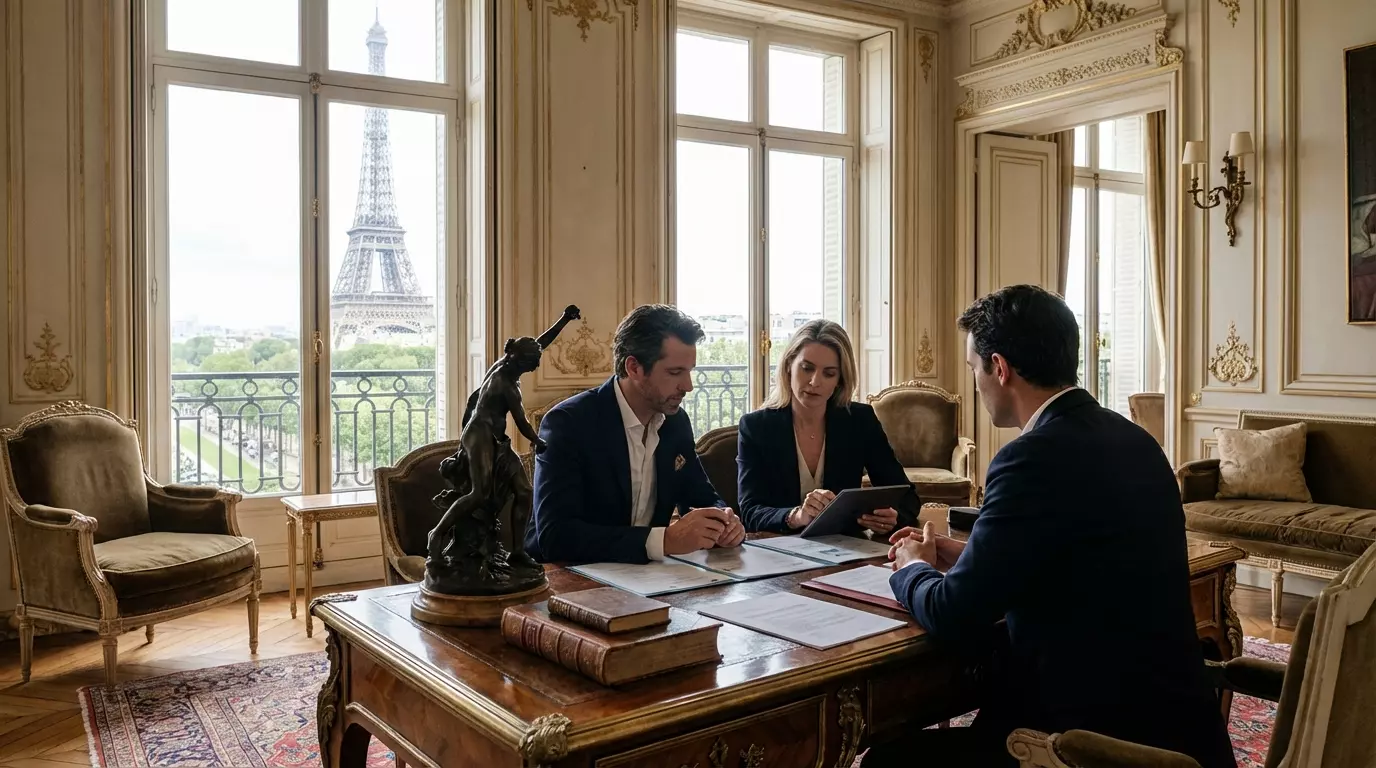
Paris Luxury Real Estate Market Struggles Against Anti-Wealth Sentiment
The Parisian luxury property market is experiencing a tentative recovery, but its progress faces significant headwinds from France’s increasingly stringent tax policies targeting wealthy individuals. While global real estate markets have shown signs of stabilization following recent economic turbulence, Paris finds itself in a unique predicament where political sentiment and fiscal measures are actively discouraging high-net-worth buyers from investing in premium properties.
This situation creates a complex dynamic where market fundamentals suggest conditions are ripe for recovery, yet policy decisions rooted in political ideology are effectively suppressing demand. The French capital’s prestigious real estate sector, long considered a safe haven for international wealth, now navigates an environment where being wealthy has become politically contentious, fundamentally altering the investment landscape for luxury properties.
Paris Luxury Real Estate Rebounds Slowly
The high-end property market in Paris has begun showing modest signs of recovery after experiencing considerable pressure over the past few years. Transaction volumes in the luxury segment, typically defined as properties exceeding €2 million, have started to tick upward, though the pace remains considerably slower than pre-pandemic levels. Real estate professionals operating in prestigious arrondissements report that while buyer interest has increased, actual closings remain constrained by various factors beyond typical market dynamics.
This gradual rebound contrasts sharply with luxury property markets in other major cities like London or Dubai, where recovery has been more robust. The Parisian market’s sluggish performance reflects not just economic uncertainty but also a growing awareness among wealthy buyers that France may not offer the welcoming environment it once did. Properties in sought-after areas such as the 7th, 8th, and 16th arrondissements continue to attract viewings, but conversion rates from interest to actual purchases have declined noticeably, indicating deeper structural issues beyond simple supply and demand mechanics.
French Tax Policies Target Wealthy Buyers
France’s tax regime has become increasingly hostile toward high-net-worth individuals, creating a significant deterrent for luxury property investment. The country maintains some of Europe’s highest wealth taxes, including substantial property taxes, inheritance levies, and various surcharges specifically designed to extract more revenue from affluent residents. These fiscal measures aren’t merely about revenue generation but reflect a broader political philosophy that views concentrated wealth with suspicion and seeks to redistribute resources through aggressive taxation.
The impact on luxury real estate is direct and measurable. Potential buyers must now calculate not just the purchase price but also the ongoing tax burden that comes with owning premium property in France. Annual property taxes on luxury homes can reach tens of thousands of euros, while inheritance taxes can claim up to 45% of an estate’s value. According to Reuters, these policies have prompted many wealthy French citizens to relocate to more tax-friendly jurisdictions, taking their purchasing power with them and leaving fewer domestic buyers for high-end properties. International buyers, meanwhile, increasingly view French luxury real estate as a poor investment compared to alternatives in Switzerland, Portugal, or even the United Kingdom despite Brexit complications.
High-End Property Sales Hit Resistance
The luxury segment of Paris’s property market faces resistance from multiple directions, creating a perfect storm that suppresses transaction activity. Beyond taxation, wealthy buyers encounter a climate of social disapproval where conspicuous consumption and displays of wealth are increasingly frowned upon. This cultural shift, amplified by political rhetoric that frequently vilifies the rich, makes some prospective buyers reluctant to make high-profile property purchases that could attract unwanted attention or criticism.
Sales data reveals this resistance quantitatively. The number of transactions exceeding €5 million has dropped significantly compared to historical averages, with some quarters seeing declines of 30-40% in this ultra-luxury segment. Properties that would have sold within months now languish on the market for extended periods, forcing sellers to reduce asking prices or withdraw listings entirely. Real estate agents specializing in premium properties report that even when buyers express serious interest, they often abandon purchases after consulting with tax advisors who outline the full financial implications of owning luxury property in France. This creates a vicious cycle where reduced transaction activity leads to market stagnation, which in turn makes properties less attractive as investments due to concerns about future liquidity.
Recovery Faces Political Opposition in France
The political landscape in France actively works against any robust recovery in the luxury property sector. Politicians across the spectrum, from the far-left to centrist parties, have found common ground in rhetoric that criticizes wealth accumulation and advocates for policies that discourage luxury consumption. This political consensus means that regardless of which party holds power, wealthy property buyers can expect little relief from current tax burdens and may face even more stringent measures in the future.
This political opposition manifests in concrete policy proposals that further threaten the luxury market. Recent discussions in the French parliament have included suggestions for additional taxes on vacant luxury properties, higher transaction fees for premium real estate sales, and even restrictions on foreign ownership of high-value properties in certain areas. According to Financial Times, some political figures have explicitly stated that discouraging luxury property investment aligns with their policy goals of promoting social equality and preventing speculation that they believe drives up housing costs for ordinary citizens. This creates an environment of regulatory uncertainty where potential buyers cannot confidently predict what their tax obligations or ownership rights might look like in five or ten years, fundamentally undermining the long-term investment thesis that typically drives luxury real estate purchases.
Market Comparison: Paris vs. Other European Capitals
| City | Luxury Market Growth (YoY) | Top Marginal Tax Rate | Foreign Buyer Interest |
|---|---|---|---|
| Paris | -2% to +1% | 45% + surcharges | Declining |
| London | +5% to +8% | 45% | Stable |
| Geneva | +8% to +12% | ~30% (varies) | Increasing |
| Monaco | +10% to +15% | 0% income tax | Strong |
Key Factors Affecting Paris Luxury Market
- Taxation burden: Cumulative effect of multiple tax layers
- Political rhetoric: Anti-wealth messaging from government officials
- Regulatory uncertainty: Unpredictable future policy changes
- Social climate: Cultural disapproval of conspicuous wealth
- Competition: More attractive markets in neighboring countries
- Inheritance concerns: Punitive estate taxes discouraging generational wealth transfer
Buyer Considerations for Luxury Paris Properties
Prospective buyers evaluating luxury Parisian real estate must weigh numerous factors beyond traditional investment metrics:
- Total cost of ownership: Including all applicable taxes and fees over expected holding period
- Exit strategy: Liquidity concerns given reduced buyer pool
- Political risk: Potential for additional punitive measures targeting wealthy property owners
- Alternative markets: Comparative analysis with London, Geneva, Monaco, and other European luxury markets
- Lifestyle value: Whether personal enjoyment justifies financial disadvantages
- Currency exposure: Euro fluctuations affecting international buyers
The decision-making process has become significantly more complex, requiring sophisticated analysis that extends well beyond simple property valuation. Many buyers now employ specialized advisors who can model various scenarios and tax implications before committing to purchases in the multi-million euro range.
In Short
The Paris luxury real estate market finds itself trapped between tentative recovery signals and formidable political and fiscal obstacles. While global economic conditions might otherwise support a rebound in high-end property sales, France’s aggressive taxation policies and anti-wealth political climate create powerful deterrents that suppress demand and transaction activity. The result is a market that struggles to gain momentum despite fundamental factors that would typically drive growth.
For the foreseeable future, Paris luxury real estate appears destined to underperform compared to competing markets in other European cities that offer more favorable tax treatment and welcoming attitudes toward wealthy residents. Unless significant policy shifts occur, which seems unlikely given the current political consensus, the City of Light may continue to dim for luxury property investors who increasingly direct their capital to more hospitable destinations. This represents not just a market challenge but a broader question about France’s economic competitiveness and its ability to attract and retain the wealthy individuals who have historically contributed significantly to its luxury sectors.
FAQ
What is considered luxury real estate in Paris?
Luxury properties in Paris are typically defined as residences valued at €2 million or above, though the ultra-luxury segment begins around €5 million. These properties are usually located in prestigious arrondissements such as the 6th, 7th, 8th, and 16th districts.
How much are property taxes on luxury homes in France?
Property taxes on luxury homes vary based on location and value but can easily reach €20,000-€50,000 annually for high-end properties. Additional wealth taxes and surcharges can further increase the total tax burden on luxury property owners.
Why are wealthy buyers avoiding Paris real estate?
Wealthy buyers are deterred by France’s high taxation rates, including property taxes, wealth taxes, and inheritance taxes that can claim up to 45% of estate values. Additionally, anti-wealth political rhetoric and regulatory uncertainty make France less attractive compared to alternatives like Switzerland or Monaco.
Is the Paris luxury property market a good investment?
Currently, the Paris luxury market faces significant headwinds that make it challenging as an investment. Reduced transaction volumes, declining buyer interest, and unfavorable tax treatment suggest investors may find better risk-adjusted returns in other European luxury markets.
What taxes do foreign buyers face when purchasing luxury property in France?
Foreign buyers face similar tax obligations as French residents, including transaction taxes (around 7-8% of purchase price), annual property taxes, potential wealth taxes if they become residents, and substantial inheritance taxes if they plan to transfer property to heirs.
How does Paris compare to London for luxury real estate investment?
While both cities have high taxes, London currently shows stronger luxury market growth (5-8% annually vs. Paris’s near-flat performance). London also offers more stable regulatory environment despite Brexit, making it relatively more attractive for international luxury buyers.

Join The Discussion