

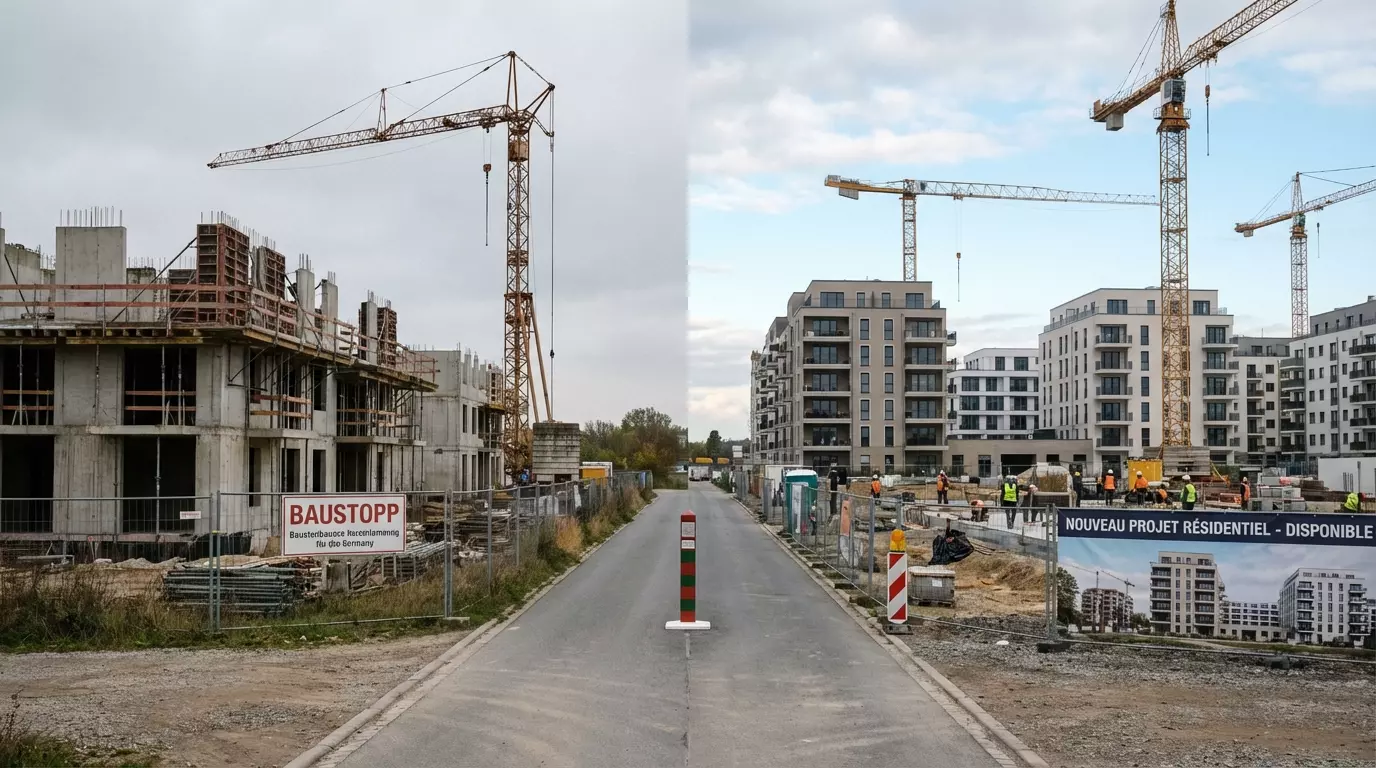
Germany Lags as Europe’s Housing Bounces Back
The European residential construction sector is showing clear signs of recovery after a challenging period, but Germany finds itself in an increasingly isolated position. According to recent findings from the ifo Institute, while most European nations are experiencing a rebound in housing construction activity, Germany continues to struggle with stagnant growth and declining building permits. This divergence marks a significant shift in the continent’s construction landscape, with Germany falling behind its neighbors in what should be a period of renewed market confidence.
The contrast between Germany’s performance and that of other European countries has become increasingly stark throughout early 2026. Where countries like France, the Netherlands, and Spain are witnessing increased construction activity and rising building permits, Germany’s residential construction sector remains trapped in a cycle of decline. This situation raises critical questions about the underlying structural issues affecting the German housing market and what policy interventions might be necessary to reverse this troubling trend.
Construction Boom Bypasses German Market
European residential construction has entered a recovery phase that is generating optimism across most of the continent. Countries that experienced significant downturns during the recent economic challenges are now reporting substantial increases in building permits, construction starts, and developer confidence. The European Construction Industry Federation data supports these observations, showing positive momentum in residential construction across multiple European markets. This recovery is being driven by several factors, including improved financing conditions, stabilizing material costs, and renewed consumer confidence in property markets.
However, Germany stands as a notable exception to this positive trend. While neighboring countries celebrate returning growth, German residential construction continues its downward trajectory. The latest statistics reveal that building permits in Germany have continued to decline, construction companies report pessimistic outlooks, and the pipeline of new residential projects remains worryingly thin. This disconnect between Germany and the broader European market represents more than just a temporary lag. It suggests fundamental differences in market conditions, regulatory environments, and economic factors that are preventing German construction from participating in the continental recovery.
Why German Residential Building Stays Flat
Several interconnected factors explain Germany’s inability to join the European construction recovery. First and foremost, financing conditions remain significantly more challenging in Germany compared to other European markets. Despite broader European monetary policy adjustments, German developers and homebuyers continue to face higher borrowing costs and stricter lending criteria than their counterparts elsewhere. These financial barriers have created a substantial obstacle to new construction projects, particularly for smaller developers and first-time homebuyers who traditionally drive significant portions of residential construction activity.
Beyond financing, Germany faces unique regulatory and bureaucratic challenges that compound the sector’s difficulties. The country’s complex building regulations, lengthy approval processes, and strict environmental standards create additional costs and delays that make new construction projects less attractive to developers. These regulatory burdens include:
- Extended planning permission timelines that can stretch for years
- Stringent energy efficiency requirements that increase construction costs
- Complex local zoning regulations that vary significantly between municipalities
- Labor shortages in skilled construction trades
- Rising material costs that disproportionately affect the German market
Additionally, Germany’s particular sensitivity to interest rate changes has amplified the impact of recent monetary policy decisions. The country’s housing market traditionally relies heavily on debt financing, making it more vulnerable to rate fluctuations than markets where cash purchases or alternative financing structures are more common. This sensitivity has created a perfect storm of reduced demand, cautious lenders, and hesitant developers, all contributing to the sector’s continued stagnation.
Recovery Gap Widens Across the Continent
The disparity between Germany and other European nations in residential construction performance has grown increasingly pronounced in recent months. France, for example, has reported a 15% increase in building permits compared to the previous year, while the Netherlands has seen similar positive trends. Spain and Portugal, markets that faced severe challenges during previous economic downturns, are now experiencing robust recovery in their construction sectors. Even smaller European economies are demonstrating stronger residential construction metrics than Germany, highlighting the severity of the German market’s underperformance.
This widening gap has significant implications for Germany’s housing supply and affordability challenges. As other European countries build new housing stock to meet demand, Germany’s stagnant construction sector exacerbates existing shortages, particularly in urban centers. The German Federal Statistical Office reports that housing shortages in major cities continue to worsen, with rental prices rising despite the overall economic uncertainty. This creates a paradoxical situation where clear housing demand exists, but the construction sector remains unable or unwilling to respond with new supply.
The competitive implications of this recovery gap extend beyond domestic concerns. German construction companies risk losing market position and expertise as their European competitors gain experience with new technologies, sustainable building practices, and innovative construction methods. The longer Germany’s construction sector remains stagnant while others advance, the more difficult it becomes to catch up once conditions improve. This could result in long-term structural disadvantages for German construction firms in an increasingly integrated European market.
Industry experts suggest that without targeted policy interventions, Germany’s construction sector may continue lagging even as European conditions improve further. The combination of regulatory complexity, financing challenges, and market hesitancy requires comprehensive solutions that address multiple aspects of the construction ecosystem simultaneously. Some proposed measures include streamlining building approval processes, providing targeted financial incentives for residential construction, and addressing labor shortages through improved training programs and immigration policies for skilled workers.
In Short
Germany’s residential construction sector faces an increasingly concerning isolation as the rest of Europe experiences a clear recovery in housing construction activity. While countries across the continent report rising building permits and renewed developer confidence, Germany remains mired in declining construction activity and persistent market pessimism. The causes are multifaceted, including challenging financing conditions, complex regulatory environments, and unique market sensitivities that distinguish Germany from its European neighbors.
The widening recovery gap between Germany and other European nations carries significant implications for housing supply, affordability, and the competitive position of German construction companies. Without comprehensive policy responses that address financing barriers, regulatory complexity, and labor shortages, Germany risks falling further behind as European construction markets continue their upward trajectory. The situation demands urgent attention from policymakers and industry leaders to prevent long-term structural damage to one of Europe’s traditionally strongest construction markets.
Frequently Asked Questions
Why is Germany’s construction sector not recovering like other European countries?
Germany faces a unique combination of challenges including stricter financing conditions, complex building regulations, lengthy approval processes, and higher sensitivity to interest rate changes. These factors create more substantial barriers to new construction than exist in other European markets, preventing German developers from capitalizing on improving economic conditions.
How significant is the gap between Germany and other European construction markets?
The gap has become quite substantial, with countries like France reporting 15% increases in building permits while Germany continues to see declines. This represents not just a temporary lag but an increasingly worrying divergence that could have long-term implications for Germany’s housing supply and construction industry competitiveness.
What impact does stagnant construction have on German housing availability?
Stagnant construction exacerbates existing housing shortages, particularly in urban areas. Despite clear demand for new housing, the lack of construction activity means supply cannot meet demand, leading to rising rental prices and worsening affordability challenges for German residents.
Could Germany’s construction sector recover quickly if conditions improve?
A rapid recovery may prove difficult due to structural issues beyond simple market conditions. The combination of regulatory complexity, labor shortages, and lost competitive ground to European rivals means that even with improved financing and demand conditions, Germany may require extended time to return to robust construction activity.
What policy changes could help Germany’s residential construction sector?
Potential solutions include streamlining building approval processes, reducing regulatory complexity, providing targeted financial incentives for new construction, addressing skilled labor shortages through training and immigration policies, and creating more favorable financing conditions for developers and homebuyers.
Are all regions of Germany equally affected by the construction stagnation?
While the overall trend affects Germany broadly, urban centers with existing housing shortages face particularly acute challenges. These areas have the strongest demand for new housing but also often face the most complex regulatory environments and highest construction costs, making the recovery gap especially problematic.
Join The Discussion