

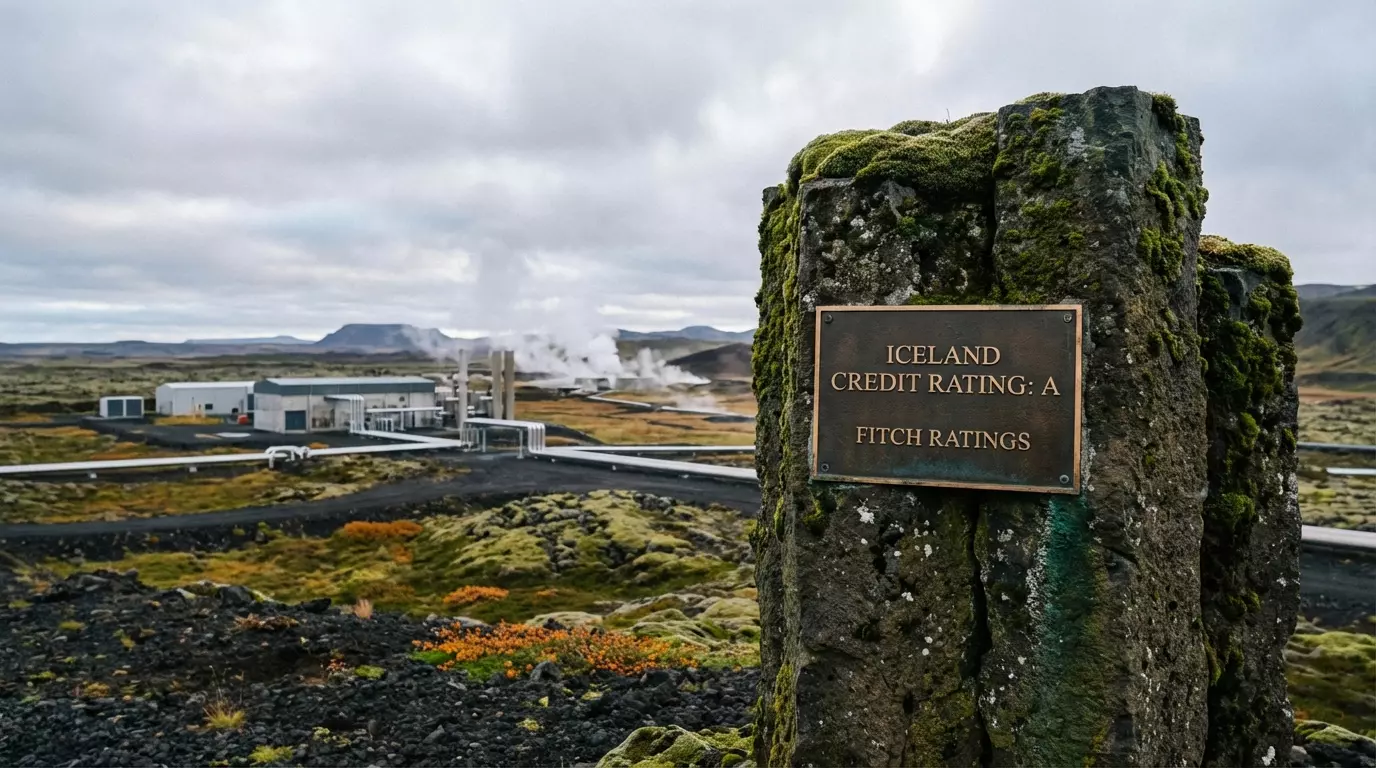
Fitch Upgrades Iceland’s Credit Rating to A
Fitch Ratings, one of the world’s leading credit rating agencies, has announced a significant upgrade to Iceland’s sovereign credit rating, elevating it to ‘A’ from ‘A-‘. This marks a notable achievement for the Nordic island nation, reflecting years of economic reforms and prudent fiscal management. The upgrade, announced on February 6, 2026, comes with a stable outlook, though Fitch has simultaneously decided to withdraw its ratings coverage of the country. This decision to withdraw ratings is a standard procedure that occurs when Fitch determines that continued coverage is no longer necessary or commercially viable, and should not be interpreted as a negative signal about Iceland’s creditworthiness.
The rating upgrade places Iceland firmly in the upper-medium grade category of investment-grade sovereigns, positioning the country alongside other economically robust nations. This achievement is particularly impressive considering Iceland’s dramatic economic challenges during the 2008 financial crisis, when the country’s banking system collapsed and required international assistance. The journey from that low point to today’s ‘A’ rating demonstrates Iceland’s remarkable economic resilience and the effectiveness of its policy responses. For international investors and financial markets, this upgrade serves as a strong endorsement of Iceland’s economic stability and its ability to meet financial obligations.
Strong Economic Growth Drives Rating Improvement
Iceland’s economic performance has been the primary catalyst behind Fitch’s decision to upgrade the rating. The country has demonstrated consistent GDP growth, supported by diverse economic sectors including tourism, renewable energy, fishing, and technology. According to International Monetary Fund assessments, Iceland has successfully managed to balance economic expansion with inflation control, a challenging feat in the current global economic environment. The nation’s unemployment rate has remained low, while wage growth has been sustainable, contributing to improved living standards without overheating the economy.
The tourism sector, which became a major economic driver in the years following the financial crisis, has shown particular strength while becoming more sustainable and manageable. Iceland has implemented measures to prevent over-tourism and ensure that visitor numbers align with the country’s infrastructure capacity and environmental preservation goals. Meanwhile, the country’s abundant geothermal and hydroelectric resources have positioned it as a leader in renewable energy, attracting energy-intensive industries seeking clean power sources. This economic diversification has reduced Iceland’s vulnerability to sector-specific shocks and created a more resilient economic foundation that impressed Fitch’s analysts.
Stable Outlook Reflects Iceland’s Fiscal Health
The stable outlook assigned by Fitch indicates that the rating agency expects Iceland’s creditworthiness to remain consistent in the near to medium term. This assessment is grounded in Iceland’s impressive fiscal discipline and debt management strategies. The government has successfully reduced public debt levels from the peaks reached during the financial crisis, demonstrating commitment to long-term fiscal sustainability. Iceland’s debt-to-GDP ratio has declined substantially, moving closer to levels seen in other highly-rated Nordic countries, which has strengthened investor confidence in the nation’s financial management.
Iceland’s fiscal health is further supported by its robust institutional framework and transparent governance structures. The country consistently ranks high in international assessments of government effectiveness, regulatory quality, and control of corruption. These institutional strengths provide a solid foundation for economic policy implementation and help ensure that fiscal targets are met. Additionally, Iceland’s central bank has maintained credibility in monetary policy, successfully navigating the challenges of a small, open economy with its own currency. The combination of sound fiscal management, strong institutions, and effective monetary policy creates a stable environment that justifies Fitch’s positive outlook, even as the agency withdraws its ongoing ratings coverage.
What This Upgrade Means for Icelandic Investors
For investors, both domestic and international, the upgrade to ‘A’ carries several important implications. First and foremost, it should reduce borrowing costs for the Icelandic government, as higher credit ratings typically translate to lower interest rates on sovereign debt. This means the government can finance its operations and infrastructure investments more efficiently, potentially freeing up resources for other priorities such as education, healthcare, or further debt reduction. The improved rating also makes Icelandic government bonds more attractive to institutional investors who have minimum credit rating requirements for their portfolios.
The benefits extend beyond government borrowing to the private sector as well. Icelandic corporations and financial institutions often find that their own credit ratings are influenced by the sovereign rating of their home country. With Iceland now rated ‘A’, domestic companies may find it easier and cheaper to access international capital markets. This could stimulate business investment and expansion, creating jobs and further strengthening the economy. For foreign investors considering opportunities in Iceland, the upgrade provides additional confidence in the country’s economic stability and reduces perceived investment risk. However, investors should note that Fitch’s decision to withdraw ratings means they will need to rely on assessments from other rating agencies, such as Standard & Poor’s and Moody’s, for ongoing credit analysis. The withdrawal itself is a technical decision and does not diminish the significance of the upgrade to ‘A’.
Key Benefits of the Rating Upgrade:
- Lower Government Borrowing Costs: Reduced interest payments on public debt
- Enhanced International Credibility: Stronger position in global financial markets
- Improved Corporate Access to Capital: Easier financing for Icelandic businesses
- Increased Foreign Investment: Greater appeal to international investors
- Validation of Economic Policies: Endorsement of fiscal and monetary management
Iceland’s Economic Indicators Comparison:
| Indicator | Pre-Crisis (2007) | Crisis Period (2009) | Current Status (2026) |
|---|---|---|---|
| Credit Rating | A+ | BBB- | A |
| Debt-to-GDP | ~30% | ~100% | ~55% |
| Unemployment | 2.3% | 8.0% | 3.5% |
| GDP Growth | 9.7% | -6.8% | 3.2% |
In Short
Iceland’s upgrade to an ‘A’ credit rating by Fitch Ratings represents a significant milestone in the country’s economic recovery and development journey. This achievement reflects strong economic growth, prudent fiscal management, and robust institutional frameworks that have positioned Iceland among the more creditworthy nations globally. The stable outlook provides confidence that these positive trends are sustainable, even as Fitch withdraws its ongoing ratings coverage.
For investors and policymakers alike, this rating upgrade validates the economic strategies pursued over the past decade and opens new opportunities for growth. Lower borrowing costs, enhanced international credibility, and increased investment appeal are tangible benefits that should support Iceland’s continued economic development. While challenges remain in an uncertain global economy, Iceland’s improved credit standing provides a strong foundation for navigating future obstacles.
The story of Iceland’s rating journey, from the depths of financial crisis to today’s ‘A’ rating, serves as an encouraging example of how determined policy reforms and sound economic management can restore and enhance a nation’s financial standing. As Iceland moves forward, maintaining the fiscal discipline and institutional strength that earned this upgrade will be essential for preserving investor confidence and ensuring long-term prosperity.
FAQ
What does a credit rating upgrade mean for a country?
A credit rating upgrade indicates that rating agencies view the country as less risky and more capable of meeting its financial obligations. This typically results in lower borrowing costs and increased investor confidence.
Why did Fitch withdraw its ratings coverage of Iceland?
The withdrawal of ratings coverage is a commercial decision by Fitch and does not reflect negatively on Iceland’s creditworthiness. Rating agencies periodically review which sovereigns they cover based on various business considerations.
How does Iceland’s ‘A’ rating compare to other Nordic countries?
Iceland’s ‘A’ rating places it in strong company, though still slightly below some Nordic neighbors like Norway and Denmark, which typically hold AAA ratings. However, it demonstrates Iceland’s successful convergence toward Nordic economic standards.
Will this rating upgrade affect the Icelandic króna?
Rating upgrades can positively influence currency values by increasing international confidence, though exchange rates are affected by many factors including interest rates, trade balances, and global economic conditions.
What are the main risks to Iceland maintaining this rating?
Key risks include potential external economic shocks, volcanic activity affecting tourism and aviation, climate change impacts on fishing industries, and the challenges of managing a small, open economy with limited diversification options.
How often do credit rating agencies review sovereign ratings?
Major rating agencies typically review sovereign ratings at least annually, or more frequently if significant economic or political events warrant reassessment.
SEO Keywords: Iceland credit rating, Fitch ratings upgrade, sovereign debt rating
5 Suggested Internal Links:
Fitch Ratings, sovereign credit rating, economic resilience, fiscal discipline, investment-grade sovereigns


Join The Discussion