

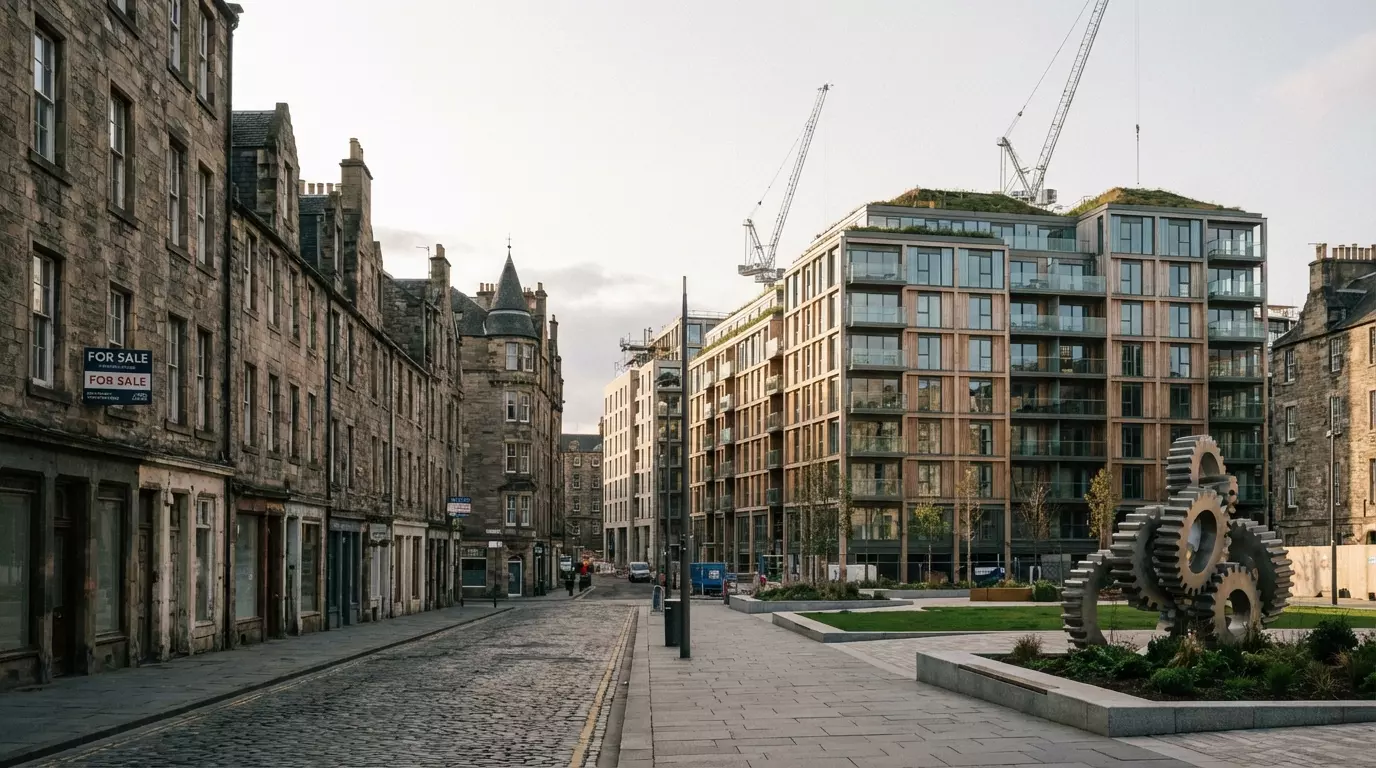
The European property market has been through a rough patch, and anyone following the headlines might think it’s stuck in a deep freeze. But that’s not quite the full picture. What’s actually happening is more nuanced, and frankly, more interesting. Across the continent, buyers, sellers, and investors are slowly finding a new rhythm after years of pandemic-driven highs followed by sharp interest rate increases. The market isn’t dead. It’s adjusting.
This article breaks down what’s really going on in European real estate right now, which cities are showing signs of life, and what the broader recalibration means for anyone with money in, or considering putting money into, property across Europe.
Why Europe’s Property Market Feels Different Now
The past two years have been defined by one dominant force: rising interest rates. The European Central Bank raised rates aggressively to fight inflation, and that sent mortgage costs soaring. For buyers used to near-zero borrowing costs, the new reality was a genuine shock. Transaction volumes dropped across most major European markets, and sellers who had enjoyed years of rising valuations suddenly found fewer people knocking on their doors.
But calling this a frozen market misses something important. A frozen market implies nothing is moving. What’s actually happening is a repricing process. Sellers are gradually accepting that 2021 and 2022 valuations were inflated by cheap money, and buyers are recalibrating their expectations too. Both sides are inching toward each other, and that movement, even if slow, is meaningful. According to data from MSCI Real Assets, European real estate transaction volumes fell sharply in 2023, but early 2024 figures suggest a stabilisation is underway.
Buyers and Sellers Are Finding New Middle Ground
One of the clearest signs of recalibration is the narrowing of the bid-ask spread, the gap between what sellers want and what buyers are willing to pay. For much of 2022 and 2023, that gap was enormous. Sellers were anchored to peak prices while buyers, facing much higher financing costs, simply couldn’t make the numbers work. Deals stalled. Portfolios sat unsold. Development pipelines slowed.
That dynamic is now shifting. In several markets, sellers have started making meaningful price adjustments. Not dramatic crashes, but practical reductions that reflect the new cost of capital. At the same time, some buyers, particularly institutional investors who have been sitting on significant dry powder, are beginning to re-enter the market. They’re not rushing, but they are looking. And when both sides are looking, deals get done. This slow but steady convergence is exactly what a healthy recalibration looks like.
Which European Cities Are Leading the Shift
Not all European cities are moving at the same pace, and the divergence is telling. Here’s a quick overview of how some key markets are performing:
| City | Market Status | Key Driver |
|---|---|---|
| London | Stabilising | Strong rental demand |
| Madrid | Active | Foreign buyer interest |
| Amsterdam | Cautious | Regulatory pressure |
| Berlin | Repricing | Oversupply concerns |
| Lisbon | Growing | Golden Visa alternatives |
| Paris | Mixed | Luxury resilience |
London continues to benefit from persistent rental demand. With homeownership increasingly out of reach for many, the private rental sector remains under pressure, which is keeping investor interest alive even as sales volumes remain subdued.
Madrid and broader Spain have seen a notable uptick in foreign buyer activity. Lifestyle appeal combined with relatively competitive pricing compared to northern European capitals has made Spain a consistent draw. Lisbon tells a similar story, with Portugal continuing to attract international buyers despite changes to its Golden Visa programme.
Berlin, on the other hand, is dealing with a more complicated picture. Years of rapid price growth followed by regulatory interventions around rent controls, combined with a slowdown in new construction, have created a trickier environment. Prices have corrected more noticeably here than in some other cities.
Key factors separating the outperformers from the underperformers include:
- Supply constraints in cities like London and Lisbon
- International buyer demand in southern European markets
- Regulatory environment affecting landlord confidence in cities like Amsterdam and Berlin
- Infrastructure investment and economic fundamentals in gateway cities
What This Means for Investors Moving Forward
For investors, the recalibration presents both risks and real opportunities. The biggest risk is mistiming the market, either selling assets too early at discounted prices or buying into markets that haven’t fully corrected yet. The biggest opportunity is exactly what patient capital has always thrived on: buying quality assets at prices that reflect genuine value rather than speculative excess.
Several trends are worth watching closely:
- Logistics and industrial real estate remain in strong demand across Europe, driven by e-commerce and supply chain restructuring.
- Residential rental continues to outperform in cities with housing shortages.
- Office real estate is the most uncertain category, with hybrid working still reshaping demand patterns.
- Retail has shown surprising resilience in prime locations, though secondary retail remains under pressure.
- Green buildings and ESG-compliant assets are increasingly commanding a premium as regulatory requirements tighten across the EU.
The investors who are best positioned right now are those who have maintained discipline during the downturn and built up the financial flexibility to act when pricing makes sense. According to research published by Knight Frank, cross-border investment into European real estate showed early signs of recovery in the first half of 2024, with logistics and residential sectors leading inflows.
The broader message for anyone with exposure to European property is this: patience is a strategy. The fundamentals underpinning demand in most major European cities, population growth, urbanisation, housing undersupply, haven’t disappeared. They’ve just been temporarily overshadowed by the cost of financing.
In Short
Europe’s real estate market isn’t broken. It’s going through a necessary correction after years of artificially low interest rates inflated values beyond what the fundamentals could justify. Sellers are adjusting, buyers are re-engaging, and certain cities are already showing signs of renewed momentum. For investors willing to do their homework and move with conviction when the timing is right, the current environment offers genuine opportunity.
The markets that will emerge strongest from this period are those with real structural demand drivers: housing shortages, strong employment bases, and growing populations. Cities like London, Madrid, and Lisbon fit that profile. Others, where speculative development outpaced demand or where regulatory overreach has dampened investor appetite, will take longer to recover.
The freeze is thawing. How fast it thaws depends on interest rate trajectories, macroeconomic stability, and the willingness of both buyers and sellers to meet in the middle.
FAQ
Is now a good time to invest in European real estate?
It depends on the market and asset class. Cities with strong rental demand and supply constraints, like London and Lisbon, present more compelling entry points than oversupplied markets.
Which European cities are seeing the most real estate activity in 2024?
Madrid, Lisbon, and London are showing the most activity, driven by foreign buyer interest and strong rental demand.
Why did European property prices drop?
Rising interest rates from the European Central Bank increased the cost of mortgages significantly, reducing buyer purchasing power and pushing transaction volumes down.
What types of property are performing best in Europe right now?
Logistics, industrial, and residential rental properties are the strongest performers. Prime retail is also holding up better than expected.
Will European property prices recover?
Most analysts expect a gradual recovery rather than a sharp rebound. Markets with strong fundamentals are likely to recover faster than those with oversupply or regulatory challenges.

Join The Discussion