

Europe’s Housing Market: A Tale of Two Extremes
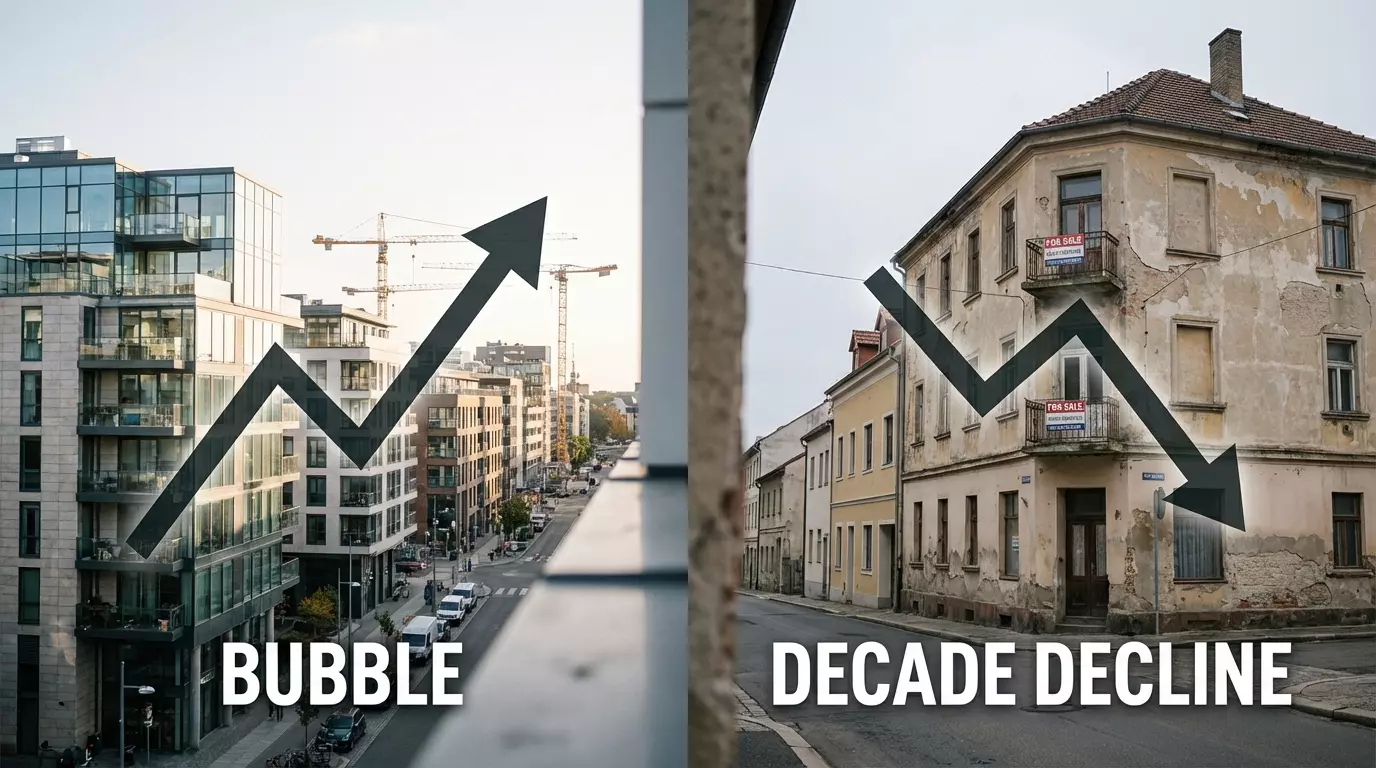
The European housing market tells a story of stark contrasts, with some nations experiencing persistent property bubbles while others have seen values plummet to levels not witnessed since 2010. According to recent analysis from Wolf Street, the continent’s largest economies present a fascinating case study in how different regulatory approaches, economic conditions, and demographic trends can create wildly divergent outcomes in real estate markets. This divergence has significant implications for homeowners, investors, and policymakers across the European Union.
The disparity between housing markets in Europe’s major economies has never been more pronounced. While countries like Germany and Portugal continue to see elevated property values that suggest ongoing bubble conditions, others including Spain and Italy have experienced corrections so severe that prices have retreated to their 2010 baseline. This fragmentation challenges the notion of a unified European economic experience and highlights how local factors often trump broader continental trends when it comes to real estate valuations.
Which Countries Are Still in Bubble Territory?
Germany stands out as one of the most concerning examples of sustained housing price inflation among Europe’s largest economies. Despite recent modest corrections, German property values remain dramatically elevated compared to pre-pandemic levels and historical norms. The country’s housing market has been fueled by years of ultra-low interest rates, strong wage growth in urban centers, and consistent demand from both domestic buyers and international investors seeking stable assets. Major cities like Munich, Frankfurt, and Berlin have seen particularly aggressive price appreciation, with some metropolitan areas experiencing increases of over 70% since 2010.
Portugal represents another market where bubble concerns persist, though the dynamics differ considerably from Germany’s experience. The Portuguese housing market has been significantly influenced by external factors, including the Golden Visa program that attracted wealthy foreign investors and the rise of short-term rental platforms that converted residential properties into tourist accommodations. Lisbon and Porto have been epicenters of this price surge, with local residents increasingly priced out of their own neighborhoods. Despite some recent cooling, Portuguese property values remain at levels that many economists consider unsustainable relative to local incomes and economic fundamentals.
The Markets That Crashed Back to 2010 Levels
Spain’s housing market correction represents one of the most dramatic reversals in European real estate history. After experiencing one of the continent’s most spectacular property bubbles in the mid-2000s, Spanish home prices crashed following the global financial crisis and have struggled to recover meaningful ground. According to data analyzed by Wolf Street, inflation-adjusted prices in Spain have essentially returned to 2010 levels, wiping out more than a decade of potential appreciation. This prolonged stagnation reflects ongoing economic challenges, including high unemployment rates, demographic shifts as young people emigrate for opportunities elsewhere, and an oversupply of housing stock built during the boom years.
Italy presents a similarly sobering picture for property owners who purchased during peak years. Italian home prices have followed a trajectory comparable to Spain’s, with real values declining to match those seen in 2010. The Italian market faces unique headwinds including an aging population, sluggish economic growth, and regional disparities that see southern areas particularly depressed while northern cities like Milan show more resilience. The combination of these factors has created a lost decade for Italian homeowners, with many properties worth less in real terms than they were fifteen years ago. This situation has profound implications for household wealth and retirement planning for millions of Italian families who traditionally viewed property ownership as their primary investment vehicle.
What’s Driving These Dramatic Price Differences?
Monetary policy and interest rate environments have played crucial roles in shaping these divergent outcomes across European housing markets. Countries that maintained tighter lending standards and avoided excessive credit expansion during the European Central Bank’s era of negative interest rates generally experienced more moderate price appreciation and are now better positioned as rates normalize. Conversely, markets that allowed lending practices to become overly accommodative saw prices detach from fundamental economic indicators like wage growth and rental yields. The recent shift toward higher interest rates has begun exposing which markets were built on sustainable foundations versus those propped up primarily by cheap credit.
Demographic trends and migration patterns provide another critical lens for understanding Europe’s housing market divergence. Germany has benefited from consistent population growth through immigration, supporting housing demand even as construction has struggled to keep pace. This supply-demand imbalance has sustained elevated prices despite affordability concerns. Meanwhile, Spain and Italy face demographic headwinds including aging populations, declining birth rates, and youth emigration that reduce long-term housing demand. According to research from the European Central Bank, these demographic factors may continue exerting downward pressure on property values in southern European markets for years to come.
Regulatory frameworks and government policies have also contributed significantly to these market variations. Some countries implemented measures to cool overheated markets, including restrictions on foreign purchases, limits on short-term rentals, and stricter mortgage lending criteria. Others maintained more laissez-faire approaches that allowed speculative activity to flourish. Tax policies regarding property ownership, capital gains, and inheritance have created different incentive structures across borders. Additionally, the varying pace of economic recovery following both the 2008 financial crisis and the COVID-19 pandemic has influenced each country’s housing trajectory, with stronger labor markets generally supporting more resilient property values.
The quality and quantity of housing supply represents yet another differentiating factor between European markets. Countries that experienced excessive construction during boom periods, particularly Spain with its coastal development frenzy, now face oversupply situations that suppress prices. In contrast, markets like Germany struggled with underbuilding for years, particularly in desirable urban areas where restrictive zoning and lengthy approval processes limited new construction. This supply scarcity has maintained upward pressure on prices even as affordability deteriorates. The Organisation for Economic Co-operation and Development has highlighted how housing supply responsiveness varies dramatically across European nations, creating structural differences in how markets respond to demand shocks.
In Short
Europe’s housing landscape presents a compelling study in contrasts, with bubble conditions persisting in some of the continent’s largest economies while others remain mired in extended corrections that have erased more than a decade of gains. Germany and Portugal continue to exhibit characteristics of overvalued markets despite recent cooling, while Spain and Italy have seen property values retreat to 2010 levels in inflation-adjusted terms. These divergent paths reflect complex interactions between monetary policy, demographics, regulation, and housing supply dynamics that vary significantly across national borders.
For prospective homebuyers, investors, and policymakers, understanding these differences is essential for making informed decisions. Markets showing bubble characteristics may face further corrections as interest rates normalize and affordability constraints intensify, while already-corrected markets might offer better value propositions depending on local economic prospects. The European housing story reminds us that real estate remains fundamentally local despite broader economic integration, and that sustainable property values ultimately depend on alignment with underlying economic fundamentals rather than speculative momentum or financial engineering.
FAQ
Which European countries have the highest housing prices right now?
Germany and Portugal currently maintain some of Europe’s most elevated housing prices relative to historical norms and local incomes. German cities like Munich and Frankfurt, along with Portuguese coastal areas and Lisbon, show particularly high valuations that concern many economists about potential bubble conditions.
Why have Spanish home prices fallen so dramatically?
Spanish housing prices have declined due to a combination of factors including the burst of the mid-2000s property bubble, persistent economic challenges with high unemployment, demographic shifts as young people emigrate, and an oversupply of housing built during boom years that still exceeds demand in many areas.
Are European housing markets likely to converge in the future?
While European economic integration continues, housing markets are likely to remain divergent due to fundamental differences in demographics, supply constraints, regulatory approaches, and local economic conditions. National and even regional factors will continue driving property values more than continental trends.
How do interest rate changes affect European housing differently?
Interest rate impacts vary based on each country’s mortgage market structure, household debt levels, and lending practices. Markets with high variable-rate mortgage prevalence and elevated household debt ratios tend to be more sensitive to rate changes than those with predominantly fixed-rate mortgages and conservative lending standards.
Is now a good time to invest in European real estate?
Investment timing depends entirely on which market you’re considering and your investment horizon. Already-corrected markets like Spain and Italy may offer better value if local economies improve, while bubble-prone markets like Germany might face further corrections. Due diligence on local conditions is essential rather than treating Europe as a monolithic market.
What role does foreign investment play in European housing bubbles?
Foreign investment has significantly impacted certain markets, particularly Portugal where Golden Visa programs attracted international buyers, and German cities popular with global investors. This external demand can inflate prices beyond what local incomes support, creating affordability crises for residents while potentially making markets vulnerable to capital flight.


Join The Discussion