

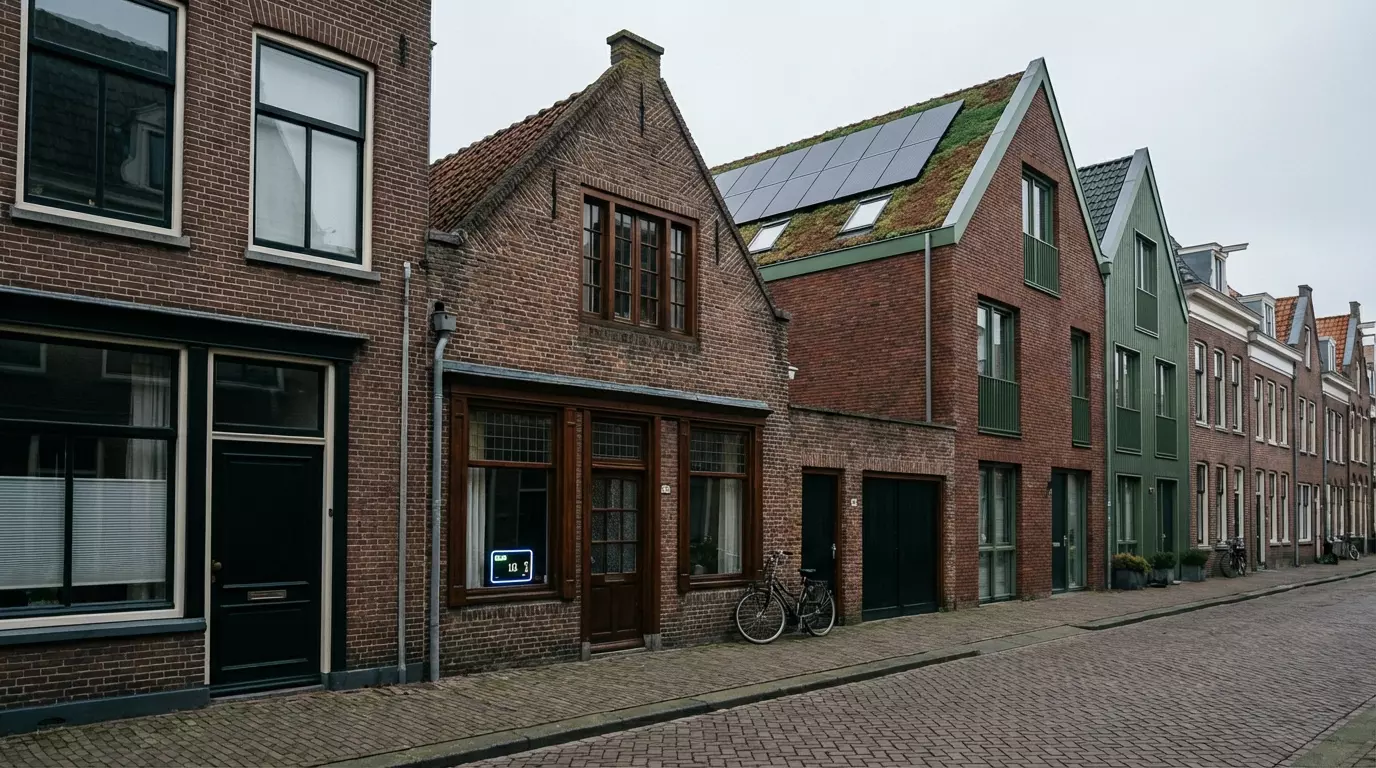
Dutch Homes Beat Their Energy Labels
Dutch households are consistently outperforming their official energy efficiency ratings, revealing a significant disconnect between theoretical calculations and real-world performance. Recent analysis has shown that homes across the Netherlands are using substantially less energy than their government-issued energy labels would suggest. This surprising trend indicates that the current labeling system may be painting an unnecessarily pessimistic picture of the country’s housing stock efficiency.
The discovery has important implications for both current homeowners and prospective buyers navigating the Dutch property market. While energy labels have become a crucial factor in real estate transactions and renovation decisions, the data suggests these ratings might be undervaluing properties and potentially misleading consumers about actual energy costs. Understanding this discrepancy could save homeowners money and help buyers make more informed decisions when evaluating potential purchases.
The Gap Between Reality and Ratings
Research conducted by TNO, the Netherlands Organization for Applied Scientific Research, has revealed that actual energy consumption in Dutch homes is often 20 to 30 percent lower than what their official energy performance certificates predict. This substantial gap exists across various property types, from historic canal houses to modern apartment buildings. The findings emerged from comparing theoretical energy calculations with actual utility consumption data collected from thousands of households throughout the country.
The discrepancy becomes even more pronounced in older homes with lower energy labels. Properties rated with D, E, or F labels are frequently performing at levels closer to B or C rated homes in terms of actual energy usage. This phenomenon isn’t limited to specific regions but appears consistent across urban and rural areas alike. The gap suggests that either the calculation methodology is flawed or that Dutch residents have developed energy-conscious habits that significantly reduce consumption beyond what models predict.
Why Official Scores Underestimate Efficiency
The current energy labeling system relies on standardized calculations that assume specific usage patterns and don’t account for actual resident behavior. The Dutch government’s methodology uses theoretical models based on building characteristics like insulation levels, window quality, and heating systems, but these calculations operate under fixed assumptions about thermostat settings and occupancy patterns. In reality, many Dutch households maintain lower indoor temperatures than the standard 20°C used in calculations, and modern smart thermostats allow for more precise heating control than older systems.
Several factors contribute to this systematic underestimation of home efficiency. First, the calculation models haven’t fully caught up with improvements in heating technology and the widespread adoption of energy-saving appliances. Second, behavioral changes driven by rising energy costs and environmental awareness have led residents to adopt more conservative energy usage patterns. Third, many homeowners have made incremental improvements like draft-proofing, LED lighting upgrades, and smart thermostat installations that don’t trigger a formal label reassessment but significantly impact actual consumption. Additionally, the models may not adequately account for passive solar gain in well-oriented properties or the insulating benefits of attached housing configurations common in Dutch urban planning.
What This Means for Homeowners and Buyers
For current homeowners, this information provides both reassurance and opportunity. Those living in homes with mediocre energy labels can take comfort knowing their actual energy costs are likely lower than the label suggests. However, this also means that the potential savings from expensive renovation projects might be smaller than anticipated when based solely on label improvements. Homeowners considering major energy upgrades should request detailed calculations based on their actual consumption history rather than relying exclusively on theoretical improvements promised by label upgrades.
Prospective buyers face a more complex situation when evaluating properties. While energy labels remain legally required in property listings and provide a useful comparison tool, they shouldn’t be the sole factor in assessing a home’s true energy performance. Savvy buyers should request actual utility bills from recent years to understand real-world costs rather than relying on label-based estimates. This is particularly important given that mortgage lenders and property valuations increasingly factor energy efficiency into their calculations. A home with a lower label but strong actual performance history might represent better value than its rating suggests, potentially offering negotiating leverage or revealing hidden value in properties overlooked by other buyers focused solely on label ratings.
The findings also have implications for the rental market, where energy labels influence maximum rent levels and tenant expectations. Landlords with properties performing better than their labels indicate might consider investing in formal reassessments, especially if minor documented improvements could push a property into a higher rating category. For tenants, understanding this gap means that a rental with a moderate label might have lower actual utility costs than feared, making it a more attractive option than initially apparent.
Frequently Asked Questions
How often should I update my home’s energy label?
Energy labels in the Netherlands are valid for 10 years, but you can request a new assessment anytime after making significant improvements. Given the gap between labels and actual performance, it’s worth considering a reassessment if you’ve made multiple small improvements or if your actual energy bills are consistently much lower than your label suggests.
Can I use my actual energy bills to challenge my home’s energy label?
While actual consumption data can’t directly change your official label, it can inform discussions with energy advisors about potential miscalculations. If you believe your label is inaccurate, you can commission a new assessment from a certified energy performance advisor who may identify factors that weren’t properly accounted for in the original evaluation.
Do energy labels affect my property’s market value?
Yes, energy labels increasingly influence property valuations and buyer decisions in the Dutch market. However, this research suggests that homes with lower labels may be undervalued if their actual performance is significantly better. Providing prospective buyers with historical utility data alongside the official label can help demonstrate true performance.
What improvements give the best return on investment for energy efficiency?
Based on the gap between theoretical and actual performance, improvements that address actual usage patterns tend to provide better returns than those focused solely on label improvement. Smart heating controls, draft-proofing, and behavioral changes often deliver immediate savings at lower cost than major structural renovations.
Will the Dutch energy labeling system be updated to reflect these findings?
The Dutch government is aware of these discrepancies and discussions are ongoing about updating calculation methodologies. However, any changes to the official system will take time to implement, as they require coordination with European Union energy performance standards and extensive testing of new calculation models.
In Short
The revelation that Dutch homes consistently outperform their official energy labels represents a significant discovery for the housing market. While the current labeling system provides a standardized comparison tool, it appears to systematically underestimate actual home efficiency by 20 to 30 percent across various property types. This gap stems from conservative calculation assumptions that don’t reflect modern technology, behavioral changes, and incremental improvements made by energy-conscious residents.
For homeowners and buyers alike, this information demands a more nuanced approach to evaluating property efficiency. Rather than relying solely on official labels, stakeholders should examine actual utility consumption data to understand true performance and costs. While energy labels remain legally required and useful for broad comparisons, they should be viewed as one data point among several when making decisions about purchases, renovations, or rental agreements.
The findings also highlight the success of Dutch energy conservation efforts, suggesting that cultural shifts toward sustainability and rising energy awareness have created real-world efficiency gains that outpace official recognition. As the government considers updates to the labeling methodology, the current system’s limitations present both challenges and opportunities for those willing to look beyond the label to understand a property’s true energy performance.


Join The Discussion