

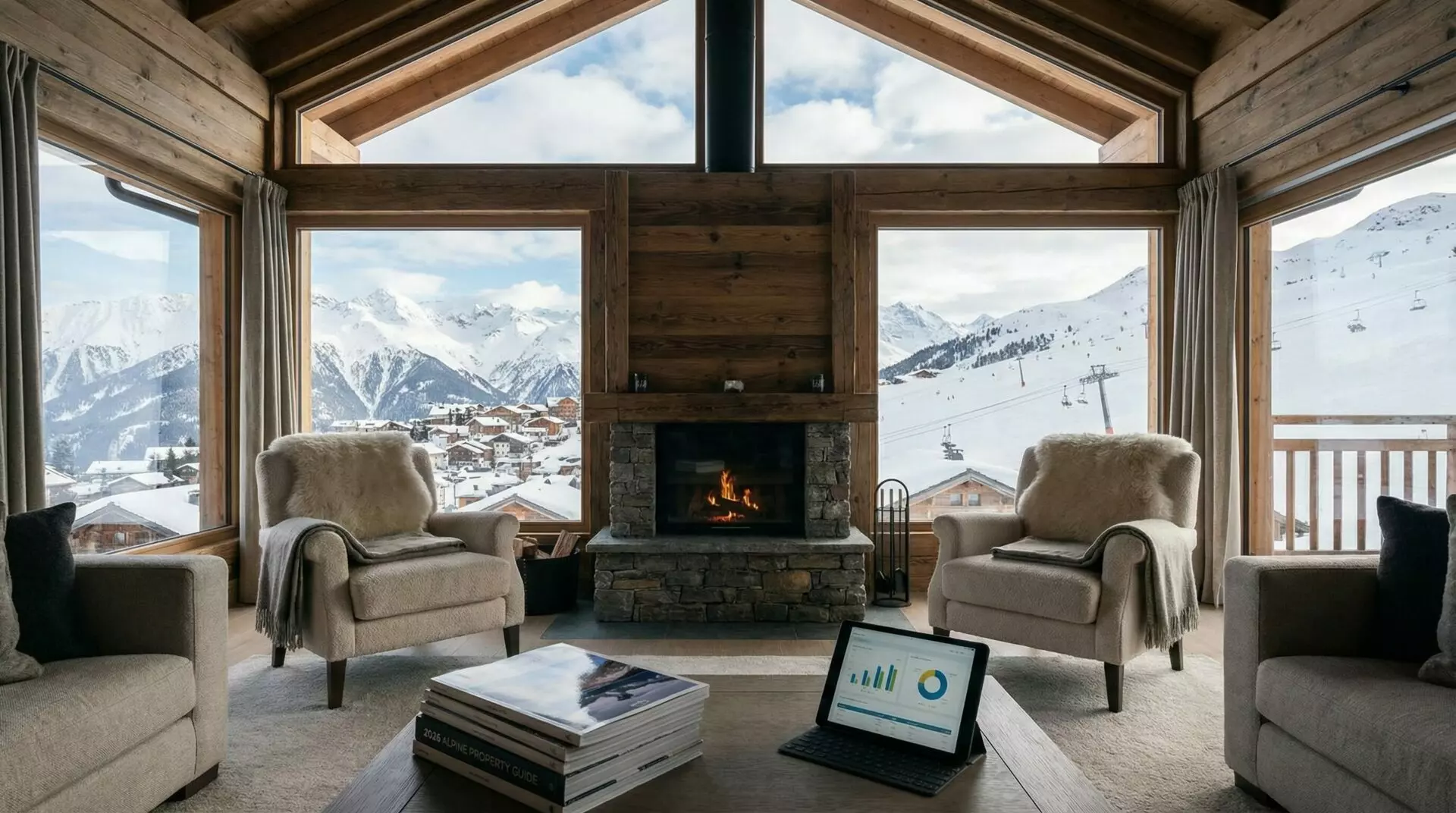
Buying Ski Property in 2026: A Comparative Guide to France, Switzerland, and Austria
The allure of owning a ski chalet in the Alps has never been stronger. As we approach 2026, investors and second-home buyers are increasingly looking at alpine property not just as a lifestyle choice, but as a strategic investment. The three dominant markets for ski property remain France, Switzerland, and Austria, each offering distinct advantages, challenges, and regulatory frameworks. Understanding the nuances of these jurisdictions can mean the difference between a profitable investment and an expensive mistake.
This comprehensive guide examines the critical factors that should influence your decision when purchasing ski property in 2026. From navigating Switzerland’s restrictive Lex Koller legislation to understanding France’s leaseback arrangements and Austria’s rental yield potential, we’ll break down everything you need to know. Whether you’re seeking rental income, capital appreciation, or simply a mountain retreat for personal use, this comparison will help you identify which Alpine nation best suits your investment goals and circumstances.
Understanding Property Purchase Rules and Restrictions
When it comes to purchasing alpine property as a non-resident, Switzerland presents the most significant hurdles. The Lex Koller legislation strictly limits foreign property ownership to protect the Swiss real estate market from excessive external investment. Non-residents can only purchase property in designated tourist zones, and even then, only apartments rather than chalets or land. Furthermore, cantonal quotas limit the number of properties that can be sold to foreigners each year, creating a competitive environment where desirable properties are snapped up quickly. Notable exceptions exist for residents with C permits or those purchasing commercial properties, but these represent a small fraction of transactions.
France and Austria offer considerably more open markets for international buyers. In France, there are virtually no restrictions on property ownership for EU citizens, while non-EU buyers face minimal additional requirements beyond standard documentation. The French system is notably transparent, with clearly defined processes handled through notaires who ensure legal compliance. Austria similarly welcomes foreign investment, though some regions require approval from local authorities, particularly in Tyrol where measures exist to prevent excessive speculation. The approval process in Austria typically takes several weeks but rarely results in rejection for legitimate buyers. Both countries allow foreigners to purchase freehold properties without the severe limitations found in Switzerland.
Breaking Down Costs: Taxes, Fees, and Hidden Charges
Transaction costs vary significantly across the three countries and can dramatically impact your overall investment. France typically has the highest upfront costs, with total fees ranging from 7% to 10% of the purchase price. This includes notary fees (approximately 7-8% for older properties, 2-3% for new builds), land registration charges, and various administrative costs. French property purchases also involve the taxe foncière (property tax) and potentially the taxe d’habitation, though recent reforms have eliminated the latter for primary residences. Additionally, if you’re purchasing through a leaseback scheme, you’ll need to factor in management fees that can reach 20-30% of rental income.
Switzerland and Austria present more moderate transaction costs. In Switzerland, total fees typically range from 3% to 5%, varying by canton, with Geneva and Vaud on the higher end of the spectrum. Swiss buyers should anticipate notary fees, land registry costs, and a property transfer tax that differs significantly between cantons. Austria offers the most competitive transaction costs among the three, generally totaling 3.5% to 5% of the purchase price. This includes the property transfer tax (3.5%), land registry fees (1.1%), and notary costs. However, Austrian buyers should budget for ongoing costs including property management, which is often necessary given that many owners live abroad. All three countries impose capital gains tax on property sales, though rates and exemptions vary, with Austria offering favorable treatment for properties held longer than ten years.
Rental Income Potential and Legal Obligations
France’s rental market for ski properties operates under two primary models: traditional rentals and leaseback arrangements. Traditional rentals offer flexibility but require active management or hiring a local agency, with gross yields typically ranging from 3% to 5% in established resorts like Chamonix or Courchevel. Leaseback properties, where you commit to leasing your property back to a management company for typically 9-11 years, offer VAT recovery benefits (20% of the purchase price) but limit personal usage to a few weeks annually. French law regarding short-term rentals has tightened considerably, with many communes implementing restrictions on the number of days you can rent to tourists, particularly in high-demand areas. The French system requires registration with local authorities and compliance with increasingly stringent safety and accessibility standards.
Austria emerges as the leader for rental yields among the three countries, with gross returns often reaching 5% to 7% in popular resorts such as Kitzbühel and St. Anton. Austrian properties benefit from strong domestic demand and an established tourism infrastructure that maintains high occupancy rates throughout the winter season. However, some Austrian resorts impose minimum rental periods or require properties to be available for tourist rentals, effectively preventing pure second-home usage. Switzerland’s rental market is constrained by Lex Koller restrictions, which often mandate that properties sold to foreigners must be available for tourist rentals. While this ensures rental income potential, it limits personal usage rights. Swiss rental yields typically range from 2% to 4%, lower than Austria but reflecting the premium nature of Swiss resorts and their international prestige. Management costs in Switzerland tend to be higher, but properties maintain their value exceptionally well, offering capital appreciation that can offset lower rental returns.
Climate Considerations: Snow Reliability by 2026
Snow reliability has become a critical factor in ski property investment decisions as climate patterns shift. Recent climate research indicates that resorts below 1,500 meters face increasing uncertainty regarding natural snow coverage, with projections suggesting that by 2026 and beyond, only high-altitude resorts will guarantee consistent winter conditions. French resorts in the Haute-Savoie, particularly those above 1,800 meters like Val d’Isère and Tignes, maintain strong snow records and significant snowmaking infrastructure. However, lower-altitude French resorts in the Pyrenees and southern Alps face growing concerns about season length and snow quality. The French ski industry has invested heavily in artificial snowmaking, but this increases operational costs and environmental concerns.
Switzerland’s high-altitude resorts offer the greatest snow security among the three countries. Resorts such as Zermatt, Saas-Fee, and Verbier benefit from elevations consistently above 2,000 meters, with skiing available up to 3,800 meters in some areas. This altitude advantage translates directly into property values, with high-altitude Swiss properties commanding premium prices due to their climate resilience. Austria occupies a middle ground, with excellent snow reliability in the Arlberg region, Ötztal, and Zillertal areas. Austrian resorts have also invested substantially in snowmaking technology, with some resorts capable of covering over 90% of their terrain with artificial snow. When considering a 2026 purchase, investors should prioritize properties in resorts above 1,600 meters with access to glacier skiing or extensive snowmaking capabilities. This altitude threshold is becoming the new baseline for protecting long-term property values against climate uncertainty.
In Short
Choosing between France, Switzerland, and Austria for ski property investment in 2026 requires balancing multiple factors against your specific priorities. Each country offers distinct advantages that cater to different investor profiles and objectives.
Best for Rental Yields: Austria takes the crown for investors prioritizing cash flow. With gross rental yields reaching 5-7%, lower transaction costs (3.5-5%), and minimal purchase restrictions for foreigners, Austria offers the most attractive proposition for income-focused investors. Resorts like Kitzbühel and St. Anton combine strong rental demand with excellent snow reliability.
Best for Prestige and Long-term Value: Switzerland remains unmatched for those seeking the ultimate alpine address. Despite Lex Koller restrictions and higher costs, Swiss properties in resorts like Zermatt, Verbier, and St. Moritz offer unparalleled prestige, exceptional build quality, and strong capital appreciation potential. The high-altitude advantage also provides the best climate resilience for long-term value protection.
Best for Accessibility and Market Size: France offers the most accessible market for international buyers, with minimal purchase restrictions, the largest selection of properties, and established management infrastructure. While transaction costs are higher (7-10%), the leaseback option provides VAT recovery benefits and guaranteed rental management, making it ideal for hands-off investors.
Best for Snow Reliability: Switzerland’s high-altitude resorts provide the greatest assurance against climate change impacts, with most major resorts operating above 2,000 meters and offering glacier skiing. However, Austrian and French high-altitude resorts (above 1,800 meters) also offer strong snow security with more accessible pricing.
Your final decision should weigh these factors against your budget, desired level of personal usage, income requirements, and long-term investment horizon. For many investors, the optimal strategy involves visiting shortlisted resorts during both peak and shoulder seasons, engaging local property experts, and carefully modeling the financial implications including all costs, potential rental income, and tax obligations in both the purchase country and your country of residence.
Frequently Asked Questions
Can Americans buy ski property in Switzerland?
Yes, but with significant restrictions under Lex Koller legislation. Non-resident Americans can only purchase properties in designated tourist zones, typically apartments rather than chalets, and are subject to cantonal quotas. The process requires approval and properties must often be made available for tourist rentals.
What are the annual costs of owning a ski property in the Alps?
Annual costs typically range from 2-4% of the property value and include property taxes, building maintenance fees, utilities, insurance, and management costs. Swiss properties tend to have higher ongoing costs, while Austrian properties are generally more economical to maintain.
Do I need to speak French, German, or Italian to buy property in the Alps?
While not legally required, having language skills or working with bilingual professionals is highly advisable. All three countries require contracts in the local language, though translations can be provided. Working with an English-speaking notary or lawyer familiar with international transactions is recommended.
How does Brexit affect UK citizens buying alpine property?
UK citizens are now considered non-EU nationals, which has minimal impact in Switzerland (already restricted) and Austria (approval process unchanged), but may involve additional documentation in France. Financing has become more complex for UK buyers, with fewer lenders offering mortgages to non-EU citizens.
What mortgage options exist for foreign buyers?
Mortgage availability varies significantly. French banks typically offer loans up to 80% loan-to-value for EU citizens, less for non-EU buyers. Swiss banks rarely lend to non-residents due to Lex Koller complications. Austrian banks offer competitive mortgages to foreigners, typically up to 60-70% loan-to-value with proof of income.
Are ski properties a good investment given climate change?
High-altitude properties (above 1,600-1,800 meters) with strong snowmaking infrastructure remain sound investments. However, lower-altitude resorts face increasing risk. Climate resilience should be a primary consideration in any 2026 purchase decision, with preference given to resorts above 2,000 meters or those with glacier access.
SEO Keywords: ski property investment, alpine real estate, Lex Koller Switzerland
5 Suggested Internal Links: France vs Switzerland property, ski property rental yields, Lex Koller legislation, alpine property transaction costs, climate resilient ski resorts
Join The Discussion