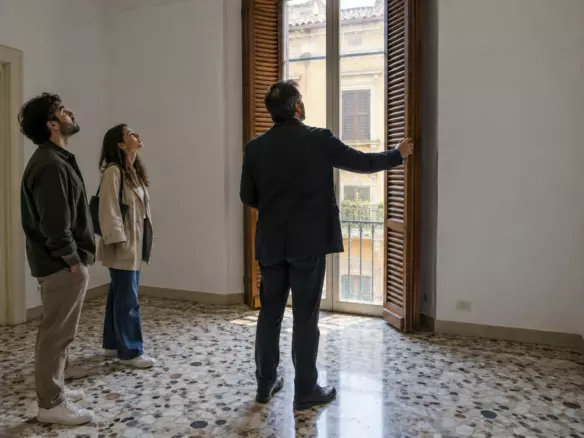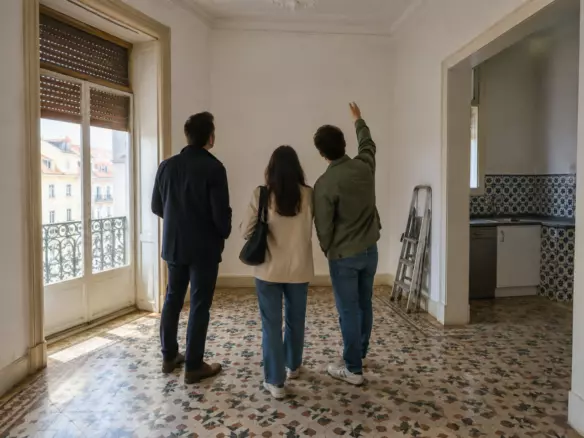

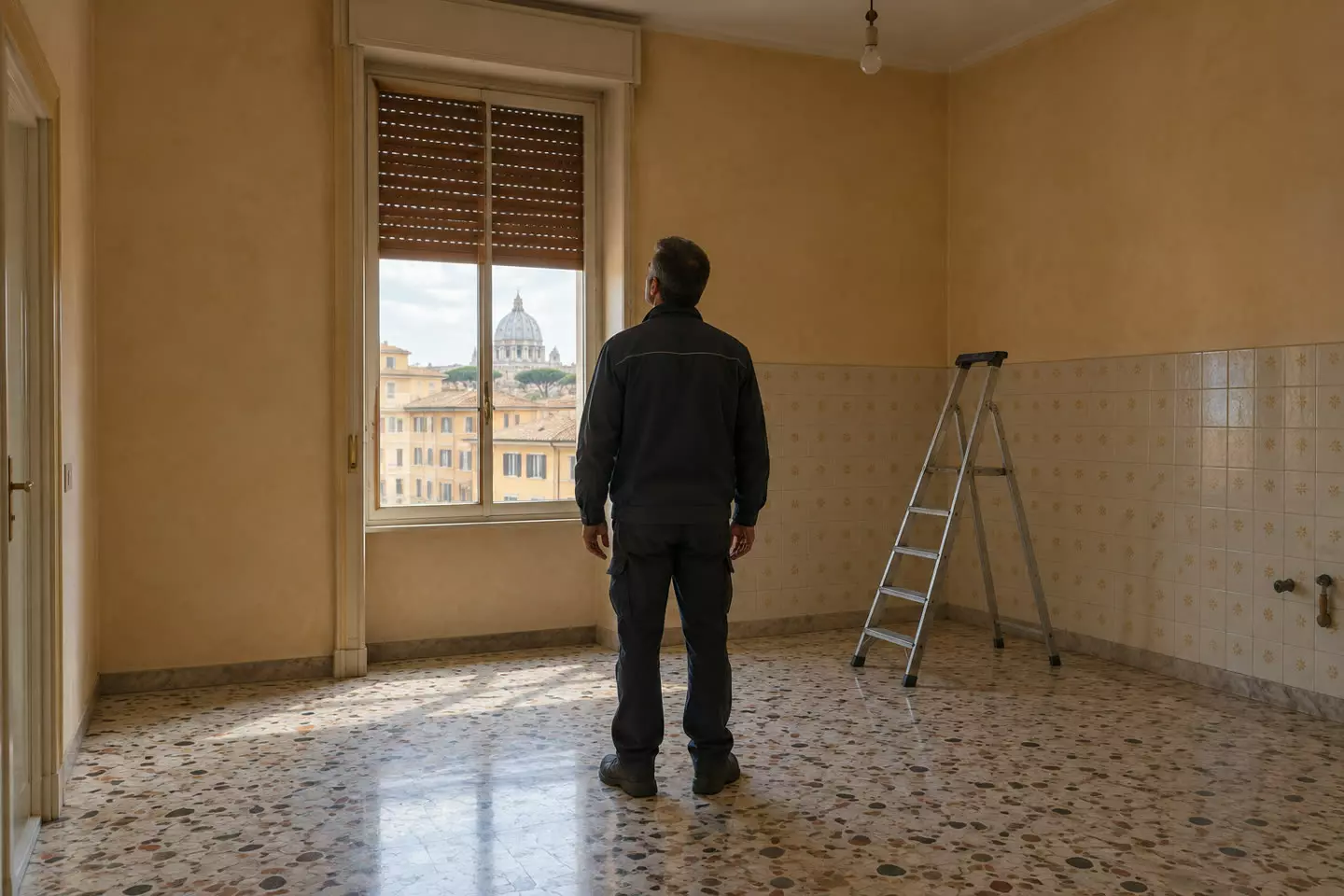
Nearly half of Italy’s certified homes sit in the two worst energy classes. Of the energy performance certificates issued in 2025, 46% landed in classes F or G, the construction fair Saie reported on 8 October after analysing the national register kept by ENEA, Italy’s energy agency. That is two percentage points more than in 2024, and it is the number that belongs beside the asking price whenever an agent works with foreign buyers.
That register is growing fast. ENEA’s SIAPE database held 8,783,723 certificates on 5 October 2026, and about 1.3 million were added in 2025 alone, an increase of 6.4% on the year before. For anyone buying in Italy, the certificate is no longer a formality. A good APE fixes a running cost, it shapes the mortgage, and it decides how much work a property will need before 2030.
What Italy’s APE Certificate Actually Tells a Buyer
An APE, the Attestato di Prestazione Energetica, is Italy’s energy performance certificate. That duty has applied on every sale and every long-term let since 2005 under Legislative Decree 192/2005, as the annual ENEA report on energy certification sets out. A qualified assessor produces it, the seller pays, it lasts up to ten years, and it has to be attached to the deed and quoted in the listing.
Its scale runs from A4, the best, down to G. What matters commercially is the class, because it turns an abstract building into a running cost a buyer can compare:
- Energy class, from A4 to G
- Estimated yearly primary energy use
- Carbon dioxide emissions
- Heating, cooling and hot-water systems
- Suggested improvements and their rough effect
Why So Much of Italy’s Housing Stock Is F or G
Italy’s stock is old, and the worst of it clusters in the south. ENEA and CTI, in the 2025 edition of their certification report, put residential homes in classes F and G at 45.3% of all certificates issued for 2024, while the most efficient bands, A4 to B, reached 20%. That share is still falling slowly, by 2.9 percentage points on 2023, but it has a long way to go.
Province by province, the map is uneven. Campania has 61% of its certified homes in F or G, with Lazio and Tuscany at 59%, Basilicata at 57% and Puglia at 55%. Efficiency sits in the north, in Valle d’Aosta, Bolzano, Trentino and Lombardy, where new builds and recent renovations pull the average up. That pattern matters for a buyer, because the province, not the country, is the right yardstick for property prices and for the cost of a retrofit.
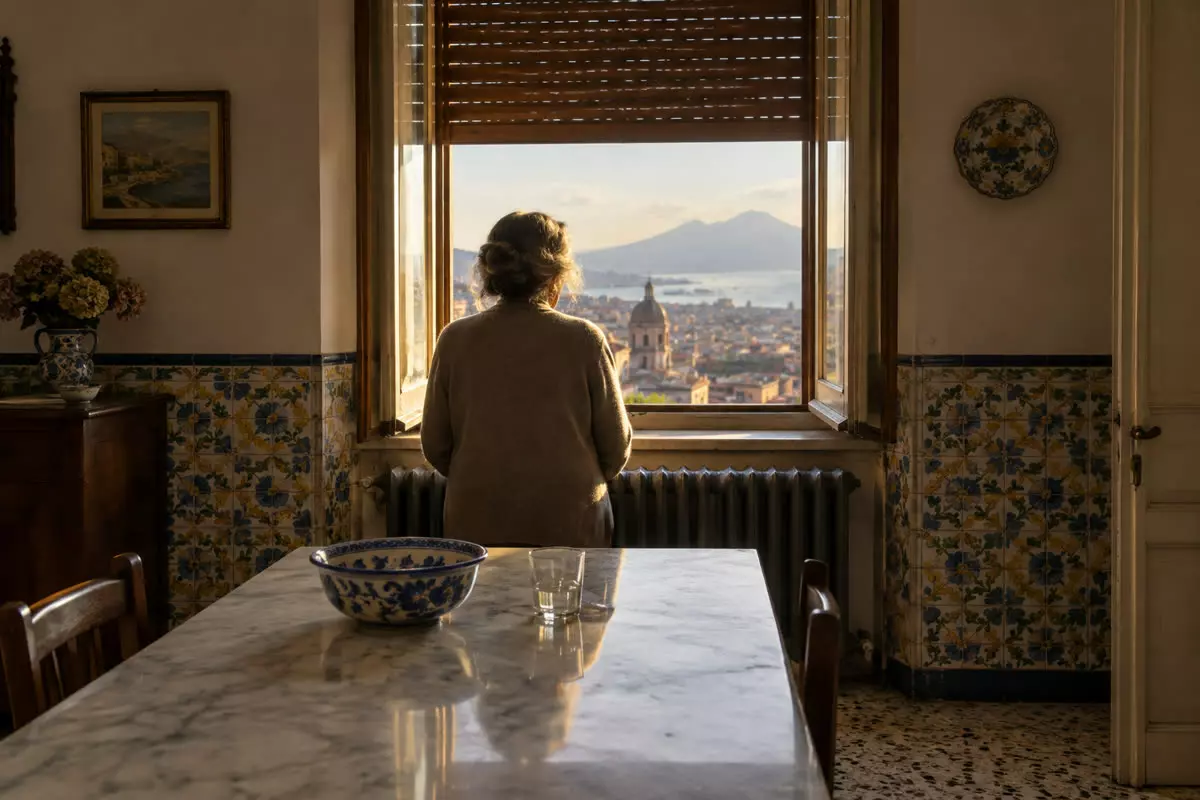
What an Energy Class Costs on an Italian Home
A letter on a certificate carries money. An F or G home is expensive to heat, harder to mortgage at the same terms as an efficient one, and first in line for the renovation push coming from Brussels. The recast Energy Performance of Buildings Directive asks each member state to cut the average primary energy use of its residential stock by 16% by 2030 and by 20 to 22% by 2035, and at least 55% of that cut has to come from the worst-performing buildings. For Italian property, that points straight at the F and G band.
| Energy band | Share of Italian homes (2024) | What a buyer should expect |
|---|---|---|
| A4 to B | 20% | New or recently renovated; low bills, no retrofit pressure |
| C to E | About 35% | Middling; targeted later in the renovation path |
| F or G | 45.3% | Worst-performing band; the first target of the 2030 trajectory |
Nomisma estimates cited by Saie suggest that the tax incentives of recent years have already covered about 56% of the work Italy needs for 2030, which leaves a large part of the F and G stock untouched. A buyer looking at a cheap southern apartment should therefore price the certificate into the offer, not treat it as a document to read at the notary.
What Buyers and Agents Should Check Before an Offer
Although the APE is the seller’s obligation, the buyer carries the consequence of a low grade. Ask for it early, read the class and the systems, and compare both with the local market. An agent who can put a retrofit number next to a listing is worth more to a client than one who only quotes the square metres.
Five checks do most of the work:
- Read the APE before the offer, not at the deed, and check its date and its ten-year validity
- Compare the class with the average for that province, not for Italy as a whole
- Price in a retrofit if the home is F or G, including windows, boiler and insulation
- Check which national incentives still apply to that work, since the rules have narrowed
- Ask the condominio whether the building has a renovation plan of its own
Where Italy’s Energy Rules Are Heading Next
On this, the direction runs one way. Member states had to write the recast directive into national law by 29 May 2026, and on 15 July 2026 the European Commission opened infringement procedures against all 27 of them, Italy included, for falling short. Each country now has to adopt a national building renovation plan and a trajectory for its residential stock, and the strengthened certificates that come with the directive will make the energy class more visible, not less.
For a buyer, that means an F or G home is not a bargain by default. It becomes a property with a known future cost, and one that a well-prepared agent can turn into a negotiation rather than a surprise.
Questions Buyers Ask About Italian Energy Classes
These are the questions that come up most often once a foreign buyer sees a low class on a listing.
Do I need an APE to buy a house in Italy?
A seller must provide one for any sale or long-term let, and it has to be attached to the deed. As a buyer you do not commission it, but you should read it before you make an offer, because it sets out the class, the systems and the estimated running cost.
How long does an Italian APE stay valid?
Up to ten years from issue, as long as the heating and cooling systems are maintained. This document has to be redone earlier if a renovation changes the energy performance of the home, so check the date on it, not just the class.
Does a low energy class reduce the value of a home?
Yes, it can. A class sits inside the price alongside location and condition, and an F or G home in a province where most homes are already efficient stands out more. Buyers increasingly treat the letter as a proxy for the bills they will pay, and they negotiate on it.
Will I have to renovate an F or G home?
Not immediately, and the directive leaves the choice of measures to each country. But the EU trajectory asks Italy to cut the average energy use of its homes by 16% by 2030, with most of that from the worst-performing buildings, so an F or G property is where the pressure will land first.
Are there grants for improving an Italian home?
Italy has run large tax incentives for energy work, and Nomisma estimates they have covered about 56% of what the country needs for 2030. These schemes have narrowed over time, so check what still applies to the specific work before you build a grant into your budget.