
Marseille has become the clearest test of what a short-term rental crackdown actually does to a city’s housing market. On 7 October, the deputy mayor in charge of housing, Audrey Garino, told reporters that the number of tourist rentals in France’s second city had fallen from 12,937 in 2024 to 10,827 in 2025, a drop of about 16%. In the historic Le Panier district, the fall reached 35%.
Marseille credits a package of rules that other French councils are watching closely: a 90-day yearly cap on letting out a primary residence, a register of every listing, and a demand that owners who turn a second home into tourist use return an equivalent amount of housing to the long-term rental market. For an agent or a buyer who plans to let in France, those rules now shape the numbers before a purchase price does.
What Marseille’s Short-Term Rental Rules Now Require
It starts with national law. The text of 19 November 2024, known as the Le Meur law, rewrote the rules on meublés de tourisme and handed mayors the tools to control them. It made registration of every short-term let compulsory across France, and from May 2026 that registration runs through a single state-run online service instead of a patchwork of town-hall forms.
On top of that, Marseille adds its own layer. Any flat that isn’t the owner’s primary residence needs a change-of-use authorisation before the first night, and the owner has to offer compensating long-term housing of equivalent surface area. Every listing must also carry a 13-digit registration number, and the city says it will pull a listing that doesn’t.
- Registration number on every advert, issued by the city
- Change-of-use authorisation for any second home, from day one
- Compensating long-term housing of equivalent surface area
- A 90-day yearly cap on a primary residence
How the 90-Day Cap Changes What You Can Let
Under the Le Meur law, a mayor in a tight housing market can cut the maximum let of a primary residence from 120 nights to 90 in a calendar year. In practice, Marseille applies the 90-day limit. That leaves a primary residence as the only home you can rent to tourists without an authorisation, and even then only inside the cap.
Tax moved in the same direction. From rental income earned in 2025, non-classified furnished lets are taxed like unfurnished ones, with the micro-BIC allowance cut to 30% up to €15,000, while classified ones keep a 50% allowance up to €77,700, as the government’s own explainer on the law sets out. Its aim was blunt: make a year-round tenancy more attractive than a string of weekend lets.
Why Marseille Says the Crackdown Is Working
The figures the city published on 7 October are its argument. Tourist rental listings fell from 12,937 in 2024 to 10,827 in 2025, and in Le Panier they dropped by 35%. Before that, the city says, listings had grown by 73% between 2020 and 2023, against a backdrop of 54,000 outstanding social-housing applications and a stock of substandard flats.
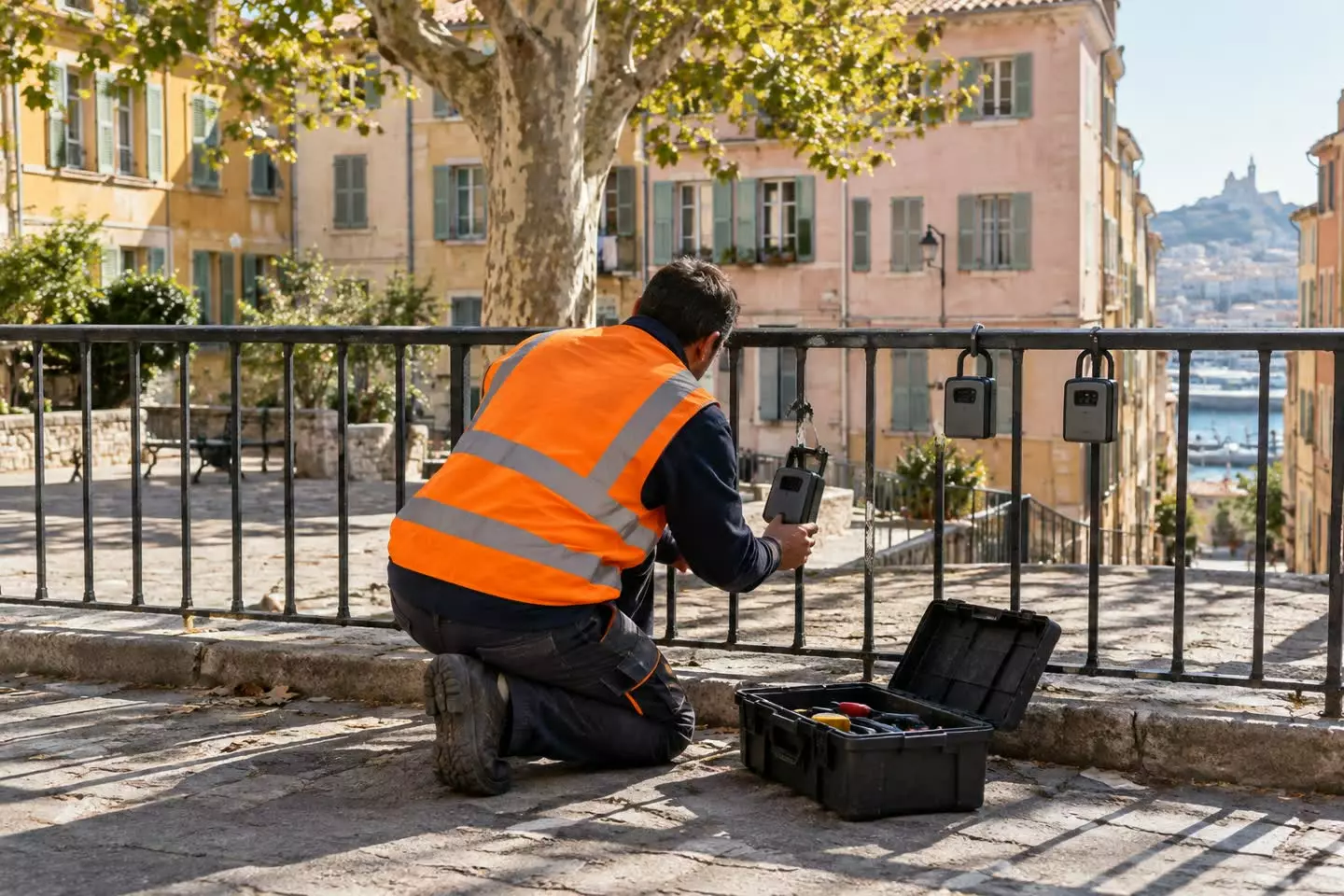
Enforcement has followed the rules. Marseille has banned keyboxes on public property and sends crews to cut them off railings, and its lawyers say around 20 cases are still before the courts. Garino added that more than 70% of the multi-property hosts aren’t from Marseille or even the wider region, which is the complaint that gives the policy its local support.
What a €440,000 Fine Tells French Landlords
A court, not a press release, gave the sharpest warning. On 23 September, the Marseille tribunal ordered three companies owned by one investor to pay €440,000 in civil fines after investigators found six tourist rentals operating without authorisation. Those flats brought in more than €1.3 million between 2022 and 2025, and the court told the owner to return them to residential use within 15 days. The council had asked for €1.5 million, as Le Parisien reported.
Two details matter for anyone tempted to copy the playbook. Investigators found the flats had been hidden on Airbnb and relisted under mobility leases, the furnished contracts that run up to 10 months, which the city treats as an attempt to sidestep the rules. And the case rested on the compensation duty, so the offence was the conversion without paperwork, not the letting on its own.
| Point | What Marseille requires | What it costs to get it wrong |
|---|---|---|
| Register the listing | A 13-digit number on every advert | The city pulls the advert |
| Primary residence | Let for up to 90 days a year | Civil fines |
| Second home | Change-of-use authorisation plus compensating long-term housing | Fines and an order to return the flat to housing |
| Tax from 2025 | Non-classified lets taxed like unfurnished | Micro-BIC allowance cut to 30% up to €15,000 |
- Check the change-of-use status before you promise a rental yield
- Put the registration number in the advert, not after a warning
- Tell a buyer that a second home needs authorisation and compensation
- Watch the tax treatment of furnished lets, which now matches unfurnished
- Expect enforcement, because the city is taking cases to court
What the Marseille Crackdown Means for Buyers
For a buyer, the practical effect is a smaller and more regulated short-let market in the city, and a clearer split between a home you live in and a home you rent out. A second home in Marseille isn’t a simple Airbnb play any more; it’s a property that needs an authorisation and a matching long-term let before it earns a euro.
The lesson travels. Under the Le Meur law, any mayor in a strained market can copy the 90-day cap, and Paris and several seaside and mountain resorts already have. For French property, that means the rental case for a purchase has to be built on the rules of the town, not on a national average.
Questions Owners Ask About French Short-Term Lets
With the enforcement now visible, the questions from owners and their agents are practical ones about paperwork and timing.
Can I still let my Marseille flat on Airbnb?
Yes, if it’s your primary residence and you stay inside the 90-day yearly cap, with the registration number on the advert. A second home is different: it needs a change-of-use authorisation and compensating long-term housing before it can be let at all.
Do I have to register before I list?
Yes. Registration is compulsory across France, and since May 2026 it runs through a single state service. It issues a 13-digit number that has to appear on every advert and any other publication.
What happens if I rent without authorisation?
Authorities can fine you and order the property back to residential use. This September’s case ended in €440,000 of civil fines against one investor’s three companies, with the flats to be returned to housing within 15 days.
Does the 90-day cap apply to a second home?
No. That cap covers primary residences only. In Marseille a second home can’t be let short-term at all without a change-of-use authorisation, which comes with the duty to put an equivalent long-term rental back into the market.
Is this only a Marseille rule?
Under the national law, any mayor in a strained housing market can cut the cap to 90 days and require authorisation, and Paris and several coastal and mountain resorts have already used the power. Check the town, not just the country.