

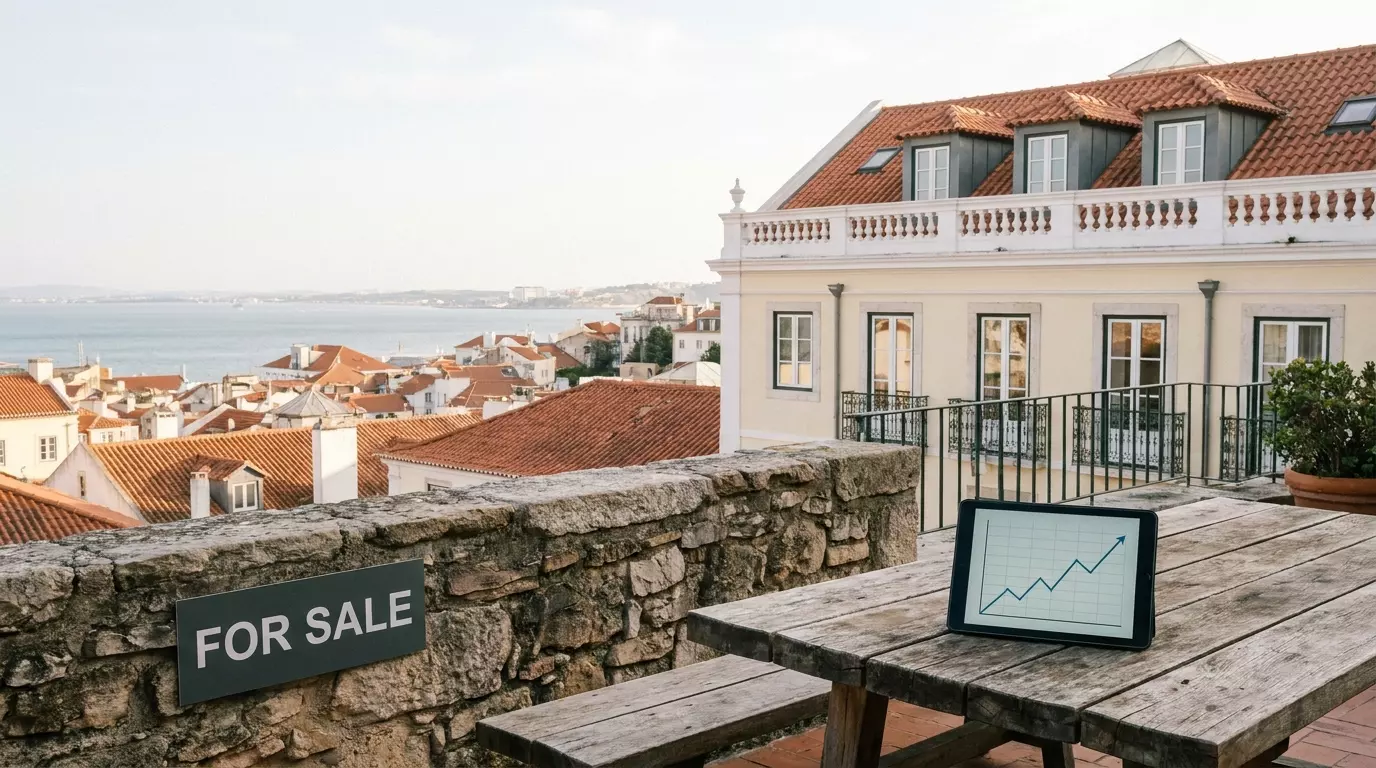
Portugal’s Property Market Keeps Breaking Records: What Buyers Need to Know
Portugal’s housing market continues to defy expectations, with residential property prices climbing yet again according to the latest figures. For anyone tracking the Portuguese real estate scene, whether as a local resident, expat, or foreign investor, this upward trend is becoming a familiar story. The latest data confirms what many industry insiders have been predicting for months: prices are not slowing down, and the pressure on buyers, particularly first-timers, is intensifying across the country.
This continued growth raises important questions about affordability, investment opportunities, and the long-term sustainability of Portugal’s property boom. In this article, we break down why prices keep rising, which regions are experiencing the sharpest increases, what this means for those trying to get onto the property ladder, and practical strategies for navigating this competitive landscape.
Why Portugal’s Property Prices Keep Climbing
Several interconnected factors are driving Portugal’s persistent price increases. Limited housing supply remains one of the biggest culprits, particularly in urban centers where construction has failed to keep pace with demand. Portugal has historically built fewer new homes compared to other European nations, and bureaucratic delays in licensing and permitting have only worsened the bottleneck. Meanwhile, demand keeps growing from multiple directions: foreign buyers attracted by Portugal’s Golden Visa program (even after recent restrictions on real estate investments in certain areas), digital nomads relocating under favorable tax schemes, and returning emigrants looking to settle back home.
Inflation and rising construction costs have compounded the issue further. Materials, labor, and land acquisition have all become more expensive, and developers naturally pass these costs onto buyers. According to data from Portugal’s National Statistics Institute (INE), house prices have consistently outpaced wage growth for several consecutive quarters, creating a widening affordability gap. Low unemployment and relatively stable economic conditions, combined with historically low (though now rising) interest rates over the past few years, have also kept demand robust even as prices soar. Together, these dynamics have created a near-perfect storm for continued price appreciation.
Which Regions Are Seeing the Biggest Increases
While Portugal’s property boom is a nationwide phenomenon, certain regions are experiencing far more dramatic price surges than others. Lisbon and its surrounding municipalities continue to lead the charge, with prime neighborhoods seeing double-digit percentage increases year-on-year in some cases. Porto, once considered the more affordable alternative to the capital, has also seen substantial growth as buyers priced out of Lisbon shift their attention northward. The Algarve, long popular with foreign retirees and holiday-home buyers, remains one of the most expensive regions per square meter, driven largely by international demand and a thriving tourism-linked property market.
Beyond these well-known hotspots, smaller cities and interior regions are also catching up. Areas like Braga, Coimbra, and even parts of the Alentejo have recorded noticeable price jumps as buyers search for more affordable alternatives, inadvertently pushing prices up in previously overlooked markets. Below is a simplified comparison of how different regions have performed recently:
| Region | Market Characteristics | Price Trend |
|---|---|---|
| Lisbon | High foreign demand, limited supply | Sharp increase |
| Porto | Growing popularity, spillover from Lisbon | Strong increase |
| Algarve | Tourism and retiree demand | Consistently high, steady growth |
| Braga/Coimbra | More affordable, emerging interest | Moderate but accelerating increase |
| Alentejo | Rural appeal, lower cost of entry | Gradual but noticeable growth |
This regional spread suggests that Portugal’s property price growth is no longer confined to its traditional urban centers. Buyers hoping to escape high prices by looking beyond Lisbon and Porto may find that the “affordable” regions of yesterday are quickly closing the gap.
What This Means for First-Time Home Buyers
For young Portuguese families and first-time buyers, the continued rise in property prices presents a genuinely difficult situation. Many are finding themselves squeezed out of urban centers entirely, forced to either rent indefinitely or relocate to more distant suburbs and towns where commuting becomes a daily challenge. The gap between average salaries and average property prices has widened to the point where homeownership, once considered a realistic milestone for most working adults, now feels increasingly out of reach for a large segment of the population.
This affordability crisis has not gone unnoticed by policymakers. The Portuguese government has introduced various measures over recent years aimed at easing pressure on the housing market, including incentives for first-time buyers, adjustments to rental protections, and restrictions on short-term rental licensing in certain high-demand areas. However, critics argue these measures have had limited impact so far, as underlying supply constraints remain largely unaddressed. Reports from Eurostat have highlighted Portugal as one of the European countries where house price growth has significantly outstripped income growth in recent years, underscoring the scale of the challenge facing everyday buyers. For many, the dream of owning a home in Portugal is increasingly dependent on family support, dual incomes, or a willingness to compromise on location and property type.
Tips for Navigating Portugal’s Competitive Market
Given the intensity of competition in today’s market, buyers need to approach the process strategically. Here are some practical tips for anyone hoping to purchase property in Portugal right now:
- Get mortgage pre-approval early. Sellers and agents favor buyers who can demonstrate they are financially ready to move quickly, especially in competitive bidding situations.
- Widen your search radius. Consider towns and neighborhoods slightly outside your ideal location, as prices can drop significantly just a short distance from major hotspots.
- Work with a local real estate agent. A knowledgeable agent familiar with the specific region can help identify opportunities before they hit the wider market.
- Factor in all additional costs. Beyond the purchase price, buyers should budget for property transfer tax (IMT), stamp duty, notary fees, and registration costs, which can add several percentage points to the total expenditure.
- Be prepared to act fast. Desirable properties, particularly in Lisbon, Porto, and the Algarve, often receive multiple offers within days of listing.
Beyond these tactical steps, it is worth taking a longer-term view of the market. Buyers should research historical price trends in their target area, consult with local financial advisors regarding tax implications, and consider whether renovation projects (which can sometimes offer better value than move-in-ready homes) might be a viable path. Working with reputable agencies and legal representatives who specialize in Portuguese property law is also essential, particularly for foreign buyers unfamiliar with local regulations, contracts, and the notary process. Patience, preparation, and flexibility remain the most valuable tools in today’s fast-moving market.
In Short
Portugal’s residential property market shows no signs of cooling down, with prices continuing their upward trajectory across nearly every region of the country. While Lisbon, Porto, and the Algarve remain the most prominent examples of this growth, smaller cities and rural areas are increasingly feeling the effects too. For first-time buyers, this trend presents real challenges, pushing homeownership further out of reach for many without significant financial support or flexibility in location. That said, opportunities still exist for those willing to research thoroughly, act decisively, and consider alternative regions. As Portugal continues to attract both domestic and international interest, understanding these market dynamics will be essential for anyone hoping to buy in the years ahead.
FAQ
Why are property prices rising so quickly in Portugal?
A combination of limited housing supply, rising construction costs, strong foreign investment, and continued domestic demand has pushed prices upward across most regions.
Which Portuguese city currently has the highest property prices?
Lisbon remains the most expensive city overall, though certain areas of the Algarve rival or exceed Lisbon prices on a per-square-meter basis.
Is it still possible for first-time buyers to purchase property in Portugal?
Yes, though it typically requires flexibility on location, early mortgage preparation, and realistic budgeting for additional purchase-related costs.
Are foreign buyers contributing to Portugal’s rising property prices?
Yes, foreign demand, including from Golden Visa applicants and digital nomads, has played a notable role, particularly in Lisbon, Porto, and the Algarve.
What additional costs should buyers expect beyond the purchase price?
Buyers should budget for property transfer tax (IMT), stamp duty, notary fees, and legal representation, which can add several percentage points to the overall cost.

Join The Discussion