

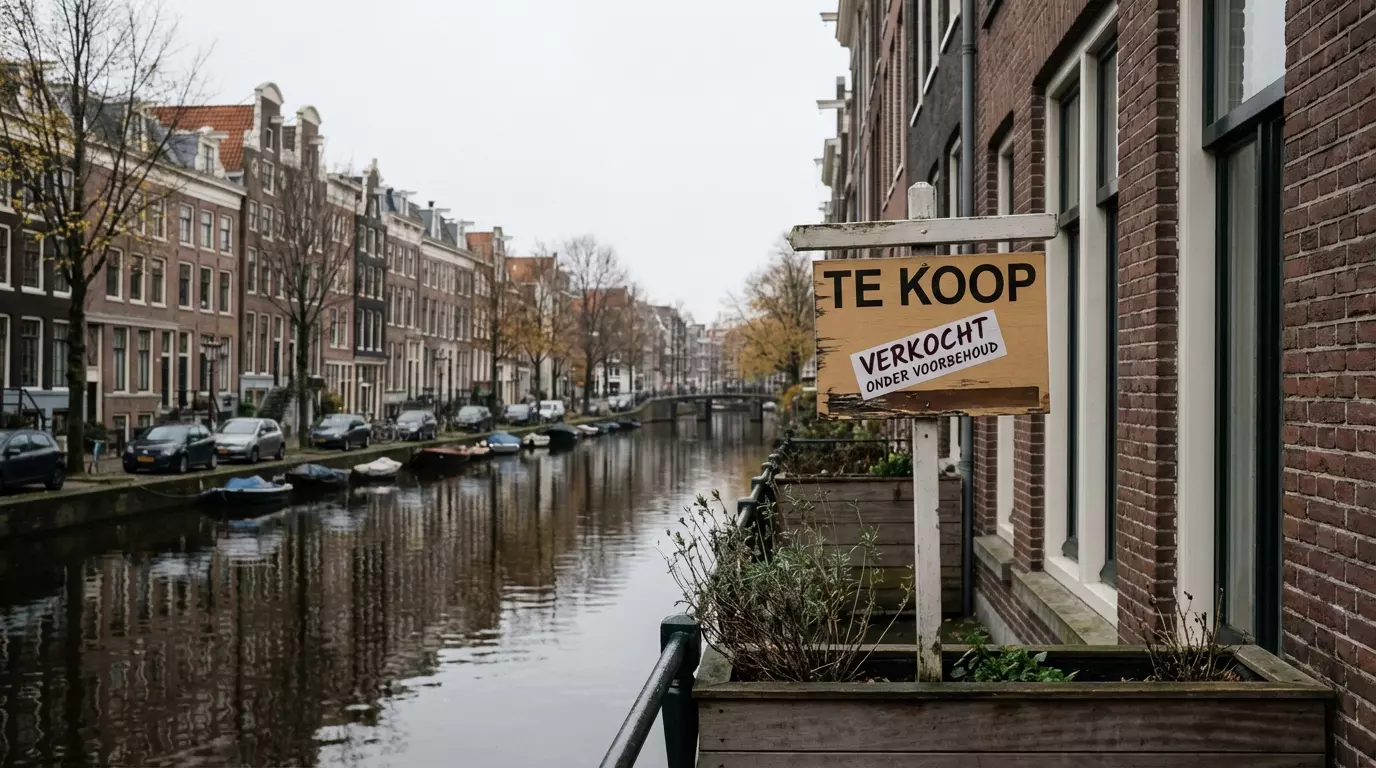
The Dutch housing market has been one of the most talked-about real estate landscapes in Europe over the past several years. After a period of explosive growth that left many aspiring homeowners struggling to keep up, the tide appears to be shifting. According to recent forecasts, home prices in the Netherlands are expected to climb by 3.1% in 2026, a notable slowdown compared to the 8.6% surge recorded last year. This moderation signals a potential turning point for the market, offering a glimmer of hope for buyers while raising new questions about the forces shaping Dutch real estate.
In this article, we break down the latest projections, explore why the market is cooling, examine what this means for prospective homebuyers, and share expert opinions on where prices could be headed next. Whether you are a first-time buyer, a seasoned investor, or simply keeping an eye on the Dutch property landscape, understanding these trends is essential for making informed decisions in 2026 and beyond.
Dutch Home Prices Set to Rise 3.1% in 2026
Home prices across the Netherlands are projected to increase by 3.1% throughout 2026, according to data reported by NL Times. While this still represents growth, it marks a significant deceleration from the 8.6% price increase that characterized the market in 2025. The forecast suggests that the days of double-digit or near-double-digit annual price jumps may be behind us, at least for the time being. For a country where housing affordability has become a central political and social issue, this slowdown is a development worth watching closely.
Several institutions and analysts have contributed to this outlook, pointing to a combination of economic factors, policy changes, and shifting buyer sentiment. The projection aligns with broader European housing trends, where many markets that experienced pandemic-era booms are now settling into more sustainable growth patterns. Here is a quick comparison of the price growth trajectory:
| Year | Annual Home Price Growth (%) |
|---|---|
| 2024 | ~10.2% |
| 2025 | 8.6% |
| 2026 | 3.1% (projected) |
This table clearly illustrates the cooling trend, with each successive year showing a meaningful reduction in the pace of price increases.
Why the Housing Market Is Finally Cooling Down
There are several interconnected reasons behind the slowdown in Dutch home price growth. First and foremost, rising interest rates over the past couple of years have significantly affected borrowing capacity. When mortgage rates climb, the amount buyers can borrow decreases, which naturally puts downward pressure on what they can offer for a property. The European Central Bank has maintained a relatively tight monetary policy stance, and while some rate cuts have been introduced, the overall borrowing environment remains less favorable than it was during the ultra-low rate era of 2020 and 2021.
Beyond interest rates, the Dutch government has taken steps to address the housing crisis through policy interventions aimed at increasing supply and regulating investor activity. Measures such as restrictions on buy-to-let investments in major cities like Amsterdam and Rotterdam, along with efforts to accelerate new construction, are beginning to have an impact. Additionally, buyer fatigue is playing a role. After years of bidding wars and paying well above asking prices, many prospective homeowners have become more cautious and strategic. Some key factors contributing to the cooling market include:
- Higher mortgage interest rates reducing overall borrowing power
- Government regulations targeting speculative investment purchases
- Increased housing construction gradually adding supply
- Buyer fatigue after years of overheated competition
- Broader economic uncertainty across the eurozone affecting consumer confidence
Together, these elements are creating a market environment where growth continues but at a much more measured pace.
What Slower Growth Means for Homebuyers Now
For prospective homebuyers in the Netherlands, the projected 3.1% price increase in 2026 carries both good news and important caveats. On the positive side, the slower pace of growth means that the gap between income growth and home price appreciation is narrowing. This is particularly meaningful for first-time buyers who have been priced out of the market in recent years. A more moderate growth rate gives buyers additional time to save, plan, and negotiate without the intense pressure of rapidly escalating prices. In some regions, properties are even starting to sell at or slightly below asking price, a scenario that would have been almost unthinkable just two years ago.
However, it is important to note that slower growth does not mean prices are falling. Homes in the Netherlands remain expensive by historical standards, and affordability challenges persist, especially in major urban centers. According to data from Statistics Netherlands (CBS), the average transaction price for existing homes is still well above what many median-income households can comfortably afford. Buyers should also consider the following practical implications:
- Negotiation leverage is improving. With less competition, buyers can take more time and negotiate better terms.
- Mortgage planning matters more than ever. Even small differences in interest rates can significantly affect monthly payments over a 30-year loan.
- Location still drives value. While national averages show moderation, some neighborhoods and cities may still see above-average growth.
- Waiting is not always wise. Prices are still rising, so delaying a purchase in hopes of a crash could backfire.
- Energy efficiency is becoming a price factor. Homes with better energy labels are commanding premium prices as sustainability gains importance.
The bottom line for buyers is that the market is becoming more balanced, but it still requires careful planning and realistic expectations.
Experts Weigh In on the Road Ahead for Prices
Housing market analysts and economists have offered a range of perspectives on what comes next for Dutch home prices. Many agree that the era of extreme price growth is winding down, but opinions differ on whether the market will stabilize at modest growth levels or potentially dip into negative territory. Some experts believe that if interest rates decline further in the second half of 2026, demand could pick up again, pushing prices slightly higher than the 3.1% forecast. Others caution that structural issues, including a persistent housing shortage estimated at roughly 400,000 units, will keep a floor under prices regardless of economic conditions.
Industry professionals also highlight the role of demographics and migration in shaping future demand. The Netherlands continues to attract international workers and students, particularly in cities like Amsterdam, The Hague, Utrecht, and Eindhoven. This sustained demand, combined with limited buildable land and lengthy permit processes, means that supply is unlikely to catch up with demand anytime soon. As a result, most forecasts suggest that while the pace of price increases will remain subdued compared to recent years, outright price declines are unlikely in the near term. The consensus view can be summarized as follows:
- Moderate price growth of 2% to 4% is the most likely scenario for 2026 and 2027
- A housing market crash is considered improbable given the supply deficit
- Regional differences will become more pronounced, with rural areas potentially underperforming
- Policy decisions around construction and immigration will be key variables to monitor
In Short
The Dutch housing market is entering a new chapter defined by moderation rather than the frenzy of recent years. With home prices projected to rise by 3.1% in 2026, down sharply from the 8.6% increase in 2025, the landscape is shifting in favor of more balanced conditions. Rising interest rates, government interventions, increased construction activity, and changing buyer behavior are all contributing to this cooldown. For homebuyers, this presents an opportunity to approach the market with greater confidence and negotiating power, though affordability remains a challenge in many parts of the country.
Looking ahead, experts broadly agree that the Dutch housing market will continue to grow, albeit at a more sustainable pace. Structural supply shortages and ongoing demand from both domestic and international sources will likely prevent any dramatic price drops. The key takeaway for anyone involved in the Dutch property market, whether buying, selling, or investing, is that patience and informed decision-making will be more valuable than ever in the months and years ahead.
FAQ
Will Dutch home prices drop in 2026?
No, prices are not expected to drop. The forecast calls for a 3.1% increase in 2026, which represents slower growth but not a decline.
Why are Dutch home prices rising more slowly?
Higher mortgage interest rates, government regulations on investor purchases, increased housing construction, and buyer fatigue are all contributing to the slowdown.
Is 2026 a good year to buy a home in the Netherlands?
With slower price growth and improved negotiation leverage, 2026 could offer better conditions for buyers compared to the past few years. However, affordability remains a concern in major cities.
How much did Dutch home prices rise in 2025?
Home prices in the Netherlands increased by approximately 8.6% in 2025, following a roughly 10.2% rise in 2024.
What is the biggest factor affecting Dutch housing prices right now?
The combination of limited housing supply (an estimated shortage of 400,000 homes) and higher interest rates are the two most influential factors currently shaping the market.

Join The Discussion