

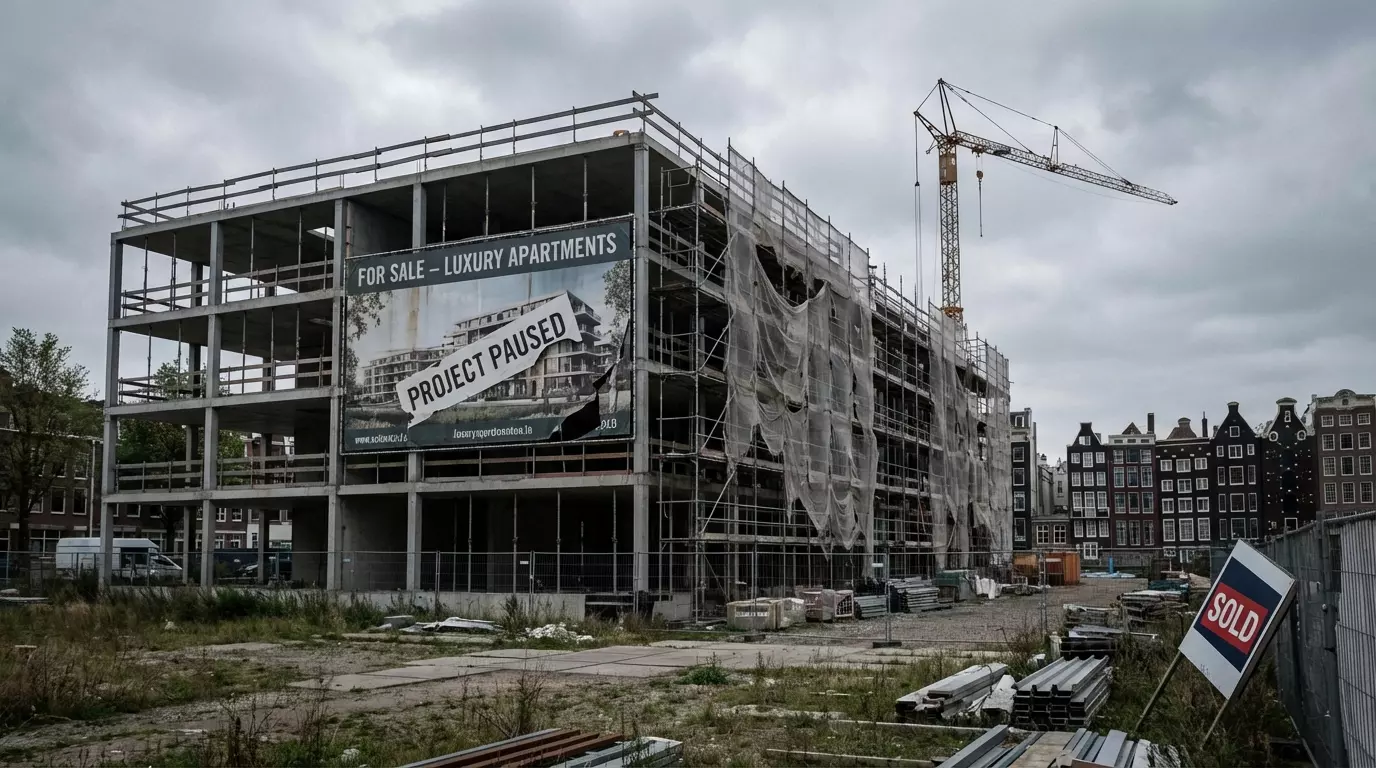
Dutch Housing Crisis Worsens as Investors Exit
Dutch Housing Crisis Worsens as Investors Exit
The Netherlands is facing an increasingly severe housing shortage as property investors withdraw from the market in unprecedented numbers. This exodus is creating a perfect storm for both renters and prospective homeowners, with the shortage of available properties reaching critical levels. Recent data shows that the gap between housing supply and demand continues to widen, leaving thousands of Dutch residents struggling to find affordable accommodation.
The situation has deteriorated significantly over the past year, with investor confidence plummeting due to regulatory changes and market uncertainties. Property investors who once played a crucial role in providing rental accommodation are now selling off their portfolios or halting new acquisitions altogether. This mass departure is stripping the market of essential rental properties at a time when the country desperately needs more housing options across all segments.
Why Property Investors Are Leaving the Market
Several factors are driving investors away from the Dutch property market, with government regulations topping the list of concerns. New legislation aimed at protecting tenants has inadvertently made property investment less attractive, with stricter rent controls and increased tenant rights creating uncertainty for landlords. The introduction of more stringent rules around rental pricing and property standards has significantly reduced profit margins for investors who previously relied on steady returns from residential properties.
Tax policy changes have further compounded the problem, making property investment considerably less lucrative than in previous years. The Dutch government’s decision to phase out mortgage interest deductions for investors and implement higher property transfer taxes has fundamentally altered the investment landscape. Additionally, rising interest rates have increased borrowing costs, while property maintenance requirements and energy efficiency mandates demand substantial upfront investments. These combined pressures have convinced many investors that the Dutch housing market no longer offers the returns or stability they seek, prompting them to redirect their capital toward other investment opportunities or foreign markets.
Impact on Renters and First-Time Buyers
The withdrawal of investors from the housing market is hitting renters particularly hard, with rental property availability dropping to historic lows. Those seeking rental accommodation in major cities like Amsterdam, Rotterdam, and Utrecht are facing waiting lists that stretch for months or even years. The reduced supply has given remaining landlords significant leverage, often resulting in higher rents and more stringent tenant selection criteria. Middle-income renters find themselves in an especially difficult position, earning too much to qualify for social housing but struggling to afford the limited private rental options available.
First-time buyers are experiencing their own set of challenges as the housing shortage pushes property prices beyond the reach of many young professionals and families. The competition for available homes has become fierce, with properties often receiving multiple offers within days of listing. According to recent market analysis, first-time buyers now need to save for an average of twelve years to afford a deposit on a starter home in urban areas. The situation is particularly frustrating for those who have been priced out of the rental market but cannot accumulate enough savings to purchase property, creating a generation caught in a housing limbo with few viable options for establishing stable, long-term accommodation.
Government Response Falls Short of Expectations
The Dutch government has announced several measures intended to address the housing crisis, but critics argue these initiatives lack the scale and urgency required to make a meaningful impact. Recent policy announcements include plans to accelerate construction permits and release more land for development, yet these measures will take years to translate into actual housing units. The government has also proposed incentives for first-time buyers and additional funding for social housing projects, but housing advocates point out that these programs remain underfunded and poorly coordinated.
Many experts believe the government’s approach fails to address the root causes of investor flight while simultaneously not providing adequate alternatives to replace the lost rental stock. The Dutch government has been criticized for implementing tenant protection measures without considering the broader market implications or preparing contingency plans for investor withdrawal. Housing economists suggest that a more balanced approach is needed, one that protects tenant rights while maintaining sufficient incentives for responsible property investment. Without a comprehensive strategy that addresses both supply and demand factors, the housing shortage is projected to worsen before it improves. Some municipalities are experimenting with innovative solutions like modular housing and converting office spaces into residential units, but these efforts remain small-scale compared to the magnitude of the crisis affecting communities across the country.
In Short
The Dutch housing market is experiencing a critical shortage exacerbated by the mass exodus of property investors responding to regulatory changes and reduced profitability. This withdrawal has created severe consequences for both renters facing limited availability and first-time buyers priced out of the market. Government measures announced thus far have been deemed insufficient by housing experts who warn that without comprehensive reform, the crisis will continue to deepen. The situation demands urgent action that balances tenant protections with market sustainability to restore investor confidence while expanding affordable housing options.
The coming months will be crucial in determining whether Dutch policymakers can develop effective solutions that address the complex dynamics driving this crisis. Success will require cooperation between government agencies, municipalities, private developers, and investors to create a sustainable housing ecosystem. Without significant intervention and a coordinated national strategy, thousands of Dutch residents will continue struggling to secure stable, affordable accommodation, potentially triggering broader economic and social consequences.
FAQ
How severe is the current housing shortage in the Netherlands?
The housing shortage in the Netherlands has reached critical levels, with estimates suggesting a deficit of hundreds of thousands of homes across the country. Major cities face the most acute shortages, with waiting times for rental properties extending to several years in some areas.
Why are property investors leaving the Dutch housing market?
Investors are exiting due to multiple factors including stricter regulations, reduced profit margins from rent controls, higher property transfer taxes, elimination of mortgage interest deductions for investors, and increased maintenance requirements. These changes have made property investment significantly less attractive compared to alternative investment options.
What can first-time buyers do to enter the housing market?
First-time buyers should consider exploring properties in less competitive areas outside major city centers, investigate government assistance programs for first-time purchasers, and potentially look into shared ownership schemes. Consulting with financial advisors about maximizing savings and mortgage options is also recommended.
How long will it take for new construction to address the shortage?
Even with accelerated construction efforts, experts estimate it will take at least five to ten years to significantly reduce the housing shortage. Construction projects face numerous delays including permit processing, labor shortages, and material supply issues, meaning immediate relief is unlikely.
Are there any successful examples of countries solving similar housing crises?
Several countries have implemented successful housing strategies, though each situation is unique. Austria’s social housing model and Singapore’s public housing program offer potential lessons, though adapting these approaches to the Dutch context requires careful consideration of local market conditions and cultural factors.
What alternatives exist for people who cannot find housing?
Those struggling to find housing might consider temporary solutions like house-sitting arrangements, co-living spaces, or staying with family while continuing their search. Some municipalities offer emergency housing assistance for those facing homelessness, though these resources are often limited.
Will rent prices decrease if investors continue leaving?
Paradoxically, the departure of investors is more likely to increase rather than decrease rents in the short term, as reduced supply with steady or growing demand typically drives prices upward. Only significant new construction or decreased housing demand would likely reduce rental costs.
What role do foreign investors play in the Dutch housing market?
Foreign investors have historically played a notable role in the Dutch property market, particularly in Amsterdam and other major cities. However, recent regulations and market conditions have also prompted many international investors to reconsider their Dutch property holdings, contributing to the overall investor exodus.



Join The Discussion