

What €485.000 Buys You Across Europe Today
The property market continues to fascinate buyers looking for value, especially when comparing what the same budget can purchase across different European countries. With €485.000 to spend, potential homeowners face an intriguing array of choices, from charming coastal properties in Ireland to sun-drenched Mediterranean villas and even modern Scandinavian retreats. This price point represents a substantial investment that opens doors to diverse lifestyles and property types across the continent.
Understanding what your money can buy in different markets is essential for making informed decisions. Property values vary dramatically depending on location, local economic conditions, and market demand. While €485.000 might secure a modest home in some Irish coastal areas, the same budget could purchase a luxurious villa with sea views in southern Europe or a contemporary apartment in Northern Europe. Let’s explore what this specific budget offers across five distinct property markets.
Coastal Living in Wexford vs Mediterranean Homes
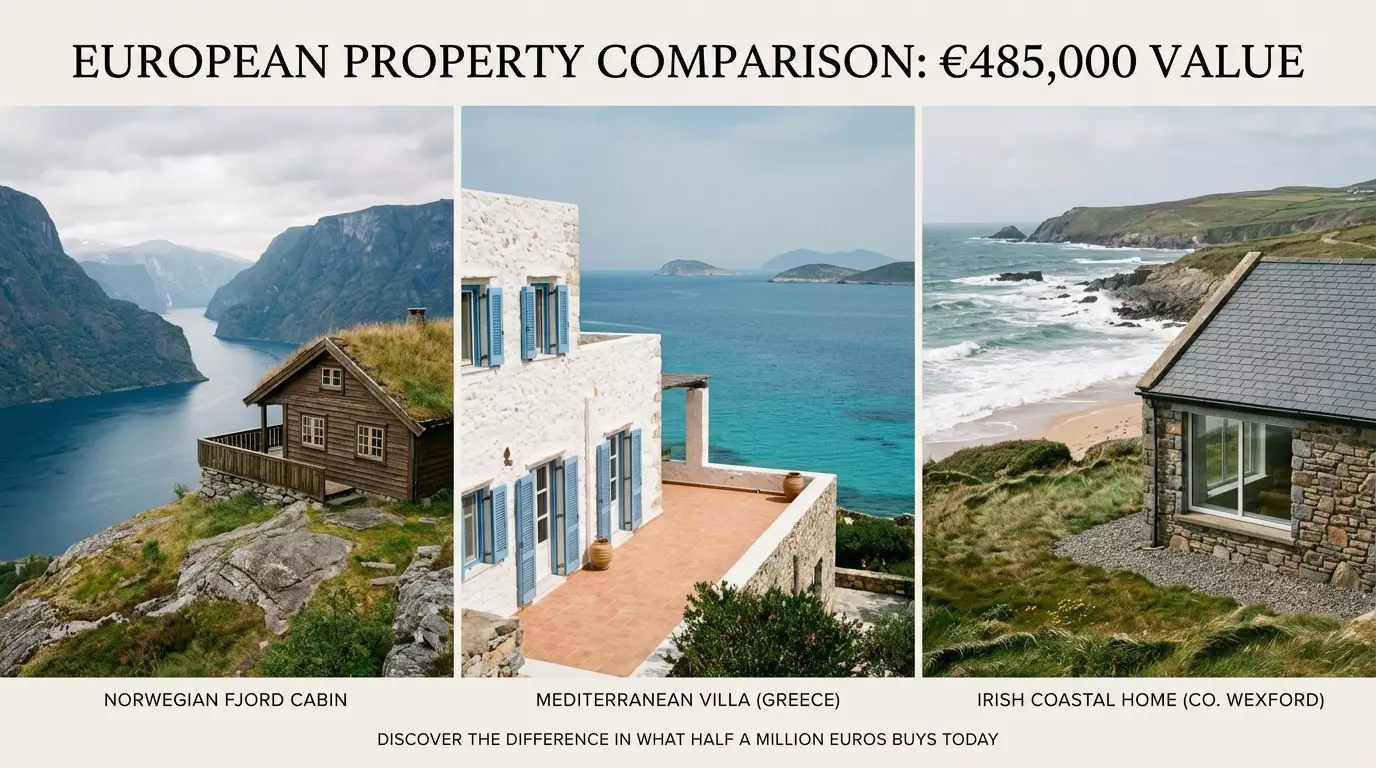
In County Wexford, Ireland, €485.000 presents buyers with solid options in the coastal property market. The Irish market at this price point typically offers well-maintained family homes with modern amenities, though space and luxury features may be more limited compared to continental options. Wexford’s coastal areas have seen steady demand from Dublin commuters and those seeking a better quality of life by the sea, which keeps property values relatively high despite offering less square footage than Mediterranean alternatives.
The Mediterranean markets tell a different story entirely. In Greece, this budget can secure stunning properties on picturesque islands or coastal mainland locations, often featuring traditional architecture, swimming pools, and breathtaking sea views. Spanish coastal regions offer similar value, with buyers potentially acquiring spacious villas complete with multiple bedrooms, outdoor entertainment areas, and proximity to beaches. The lifestyle proposition differs significantly, with Mediterranean properties often emphasizing outdoor living, extended terraces, and architectural styles designed for warmer climates. Italian properties in this price range can include historic charm with renovation potential or modern apartments in desirable coastal towns.
Comparing Property Markets: Ireland and Beyond
The Irish property market operates within a unique context of high demand and limited supply, particularly in desirable coastal regions. According to the Central Statistics Office, Irish property prices have experienced significant growth over recent years, driven by demographic pressures and economic recovery. Buyers in Ireland benefit from political stability, strong rental yields in many areas, and proximity to major employment centers, but must accept that their budget will purchase less physical space compared to many European alternatives.
European markets present varied investment propositions depending on the country. Southern European nations like Greece, Spain, and Italy often provide more property for your money, with the added appeal of favorable climates and lower living costs. However, buyers must consider factors beyond the purchase price, including local taxation systems, property maintenance costs in different climates, and potential language barriers. Northern European markets like Norway operate at the premium end, where €485.000 might secure a smaller apartment or modest home, but with the benefits of excellent infrastructure, high living standards, and strong economies. Each market requires careful research into local regulations, buying processes, and long-term value prospects.
From Greek Islands to Norwegian Fjords: Your Options
Greek island properties at the €485.000 price point offer exceptional value for those seeking Mediterranean lifestyle. Buyers can find charming stone houses with traditional Cycladic architecture, modern villas with infinity pools, or apartments with uninterrupted Aegean views. The Greek market has recovered strongly since its economic challenges, and property ownership comes with relatively low annual taxes. Islands like Crete, Rhodes, or less touristy alternatives provide opportunities for permanent residence, holiday homes, or rental income from the thriving tourism sector.
Norwegian properties represent the opposite end of the European spectrum. In Norway, €485.000 translates to approximately 5.5 million Norwegian Kroner, which might purchase a contemporary apartment in cities like Bergen or Stavanger, or a modest home in less central locations. Norwegian properties emphasize energy efficiency, modern design, and high-quality construction standards. While the property size may be smaller, buyers gain access to one of the world’s highest-quality living environments, with spectacular natural surroundings, excellent public services, and a strong economy. The Norwegian market remains stable and relatively expensive by European standards, reflecting the country’s prosperity and high cost of living.
Property Comparison Overview
Here’s how €485.000 compares across these markets:
| Country | Property Type | Typical Size | Key Features |
|---|---|---|---|
| Ireland (Wexford) | Family home | 3-4 bedrooms | Modern amenities, garden, coastal proximity |
| Greece | Villa or traditional house | 4-5 bedrooms | Pool, sea views, outdoor space |
| Spain | Coastal villa | 4-6 bedrooms | Pool, terraces, Mediterranean style |
| Italy | Renovated townhouse/apartment | 3-4 bedrooms | Historic features, village location |
| Norway | Modern apartment | 2-3 bedrooms | High-spec finish, energy efficient |
Key Considerations for International Buyers
When purchasing property across European borders, several factors deserve attention:
- Legal requirements: Each country has distinct property laws and foreign ownership regulations
- Taxation: Annual property taxes, purchase taxes, and capital gains vary significantly
- Currency fluctuations: Exchange rates can impact the true cost for buyers using different currencies
- Maintenance costs: Climate and building styles affect ongoing property maintenance expenses
- Rental potential: Tourism markets and local demand influence investment returns
- Healthcare access: Important for retirees or those planning extended stays
- Residency rights: Post-Brexit considerations for UK citizens and various visa requirements
Market Trends and Future Outlook
The European property market continues evolving, with several trends shaping value propositions. Remote working has increased interest in coastal and rural properties across all markets, as buyers prioritize lifestyle over proximity to offices. According to Eurostat, property prices across the EU have shown varied growth rates, with southern European markets offering recovery opportunities while northern markets remain stable but expensive.
Climate considerations are increasingly influencing buyer decisions, with some northern Europeans seeking warmer climates while others value cooler regions amid rising temperatures. Energy efficiency has become crucial, particularly in northern markets like Norway where building standards emphasize sustainability. Investment buyers should research local market trajectories, as some Mediterranean markets offer growth potential while established markets provide stability. The diversity of options at the €485.000 price point means buyers can prioritize what matters most, whether that’s space, location, climate, or investment potential.
In Short
The €485.000 budget opens remarkably different property opportunities across Europe, from compact Irish coastal homes to spacious Mediterranean villas and efficient Norwegian apartments. Irish properties offer stability and proximity to growing economies but less space for your investment. Mediterranean options in Greece, Spain, and Italy provide exceptional value, larger properties, and appealing lifestyles with outdoor living at their core. Norwegian properties deliver premium quality, modern standards, and access to spectacular natural environments, though at a premium price per square meter.
Choosing between these markets depends entirely on individual priorities. Those seeking investment returns and rental income might favor Greek islands or Spanish coastal areas with strong tourism sectors. Buyers prioritizing quality of life, infrastructure, and political stability might lean toward Irish or Norwegian options despite higher costs per square meter. Mediterranean properties suit those dreaming of year-round sunshine, outdoor entertaining, and lower living costs. Whatever the choice, €485.000 remains a significant budget that can secure desirable properties across Europe, each offering unique advantages and lifestyle propositions. Thorough research, professional legal advice, and careful consideration of long-term goals remain essential for making the right decision in any of these diverse and attractive markets.
Frequently Asked Questions
What are the hidden costs when buying property in Europe?
Beyond the purchase price, buyers should budget for legal fees (typically 1-3% of property value), notary fees, property transfer taxes (varying from 1-10% depending on country), survey costs, and currency exchange fees. Annual costs include property taxes, community fees for apartments, insurance, and maintenance. Some countries require non-residents to establish local bank accounts with associated fees.
Can non-EU citizens buy property in these European countries?
Generally, yes, but with variations. Greece, Spain, and Italy allow non-EU citizens to purchase property relatively freely. Ireland permits property purchases by non-EU citizens without restrictions. Norway allows purchases but may require special permission in certain areas. Always consult local legal experts as regulations can change and specific regions may have additional requirements.
Which market offers the best rental income potential?
Greek islands and Spanish coastal areas typically offer strong rental yields due to robust tourism sectors, with potential annual returns of 5-8% in prime locations. Irish coastal properties can generate good returns from domestic tourism and long-term rentals. Norwegian properties offer stable but lower yields (3-4%) due to higher purchase prices. Rental regulations vary significantly between countries.
How does climate affect property maintenance costs?
Mediterranean properties require regular maintenance due to intense sun exposure, salt air in coastal areas, and occasional heavy rainfall. Pool maintenance adds ongoing costs. Norwegian properties need excellent insulation and heating systems, increasing initial costs but reducing energy bills. Irish properties require damp-proofing and regular exterior maintenance due to wet climate conditions.
What about healthcare access for foreign property owners?
EU citizens can access healthcare across member states through the European Health Insurance Card system. Non-EU residents should arrange private health insurance. Norway, though not an EU member, has reciprocal healthcare agreements with many countries. All these countries offer excellent healthcare facilities in major towns, though remote island or rural properties may be distant from hospitals.
Is now a good time to invest in Mediterranean property markets?
Mediterranean markets have shown recovery and growth following economic challenges, with Greece particularly offering value compared to pre-crisis peaks. Spain and Italy have stabilized with steady growth in coastal areas. However, economic conditions, tourism trends, and local market dynamics vary significantly. Professional market analysis and long-term perspective are advisable for any property investment.



Join The Discussion