

Spain’s Rental Market Reaches Breaking Point
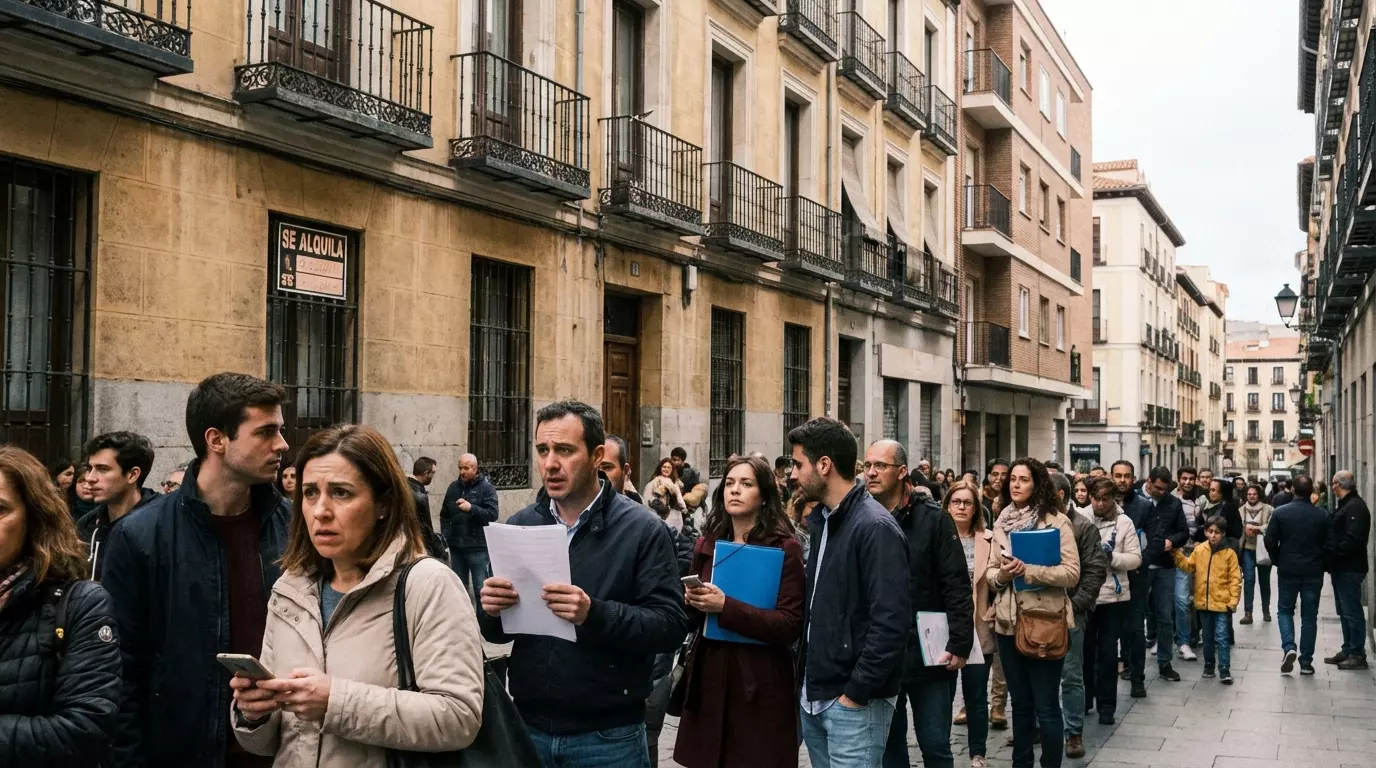
Spain’s housing crisis has escalated to unprecedented levels, with rental seekers facing fierce competition that has transformed the simple act of finding a home into an exhausting battle. The situation has deteriorated so dramatically that landlords are now routinely receiving applications from over 100 families for a single available property in major urban centers. This staggering imbalance between supply and demand has created a perfect storm in the Spanish rental market, leaving countless families desperate and frustrated in their search for adequate housing.
The severity of the crisis extends far beyond mere inconvenience, affecting the fundamental quality of life for thousands of Spanish residents and newcomers alike. Property portals have documented this alarming trend, revealing that the competition for rental properties has reached levels never before seen in Spain’s modern history. What was once a straightforward process of viewing a few apartments and making a choice has transformed into a highly competitive scenario where prospective tenants must fight tooth and nail for even the most basic accommodation.
Over 100 Families Compete for Single Apartment
The numbers paint a stark picture of Spain’s rental reality. In cities such as Barcelona, Madrid, and Valencia, landlords report receiving between 100 and 150 inquiries within hours of listing a property. Some particularly desirable apartments in central locations have attracted even more attention, with property owners overwhelmed by the sheer volume of applications flooding their inboxes. This unprecedented demand has fundamentally altered the landlord-tenant dynamic, placing all negotiating power firmly in the hands of property owners.
The competition has become so intense that prospective renters have begun employing increasingly creative strategies to stand out from the crowd. Many applicants now prepare comprehensive dossiers including employment contracts, bank statements, reference letters, and even personal videos introducing themselves to landlords. Some desperate renters offer to pay several months’ rent in advance or propose rental rates above the asking price, further inflating an already overheated market. This bidding war mentality has normalized practices that would have seemed excessive just a few years ago.
Why Finding a Flat Has Become Nearly Impossible
Multiple factors have converged to create this housing nightmare for Spanish renters. The surge in remote work following the pandemic has enabled many professionals to relocate to Spain’s attractive coastal cities and urban centers, significantly increasing demand for rental properties. Additionally, the growth of tourist rentals through platforms has reduced the stock of long-term residential properties available in prime locations. According to European housing research, Spain has experienced one of the most dramatic shifts in housing availability across the European Union.
The supply side of the equation presents equally challenging dynamics. Construction of new residential properties has failed to keep pace with growing demand, while stringent rental regulations in some regions have discouraged property owners from entering the long-term rental market. The conversion of traditional apartments into short-term tourist accommodations has further constricted supply, particularly in cities like Barcelona and Madrid where tourism represents a major economic driver. These structural issues compound the immediate crisis, suggesting that relief may not arrive quickly without significant policy interventions.
The Human Cost of Spain’s Housing Shortage
Behind the statistics lie real stories of hardship and displacement. Families with children face the prospect of frequent moves or inadequate living conditions, disrupting education and social stability. Young professionals find themselves trapped in shared accommodations well into their thirties, unable to establish independent households or start families. The psychological toll of endless apartment viewings, rejected applications, and housing insecurity cannot be understated.
The crisis disproportionately affects vulnerable populations, including low-income workers, immigrants, and single-parent households. These groups often lack the financial cushion to offer advance payments or the employment documentation that landlords increasingly demand. Some families have resorted to living in overcrowded conditions, subletting illegally, or accepting substandard housing that fails to meet basic safety requirements. The shortage has also contributed to rising homelessness rates in major Spanish cities, as those at the economic margins find themselves priced out entirely. The Guardian’s coverage of housing issues across Europe highlights Spain as a particularly acute case requiring urgent attention.
Regional Variations in the Crisis
Not all Spanish cities face identical challenges. The following table illustrates the varying intensity of the rental crisis across major urban areas:
| City | Average Applications per Property | Average Rental Price Increase (Year-on-Year) | Availability Rate |
|---|---|---|---|
| Barcelona | 120-150 | 15-18% | Critical |
| Madrid | 100-130 | 12-16% | Very Low |
| Valencia | 80-100 | 14-17% | Low |
| Seville | 60-80 | 10-13% | Moderate |
| Malaga | 90-110 | 16-19% | Very Low |
Key Factors Driving the Crisis
Several interconnected elements have created this perfect storm:
- Tourism Impact: Short-term rental platforms have removed thousands of properties from the long-term market
- Remote Work Migration: Digital nomads and remote workers have increased demand in previously affordable cities
- Construction Lag: New housing development has not kept pace with population growth and changing demographics
- Regulatory Uncertainty: Changing rental laws have made some property owners hesitant to enter the market
- Economic Recovery: Post-pandemic economic growth has increased overall housing demand
- Foreign Investment: International buyers purchasing properties as investments rather than primary residences
What Prospective Renters Can Do
While systemic solutions require policy changes, individuals can take steps to improve their chances:
- Prepare documentation in advance: Have all financial documents, references, and identification ready before viewings
- Expand search parameters: Consider neighborhoods slightly outside preferred areas or properties requiring minor compromises
- Act quickly: Respond to listings within hours rather than days
- Network actively: Inform friends, colleagues, and social media contacts about your housing search
- Consider temporary solutions: Short-term rentals while continuing the search may relieve immediate pressure
- Seek professional help: Real estate agents may have access to unlisted properties or insider knowledge
In Short
Spain’s rental market has reached a critical juncture where the fundamental right to adequate housing feels increasingly out of reach for ordinary citizens. The phenomenon of 100 families competing for a single apartment represents not merely a market imbalance but a genuine social crisis requiring urgent intervention. The convergence of tourism pressure, remote work trends, and insufficient housing construction has created a situation where finding a place to live has become a full-time endeavor fraught with disappointment and stress.
Addressing this crisis will require coordinated action from multiple stakeholders. Policymakers must balance the needs of property owners with the rights of tenants while encouraging new construction and regulating tourist rentals more effectively. Local governments need to prioritize affordable housing development and consider innovative solutions like cooperative housing models or public-private partnerships. Without meaningful intervention, the rental scramble will continue to intensify, potentially triggering broader social and economic consequences that extend far beyond the housing market itself.
The human stories behind these statistics remind us that housing is not merely an economic commodity but a basic necessity for dignity and stability. As Spain grapples with this challenge, the solutions implemented will determine whether the country can maintain its reputation as a desirable place to live and work, or whether the dream of finding a home in Spain will remain frustratingly out of reach for the many while benefiting only the fortunate few.
FAQ
How long does it typically take to find a rental apartment in Spain right now?
Finding a rental apartment in Spain’s major cities currently takes anywhere from several weeks to several months, significantly longer than the historical average. The timeline depends heavily on location, budget flexibility, and how quickly you can respond to new listings.
What documents do landlords in Spain typically require from prospective tenants?
Spanish landlords commonly request employment contracts, recent pay slips, bank statements showing financial stability, identification documents, previous landlord references, and sometimes a guarantor. Some may also require proof of savings equivalent to several months’ rent.
Are rental prices regulated in Spain?
Rental price regulations vary by region in Spain. Some autonomous communities have implemented rent control measures or limitations on price increases, while others maintain more liberal market policies. Recent legislative changes have attempted to address affordability but implementation varies significantly.
Is it better to search for rentals through agencies or directly from owners?
Both approaches have advantages. Agencies may have access to more listings and handle administrative tasks, but charge fees. Direct rentals from owners eliminate agency costs but require more personal effort in documentation and negotiation. In the current competitive market, pursuing both channels simultaneously increases your chances.
How much should I expect to pay upfront when renting in Spain?
Typical upfront costs include the first month’s rent, a security deposit (usually one to two months’ rent), and potentially an agency fee if applicable. In the current market, some landlords request additional months’ rent in advance, though this practice exists in a legal gray area.
Can foreigners rent apartments in Spain easily?
Foreigners can rent in Spain but may face additional scrutiny regarding documentation and financial stability. Having a Spanish bank account, local employment contract, or sufficient savings documentation significantly improves prospects. EU citizens generally encounter fewer barriers than non-EU nationals.



Join The Discussion