

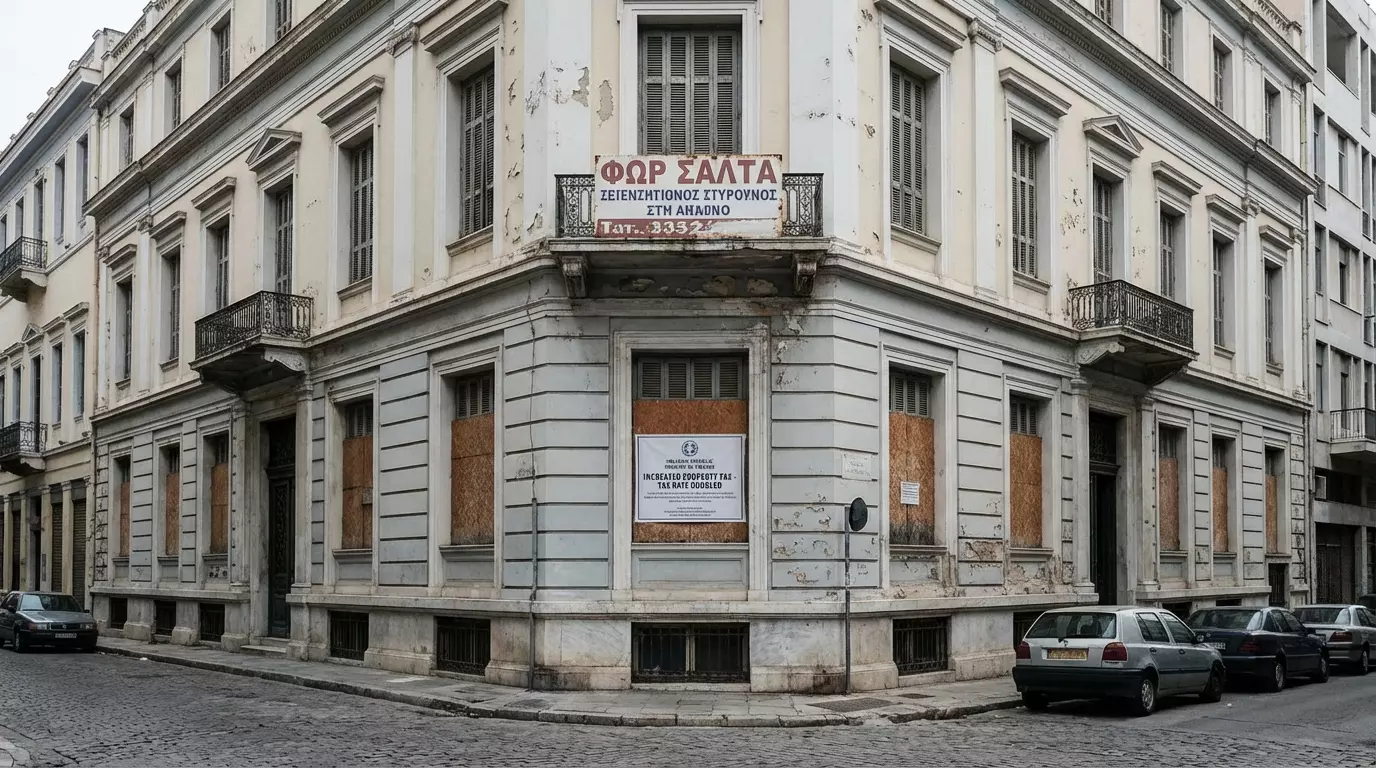
Greece Banks Face New Tax Burden on Vacant Properties
Greek financial institutions are confronting an unprecedented fiscal challenge as they become subject to double taxation on properties acquired through foreclosures and debt settlements. The Bank of Greece and major lenders across the country are now required to pay both the standard property tax (ENFIA) and an additional levy specifically targeting vacant buildings. This development marks a significant shift in how the government approaches taxation of bank-owned real estate portfolios.
The new taxation framework emerged as part of broader government efforts to address the housing crisis and encourage property utilization. Banks that accumulated substantial real estate holdings during the financial crisis now find themselves paying premium rates for properties that generate no income. The dual taxation system applies regardless of whether the properties are marketable or stuck in legal proceedings, creating an additional financial burden for institutions still recovering from the economic downturn of the previous decade.
Double Taxation Hits Financial Institutions Hard
The implementation of this double taxation policy represents a substantial increase in operational costs for Greek banks. Financial institutions must now calculate and pay the standard ENFIA property tax, which applies to all property owners in Greece, plus an additional vacant property surcharge that can significantly increase their total tax liability. This combined taxation approach has caught many lenders off guard, forcing them to reassess their property management strategies and disposal timelines.
According to banking sector analysts, the financial impact extends beyond simple tax payments. The double taxation creates a cascading effect on bank balance sheets, affecting their ability to write off non-performing loans and restructure their real estate portfolios. Major Greek banks including National Bank of Greece, Alpha Bank, Eurobank, and Piraeus Bank are all grappling with this new reality. The additional costs come at a time when these institutions are working to strengthen their capital positions and improve profitability metrics following years of economic uncertainty.
Empty Buildings Become Costly Problem for Lenders
The vacant property problem facing Greek banks stems directly from the financial crisis that gripped the nation for much of the 2010s. During this period, banks acquired thousands of properties through foreclosure proceedings as borrowers defaulted on their loans. Many of these buildings remain empty today, either because they are located in areas with limited market demand, require substantial renovation work, or are entangled in complex legal disputes that prevent their sale.
The scale of the vacant property portfolio held by Greek financial institutions is substantial. Industry estimates suggest that banks collectively own thousands of residential and commercial properties across the country, with significant concentrations in urban centers like Athens and Thessaloniki, as well as in economically depressed regions. These properties range from small apartments to large commercial complexes, creating a diverse but problematic asset base. The new taxation policy essentially penalizes banks for holding onto these properties, regardless of the legitimate obstacles preventing their disposal. This includes properties where:
- Legal challenges prevent immediate sale
- Title disputes remain unresolved
- Market conditions make sale financially unfavorable
- Required renovations exceed potential sale proceeds
- Zoning restrictions limit property use
Banks Struggle With Rising Property Tax Expenses
The financial strain created by rising property tax expenses is forcing Greek banks to accelerate their property disposal programs. However, selling foreclosed properties quickly often means accepting below-market prices, which impacts the banks’ ability to recover loan losses. This creates a difficult balancing act between minimizing ongoing tax expenses and maximizing recovery rates on non-performing loans.
Banking executives have expressed concern about the policy’s timing and structure. They argue that the double taxation approach discourages banks from maintaining properties in good condition while awaiting suitable buyers. Instead, institutions may feel pressured to accept fire-sale prices or abandon properties altogether, potentially creating urban blight in already struggling neighborhoods. The European Central Bank has also monitored the situation closely, as Greek banks’ financial health remains important for overall eurozone banking stability.
Strategic Responses from the Banking Sector
Greek financial institutions are implementing several strategies to address the double taxation challenge:
Immediate Actions:
- Accelerating property auctions and sales programs
- Establishing partnerships with real estate investment firms
- Creating specialized subsidiaries to manage property portfolios
- Negotiating bulk sales to institutional investors
- Implementing aggressive pricing strategies to move inventory
Long-term Adaptations:
- Restructuring loan workout procedures to avoid property acquisition
- Strengthening pre-foreclosure settlement negotiations
- Developing rent-to-own programs for occupied properties
- Investing in property improvements to increase marketability
- Lobbying for policy modifications or exemptions
Impact on Greek Real Estate Market
The double taxation policy has broader implications for Greece’s real estate market beyond the banking sector. As banks rush to dispose of properties to avoid ongoing tax liabilities, the market may experience increased supply in certain segments, potentially depressing prices further. This could create opportunities for investors but may also complicate recovery efforts in areas already suffering from low property values.
The situation also highlights the delicate balance policymakers must strike between encouraging property utilization and maintaining financial sector stability. While the government’s intention to discourage property vacancy is understandable, the implementation may have unintended consequences for both banks and the broader economy. Real estate professionals have noted increased activity in bank property sales since the policy announcement, suggesting that the taxation pressure is indeed influencing institutional behavior.
Comparison of Tax Burden: Standard vs. Double Taxation
| Property Type | Standard ENFIA | Vacant Property Surcharge | Total Annual Tax (Example) |
|---|---|---|---|
| Urban Apartment (80 sq.m.) | €400-600 | €200-400 | €600-1,000 |
| Commercial Space (200 sq.m.) | €1.500-2,500 | €750-1,500 | €2.250-4,000 |
| Large Residential Building | €3.000-5,000 | €1.500-3,000 | €4.500-8,000 |
Note: Actual amounts vary based on location, property characteristics, and assessed value
Regional Variations in Impact
The double taxation burden affects banks differently depending on where their property portfolios are concentrated. Properties in Athens and other major urban centers generally have higher assessed values and therefore generate larger tax bills. However, these same properties also tend to be more marketable, giving banks better options for disposal. Conversely, properties in rural or economically depressed areas may have lower individual tax burdens but prove much harder to sell, creating a longer-term drain on resources.
Financial institutions with significant holdings in tourist areas face particularly complex decisions. These properties may have seasonal appeal but remain vacant for much of the year, triggering the vacancy surcharge despite their potential economic value. Banks must weigh the costs of holding such properties against the possibility of improved tourism markets in future years.
In Short
The introduction of double taxation on vacant bank-owned properties in Greece represents a significant policy shift with far-reaching implications for the financial sector. While the government aims to address housing availability and encourage property utilization, banks face mounting pressure to dispose of foreclosed assets quickly, potentially at unfavorable prices. The policy’s impact extends beyond simple tax calculations to affect loan recovery strategies, property management approaches, and overall banking sector profitability.
Greek financial institutions are responding with accelerated disposal programs and innovative property management strategies, but the fundamental tension between regulatory pressure and financial prudence remains. As this situation develops, it will serve as an important case study in how fiscal policy can influence banking behavior and real estate markets. The coming months will reveal whether this approach successfully encourages property utilization without creating unintended consequences for financial stability or market dynamics.
FAQ
What is the double taxation on bank properties in Greece?
Greek banks must now pay both the standard ENFIA property tax and an additional vacant property surcharge on buildings they own. This applies to properties acquired through foreclosures and debt settlements, significantly increasing the cost of holding vacant real estate.
Why do Greek banks own so many vacant properties?
Banks accumulated these properties during Greece’s financial crisis when borrowers defaulted on loans. Many properties remain unsold due to legal complications, poor market conditions, location issues, or the need for expensive renovations.
How much does the double taxation cost banks annually?
The exact cost varies by property size, location, and assessed value, but the combined tax burden can range from 50% to 100% higher than standard property taxes. For large portfolios, this represents millions of euros in additional annual expenses.
Can banks pass these costs to borrowers?
No, once banks take ownership of foreclosed properties, they assume all associated costs including taxes. These expenses typically reduce the bank’s recovery rate on non-performing loans.
What are banks doing to reduce their vacant property holdings?
Banks are accelerating property sales through auctions, negotiating bulk sales with investors, partnering with real estate firms, and in some cases accepting below-market prices to minimize ongoing tax liabilities.
Does this policy affect private property owners?
While private owners also pay ENFIA, the vacant property surcharge primarily targets institutional holders like banks. However, the policy may indirectly affect the market by increasing property supply as banks rush to sell.
How does this compare to property taxation in other European countries?
Many European nations have vacant property taxes, but Greece’s approach of specifically targeting bank-owned properties through double taxation is relatively unique. Most countries apply vacancy charges more uniformly across all property owners.


Join The Discussion